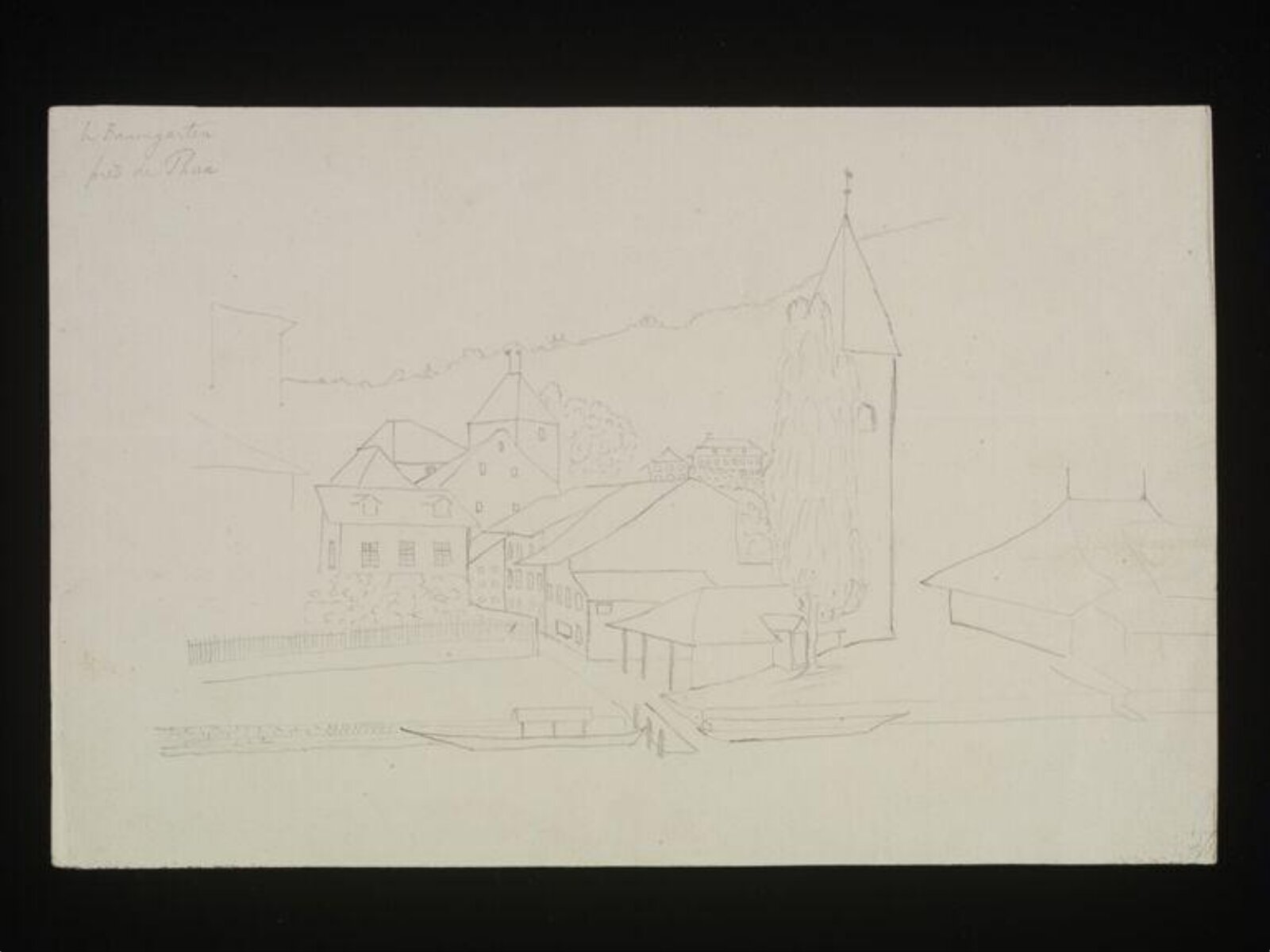
 William Henry Fox TalbotEngeland, 1800–1877
Le Baumgarten près de Thun
Kan ik het zien?
Nu niet te zien
Waar is „Le Baumgarten près de Thun” nu? Collectie: Victoria and Albert Museum, Londen. Nu niet te zien. Gecontroleerd 25 september 2026.

Londen, Verenigd Koninkrijk
Het hoort bij de collectie, maar is momenteel niet tentoongesteld.
- Gecontroleerd
- Ongewijzigd sinds
- Bron
- Het museum
Gegevens
- Inventarisnummer
- RPS.60-2017
In de catalogus
Bronnen
- Victoria and Albert Museum
- Afbeelding: Victoria and Albert Museum — © Victoria and Albert Museum, London
In het leven van William Henry Fox Talbot
Het hele leven1831
Elected to the Royal Society
Talbot was elected a Fellow of the Royal Society for his work on the integral calculus.
1831 · Onderscheiding
Fellow of the Royal Society
19 december 1832
Married: Constance Fox Talbot
10 december 1832 – 29 december 1834
Post: member of the 11th Parliament of the United Kingdom
early 1834
Photographic experiments begin
In early 1834 Talbot began the experiments on which he later based his claim to priority of invention. For his “photogenic drawing” he bathed writing paper in a weak solution of table salt and brushed it with a strong solution of silver nitrate; unlike Thomas Wedgwood and Nicéphore Niépce, he found ways to fix the image chemically so that it would not darken in daylight.
1835
The first negative on salted paper
Talbot made his first negative on paper soaked in silver nitrate and a salt solution, as he later recounted in “The Pencil of Nature”. Among his early pictures is the window of his own library, taken from inside with a camera whose optical lens measured only 8 centimetres.


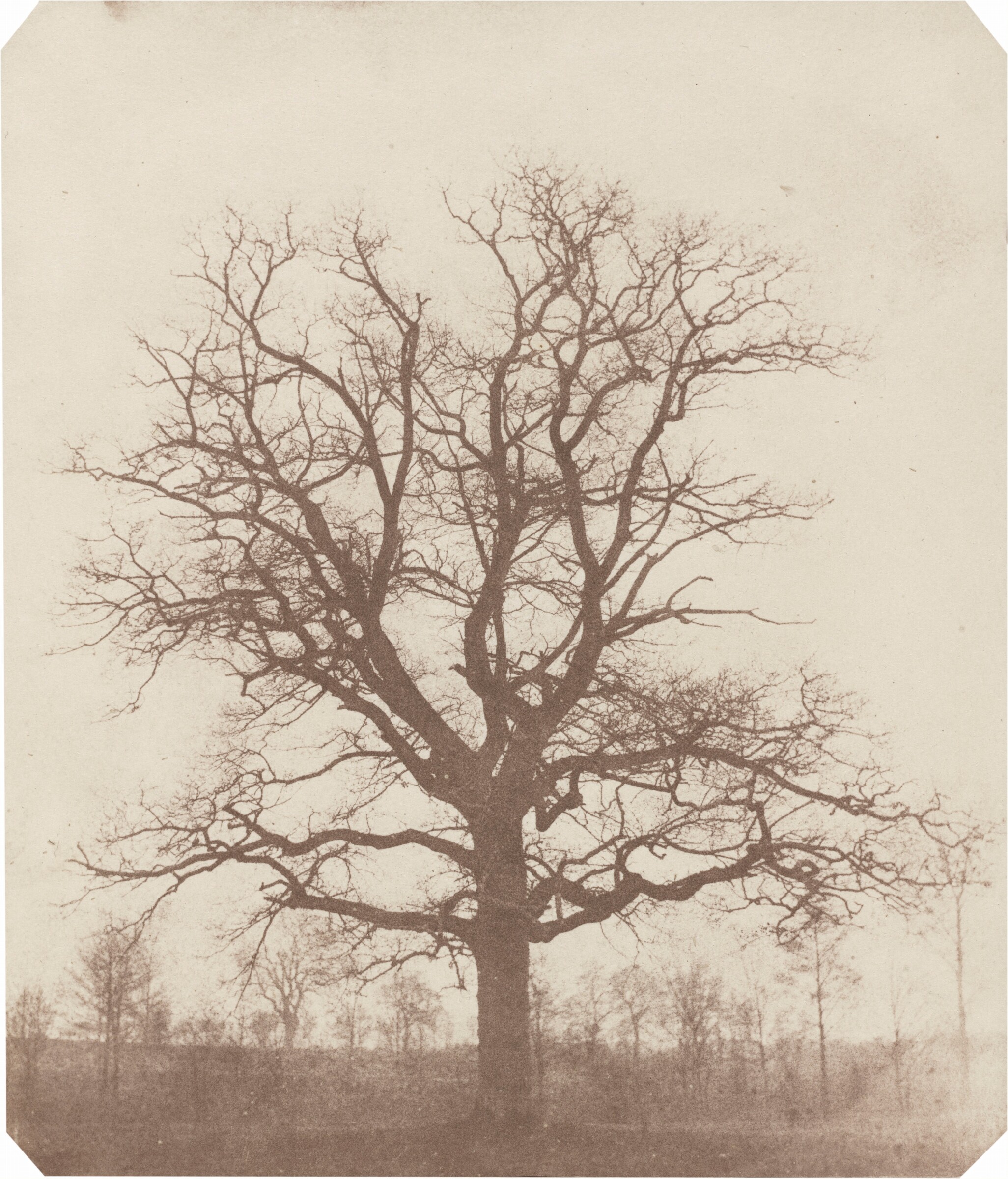
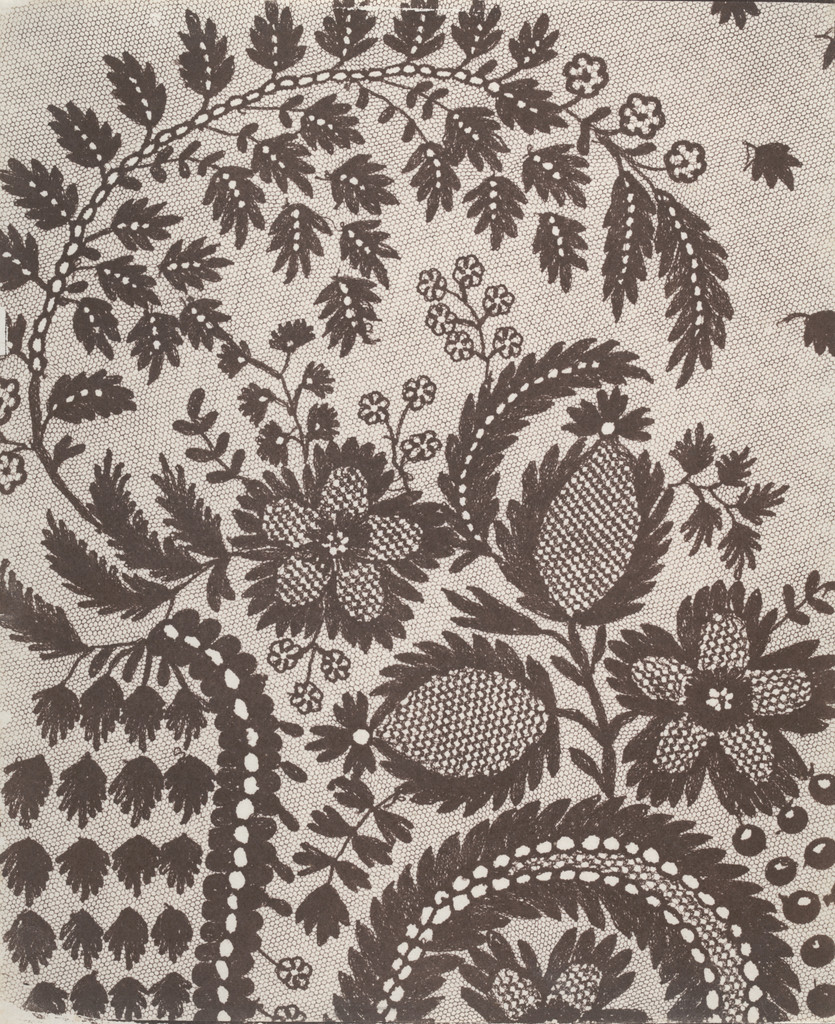

![[Group of Trees from the American Walnut], William Henry Fox Talbot, June 1, 1840](https://media.getty.edu/iiif/image/e2239044-50e4-44d2-be46-db53cdc317f1/full/!1200,1200/0/default.jpg)