
 Paul KleeDuitsland, 1879–1940
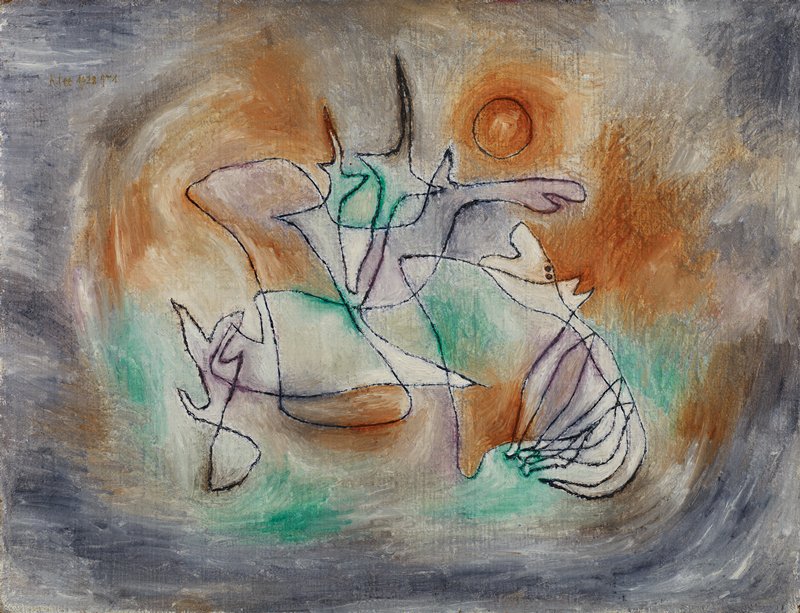
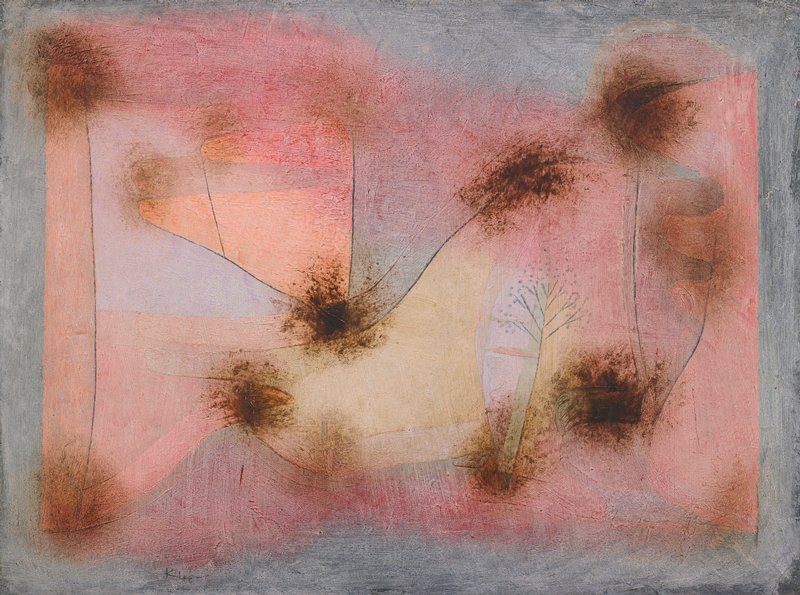
Composition with Figures
Mag men het zien?
Ontvangt momenteel niet

National Gallery of Art
Washington D.C., Verenigde Staten
Het hoort bij de collectie, maar is momenteel niet tentoongesteld.
- Gecontroleerd
- eergisteren
- Ongewijzigd sinds
- 19 aug 2026
- Bron
- De eigen collectiegegevens van het museum
Gegevens
- Inventarisnummer
- 2014.18.25
What it shows
In de catalogus
Bronnen
- National Gallery of Art: the museum's own open data · opgehaald 5 dagen geleden
- Afbeelding: National Gallery of Art — Museum open access
Intussen, in het leven van Paul Klee
Het hele leven25 May 1912 – September 1913
Exhibitions in Cologne (1912) and Berlin (1913)
Four of Klee’s drawings were shown at the international art exhibition of the association of West German artists and friends of art in Cologne (25 May – 30 September 1912). In September 1913 he exhibited watercolours and drawings at the First German Autumn Salon in Berlin.
from 3 April 1914
Tunisia with Macke and Moilliet: Klee the painter
On 3 April 1914 Klee set out from Bern with August Macke and Louis Moilliet, via Lyon and Marseille to Tunisia — Saint-Germain, Sidi Bou Said, Carthage, Hammamet, Kairouan — and he alone of the three kept a diary. Struck by the light, Klee wrote that colour had taken possession of him for ever and that he was a painter; back home he painted his first purely abstract work, “In the Style of Kairouan”, built of coloured rectangles and a few circles.
autumn 1914
The war: hopes, and the death of August Macke
Klee greeted the outbreak of war, like Franz Marc, with a hope for the country’s revival, and in the first months made works on war themes — “Death on the Battlefield” and “Death for the Idea”. The death of his friend August Macke in the autumn of 1914 changed his mind: in his diary he wrote that the more terrible the world, the more abstract art becomes, and by the end of 1915 he had abandoned war subjects altogether.
1915
Meeting Rainer Maria Rilke
Klee met the poet Rainer Maria Rilke, who was allowed to keep about forty of Klee’s works in his room for several months.
March 1916
First exhibition of abstract watercolours at Walden’s
Herwarth Walden’s gallery held the first exhibition of Klee’s abstract watercolours, a success with the public. He gave the works new titles, marking his break with war themes, and Walden asked him for more.
February 1917
Second show at Walden’s: the first commercial success
Klee showed the watercolours of the past year; many works were sold, and critics called him the most important German artist since Marc’s death. The success was made possible by a changed market: collectors had appeared who were ready to buy modern art.




![Ginevra de' Benci [obverse], Leonardo da Vinci, c. 1474/1478](https://api.nga.gov/iiif/8f29e3c9-a289-4d53-abf0-31a66e9e98fa/full/!2400,2400/0/default.jpg)
![Wreath of Laurel, Palm, and Juniper with a Scroll inscribed Virtutem Forma Decorat [reverse], Leonardo da Vinci, c. 1474/1478](https://api.nga.gov/iiif/ff62e8d0-45c4-498f-ad36-6358de827e04/full/!2400,2400/0/default.jpg)


