André KertészVerenigde Staten, 1894–1985
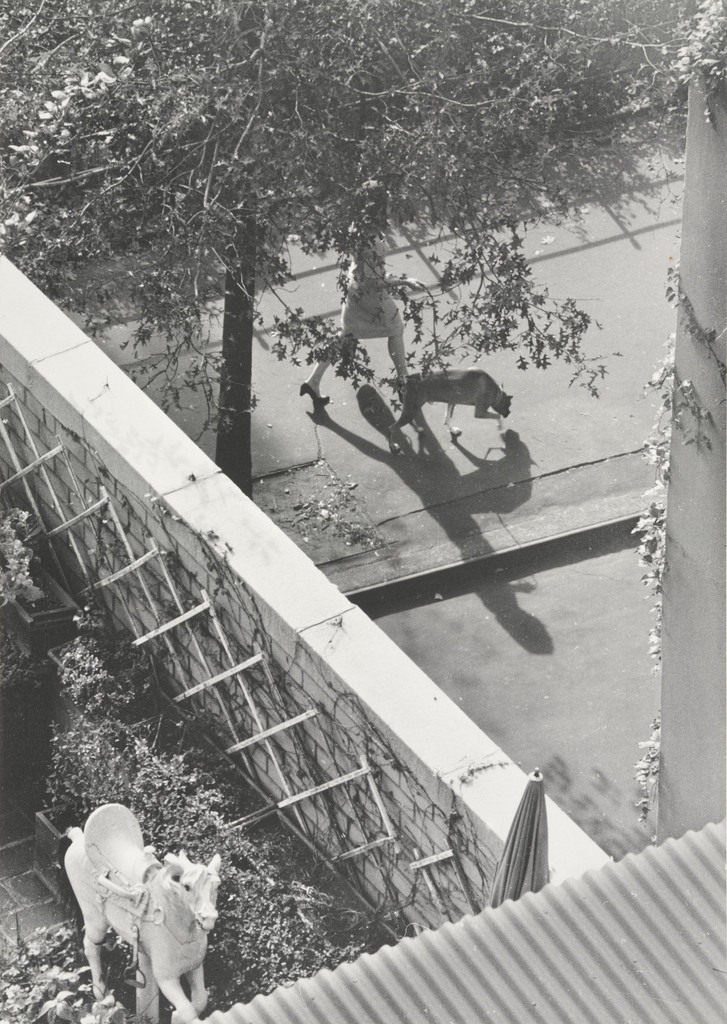
Arm and Ventilator
Mag men het zien?
Ontvangt momenteel niet

Art Institute of Chicago
Chicago, Verenigde Staten
Het hoort bij de collectie, maar is momenteel niet tentoongesteld.
- Gecontroleerd
- Ongewijzigd sinds
- Bron
- De eigen collectiegegevens van het museum
Gegevens
- Inventarisnummer
- 2019.1502
What it shows
In de catalogus
Bronnen
- Art Institute of Chicago: the museum's own open data · opgehaald 7 dagen geleden
- Afbeelding: Art Institute of Chicago — © the artist or rights holder
Intussen, in het leven van André Kertész
Het hele leven1925–1936
The circle of Hungarian émigrés and portraits of friends
In Paris he is among numerous Hungarian artists, including François Kollar, Robert Capa, Emeric Fehér, Brassaï and Julia Bathory, as well as Man Ray, Germaine Krull and Lucien Aigner, who also emigrated there, and becomes involved with the Dada movement; visiting his sculptor friends, he is fascinated by Cubism. He makes photo portraits of the painters Piet Mondrian and Marc Chagall, the writer Colette and the film-maker Sergei Eisenstein.
1933–1937
Books: “Enfants”, “Paris”, “Nos amies les bêtes”
His first personal book of photographs, Enfants, is published in 1933, and he publishes regularly in the following years: Paris (1934), dedicated to his brothers Imre and Jenő, Nos Amies les bêtes (“Our Friends the Animals”, 1936) and Les Cathédrales du vin (“The Cathedrals of Wine”, 1937).
15 October 1936
Emigrates to New York
Magazines emphasise political stories and stop publishing Kertész for his apolitical subjects; with commissions dropping and persecution of Jews increasing, he and Elizabeth decide to move, which may have saved his life, as four years later France would fall under Nazi occupation. They board the SS Washington and arrive in New York on 15 October 1936, living at the Beaux Arts Hotel in Greenwich Village; deprived of his artist friends, struggling with English and among Americans who reject having their photos taken on the street, he goes through a period he later calls the “absolute tragedy”.
1937
Five “Distortions” in the show “Photography 1839–1937”
Soon after his arrival he approaches Beaumont Newhall, director of the photographic department at the Museum of Modern Art, who is preparing a show entitled Photography 1839–1937; Kertész bristles at his criticism of the Distortions he offers, but Newhall exhibits five of the photographs.
1937
Leaves Keystone; commissions from Harper’s Bazaar and Life
The Keystone agency, owned by Ernie Prince, required him to stay in the company’s studio; frustrated, Kertész leaves when Prince leaves the company in 1937, is commissioned by Harper’s Bazaar for an article on the Saks Fifth Avenue department store in its April 1937 issue, takes commissions from Town and Country to supplement his income, and declines an invitation to work for Vogue as inappropriate work. He later chooses Life, but the magazine refuses to publish the unauthorized photographs of the whole harbour he made instead of just tugboats, and Kertész resents the constraints on his curiosity.
December 1937
His first solo show in New York
In December 1937 Kertész has his first solo show in New York, at the PM Gallery.