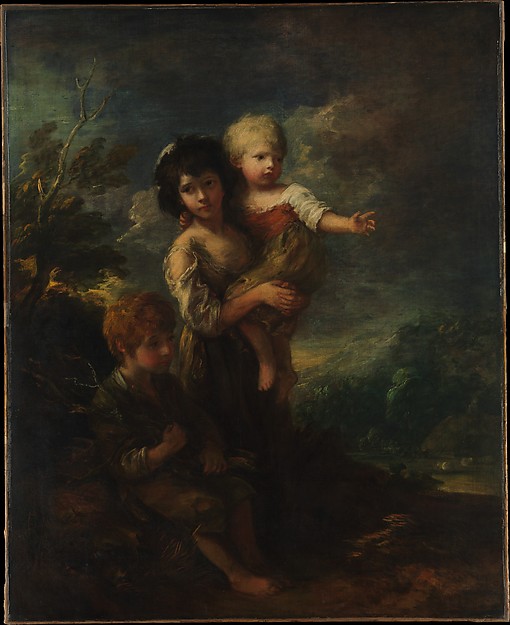
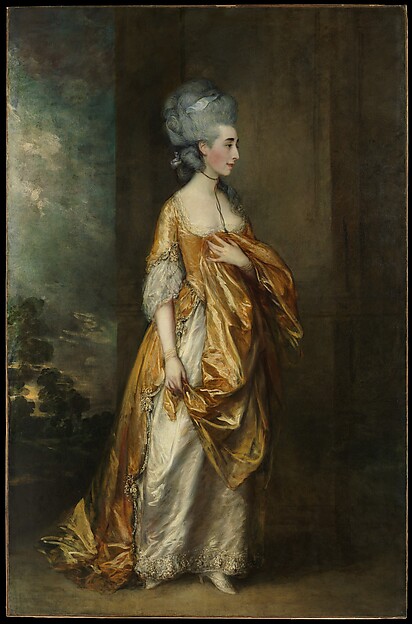
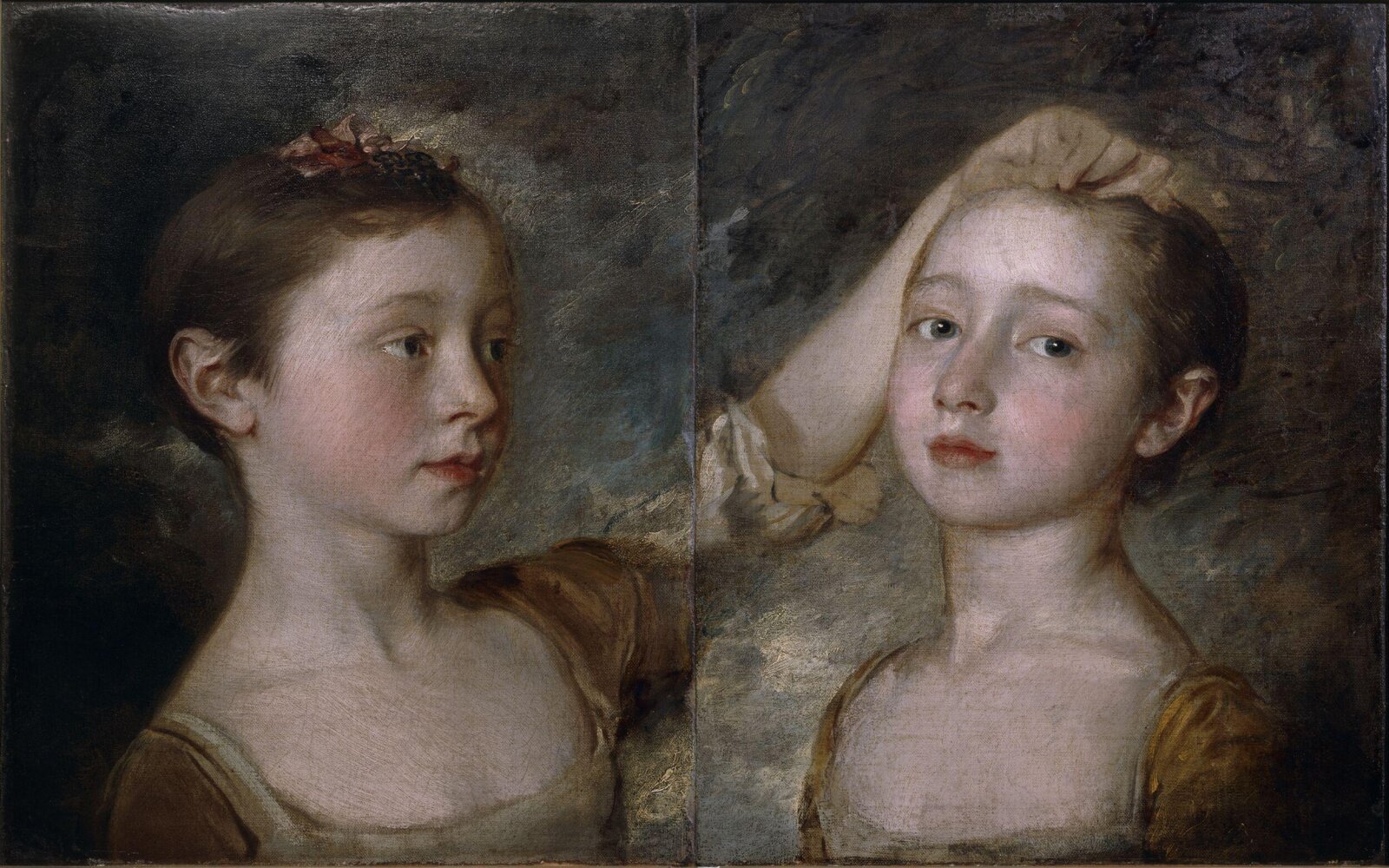
A portrait of this kind is reminiscent of the work of one of Gainsborough's most admired artists of the past, Van Dyck, whose portraits of children also had a slightly melancholy sweetness.
Subjects Depicted
The artist painted his daughters several times. Both daughters attended Blacklands School in Chelsea, London, where they learned to draw; Margaret also became an accomplished amateur musician. Mary married the oboe player Johann Christian Fischer in 1780, but they soon separated, and she developed eccentricities which eventually resulted in insanity. After their father's death in 1788, the two sisters lived together.
People
続きを読む
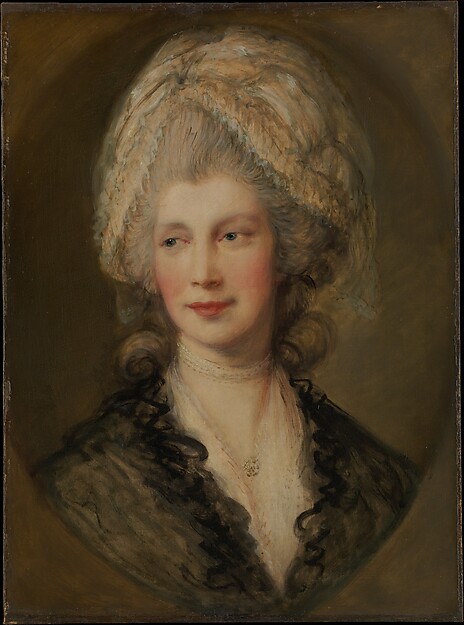
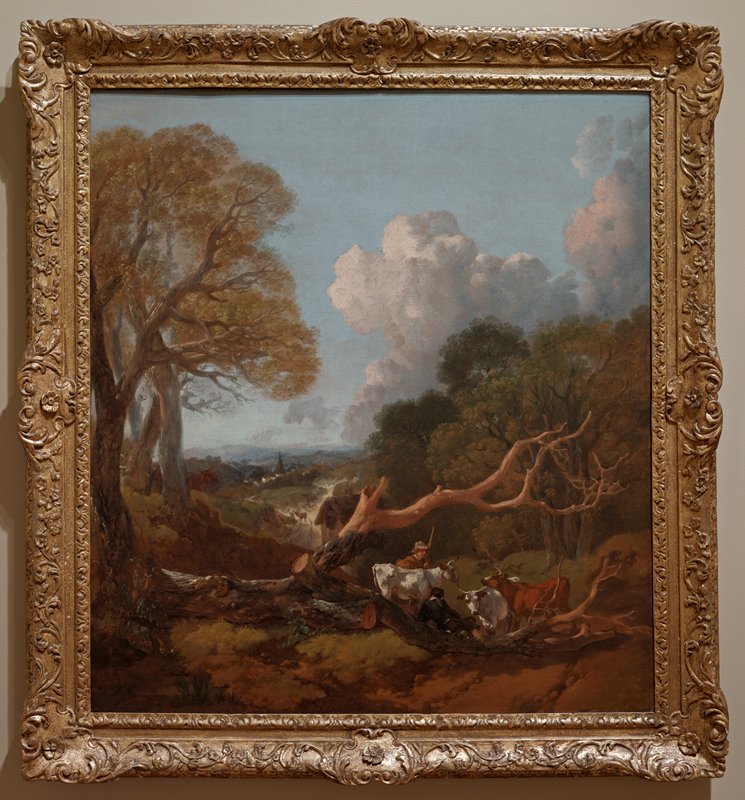
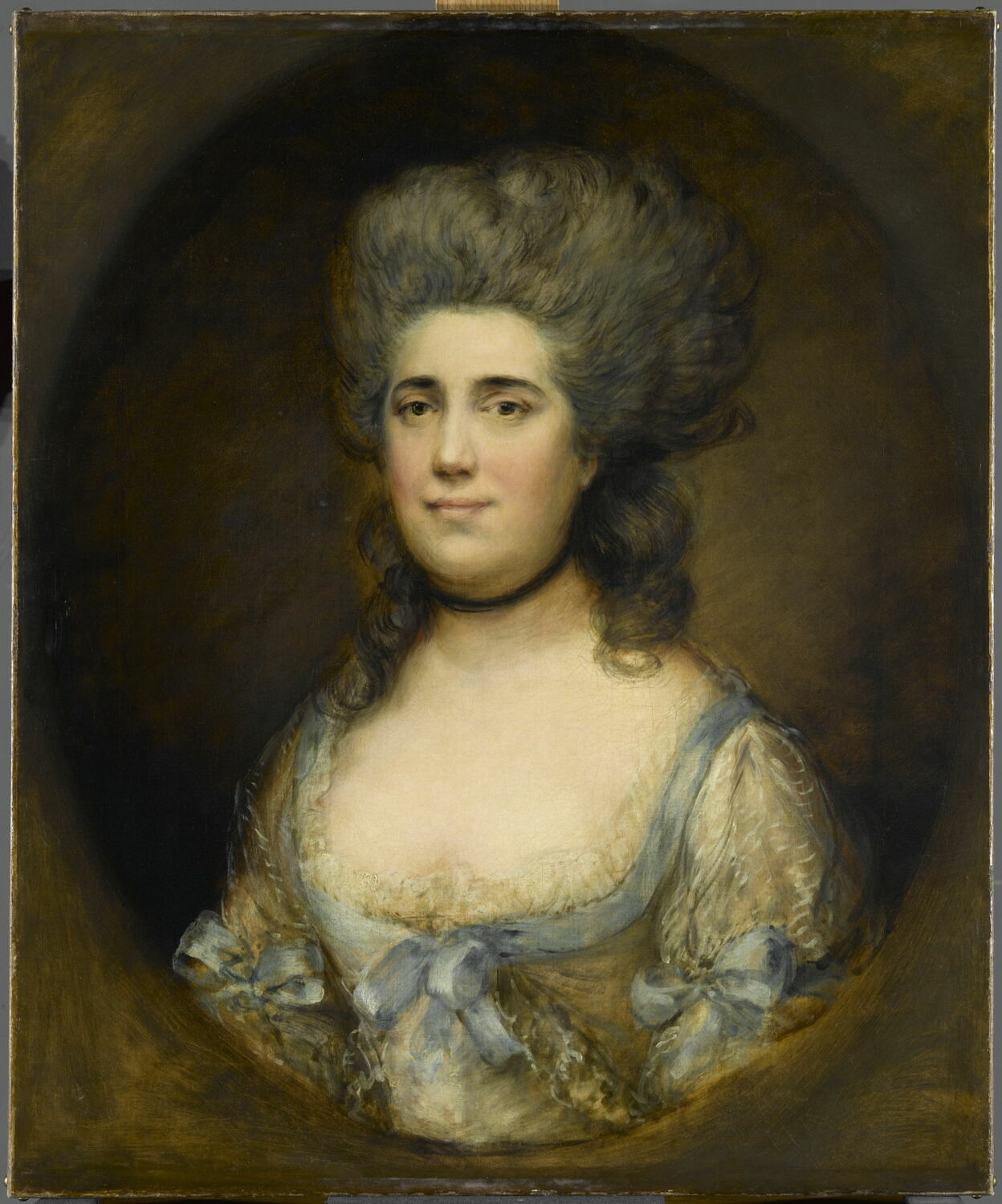
Thomas Gainsborough was born in Sudbury, Suffolk, in 1727. He moved to London in 1740, studying at the St Martin's Lane Academy and associating with Hubert Gravelot and Francis Hayman. He returned to Suffolk in 1748; then moved to Bath in 1759 and established a successful portrait practice, although he regularly visited London. He exhibited at the Society of Artists and was invited to be a founder member of the Royal Academy in 1768. He also painted pictures in the sentimental manner of Murillo, and landscapes of a 'picturesque' kind.
Gainsborough's main income comes from portraits; in this genre he tries to follow Hogarth, caring more about likeness than about conveying the sitter's social standing. Around 1753, probably, he receives a flattering commission for a portrait of Admiral Vernon, and he paints many members of his own family — for example a self-portrait of 1754 in a tricorn hat.
c. 1752 – 1759
The Ipswich Music Club
In Ipswich Gainsborough becomes a member of the Music Club, where he meets fellow music lovers and professional musicians; later he will paint portraits of some of them, and a group portrait of the club's members.
December 1758
A commission for portraits of the Earl of Jersey and his son
In December 1758 Gainsborough receives a commission for portraits of the Earl of Jersey and his son Lord Villiers. The portraits meet with approval and the painter's fame grows.
1759
The move to fashionable Bath
Having made his name as a portraitist in Ipswich, Gainsborough decides to move to the fashionable spa town of Bath, where two of his sisters live. There are so many portrait commissions there that they outstrip what he can handle.
1759–1774
Bath: Van Dyck and Rubens in the houses of the local aristocracy
Of great importance to Gainsborough is his acquaintance with paintings by Anthony van Dyck and Peter Paul Rubens owned by local aristocrats; he copies some of them. The study of the old masters is linked to the appearance in his landscapes of luminous distances that he had not been able to achieve before.
1760s
“Sick of portraits”
In a letter to a friend Gainsborough confesses that he is sick of portraits and longs to take his viola da gamba and walk off to some quiet village to paint landscapes. He has little regard for his gentleman patrons, whose only part worth looking at, he says, is their purse; by now he owns five viols — three by Henry Jaye and two by Barak Norman.
 Thomas Gainsboroughイギリス, 1727–1788