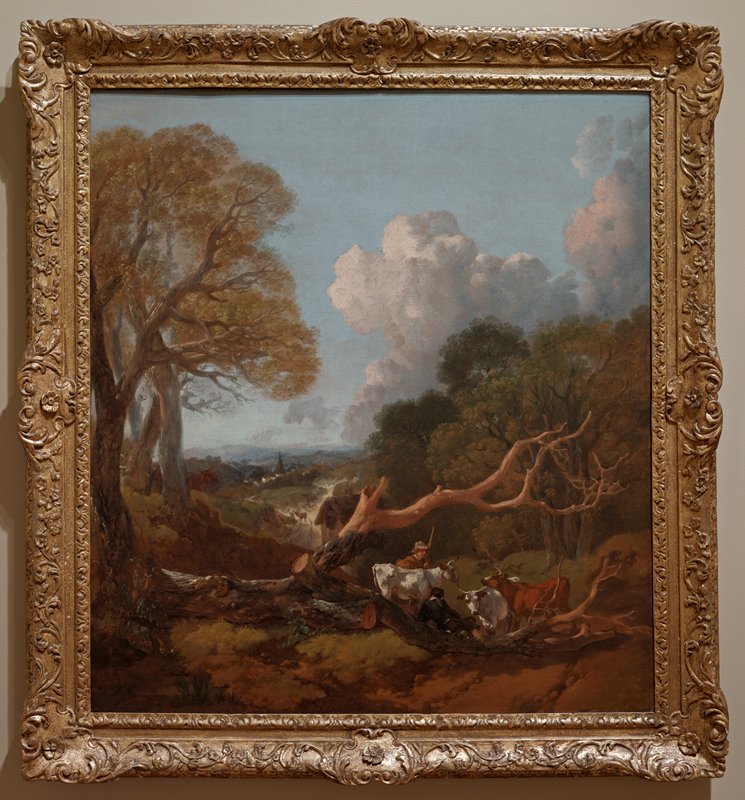
 Thomas Gainsboroughイギリス, 1727–1788
The Fallen Tree
お目にかかれますか?
はい、お客様をお迎えしています

ミネアポリス美術館
展示室G324ミネアポリス, アメリカ合衆国
一般公開されています。裏付けとなる出典は下に記しています。
- 確認
- この状態になった日
- 出典
- 美術館自身の所蔵データ
About the painting
Though best known for his magnificent portraits, Thomas Gainsborough preferred painting “landskips” (as he called them) and played a key role in establishing the importance of landscape in British art. As a young artist he enjoyed the beauties of his native Suffolk countryside, walking the picturesque landscape of the Stour Valley and Cornard Wood with sketchbook in hand. The distant spire behind the fallen tree and grazing cows can be identified as the small parish church of Saint Andrews in Great Cornard, just a kilometer from Gainsborough's house in his hometown of Sudbury (Suffolk).
ミネアポリス美術館
作品データ
- 収蔵番号
- 53.1
カタログ収録
出典
- ミネアポリス美術館: the museum's own open data · 7 日前に取得
- 画像: ミネアポリス美術館 — public domain
その頃、Thomas Gainsboroughの人生では
生涯をすべて見る1748
His father dies; back to Sudbury
Gainsborough's father, John, dies in 1748. With no new commissions coming in London, the painter returns to Sudbury, to the house of his childhood.
c. 1749
Landscapes do not pay: a turn to portraiture
Gainsborough has always thought of himself as a landscape painter, but landscapes bring no income: in the England of the day they count as a “low genre”. Around 1749 he unites portrait and landscape in one composition for the first time, in “Mr and Mrs Andrews”.
1750年1月31日
Daughter born: Mary Gainsborough Fischer
1751
Daughter born: Margaret Gainsborough
1752
The move to Ipswich
In 1752 Gainsborough, his wife and their two daughters, Mary (“Molly”) and Margaret (“Peggy”), move to Ipswich. Portrait commissions increase, but his clients are mostly local merchants and squires, and he has to borrow against his wife's annuity of £200, which the Duke of Beaufort had settled on her.
c. 1752 – 1759
The Ipswich Music Club
In Ipswich Gainsborough becomes a member of the Music Club, where he meets fellow music lovers and professional musicians; later he will paint portraits of some of them, and a group portrait of the club's members.