
 André Kertészアメリカ合衆国, 1894–1985
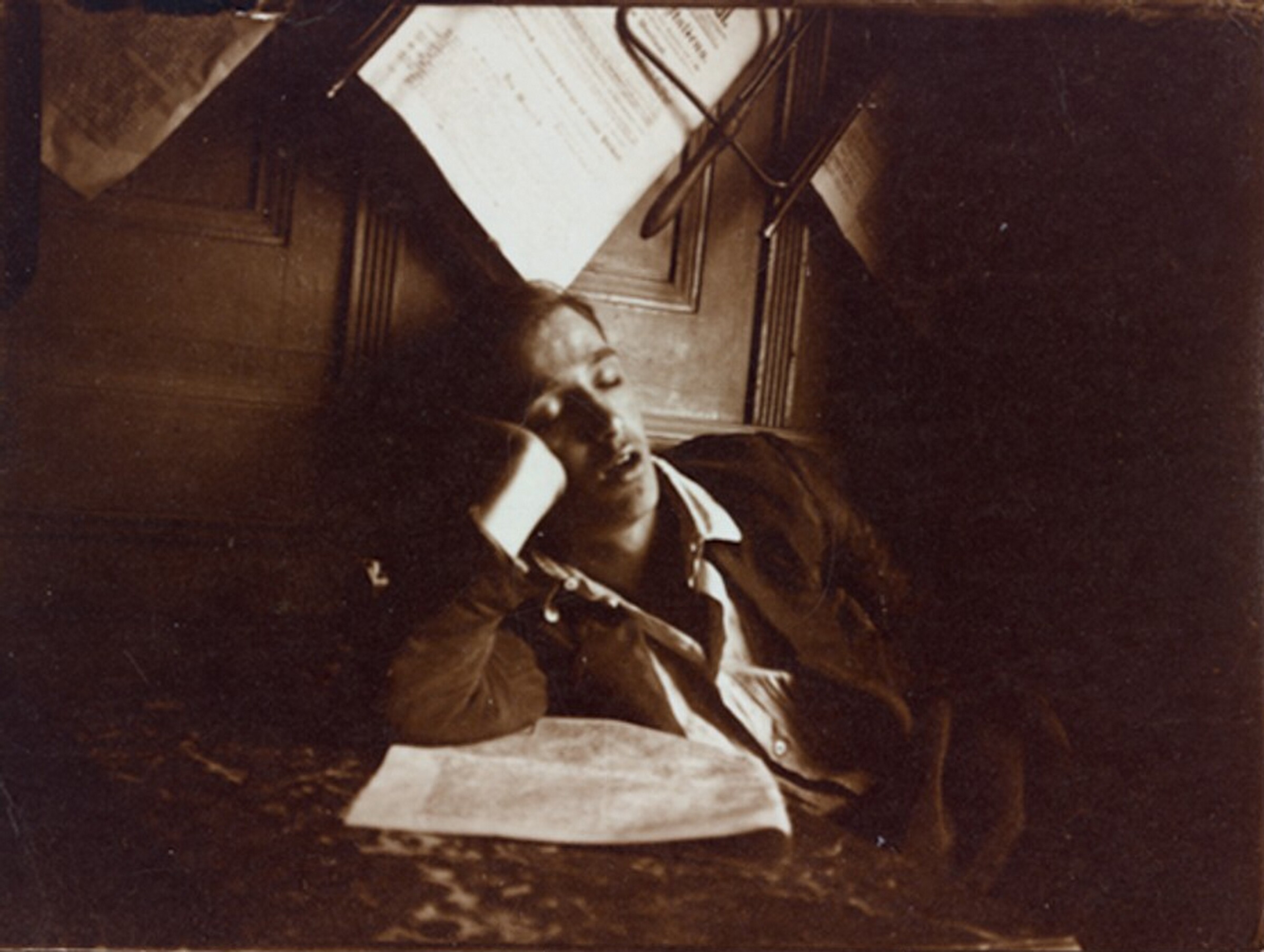
Self-Portrait, Wounded, with Officer
お目にかかれますか?
ただいまはお迎えしていません

ワシントンD.C., アメリカ合衆国
コレクションに属していますが、現在は展示されていません。
- 確認
- この状態になった日
- 出典
- 美術館
作品データ
- 収蔵番号
- 2000.170.4
描かれているもの
カタログ収録
出典
- ナショナル・ギャラリー
- 画像: ナショナル・ギャラリー — © the artist or rights holder
その頃、André Kertészの人生では
生涯をすべて見る1914
At the front: trench life on a Goerz Tenax
At the age of 20 he is sent to the frontline of the First World War, where he photographs life in the trenches with a lightweight Goerz Tenax camera; most of these photographs are destroyed during the violence of the Hungarian Revolution of 1919. His distinctive, mature style is already evident in work of 1914 such as Eugene.
1915
Wounded, then convalescing in Esztergom
He is wounded by a bullet and suffers temporary paralysis of his left arm; sent to convalesce in a military hospital in Budapest, he is later transferred to Esztergom, where he continues to take photographs, including a self-portrait for a competition in the magazine Borsszem Jankó. He does not heal soon enough to return to combat.
1917
First publication in Érdekes Újság
While he is serving in the Austro-Hungarian army, his photographs are first published, in the magazine Érdekes Újság.
1918
Meets Erzsebet Salomon
With peace in 1918 he returns to the stock exchange, where he meets his future wife Erzsebet Salomon (later Elizabeth Saly), who also works there, and begins to pursue her romantically; throughout his whole career he uses Elizabeth as a model for his photographs.


![Ginevra de' Benci [obverse], Leonardo da Vinci, c. 1474/1478](https://api.nga.gov/iiif/8f29e3c9-a289-4d53-abf0-31a66e9e98fa/full/!2400,2400/0/default.jpg)
![Wreath of Laurel, Palm, and Juniper with a Scroll inscribed Virtutem Forma Decorat [reverse], Leonardo da Vinci, c. 1474/1478](https://api.nga.gov/iiif/ff62e8d0-45c4-498f-ad36-6358de827e04/full/!2400,2400/0/default.jpg)


