 John Constableイギリス, 1776–1837
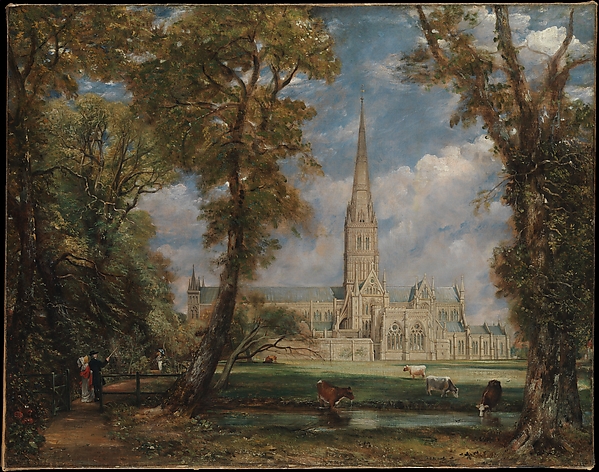
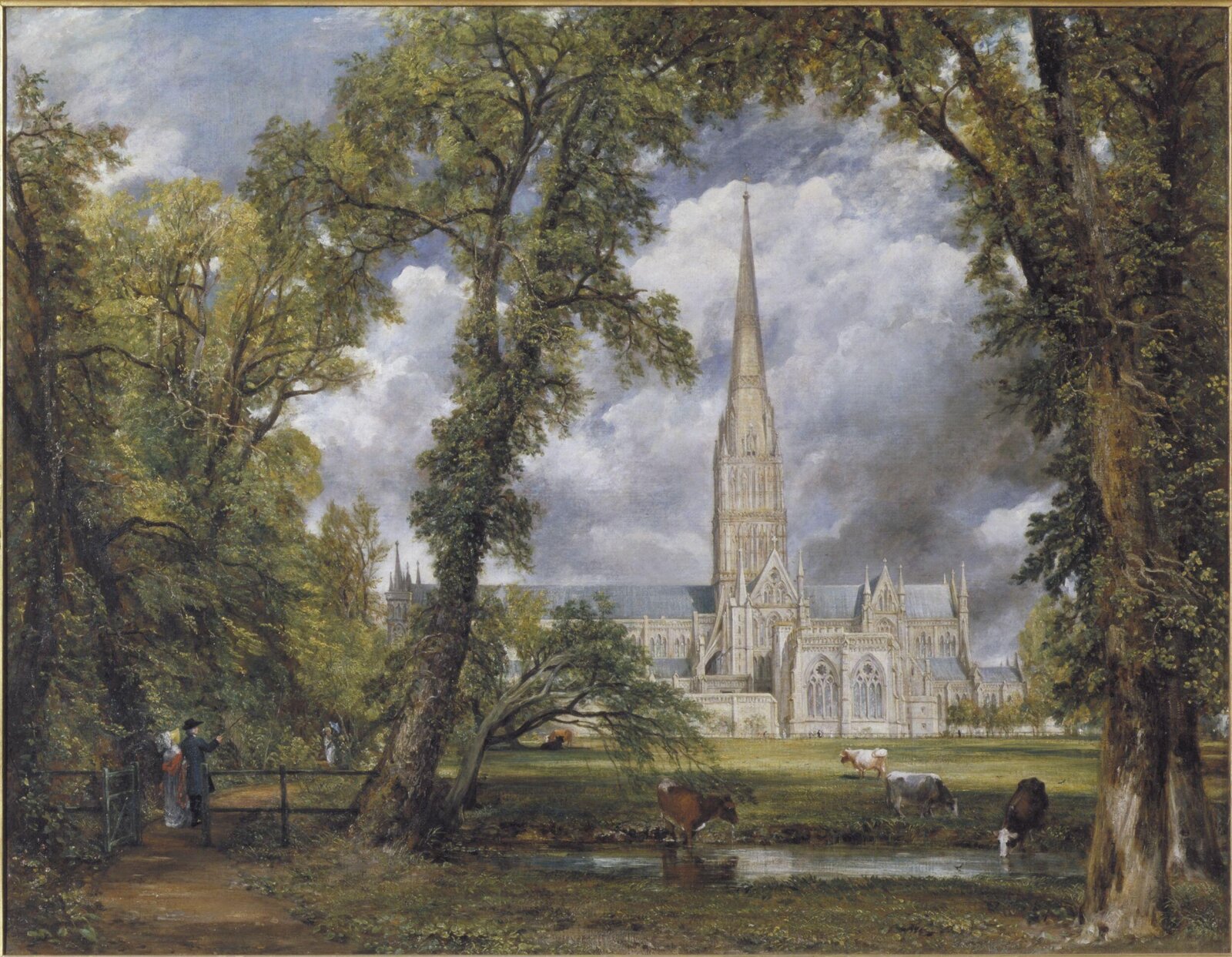
主教の庭から見たソールズベリー大聖堂
Salisbury Cathedral from the Bishop's Ground
お目にかかれますか?
ただいまはお迎えしていません

ヴィクトリア&アルバート博物館
ロンドン, イギリス
コレクションに属していますが、現在は展示されていません。
- 確認
- この状態になった日
- 出典
- 美術館
この絵画について
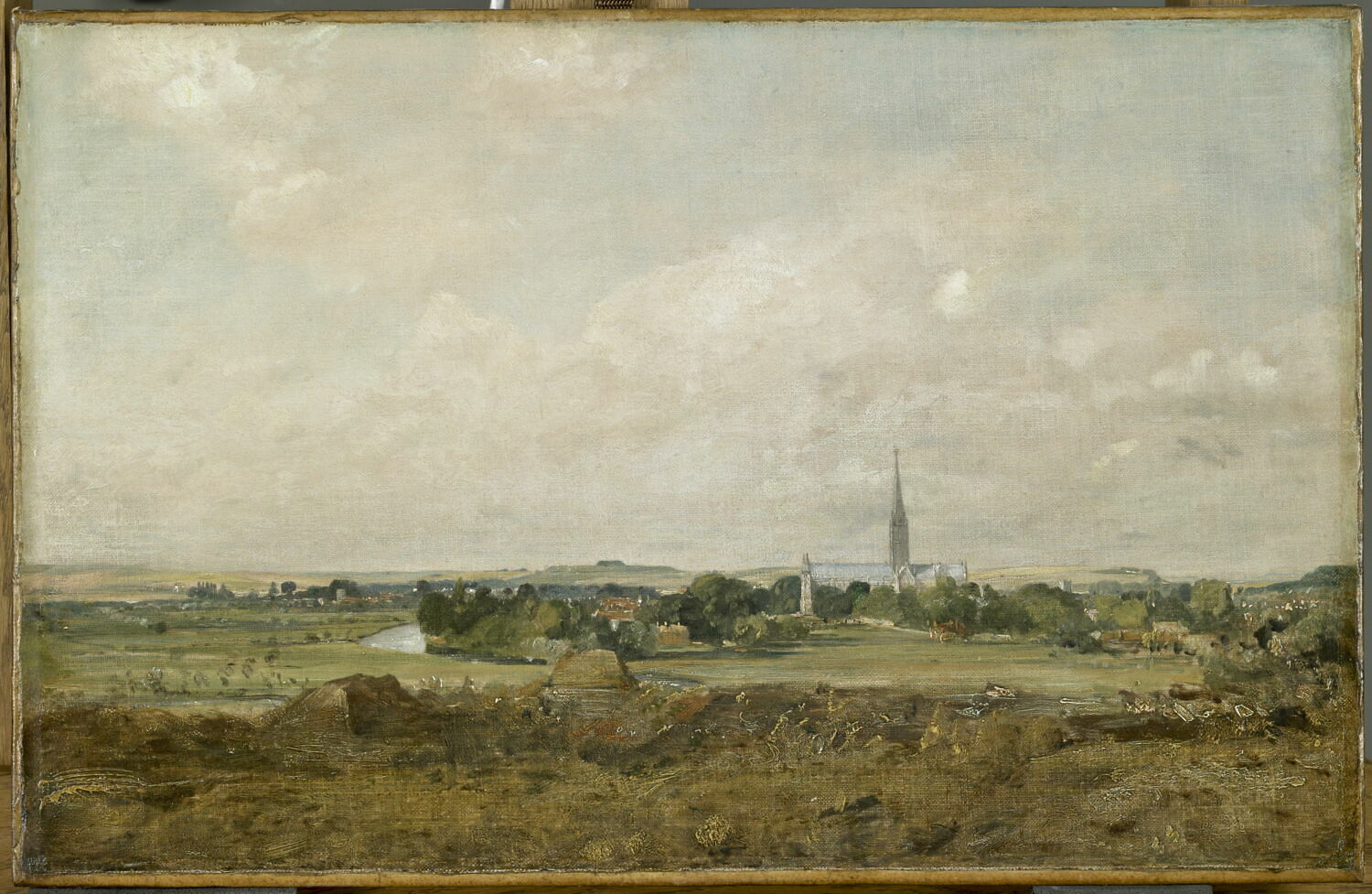
『主教の庭から見たソールズベリー大聖堂』(しゅきょうのにわからみたソールズベリーだいせいどう、Salisbury Cathedral from the Bishop's Grounds)は、19世紀のイギリスの風景画家ジョン・コンスタブルが1823年に描いた風景画である。中世イングランドを代表する教会であるソールズベリー大聖堂を描いたもので、コンスタブルの最も有名な作品の一つである。コンスタブルの親友であるソールズベリー主教ジョン・フィッシャーの依頼で制作された。1857年に遺贈されて以来、ロンドンのヴィクトリア&アルバート博物館に所蔵されている。
美術館の言葉で
Object Type
Landscape painting in oils steadily became more popular during the 19th century. John Constable and his contemporary J.M.W. Turner take credit for establishing landscape as a significant subject. Until then, history paintings had been considered more important, but increasingly naturalistic paintings of picturesque views of the British landscape appealed to a wider section of the art-buying public.
People
続きを読む
Dr John Fisher, Bishop of Salisbury, commissioned this painting in 1820. He and his family were some of Constable's closest friends and the artist taught one of his daughters. There has been some confusion over the identities of the figures in the painting but they are now thought to be the Bishop and his wife at the gate, and the figure a little further down the path, one of their daughters, probably Dolly. Constable had made a series of sketches before starting work on the canvas, and after it had been exhibited at the Royal Academy in 1823, he was asked to make a smaller version and a full-scale replica.
Subjects Depicted
The painting embodies the full range of qualities of a quintessentially British landscape painting - the clouds, trees, a water meadow, cattle drinking at the edge of the pasture and the glorious architecture of a medieval cathedral - but all on a human scale. Paintings like this one have so conditioned our view of rural Britain that it is now difficult to imagine a time when the countryside and country life were not held in such high regard.
ヴィクトリア&アルバート博物館
作品データ
- 収蔵番号
- FA.33[O]
描かれているもの
カタログ収録
出典
- ヴィクトリア&アルバート博物館
- 画像: ヴィクトリア&アルバート博物館 — © Victoria and Albert Museum, London
その頃、John Constableの人生では
生涯をすべて見る1821
“The Hay Wain” at the Royal Academy
The picture, shown as “Landscape: Noon”, found no buyer, but it was seen by the painter Théodore Géricault and the writer Charles Nodier. According to Delacroix, Géricault went back to France quite stunned and invited Constable to Paris, while Nodier urged French artists to look to nature rather than to trips to Rome.
1821
“I should paint my own places best”
In a letter to his friend John Fisher in 1821 Constable wrote that he should paint his own places best, and that painting is but another word for feeling. The Dedham Vale around his home came to be known as “Constable Country”.
1824
The Paris Salon: a gold medal
The Anglo-French dealer John Arrowsmith bought The Hay Wain and other works, and in 1824 they were shown at the Paris Salon, where they caused a sensation. The Hay Wain was awarded a gold medal by Charles X.
1824
Delacroix repaints the background of “The Massacre at Chios”
After seeing Constable’s pictures at Arrowsmith’s gallery, Delacroix repainted the background of his Massacre at Chios, saying the paintings had done him a great deal of good. In his journal he noted that Constable’s meadow greens are a combination of many different shades.
1824–1828
The family in Brighton for Maria’s health
When Maria began to show symptoms of tuberculosis, Constable took lodgings for the family in Brighton in the hope that sea air would restore her health, dividing his time between Brighton and Charlotte Street in London. He was unsure at first that Brighton suited painting, and complained to Fisher that the beach was only Piccadilly by the sea.
1825
A quarrel with Arrowsmith: the French market is lost
In 1825 Constable quarrelled with Arrowsmith and lost his French outlet, perhaps partly from worry over his wife’s health, the uncongenial life at Brighton and the pressure of outstanding commissions. In a few years he had sold more than twenty pictures in France, more than he sold at home.



![Vallon à Helmingham [Helmingham Dell], Constable, John, 1e quart du XIXe siècle (peint à l'été 1823 (selon Beckett)) (1823)](https://collections.louvre.fr/media/cache/large/0000000021/0000065616/0000312650_OG.JPG)