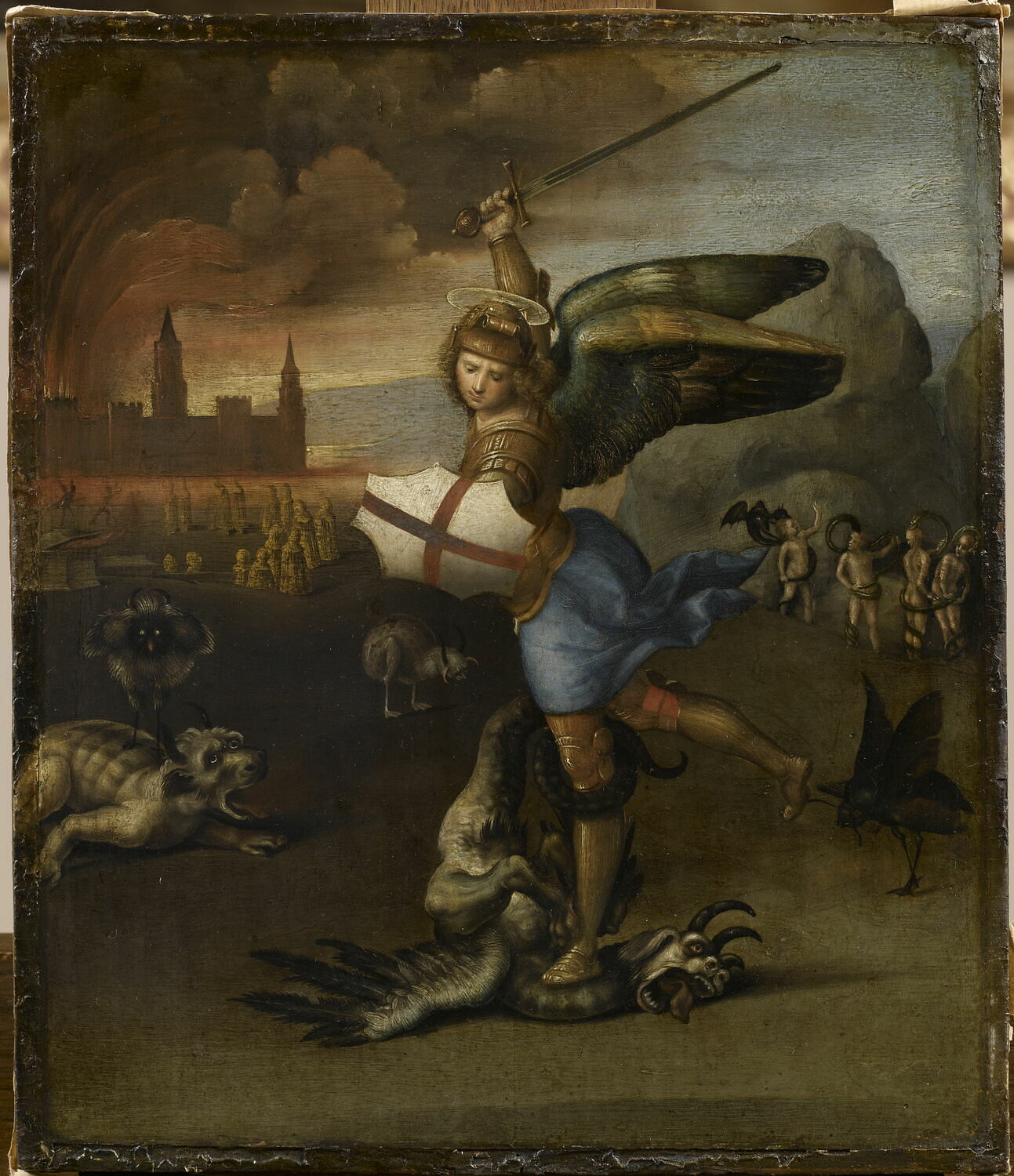
 Raphaelイタリア, 1483–1520
聖ミカエルと竜
Saint Michel
お目にかかれますか?
はい、お客様をお迎えしています

一般公開されています。裏付けとなる出典は下に記しています。
- 確認
- この状態になった日
- 出典
- 美術館
この絵画について
『聖ミカエルと竜』(せいミカエルとりゅう、伊: San Michele e il drago, 仏: Saint Michel et le Dragon, 英: St. Michael and the Dragon)は、盛期ルネサンスのイタリアの巨匠ラファエロ・サンツィオが1503年から1505年ごろに制作した絵画である。油彩。『悪魔を打ちのめす聖ミカエル』や『聖ミカエル』などの名前でも呼ばれる。主題は『新約聖書』の「ヨハネの黙示録」12章で語られている大天使ミカエルとサタンの闘争から取られている。
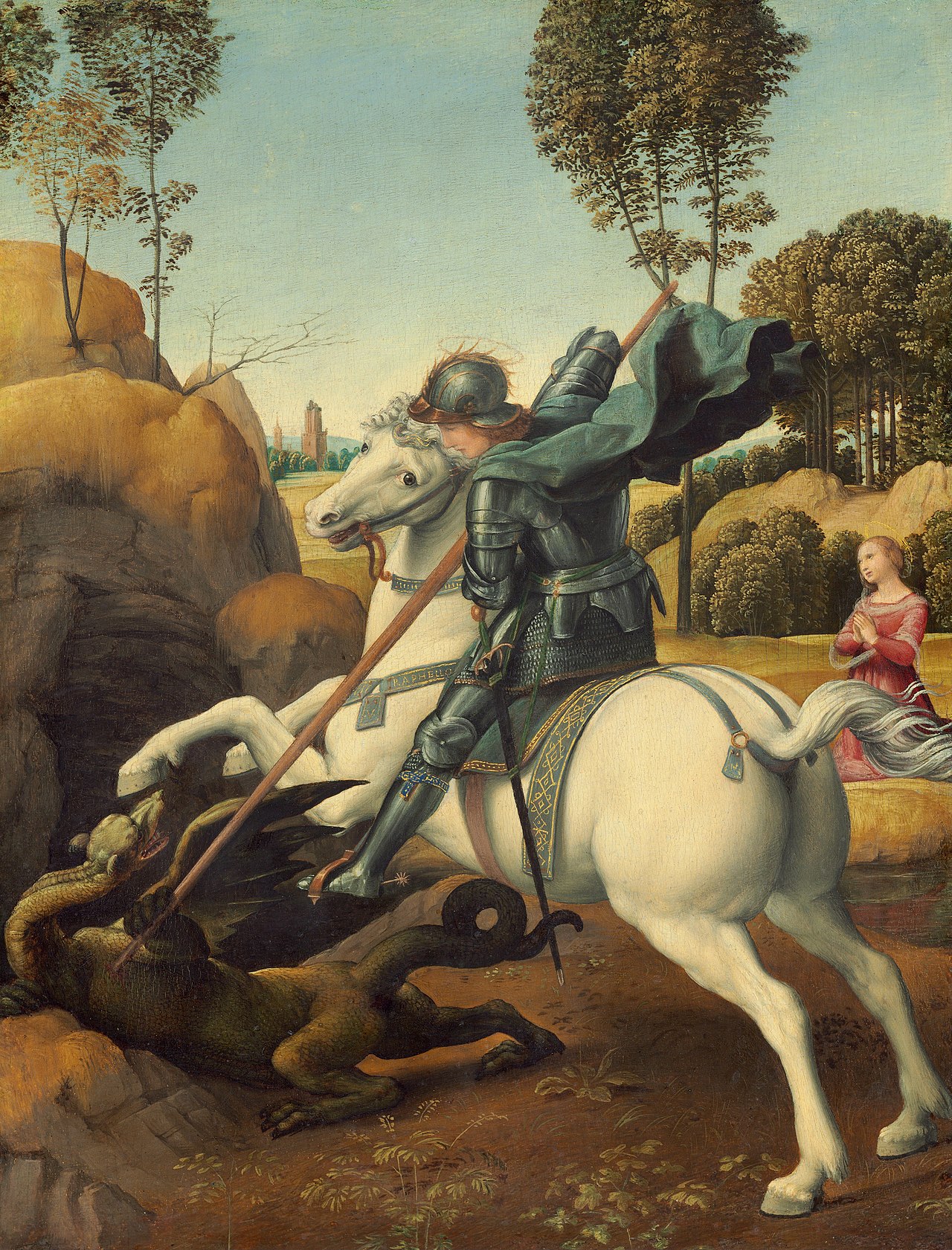
ウルビーノ時代の様式と北方ルネサンスの強い影響が見られる初期のラファエロを代表する作品である。制作経緯や注文主については不明だが、ウルビーノの宮廷と関係が深い作品と考えられている。また同時期に制作された『聖ゲオルギウスと竜』(San Giorgio e il drago)の対作品とされている。17世紀にジュール・マザラン枢機卿のコレクションを経てフランス王室コレクションに入り、現在は両作品ともにパリのルーヴル美術館に所蔵されている。ルーヴル美術館に所蔵されているもう1点のラファエロの同じ主題の作品と比べてサイズが小さいために『小さな聖ミカエル』(Le Petit saint Michel)とも呼ばれている。
作品データ
- 収蔵番号
- INV 608
カタログ収録
出典
- ルーヴル美術館
- 画像: ルーヴル美術館 — © 2011 GrandPalaisRmn (musée du Louvre) / Tony Querrec
その頃、Raphaelの人生では
生涯をすべて見る1501
In Perugino's workshop
From 1501 Raphael studied and worked in Pietro Perugino's workshop in Perugia; according to Vasari, his early works cannot be told apart from his master's. He often travelled home to Urbino, to Città di Castello and, with Pinturicchio, to Siena.
c. 1501 – c. 1502 · 活動地
Perugia
late 1504
Meets Leonardo and Michelangelo
Having moved to Florence, Raphael met Leonardo da Vinci, Michelangelo and Bartolomeo della Porta and closely studied Leonardo's sfumato. His first Florentine commission, portraits of Agnolo Doni and his wife, was painted under the clear impression of the “Mona Lisa”.
1504
Friendship with Baldassare Castiglione
In Urbino Raphael met the philosopher, writer and patron Count Baldassare Castiglione; they formed a firm friendship and correspondence, including the famous letters about the fresco “The Triumph of Galatea”.
October 1504
To Florence, to study
The mother of the next Duke of Urbino gave Raphael a letter of recommendation to the Gonfaloniere of Florence: “The bearer of this will be found to be Raphael, painter of Urbino, who, being greatly gifted in his profession has determined to spend some time in Florence to study.” She called him “a sensible and well-mannered young man”.
1507
Meets Donato Bramante
Raphael met the architect Donato Bramante, by an unproven account his relative. Bramante became his adviser and patron and later recommended him to Pope Julius II as the best candidate for work in the Vatican.