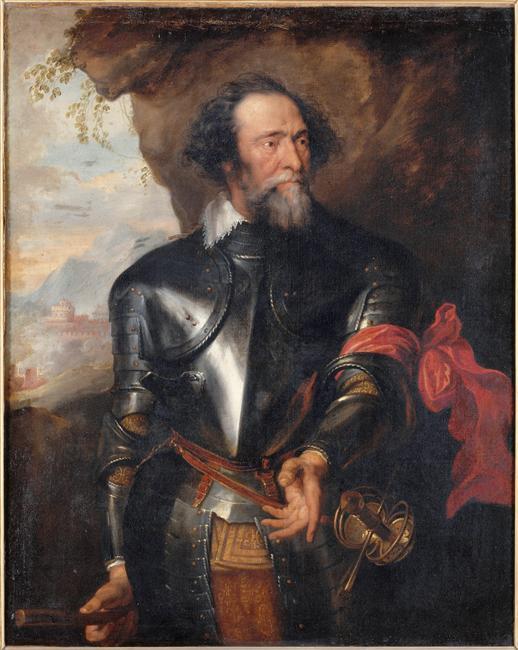
 Anthony van Dyckフランドル, 1599–1641
PORTRAIT DU COMTE HENRI DE BERGHE
見られますか?
不明
『PORTRAIT DU COMTE HENRI DE BERGHE』は今どこに? 所蔵: コンデ美術館, シャンティイ. 不明.
シャンティイ, フランス
所蔵者は判明していますが、現在展示中かどうかは不明です。
- この状態になった日
- 出典
- 美術館
作品データ
- 収蔵番号
- PE 126
描かれているもの
カタログ収録
出典
- コンデ美術館
- 画像: コンデ美術館 — © R.G. Ojeda ; Harry Bréjat ; Réunion des musées nationaux - utilisation soumise à autorisation; Ministère de la Culture (France), base Joconde
その頃、Anthony van Dyckの人生では
生涯をすべて見る1624
Quarantine During the Plague in Palermo
In Palermo Van Dyck found himself in quarantine during the plague of 1624, one of the most severe in Sicily's history; there he created an important series of paintings of Saint Rosalia, the city's patroness, establishing her iconography for the Italian Baroque.
1624
Invitation to Palermo
In April 1624 Emmanuel Philibert of Savoy, Viceroy of Sicily, invited Van Dyck to Palermo to paint his portrait.
1626–1632
The Iconography Print Series
After returning to Antwerp, Van Dyck conceived a large series of engraved portraits of his contemporaries, the Iconography; he etched eighteen plates himself, executing the preparatory drawings mainly between 1626 and 1633. The first edition (80 plates) appeared in Antwerp in 1632.
1627
Return to Antwerp
In 1627 Van Dyck returned from Italy to Antwerp, where he remained for five years, creating portraits of the Flemish nobility and large altarpieces, and beginning to work in printmaking.
1629
Beginning of His Relationship with Charles I
Van Dyck's relationship with Charles I began in 1629: through the intermediary Sir Endymion Porter, the king acquired his painting Rinaldo and Armida.
by 1630
Court Painter to Archduchess Isabella
From 1630 Van Dyck was court painter to Archduchess Isabella Clara Eugenia of Habsburg, regent of the Spanish Netherlands; for her portrait he received a gold chain.