Jean-Auguste-Dominique Ingresフランス, 1780–1867
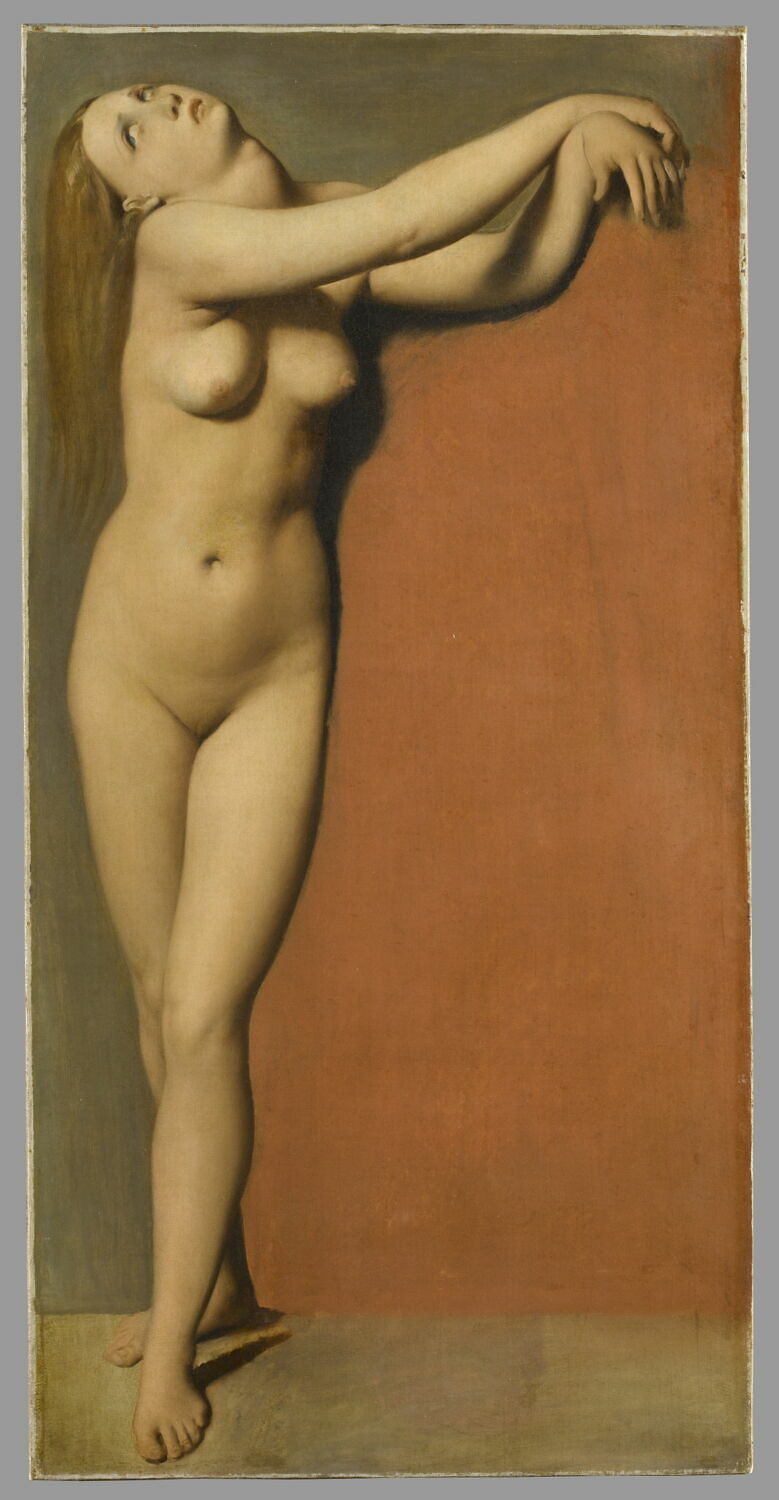
Odalisque
見られますか?
現在は展示されていません
『Odalisque』は今どこに? 所蔵: ナショナル・ギャラリー, ワシントンD.C. 現在は展示されていません. 確認 2026年9月29日.

ワシントンD.C., アメリカ合衆国
コレクションに属していますが、現在は展示されていません。
- 確認
- この状態になった日
- 出典
- 美術館
作品データ
- 収蔵番号
- 1946.21.117
描かれているもの
カタログ収録
出典
- ナショナル・ギャラリー
- 画像: ナショナル・ギャラリー — Museum open access
その頃、Jean-Auguste-Dominique Ingresの人生では
生涯をすべて見る1824
The start of the feud with Delacroix
The confrontation at the Salon of 1824 began Ingres's feud with Delacroix, who embodied the opposite aesthetic. Ingres called Delacroix his “anti-self” and used the administrative resources at his disposal to keep him out of the Institut de France.
12 November 1824
“The Vow of Louis XIII” at the Salon of 1824
Ingres showed the picture to which he had given four years at the Salon on 12 November 1824, alongside Delacroix's Massacre at Chios, and it was dubbed the “Salon of the Romantic battle”. Admirers and critics alike said the same of him: “the Raphael of our day” and “the best antidote to the Romantic threat”.
c. 1824 – 1825
His own drawing school in Paris
Soon after the Salon closed Ingres rented a studio on the rue des Marais-Saint-Germain and opened a school for young artists there; the first pupil was Amaury-Duval, and within a year as many as a hundred could attend. He called it the “School of Drawing”.
1827
The Salon of 1827: the “Apotheosis” against “Sardanapalus”
Unable to finish the Apotheosis of Homer, Ingres showed it in grisaille at the Salon of 1827, which became a confrontation between his Neoclassicism and a new manifesto of Romanticism, Delacroix's Death of Sardanapalus. Ingres joined the battle with enthusiasm, calling Delacroix “the apostle of ugliness”.


![Ginevra de' Benci [obverse], Leonardo da Vinci, c. 1474/1478](https://api.nga.gov/iiif/8f29e3c9-a289-4d53-abf0-31a66e9e98fa/full/!2400,2400/0/default.jpg)
![Wreath of Laurel, Palm, and Juniper with a Scroll inscribed Virtutem Forma Decorat [reverse], Leonardo da Vinci, c. 1474/1478](https://api.nga.gov/iiif/ff62e8d0-45c4-498f-ad36-6358de827e04/full/!2400,2400/0/default.jpg)