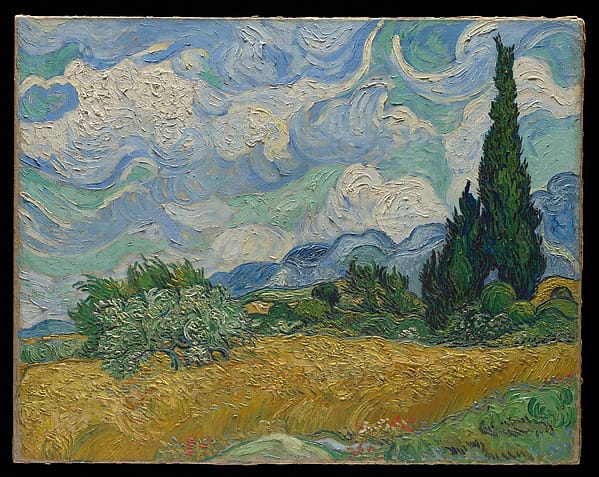
Caspar David Friedrichドイツ, 1774–1840
Northern Landscape, Spring
お目にかかれますか?
ただいまはお迎えしていません

ワシントンD.C., アメリカ合衆国
コレクションに属していますが、現在は展示されていません。
- 確認
- この状態になった日
- 出典
- 美術館
作品データ
- 収蔵番号
- 2004.113.1
描かれているもの
カタログ収録
出典
- ナショナル・ギャラリー
- 画像: ナショナル・ギャラリー — Museum open access
その頃、Caspar David Friedrichの人生では
生涯をすべて見る1824年12月23日
Son born: Adolf Friedrich
1824–1826
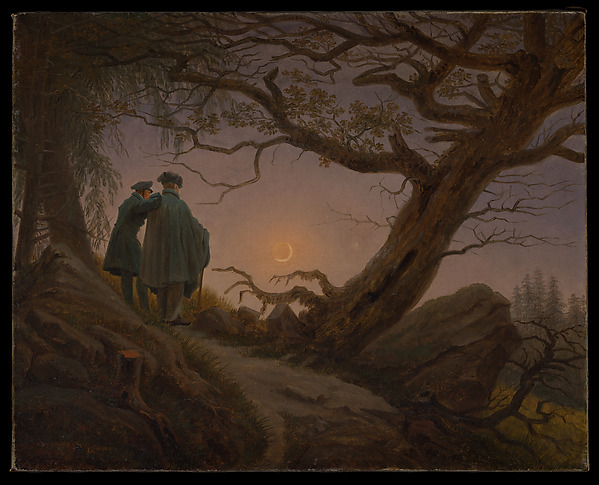
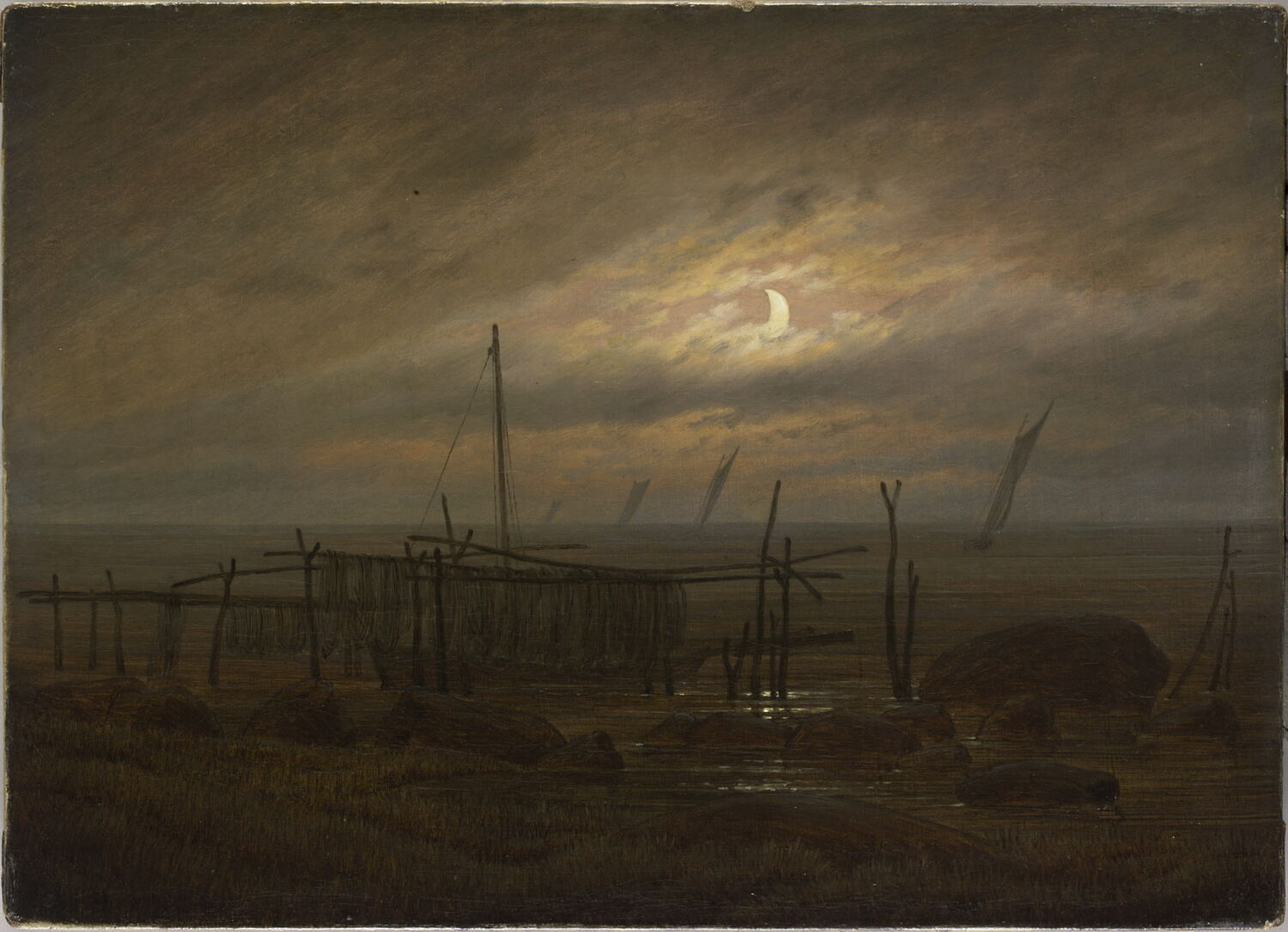
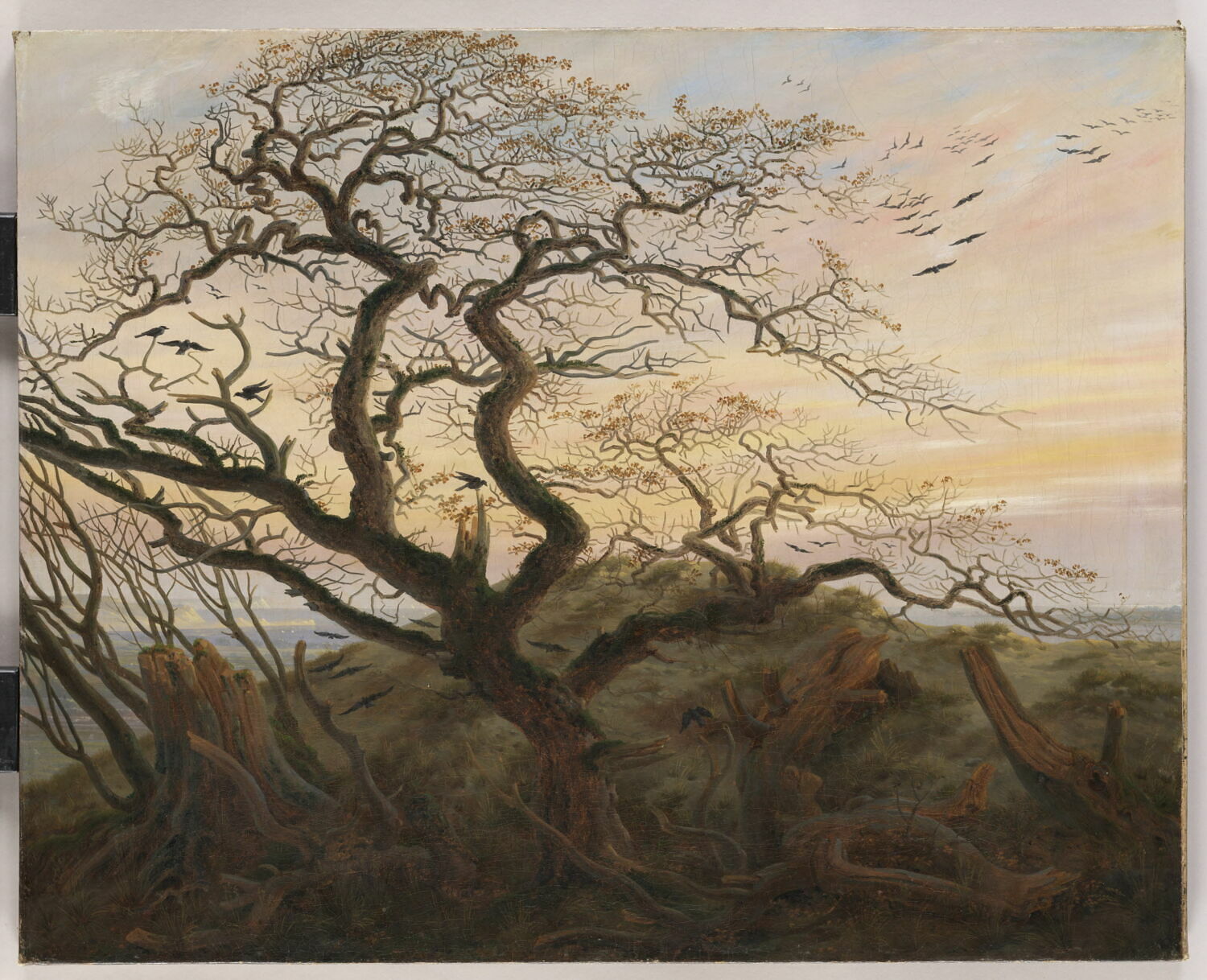
Depression and darker motifs
A new bout of depression — earlier ones came in 1799, 1803–1805, around 1813 and in 1816 — brings vultures, owls, graveyards and ruins into his work. From 1826 these motifs become a permanent feature of his output, and his colours grow darker and more muted.
1825–1840
The fading of his fame
Over the last fifteen years of his life Friedrich’s reputation steadily declines: as the ideals of early Romanticism go out of fashion he comes to be seen as an eccentric and melancholy figure out of touch with the times, and his patrons gradually fall away. Towards the end he lives in relative poverty and spends long periods, often beginning before sunrise, walking alone through woods and fields.





![Ginevra de' Benci [obverse], Leonardo da Vinci, c. 1474/1478](https://api.nga.gov/iiif/8f29e3c9-a289-4d53-abf0-31a66e9e98fa/full/!2400,2400/0/default.jpg)
![Wreath of Laurel, Palm, and Juniper with a Scroll inscribed Virtutem Forma Decorat [reverse], Leonardo da Vinci, c. 1474/1478](https://api.nga.gov/iiif/ff62e8d0-45c4-498f-ad36-6358de827e04/full/!2400,2400/0/default.jpg)