
 Frederic Edwin Churchアメリカ合衆国, 1826–1900
Niagara
お目にかかれますか?
はい、お客様をお迎えしています

一般公開されています。裏付けとなる出典は下に記しています。
- 確認
- 一昨日
- この状態になった日
- 2026年9月29日
- 出典
- 美術館自身の所蔵データ
About the painting
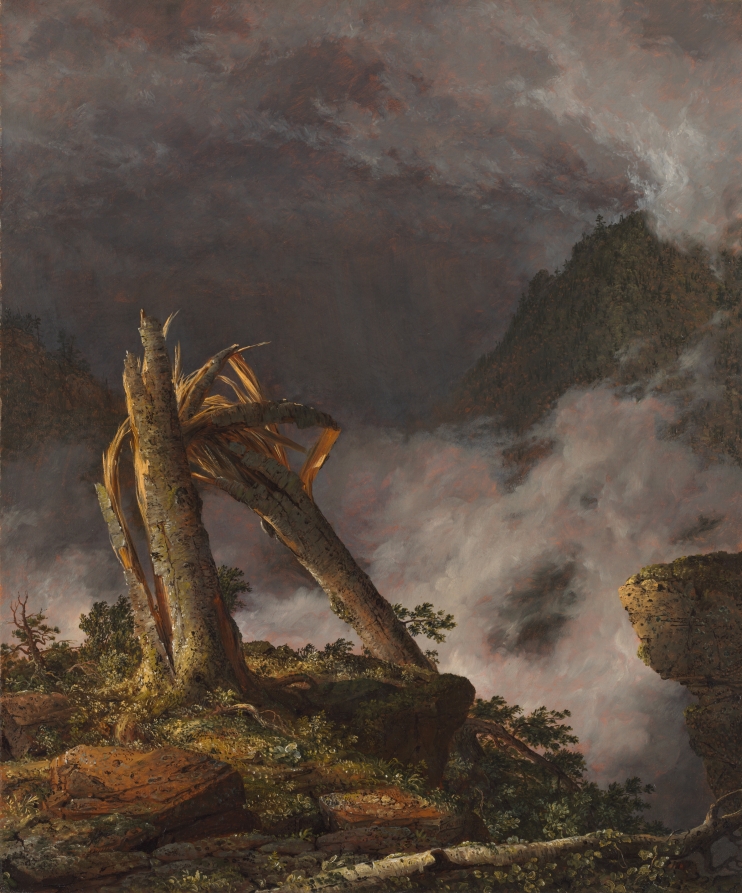
Niagara is an oil painting produced in 1857 by the American artist Frederic Edwin Church. Niagara, which portrays the Horseshoe Falls portion of Niagara Falls, was Church's most important work at the time and confirmed his reputation as the premier American landscape painter of the era. In his history of Niagara Falls, Pierre Berton writes, "Of the hundreds of paintings made of Niagara, before Church and after him, this is by common consent the greatest."
作品データ
- 収蔵番号
- 2014.79.10
What it shows
カタログ収録
出入りの記録
展示中 · 展示室 71 · 西館, メインフロア
ナショナル・ギャラリー · 2026年9月29日 — 現在 · 確認済み
展示中 · 展示室 72 · 西館, メインフロア
ナショナル・ギャラリー · 2026年8月19日 — 2026年9月29日 · 確認済み
出典
- ナショナル・ギャラリー: the museum's own open data · 6 日前に取得
- 画像: ナショナル・ギャラリー — Museum open access
その頃、Frederic Edwin Churchの人生では
生涯をすべて見る1854–1856
Canada, New England and Mount Desert Island
Church travelled in Canada and New England; like Cole, he was among the first city dwellers to summer on Mount Desert Island in Maine, now Acadia National Park.
1857
Second South American journey, with Louis Rémy Mignot
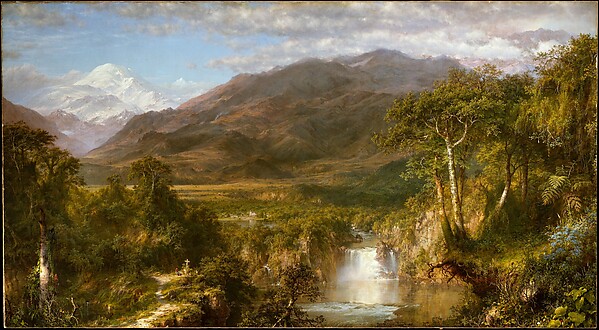
Church returned to South America with the painter Louis Rémy Mignot and added to his sketches; the two journeys produced “The Andes of Ecuador”, “Cayambe”, “The Heart of the Andes” and “Cotopaxi”.
1859
A one-picture show: “The Heart of the Andes” in New York
Thousands paid to see the canvas: its huge floor-standing frame served as a window onto the Andes, visitors sat on benches and studied the details through opera glasses, and Church arranged the room so that light from the skylights fell on the picture. It was an instant success; at this exhibition Church met his future wife, Isabel Carnes.
1859
To the icebergs: Newfoundland and Labrador
His friendship with the Arctic explorer Isaac Israel Hayes stirred Church’s interest in the far north, and with his friend the Rev. Louis Legrand Noble he travelled to Newfoundland and Labrador. Noble chronicled the trip in “After Icebergs with a Painter” (1861), published shortly before “The Icebergs” went on display.



![Ginevra de' Benci [obverse], Leonardo da Vinci, c. 1474/1478](https://api.nga.gov/iiif/8f29e3c9-a289-4d53-abf0-31a66e9e98fa/full/!2400,2400/0/default.jpg)
![Wreath of Laurel, Palm, and Juniper with a Scroll inscribed Virtutem Forma Decorat [reverse], Leonardo da Vinci, c. 1474/1478](https://api.nga.gov/iiif/ff62e8d0-45c4-498f-ad36-6358de827e04/full/!2400,2400/0/default.jpg)


