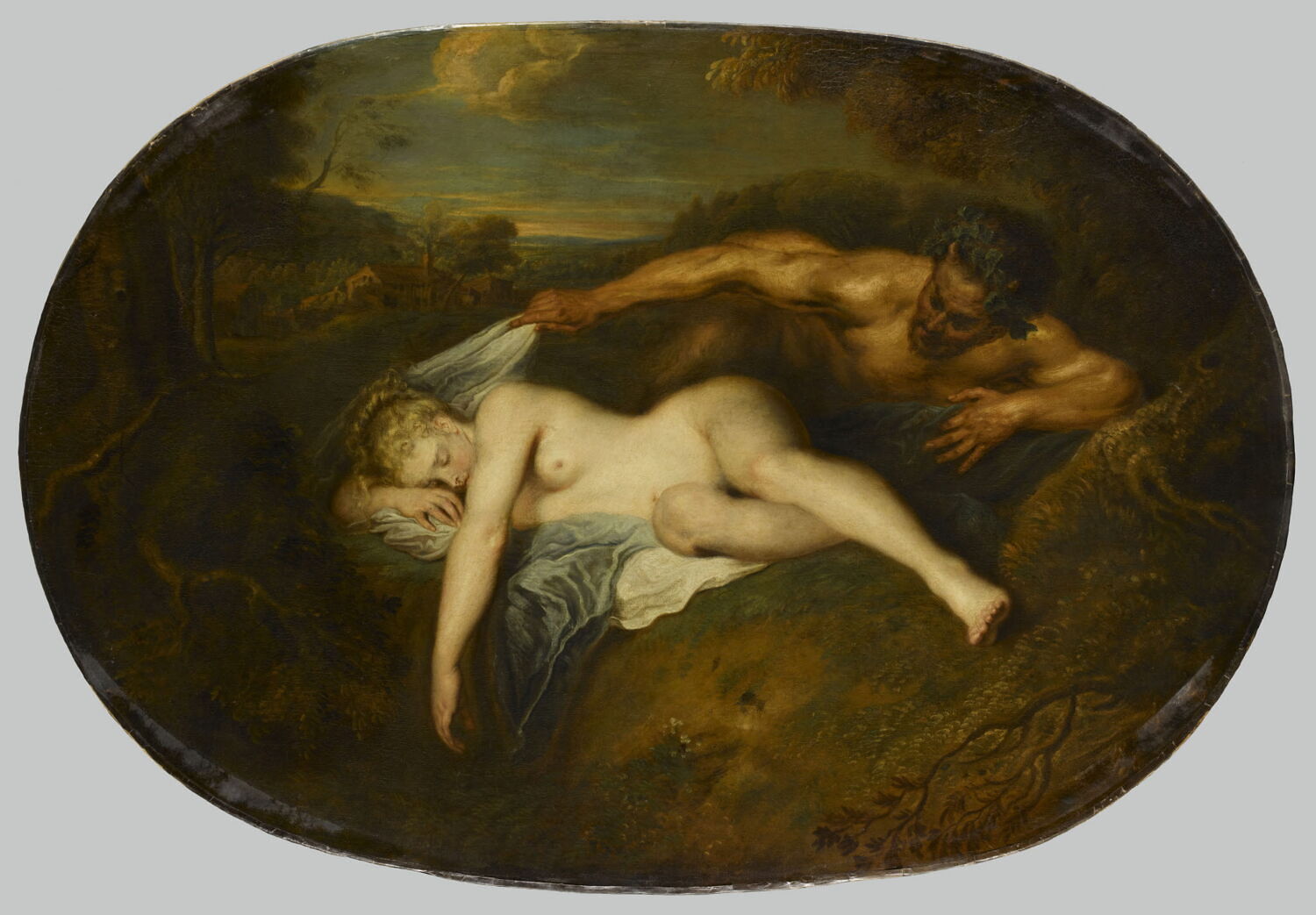
その頃、Jean-Antoine Watteauの人生では
生涯をすべて見る1700–1702
Slips away to Paris on foot, penniless
Against his father's will, Watteau secretly leaves Valenciennes and walks to Paris without a penny. By one account the decision was influenced by the War of the Spanish Succession and by his acquaintance with the decorator Métayer, under whom he first worked for the theatre.
c. 1704
First patrons: the Mariettes
Watteau finds his first patrons in the engravers and collectors Pierre Mariette II and his son Jean, owners of a large firm dealing in prints and paintings. At their house he gets to know Rembrandt's prints, Titian's drawings and Rubens's engravings, and for the first time enters an atmosphere of true professionalism.
c. 1705
With Gillot: theatre and the commedia dell'arte
Through the Mariettes, Watteau becomes a pupil of Claude Gillot, a master of stage sets who also paints small pictures of Italian-comedy scenes. In Gillot's studio he sees theatrical life from the inside and meets a subject that will become one of the foundations of his art.
30 July 1712
Admitted to the Academy as an associate
Watteau seeks admission to the Royal Academy of Painting and Sculpture. According to Gersaint, the academician Charles de La Fosse, having seen his work, urges him to apply and helps to get him accepted among the Academy's associate members.
28 August 1717
Elected to the Academy: a “fête galante”
By 1717 Watteau's “gallant scenes” have had such wide success that an exception is made for his reception piece, “Pilgrimage to Cythera”: in the minutes the words “pilgrimage to Cythera” are struck out and replaced by “fête galante”. Watteau is elected a full member of the Academy; the ceremony is attended by the First Painter to the King, Antoine Coypel, by Claude Gillot and by the Regent, the Duke of Orléans.
1721年7月18日
Died