 Johannes Vermeerオランダ, 1632–1675
天文学者
L'Astronome
見られますか?
はい、現在展示中
『天文学者』は今どこに? ルーヴル美術館, Salle 837, Aile Richelieu, Niveau 2, パリ. はい、現在展示中. 確認 2026年9月26日.

閉館· 9:00に開館
一般公開されています。
- 確認
- この状態になった日
- 出典
- 美術館
この絵画について
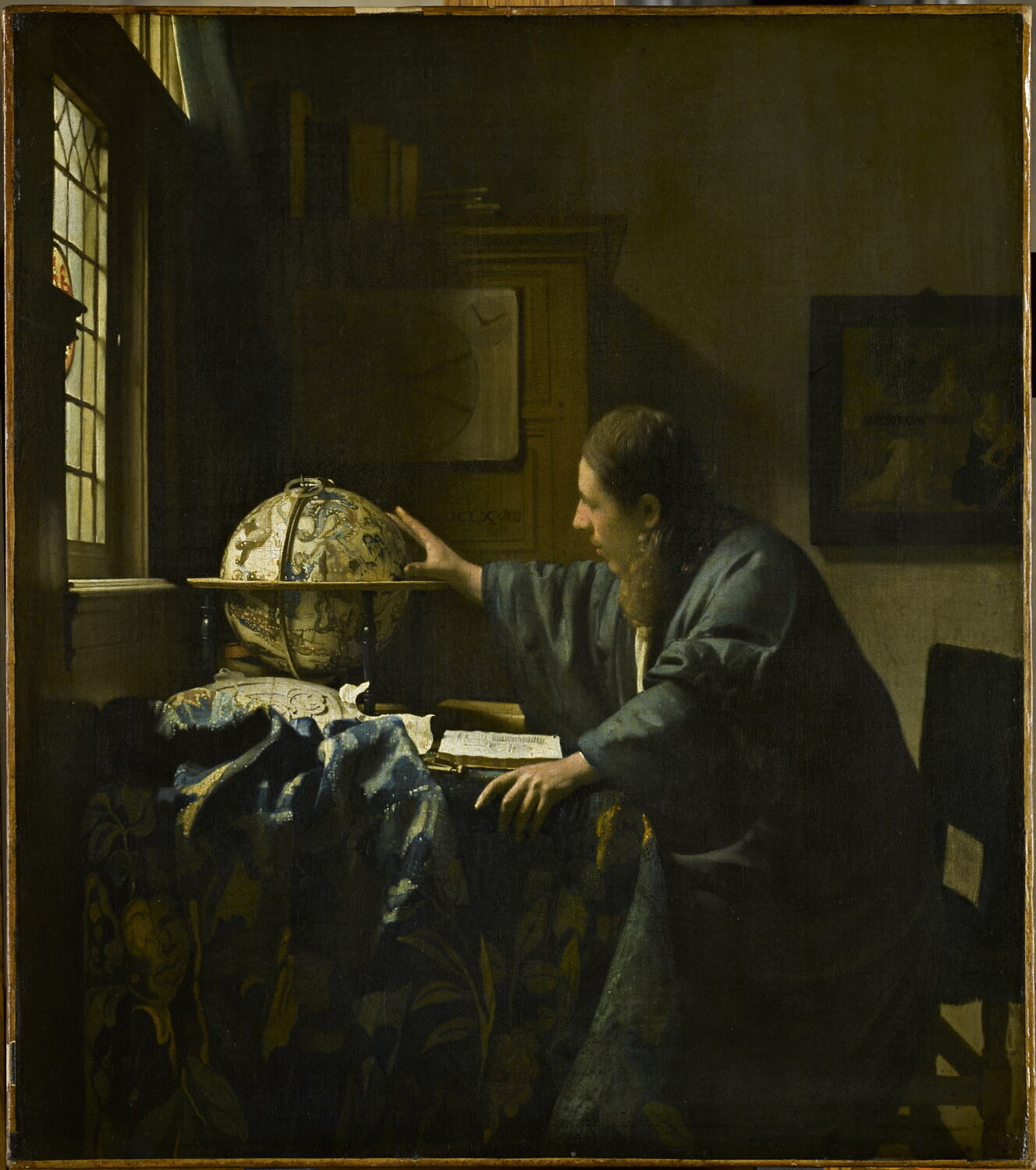
『天文学者』(てんもんがくしゃ、蘭: De astronoom、仏: L'Astronome)は、オランダ黄金時代の画家ヨハネス・フェルメールが1668年ごろに描いた絵画。キャンバスに油彩で描かれた縦51cm、横45cmの作品で、パリのルーヴル美術館が所蔵している 。
学者の肖像は17世紀のオランダ絵画で好まれたモチーフで、フェルメールの絵画にもこの『天文学者』と『地理学者』の、学者の肖像を主題に描いた作品が二点現存している。この二点の作品に描かれている学者は同一人物と考えられており
、モデルとなっているのはフェルメールと同時代のオランダ人哲学者 バールーフ・デ・スピノザ だといわれている。描かれている人物が天文学者であるということが、テーブル上のヨドクス・ホンディウス制作の天球儀と、アドリアーンスゾーン・メチウスの天文測定に関する著書『星の研究と観察 (Institutiones Astronomicae Geographicae)』から分かる。開かれているページは『星の研究と観察』の第三章で、ここには「神からのお導きによって」天文学者は真実を追究するという内容が記されている。背景の壁には「モーセの発見」の絵画がかけられており、「モーセはエジプト人のあらゆる知識を学んだ」ことから、知識と科学の象徴として描かれているとされている。
『天文学者』の来歴は、名前が伝わっていないコレクターがロッテルダムで『天文学者』と『地理学者』を同時に売りに出した、1713年4月27日まで遡ることができる。購入者はヘンドリク・ショールフという名前の人物ではないかといわれ、この人物の遺産売却が行われた1720年3月28日に『天文学者』と『地理学者』が再度売りに出された。このときの売却目録には『天文学者』が「天文学者、デルフトのフェルメール作、一級品 (Een Astrologist: door Vermeer van Delft, extra puyk)」、『地理学者』が「同上、同様 (Een weerga, van ditto, niet minder)」と記載されている。
続きを読む
1881年から1888年の間のいずれかの時期に、パリの画商レオン・ゴシェが、美術品収集家だったロチルド銀行頭取アルフォンス・ド・ロチルド(フランスのロスチャイルド家当主)に『天文学者』を売却し、1905年のアルフォンスの死後に息子のエドゥアールが受け継いだ。1940年にナチス・ドイツ軍がフランスに侵攻し、パリにアルフォンスが所有していたホテルから『天文学者』を押収した。このため『天文学者』の裏面には、ナチスの所有物を意味した小さな鉤十字が、黒いインクで刻印されている。第二次世界大戦終結後に『天文学者』はロートシルト家に返還され、その後1983年に遺産相続税の一部現物税としてフランス政府に納められた
。これ以来『天文学者』はルーヴル美術館に展示されている
。
作品データ
- 収蔵番号
- RF 1983 28
カタログ収録
出典
- ルーヴル美術館
- 画像: ルーヴル美術館 — © 2016 GrandPalaisRmn (musée du Louvre) / Franck Raux
その頃、Johannes Vermeerの人生では
生涯をすべて見る1653–1675 · 活動地
Delft
1653–1675
Patrons: van Ruijven and van Buyten
Pieter van Ruijven and his wife Maria de Knuijt were Vermeer's patrons for the better part of his career: van Ruijven bought much of his output, which kept Vermeer afloat financially but reduced the chances of his fame spreading beyond Delft. The baker Hendrick van Buyten held a couple of his paintings as collateral.
1672
The “Year of Disaster”: war and the collapse of the market
In 1672 the Rampjaar, a severe economic downturn, struck the Dutch Republic after French troops under Louis XIV invaded from the south and troops from Münster and Cologne from the east. Vermeer's sale of a painting that year was his last, and five years passed before circumstances improved.
1672
To The Hague: appraising a collection for the Elector
In 1672 Vermeer, a recognised connoisseur, travelled to The Hague, where together with the painter Jacob Jordaens he appraised Venetian and Roman paintings offered to the Elector of Brandenburg for 30,000 guilders. Before a notary he denied the collection's authenticity and declared it worth no more than a tenth of the asking price.
1675
A sudden death in December 1675
Vermeer's widow wrote to the creditors that during the war he had been forced to sell paintings at a reduced price; falling into despondency, in December 1675 he lost consciousness and died a day and a half later. What exactly happened remains unclear.
1675
Died