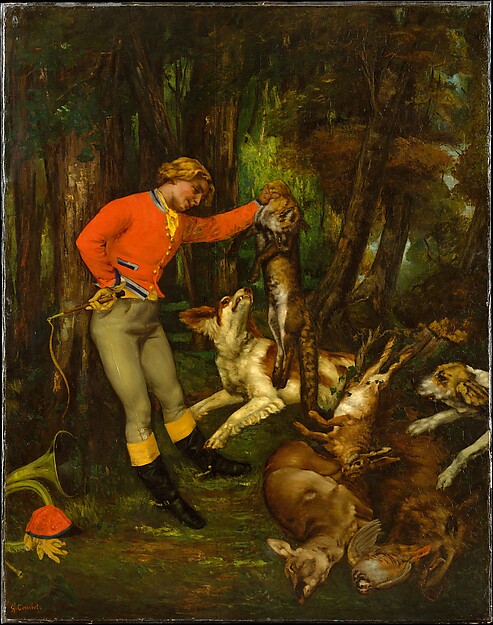
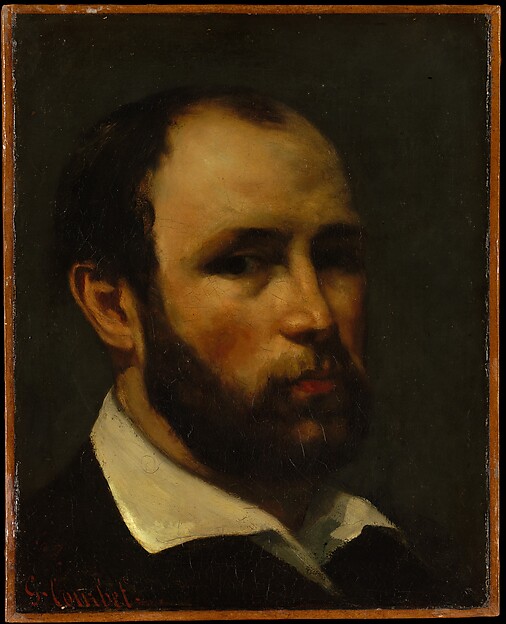
Gustave Courbetフランス, 1819–1877
Landscape
見られますか?
不明
『Landscape』は今どこに? 所蔵: ナショナル・ギャラリー, ロンドン. 不明.

ロンドン, イギリス
所蔵者は判明していますが、現在展示中かどうかは不明です。
- この状態になった日
- 出典
- 美術館
作品データ
- 収蔵番号
- NG4182
カタログ収録
出典
- ウィキデータ
- 画像: ナショナル・ギャラリー — Gustave Courbet · Public domain · Wikimedia Commons
その頃、Gustave Courbetの人生では
生涯をすべて見る1819年6月10日
Born
1839
Goes to Paris, promising his father to study law
In 1839 Courbet left for Paris, promising his father to study law, but instead began working in art studios, above all with Karl Steuben. At the Louvre he got to know the collections, and his early work was strongly influenced by the Little Dutch Masters and the Spanish painters, especially Velázquez.
1855
Stages the “Pavilion of Realism”
Refusing to accept the jury's decision, Courbet asked museums and private owners to lend his paintings, had a separate building erected and showed about forty canvases there, without state permission, under the Second Empire. The public was baffled and laughed at the “crude art”, and the critics mocked him; the paintings were appreciated by Delacroix and Baudelaire.
16 May 1871
The fall of the Vendôme Column
On 16 May 1871, nine days before the fall of the Commune, the column whose removal Courbet had requested back in September 1870 was pulled down in a large ceremony with military bands and photographers and broke into pieces. Some witnesses said Courbet was there, others denied it.
1873
Leaves for Switzerland to escape the debt for the column
In 1873 the newly elected president of the Republic, Patrice de MacMahon, announced plans to rebuild the column at Courbet's expense. Unable to pay, he went into self-imposed exile in Switzerland to avoid bankruptcy and remained there until his death.
1877年12月31日
Died