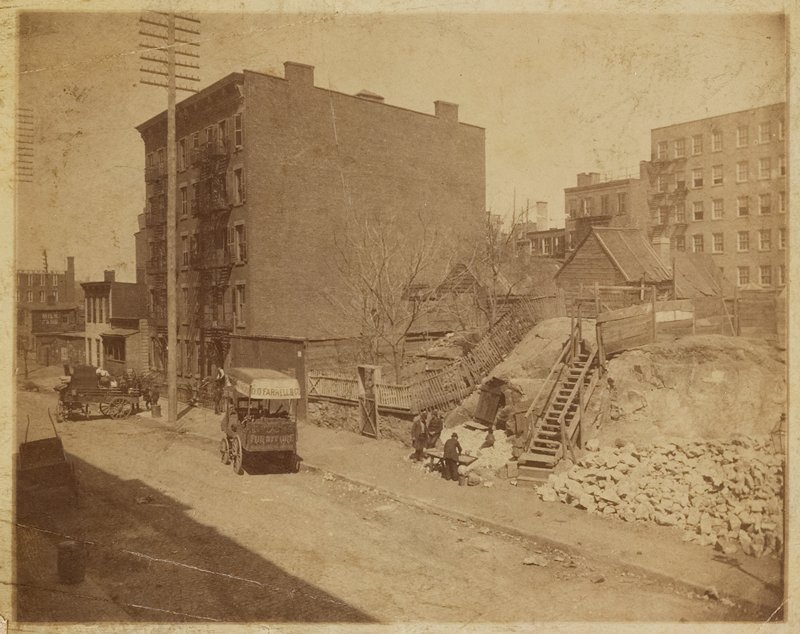
 Jacob August Riisアメリカ合衆国, 1849–1914
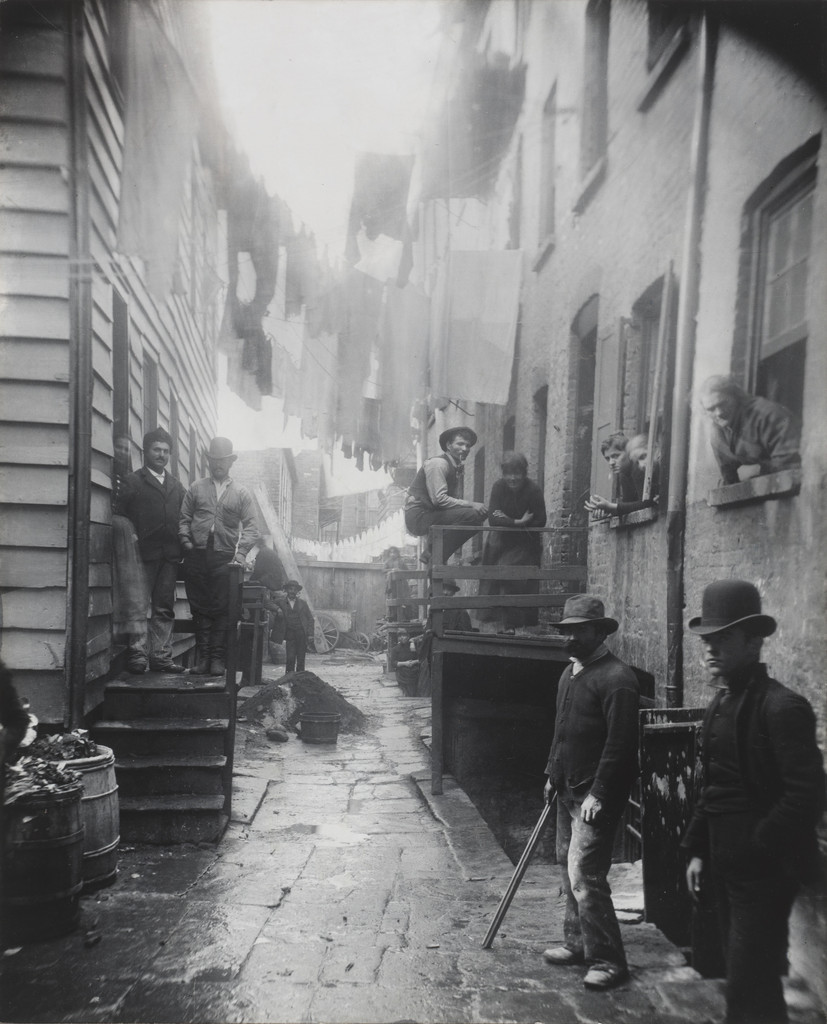
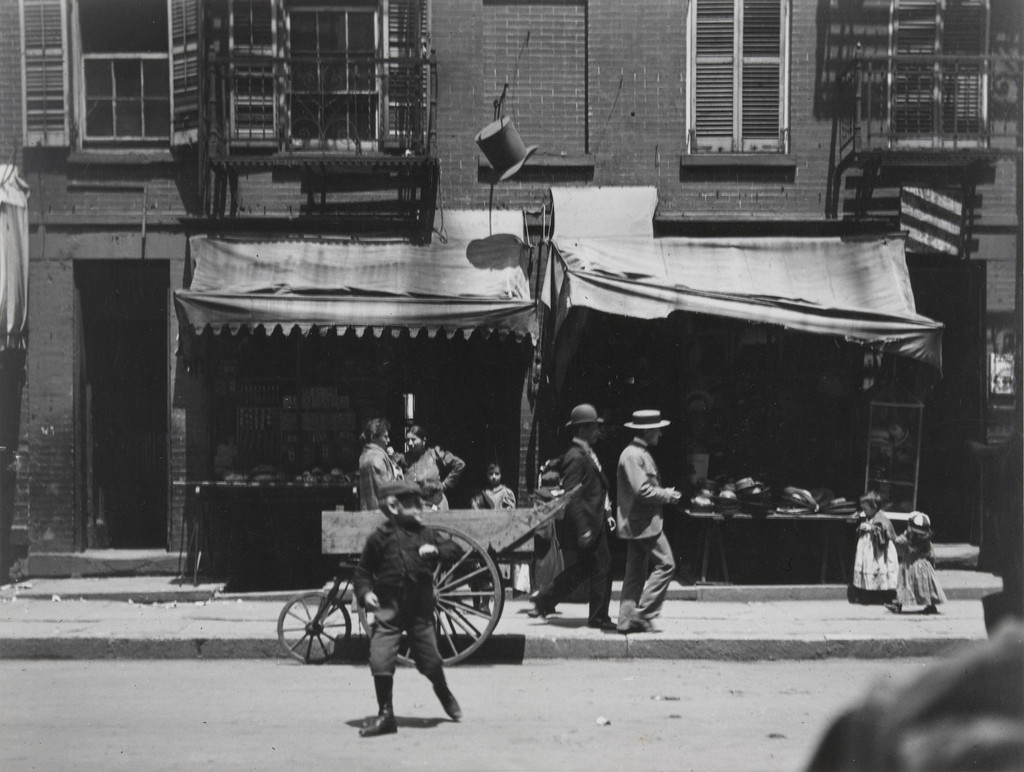
Hell's Kitchen with Sebastopol
お目にかかれますか?
ただいまはお迎えしていません

ミネアポリス美術館
ミネアポリス, アメリカ合衆国
コレクションに属していますが、現在は展示されていません。
- 確認
- この状態になった日
- 出典
- 美術館自身の所蔵データ
作品データ
- 収蔵番号
- 98.262
カタログ収録
出典
- ミネアポリス美術館: the museum's own open data · 7 日前に取得
- 画像: ミネアポリス美術館 — public domain
その頃、Jacob August Riisの人生では
生涯をすべて見る1870–1914 · 活動地
New York City
January 1888
Buys his own camera
The first team soon tires of the late hours, and Riis's assistants prove lazy, one of them dishonest. On Nagle's advice Riis pays $25 for a 4×5 box camera, plate holders, a tripod and developing and printing equipment, and tries them out at the potter's field cemetery on Hart Island: two exposures, badly overexposed but successful.
12 February 1888
First report on his night photographs in the Sun
The Sun publishes Riis's unsigned article on pictures of the city's crime and misery by night and day, illustrated with twelve line drawings after the photographs. It presents the material as the foundation of a lecture, “The Other Half: How It Lives and Dies in New York”, to be given at church and Sunday school exhibitions.
1888–1889
Lantern-slide lectures and new acquaintances
An editor at Harper's New Monthly Magazine says he likes the photographs but not the writing, and Riis decides to speak to the public directly: Adolph Schauffler and Josiah Strong arrange a lecture at the Broadway Tabernacle, and a Health Department clerk, W. L. Craig, becomes his partner. The lantern-slide lectures make little money but bring Riis together with Charles Henry Parkhurst and an editor of Scribner's Magazine, who invites him to submit an illustrated article.
Christmas 1889
The article “How the Other Half Lives” in Scribner's Magazine
An eighteen-page article by Riis, illustrated with line drawings made from his photographs, appears in the Christmas 1889 issue of the magazine. Its publication brings an invitation to expand the material into an entire book.
1890
The book “How the Other Half Lives” is published
He writes “How the Other Half Lives: Studies Among the Tenements of New York” at night, reporting for the New York Sun by day and lecturing in the evenings. It reuses the line drawings from the magazine article and adds seventeen halftone reproductions of photographs — the first extensive use of halftones in a book; it sells well, though some reviewers fault the author for oversimplifying and exaggerating (other accounts give 1891 as the year of publication).