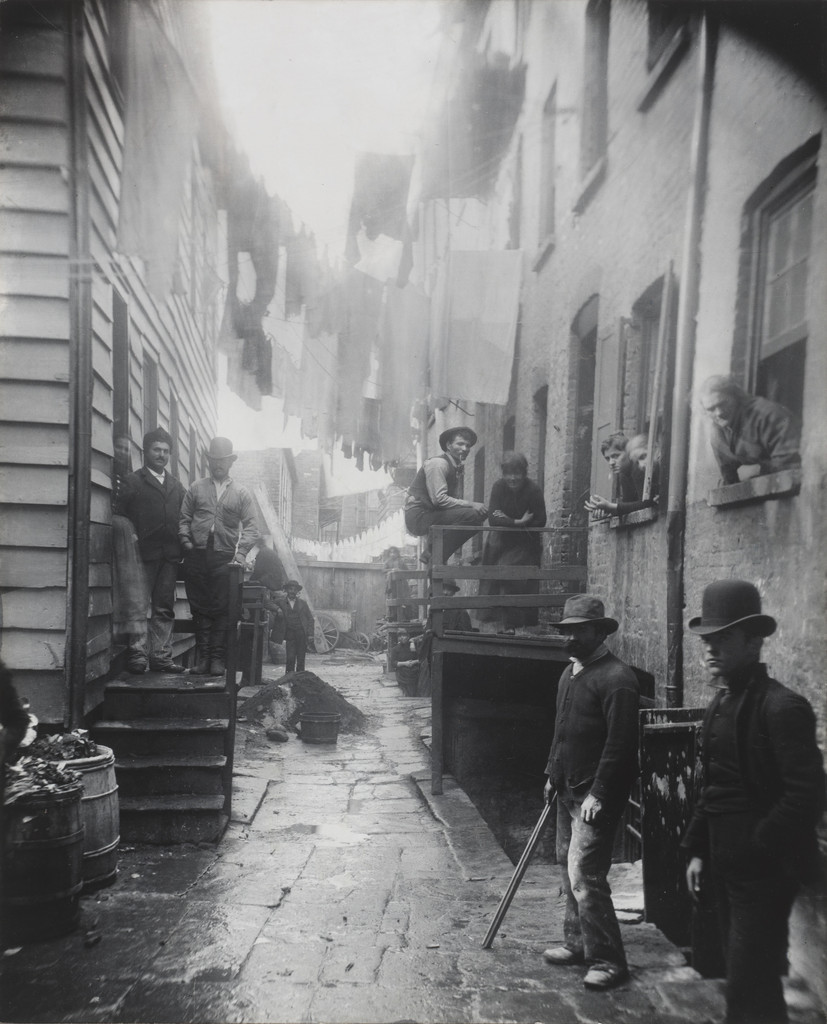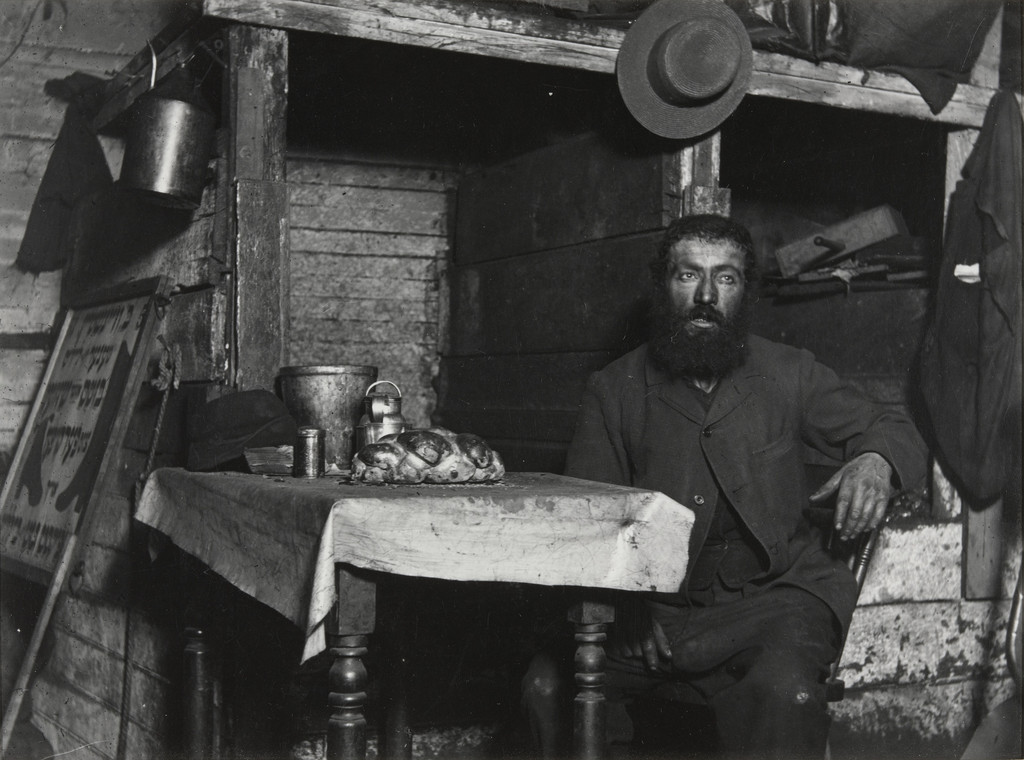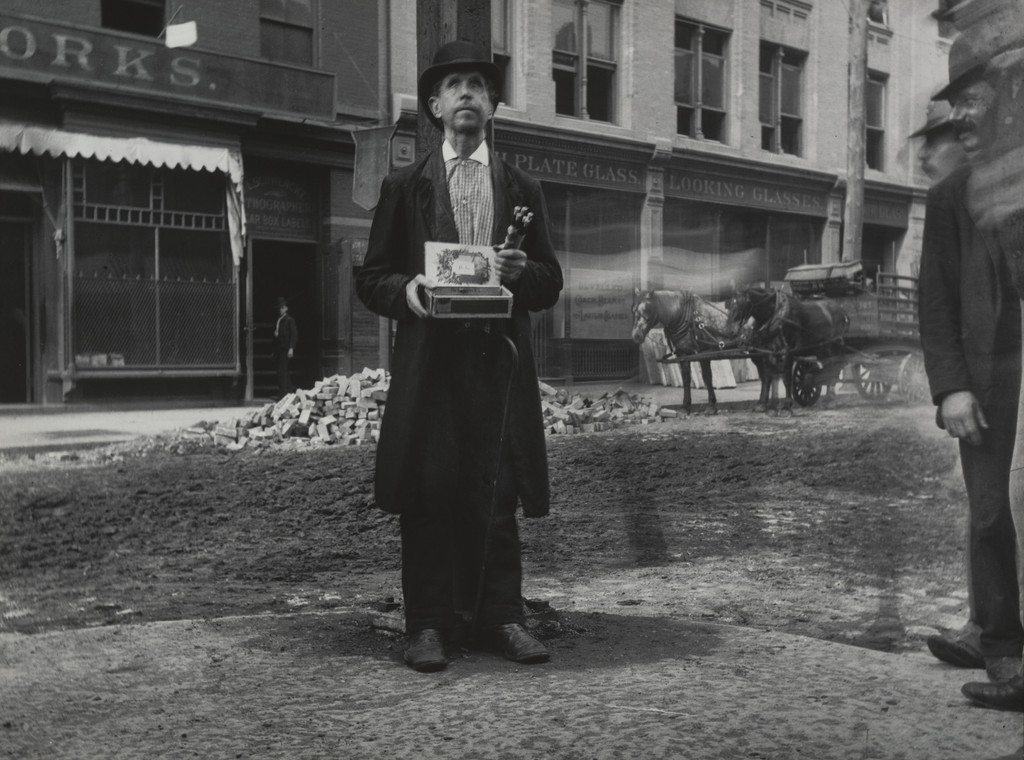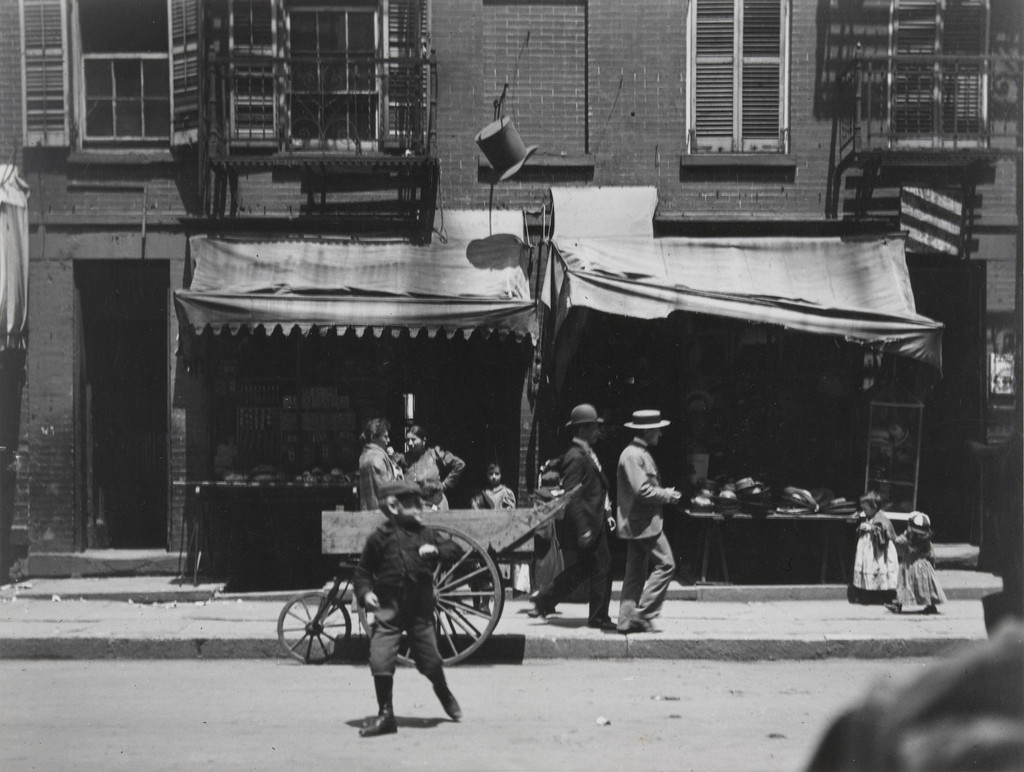
 Jacob August Riisアメリカ合衆国, 1849–1914
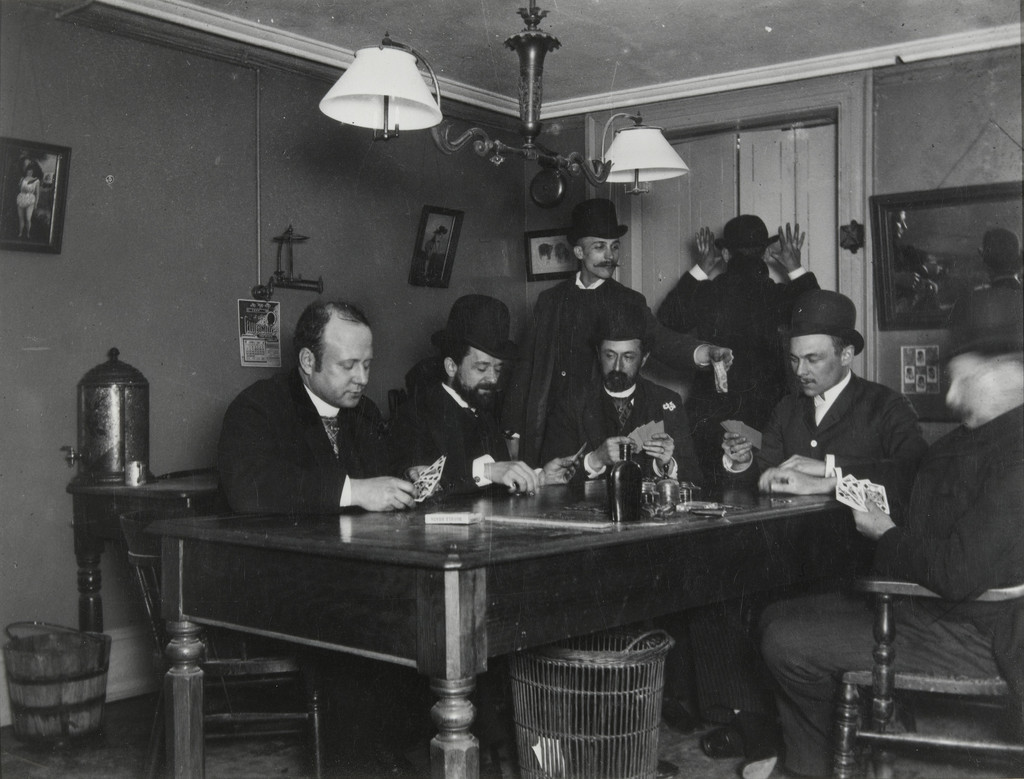
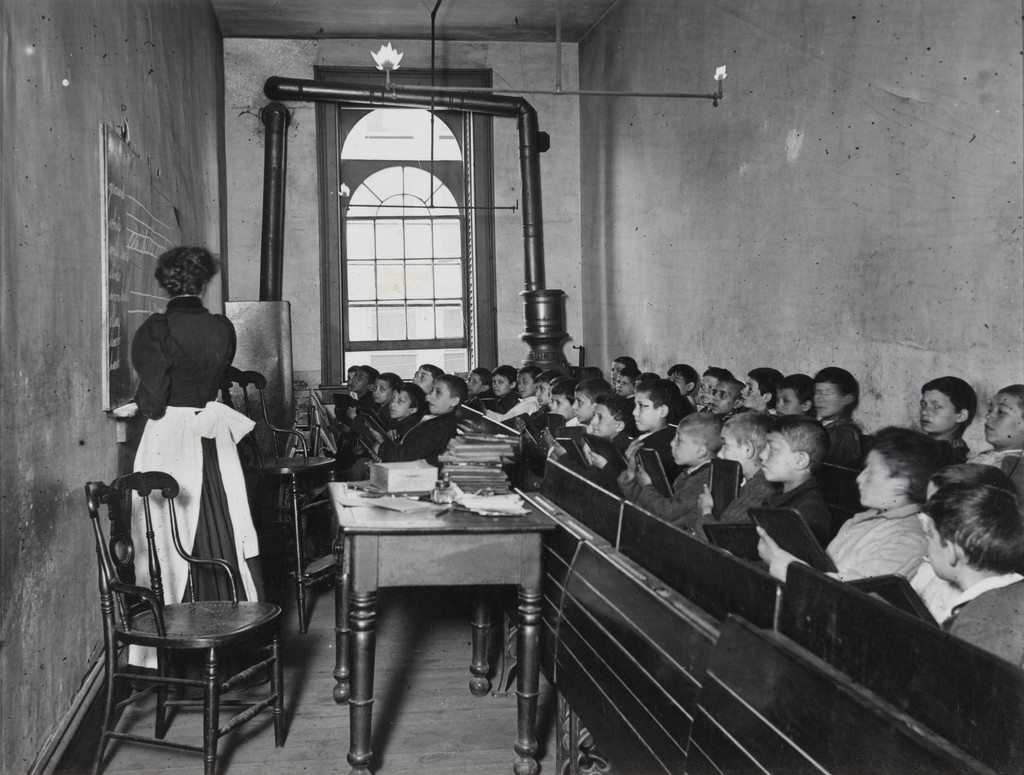
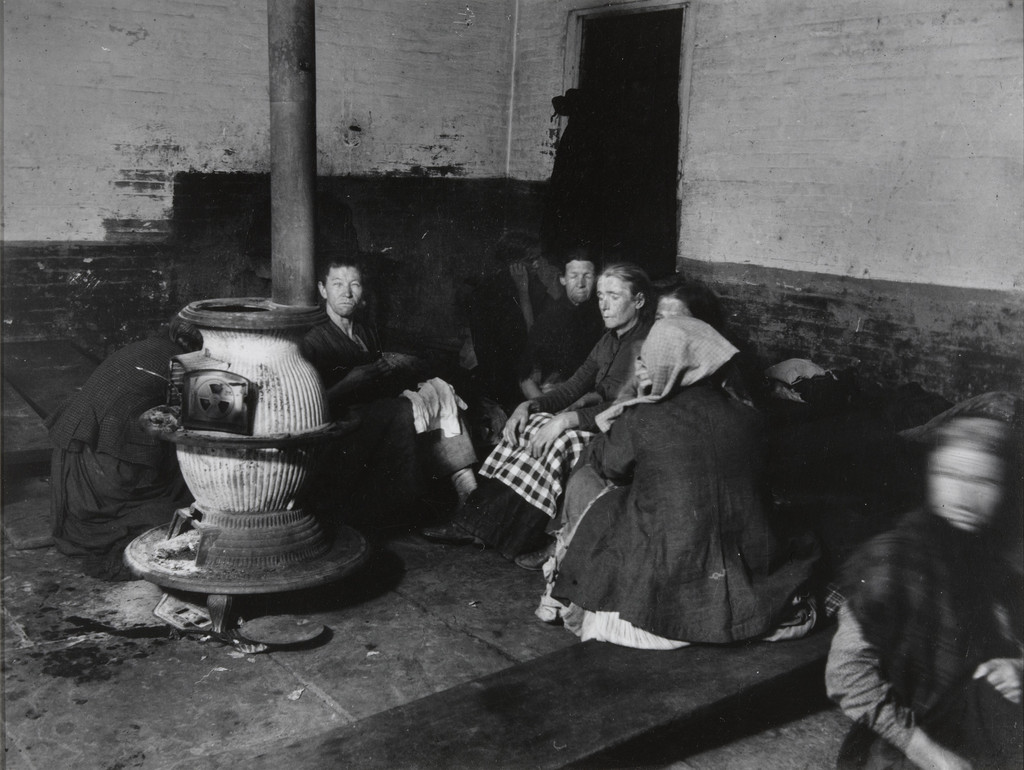
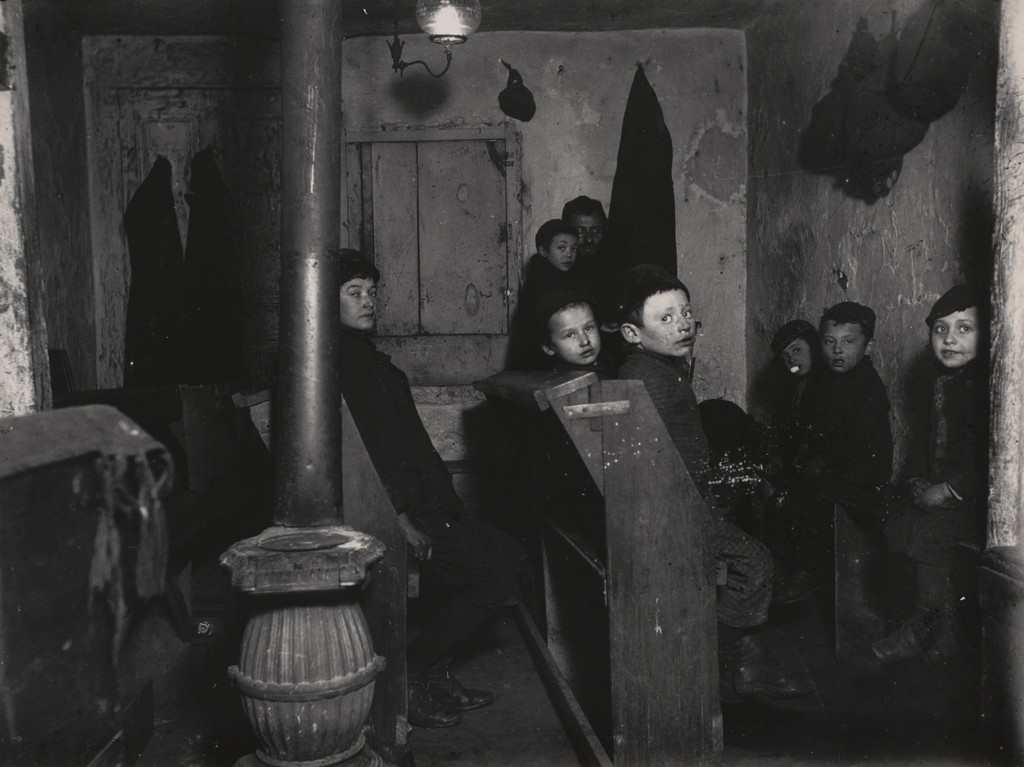
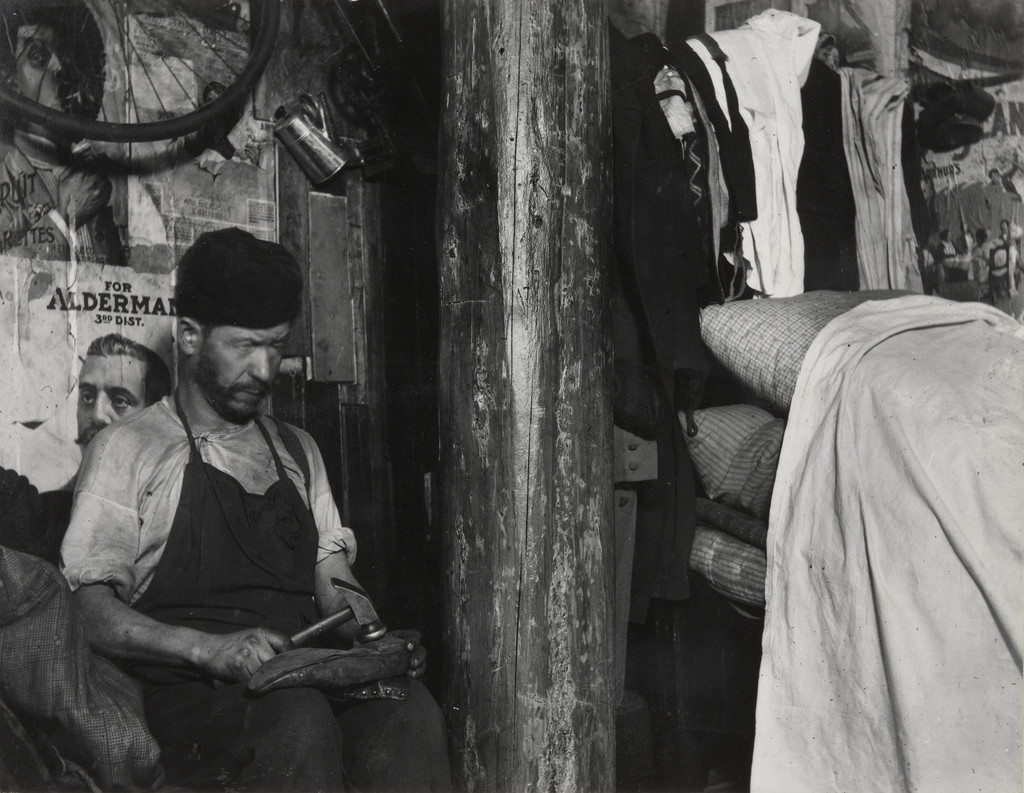
Shoemaker, Broome Street
見られますか?
現在は展示されていません
『Shoemaker, Broome Street』は今どこに? 所蔵: ニューヨーク近代美術館, ニューヨーク. 現在は展示されていません. 確認 2026年9月22日.

ニューヨーク, アメリカ合衆国
コレクションに属していますが、現在は展示されていません。
- 確認
- 出典
- 美術館
作品データ
- 収蔵番号
- 349.1964
カタログ収録
出典
- ニューヨーク近代美術館
- 画像: ニューヨーク近代美術館 — © the artist or rights holder
その頃、Jacob August Riisの人生では
生涯をすべて見る1870–1914 · 活動地
New York City
early 1887
Learns of flash photography
Riis was no good at sketching, and the slow lenses and emulsions of the 1880s seemed useless for photographing dark interiors. Reading that a way has been found to take pictures by flash of magnesium powder — a German invention by Adolf Miethe and Johannes Gaedicke — he sees how to show the slums more vividly than words.
Christmas 1889
The article “How the Other Half Lives” in Scribner's Magazine
An eighteen-page article by Riis, illustrated with line drawings made from his photographs, appears in the Christmas 1889 issue of the magazine. Its publication brings an invitation to expand the material into an entire book.
1890
The book “How the Other Half Lives” is published
He writes “How the Other Half Lives: Studies Among the Tenements of New York” at night, reporting for the New York Sun by day and lecturing in the evenings. It reuses the line drawings from the magazine article and adds seventeen halftone reproductions of photographs — the first extensive use of halftones in a book; it sells well, though some reviewers fault the author for oversimplifying and exaggerating (other accounts give 1891 as the year of publication).
1895
Meets Theodore Roosevelt
When Roosevelt is appointed president of the Board of Commissioners of the New York City Police Department, he asks Riis to show him night police work; on their first tour they find nine out of ten patrolmen missing. Riis writes about it in the next day's newspaper and the force is more attentive for the rest of Roosevelt's term; deeply affected by Riis's sense of justice, Roosevelt befriends him for life and later has the police lodging rooms where Riis had suffered in his first years in New York closed.
15 June 1897
Park opens on the site of Mulberry Bend
Mulberry Park, now Columbus Park, replaces the “foul core” of the Mulberry Bend slum — the outcome of Riis's photojournalism. He is not invited to the opening but goes anyway with Lincoln Steffens; in the final speech the street cleaning commissioner credits him with the park and the crowd gives him three cheers.