ジェームズ・アンソール(James Ensor, 1860年4月13日 - 1949年11月19日)は、19世紀後半から20世紀前半のベルギーの画家。近代ベルギーを代表する画家の一人。Les XX所属。
日本ではフランス語発音に基づく「アンソール」の表記が定着しているが、画家の出身地の言語であるオランダ語(フラマン語)での発音は「エンソル」に近い。「ジェームズ」は英語の名前である。
ベルギーでユーロ導入以前に発行されていた100フラン紙幣に肖像が使用されていた。
ジェームズ・アンソール(James Ensor, 1860年4月13日 - 1949年11月19日)は、19世紀後半から20世紀前半のベルギーの画家。近代ベルギーを代表する画家の一人。Les XX所属。
日本ではフランス語発音に基づく「アンソール」の表記が定着しているが、画家の出身地の言語であるオランダ語(フラマン語)での発音は「エンソル」に近い。「ジェームズ」は英語の名前である。
ベルギーでユーロ導入以前に発行されていた100フラン紙幣に肖像が使用されていた。
経歴 · c. 1871
First lessons with Ostend painters
His father encouraged the talent of a boy with little aptitude for school and, when he was eleven, sent him to study with the local painters Édouard Dubar and Michel van Cuyck. Other accounts say Ensor left school and began training with two local painters at fifteen.
作品 · c. 1876 · Ostend
Paints “The Bathing Hut”
At sixteen Ensor entered the Ostend academy and painted the small “Bathing Hut” on cardboard. The sea had captivated him since youth with its colour, smell and mystery, and the picture can be read as the dream he described 21 years later in a letter to his friend Jules Dujardin.
出会い · 1877–1880
Brussels friends and the Rousseau household
At the Academy Ensor befriended Willy Finch, Fernand Khnopff and Théo Hannon, and through Hannon met Ernest Rousseau, a professor at the Free University of Brussels, whose house drew the Brussels avant-garde to debate socialist and anarchist ideas. The lady of the house, Mariette Rousseau, became one of the few women close to him, though she kept him at a certain distance.
経歴 · Ostend
A studio in the attic of his parents' house
Disappointed by the dry teaching, Ensor left the Brussels Academy — 'an establishment for the half-blind' — and returned to Ostend, where until 1917 he worked in the attic of his parents' house above his mother's souvenir shop. There he created all his key paintings of the 19th century — even the huge “Christ's Entry into Brussels”, which, under the low ceiling, he painted now kneeling, now standing on a chair.
出来事 · 1900s · Ostend
Turning to music: improvising on the harmonium
His output of new works was dwindling: with no musical training, Ensor proved a gifted improviser on the harmonium and spent much time playing for visitors. In later years he said he had followed the wrong path in life and should have devoted himself to music.
作品
“Au conservatoire”
居住 · 1917–1949
Ensor House
経歴
Retrospective in Brussels and a barony
After his first major retrospective in Brussels Ensor was made a baron by King Albert; that same year the composer Flor Alpaerts devoted his “James Ensor Suite” to him. Once a baron, the artist tried to withdraw his political etchings of 1889 from circulation.
死去 · 1949年11月19日
Ostend
埋葬
Ostend, cemetery
展覧会 · 1964年6月28日–1964年10月6日
Documenta III
展覧会 · 1992年6月13日–1992年9月20日
Documenta IX
展覧会 · Antwerp
The Salon rejects “The Oyster Eater”
“The Oyster Eater”, a portrait of the artist's sister, was rejected by the Antwerp Salon, and a year later by L'Essor, because of its unconventional composition. These setbacks led Ensor to join Les XX, founded in 1883 with Khnopff, Finch and Théo van Rysselberghe among its members.
作品
“The Lady in Distress”
作品 · Ostend
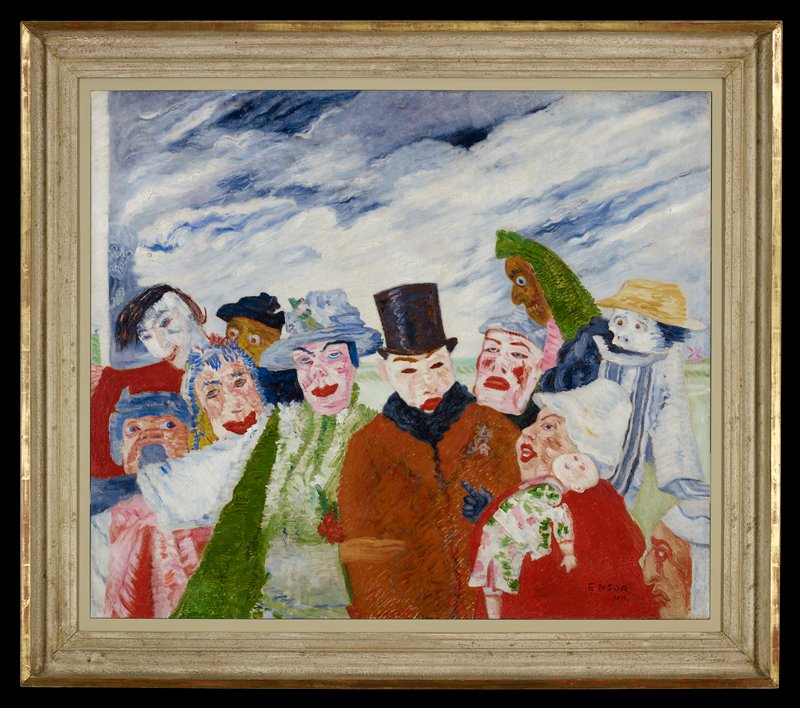
Paints “The Scandalized Masks”
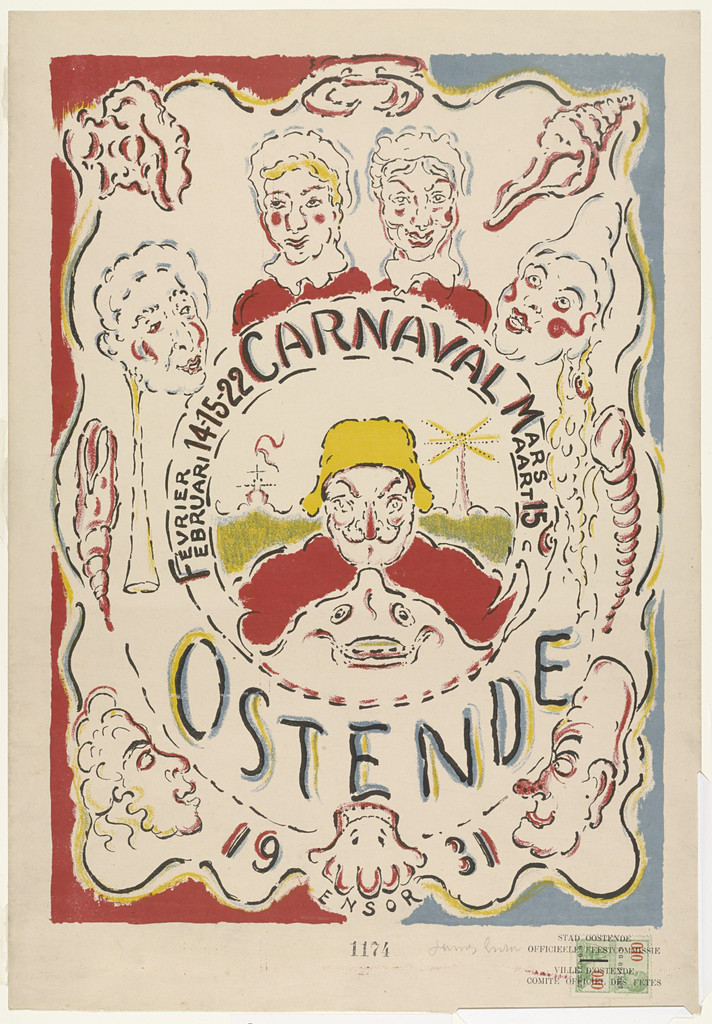
Ensor's first painting with masks — inspired, many biographers believe, by his father's drinking; the masks themselves he had known since childhood from his mother's souvenir shop, which sold them for the Ostend carnival. That same year he abandoned the Impressionist manner and everyday subjects for symbolic ones, baffling his contemporaries.
所属 · 1883–1893
Les XX
家族 · Ostend
Death of his father
His father, James Frederic Ensor, died — a scion of a wealthy English family who never found his footing in Belgium, mocked by small-town Ostend as a drunkard and failure, yet always supportive of his son's passion for art. Left the only man in the family, James felt a special responsibility for his younger sister Mariette (Mitche).
作品 · Ostend
The etching “Le Pisseur”: a reply to the critics
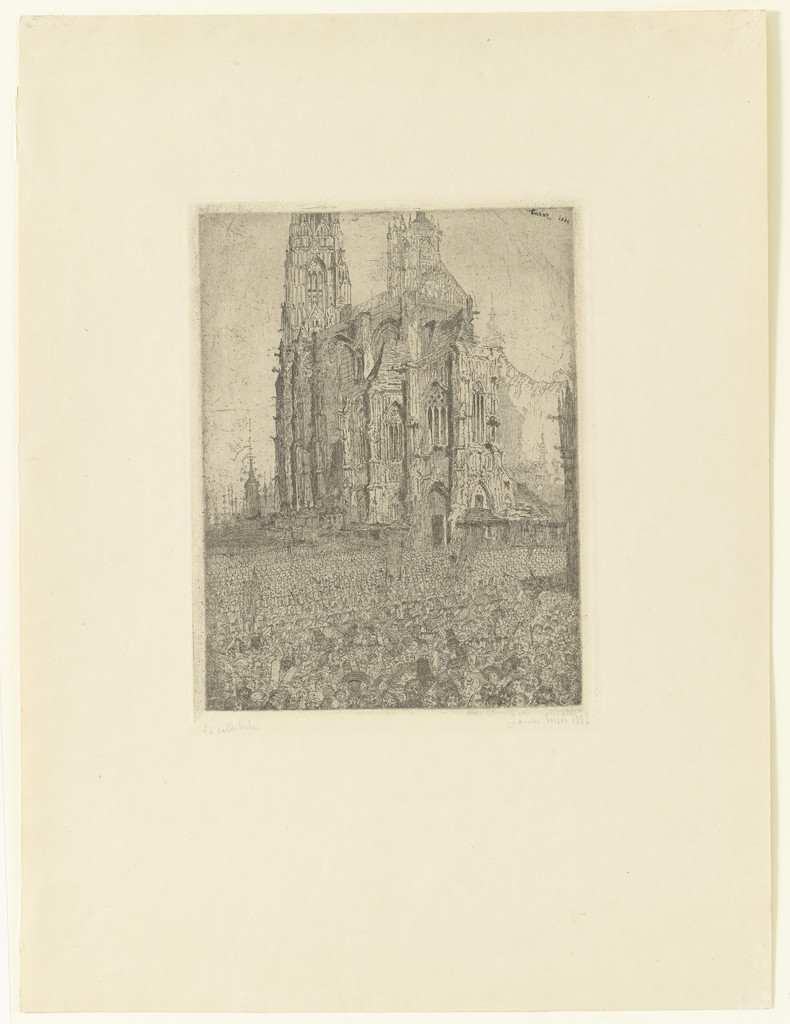
The etching shows the artist urinating on a wall scrawled with 'Ensor est un fou' ('Ensor is a madman') — a defiant reply to critics who, as Octave Maus put it, saw him as the leader of a clan, a carrier of anarchistic principles and 'a dangerous person'.
出来事 · 1888–1892 · Ostend
Turning-point years: the Passion of Christ
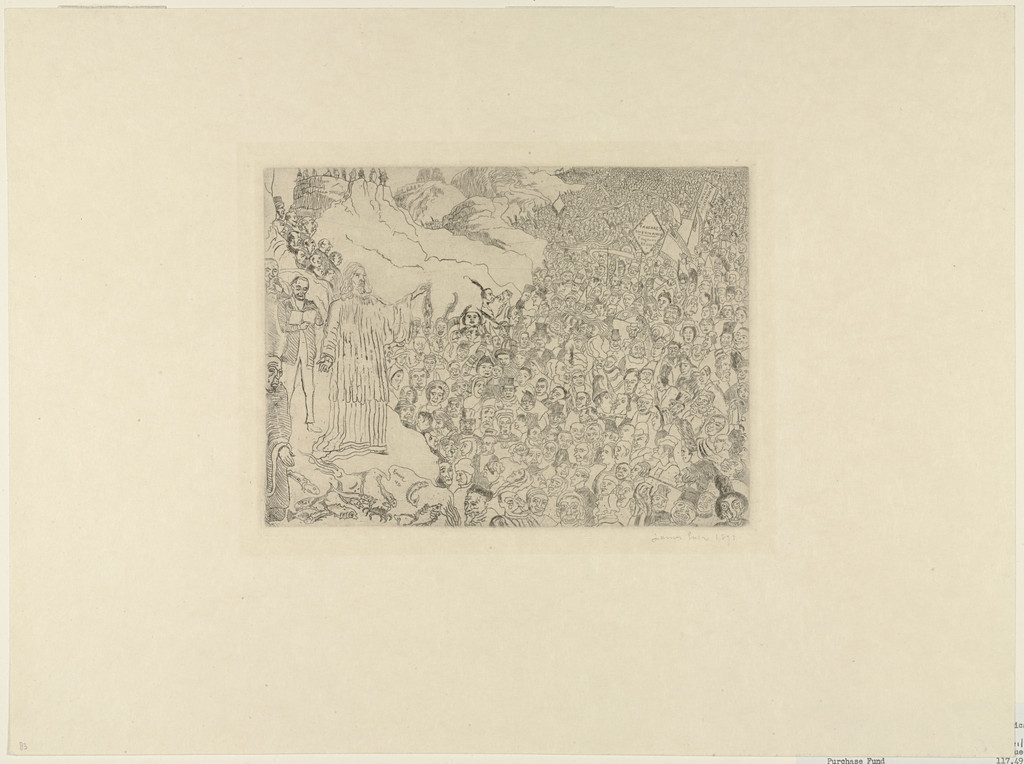
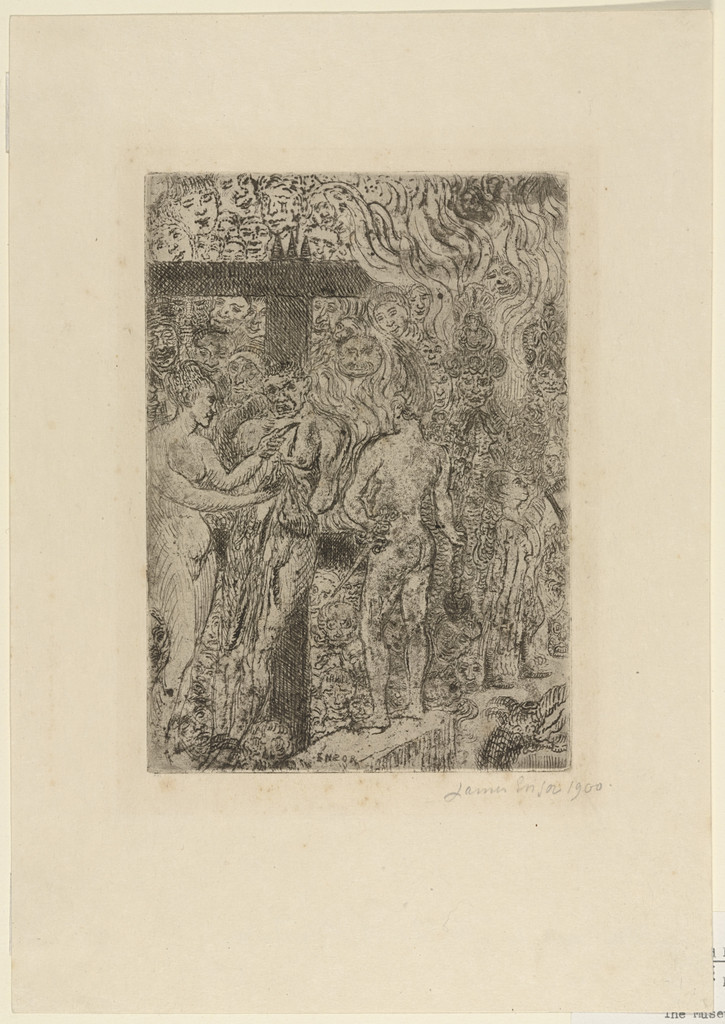
Ensor turned to religious themes, most often the torments of Christ, expressing through them his disgust at the inhumanity of the world; an atheist, he identified with Christ as a victim of mockery. At the height of his creative powers, between 1886 and 1891, he made 86 of his 133 etchings.
作品
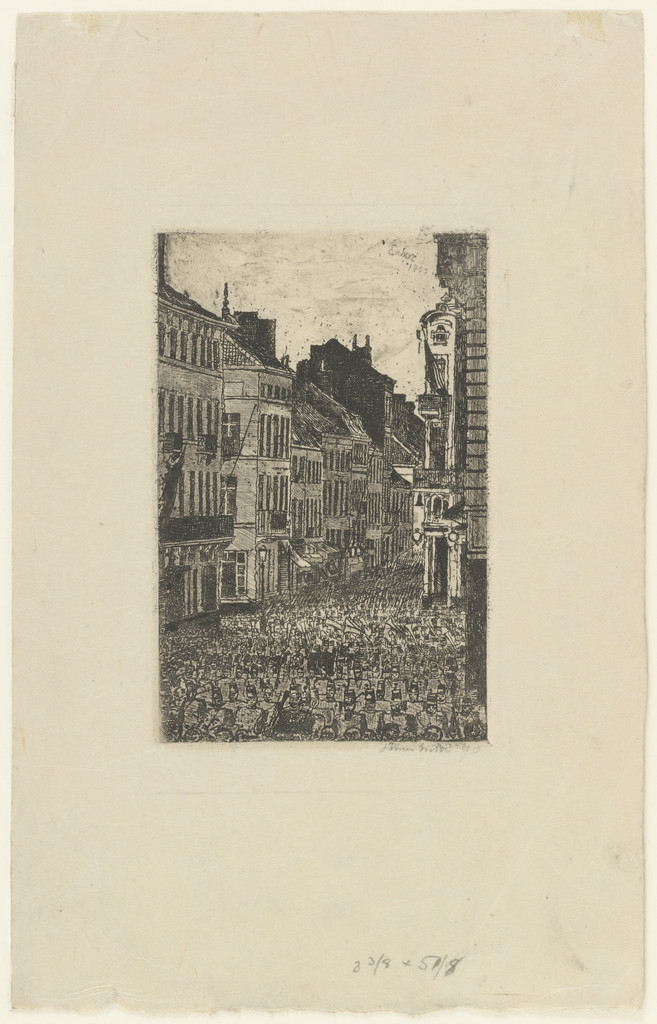
“Christ's Entry Into Brussels in 1889”
作品 · Ostend
Forty-five etchings in a single year
In 1888 alone Ensor made forty-five etchings and painted his most ambitious canvas, the immense “Christ's Entry into Brussels in 1889”, in which a carnival mob in grotesque masks advances on the viewer. Les XX rejected the painting, and it was not shown in public until 1929.