 Kuzma Petrov-VodkinRussia, 1878–1939
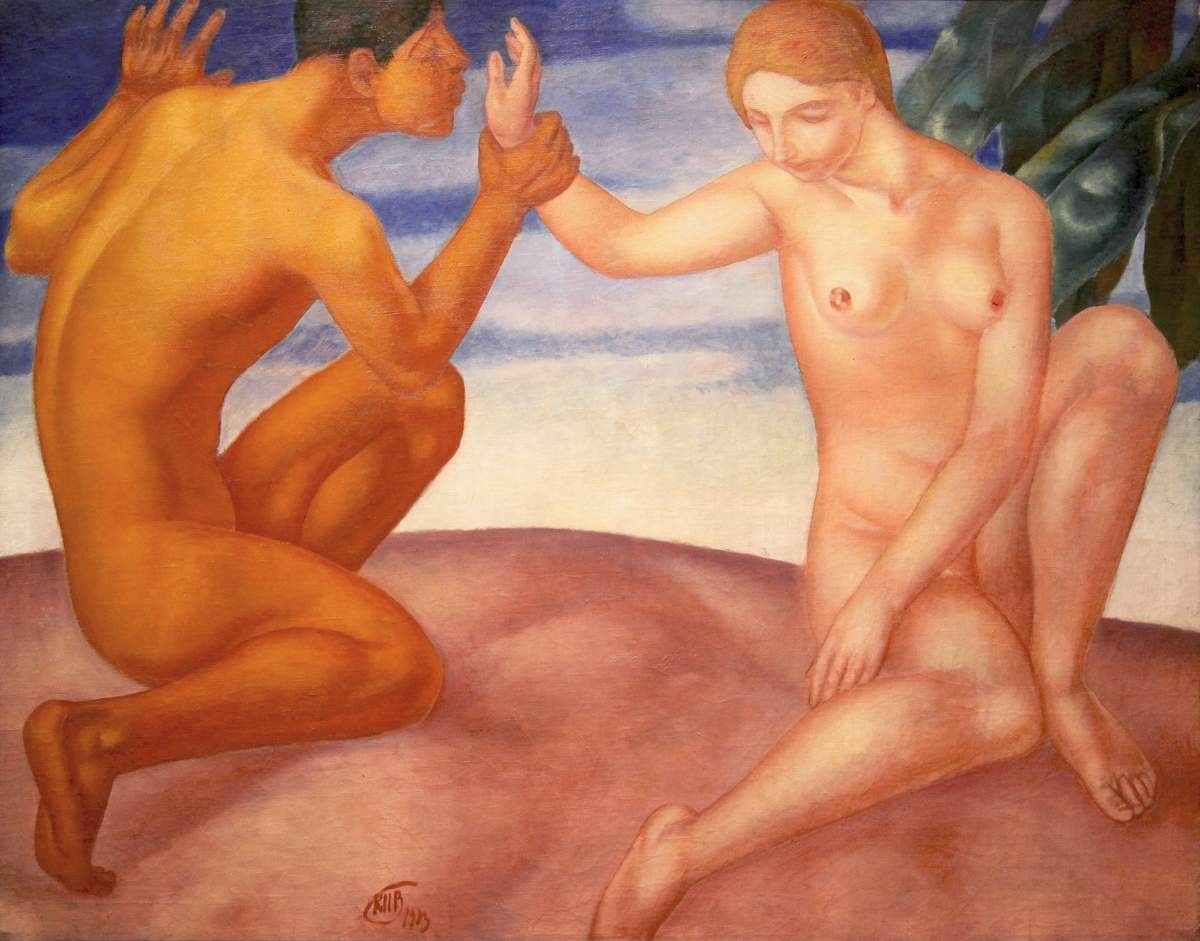
Юность
Si può vedere?
Non si sa
Dove si trova «Юность» oggi? Collezione: Museo russo, San Pietroburgo. Non si sa.

San Pietroburgo, Russia
Il proprietario è noto; non si sa se oggi sia esposta.
- Ultimo cambio di stato
- Fonte
- Il museo
Sul dipinto
Con le parole del museo — in russo
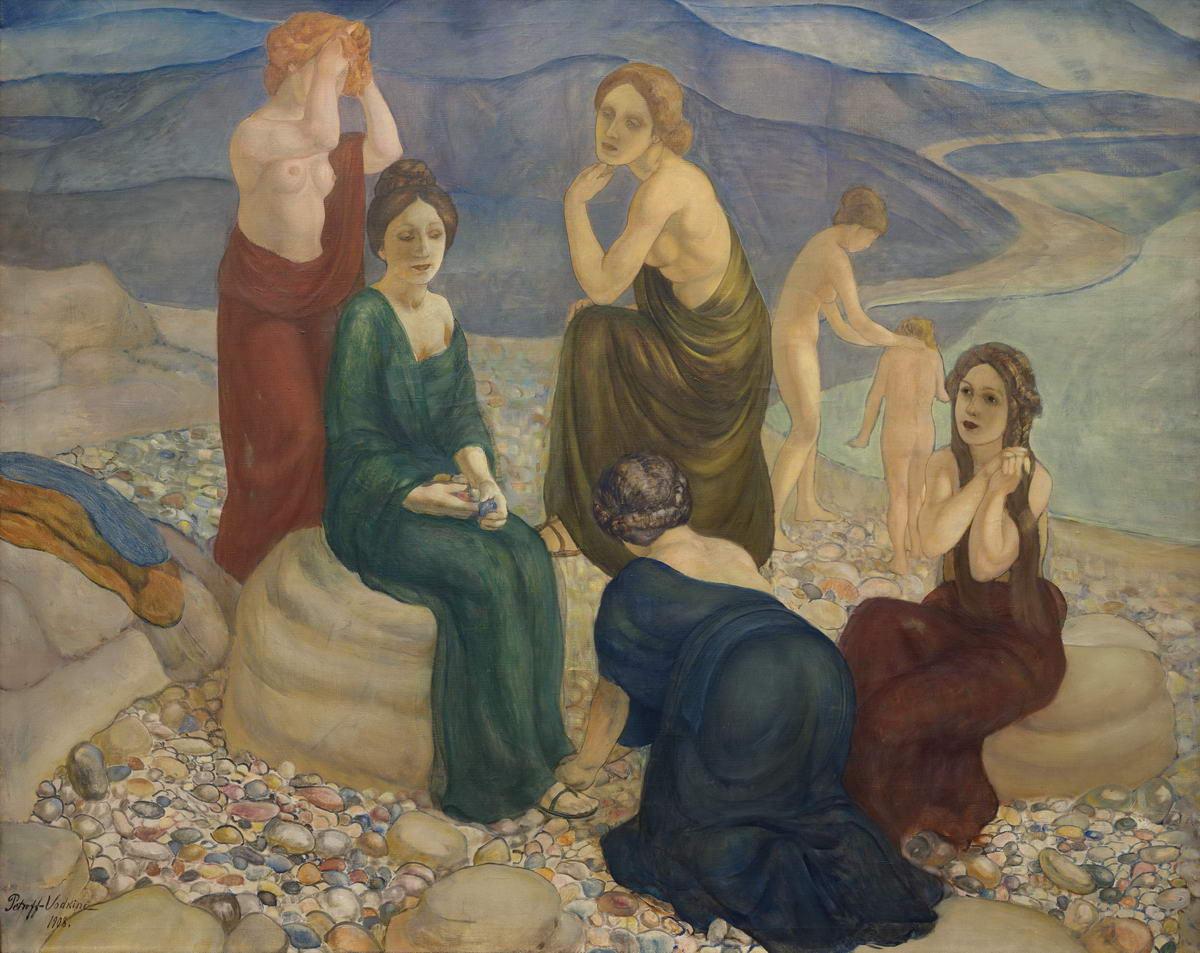
Выразительность пластики обнаженного тела, в особенности юношеского тела, часто используется художником в его произведениях, становясь составляющей его пластических метафор. Как у Александра Иванова, художника особо чтимого Петровым-Водкиным, юношеское тело органично вписывалось в смысловой контекст произведений, олицетворяя чистоту и целомудрие. Во многих отношениях « Явление Христа народу » Иванова являлось ориентиром в творческих поисках художника. Ольга Мусакова. Мгновения вечности // Кузьма Сергеевич Петров-Водкин. СПб. 2018. С. 9.
Museo russo
Scheda
- Numero di inventario
- Ж-11875
In catalogo
Fonti
- Museo russo
- Immagine: Museo russo — © State Russian Museum
Nella vita di Kuzma Petrov-Vodkin
Tutta la vita1913
First serious stage design: “The Maid of Orleans”
He designs sets and costumes for Schiller’s “The Maid of Orleans” at Nezlobin’s theatre in Moscow (directed by N. N. Zvantsev). The papers dubbed the war scene the “fire of war”, and it drew both praise and blame for its colour contrasts.
1914
Children’s tale “Aoya” is published
His fantasy tale for children, “Aoya: The Adventures of Andryusha and Katya in the Air, Underground and on Earth”, appears with the author’s own illustrations. In 1922 he prepares new drawings for it, but the reissue never takes place.
1914
A garden for the dacha-studio “Krasulinka”
He buys an abandoned garden near Khvalynsk for a dacha-studio. In the first two years of the war much of his time and money goes into clearing the garden, deepening the ponds and designing and building the dacha, which he names “Krasulinka”.
summer 1914
Trip to the Caucasus
He travels through the Caucasus: Vladikavkaz, Tiflis, Batum, New Athos and Sochi.