ART WIKI33.040 in sala
MappaCollezioneArtistiMuseiMostreRivista
Accedi

ART WIKI

Dove è appeso il capolavoro, e quando si può entrare.

Collezioni: Art Institute of Chicago, Cleveland Museum of Art, Ermitage, Galleria Tret'jakov, Getty Museum, Harvard Art Museums, Hirshhorn Museum and Sculpture Garden, Metropolitan Museum of Art, Minneapolis Institute of Art, Museo del Louvre, Museo Puškin delle belle arti, Museo russo, Museum of Modern Art, National Gallery of Art, National Museum of Asian Art, National Portrait Gallery, Rijksmuseum, Smithsonian American Art Museum, Statens Museum for Kunst, Victoria and Albert Museum, Villa Getty, Whitney Museum of American Art, Catalogo statale del fondo museale russo (274 musei), Europeana (19 musei), Wikidata (6 musei), Paris Musées (12 musei) e Joconde, la banca dati dei musei del Ministero della Cultura francese (495 musei). Le immagini appartengono ai titolari dei diritti.

Sezioni

  • Mappa
  • Ricerca
  • Collezione
  • Capolavori
  • Esposte ora
  • Artisti

Altro

  • Musei e gallerie
  • Mostre
  • Rivista
  • Da dove vengono i dati
  • Privacy e cookie
HomeMappaCatalogo
  1. Collezione/
  2. Art Institute of Chicago/
  3. White Negress II
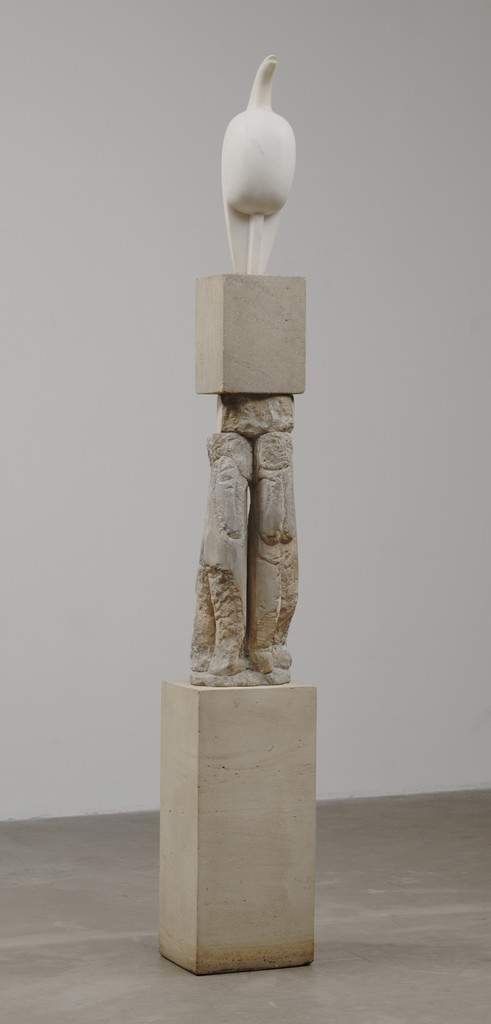
White Negress II, Constantin Brancusi, 1928
Constantin Brancusi, ritrattoConstantin BrancusiRomania, 1876–1957

White Negress II

1928 · Sculpture

Sulla scultura

Among sculptors of his generation in Europe, Constantin Brancusi was arguably the most influenced by African art in his choices of materials and forms, but it was not until the middle of his career, in the 1920s and 1930s, that he chose to represent his impression of an African subject in two related series: White Negress and Blond Negress. According to the artist, the impetus for these works was a visit to the 1922 Colonial Exposition—an expansive exhibition demonstrating France’s dominance as a colonial power held in Marseille—where he observed a woman he understood to be of African descent. The anonymous subject, rendered as an elongated volume with just two features, lips and hair, reflected European stereotypes about African physiognomy, and presented the paradox of seeing a black body represented in light-colored materials.

Continua a leggere

White in the title refers to the color of the marble, which at once relates to the tradition of marble statuary but also to an ongoing 20th-century fetishism of black bodies. In the blond versions, this same form appears in highly polished, mirror-like bronze.

Art Institute of Chicago · CC BY 4.0

Scheda

1928 · a 52 anni
18761957
Numero di inventario
1966.4

Nel frattempo, nella vita di Constantin Brancusi

Tutta la vita
  1. 1926

    Back to the United States: the Wildenstein and Brummer exhibitions

    In 1926 Brâncuși returns to the United States: the Wildenstein Gallery presents his work in a group exhibition and then in a solo exhibition (16 February to 3 March), and on 17 November another exhibition opens at the Brummer Gallery, remaining on view until 15 December.

  2. 1926–1928

    Brancusi v. United States: a bird is a work of art

    During the trip United States customs officials detain a bronze “Bird in Space”, classify it as an article of metal and impose the tariff applied to manufactured objects. The case “Brancusi v. United States” ends in 1928 with the sculpture being accepted as a work of art.

  3. 1927

    Isamu Noguchi as his studio assistant

    In 1927 the Japanese American sculptor Isamu Noguchi works as an assistant in Brâncuși’s studio, sawing and polishing pieces, preparing the studio and keeping the tools sharp. The experience brings him closer to direct carving in stone and wood.

  4. 1929

    A portrait of James Joyce for the Black Sun Press

    In 1929 Harry and Caresse Crosby commission portraits of James Joyce from Brâncuși for the limited edition of “Tales Told of Shem and Shaun”, published by the Black Sun Press. He makes profile and frontal drawings and a composition formed from a spiral and vertical lines, which Caresse selects for the frontispiece: the book calls it “Portrait of the Author”, while Brâncuși uses the title “Symbol of James Joyce”.
Altre opere di Constantin Brancusi

Tutte le opere

Nella stessa sala · Gallery 395, Art Institute of Chicago

Pagina del museo

Sullo stesso tema · Abstract figures

Tutte le opere sul tema

Si può ammirare?

Sì, riceve visite

Art Institute of Chicago

Chicago, Stati Uniti

Sala395

Esposta al pubblico. Chi lo garantisce è indicato qui sotto.

Verificato
9 giorni fa
Ultimo cambio di stato
19 ago 2026
Fonte
Il museo
Sulla mappaPagina del museo

Che cosa raffigura

Abstract figuresDonnaGeometricFigures (representations)

In catalogo

SculturaMarmoModernismoXX secoloFrancia

Fonti

  • Art Institute of Chicago
  • Immagine: Art Institute of Chicago — © the artist or rights holder
Maiastra, Constantin Brancusi, 1910-12

Maiastra

1910-12 · Museum of Modern Art

Maiastra, Constantin Brâncuși, c. 1911

Maiastra

c. 1911 · National Gallery of Art

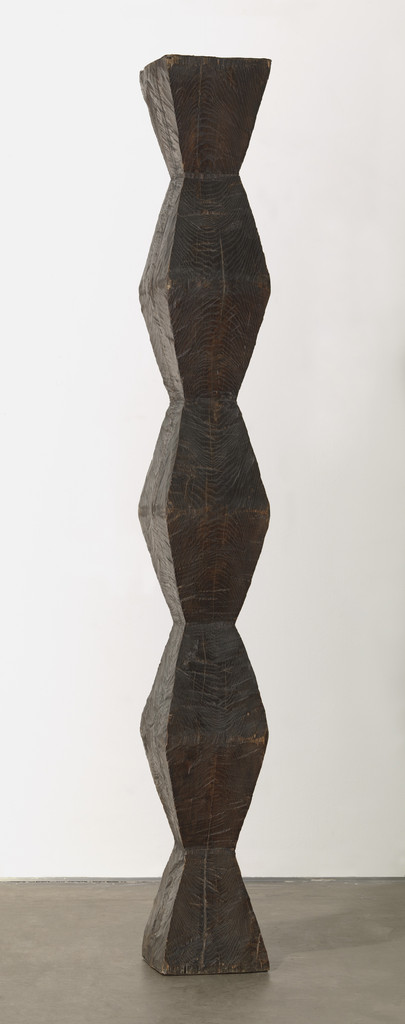
Endless Column, Constantin Brancusi, version I, 1918

Endless Column

version I, 1918 · Museum of Modern Art

The Newborn, Constantin Brancusi, version I, 1920

The Newborn

version I, 1920 · Museum of Modern Art

Socrates, Constantin Brancusi, 1922

Socrates

1922 · Museum of Modern Art

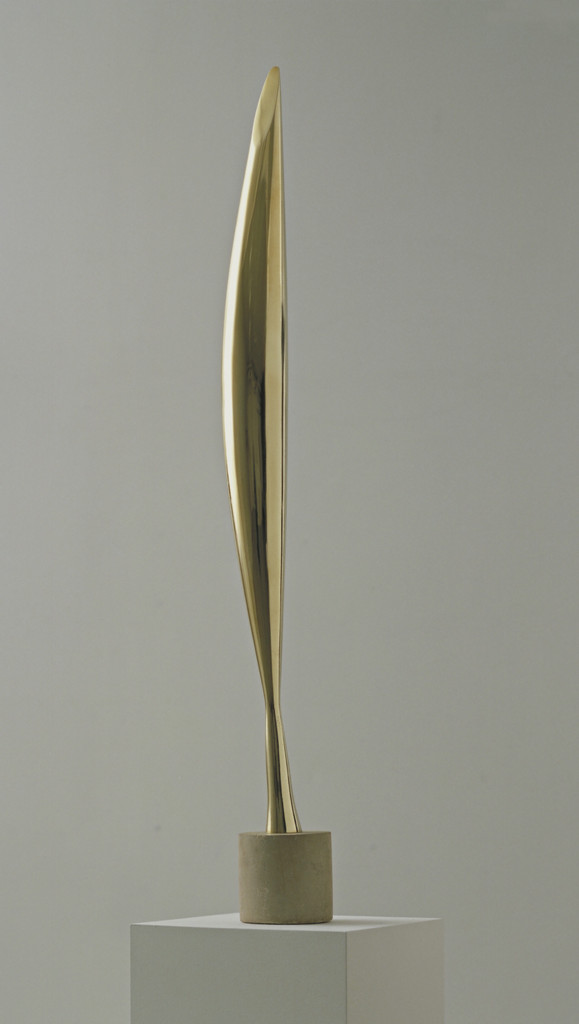
Bird in Space, Constantin Brâncuși, 1925

Bird in Space

1925 · National Gallery of Art

Bird in Space, Constantin Brâncuși, 1927

Bird in Space

1927 · National Gallery of Art

Bird in Space, Constantin Brancusi, 1928

Bird in Space

1928 · Museum of Modern Art

The Plough and the Song, Arshile Gorky, 1946–47

Arshile Gorky

The Plough and the Song, 1946–47

Untitled, Yves Tanguy, 1928

Yves Tanguy

Untitled, 1928

Spoon Woman, Alberto Giacometti, 1926–27 (cast 1954)

Alberto Giacometti

Spoon Woman, 1926–27 (cast 1954)

Golden Bird, Constantin Brancusi, 1919/20 (base c. 1922)

Constantin Brancusi

Golden Bird, 1919/20 (base c. 1922)

Averno, Richard Rezac, 2020

Richard Rezac

Averno, 2020

Veil, Richard Rezac, 1987

Richard Rezac

Veil, 1987

Vigil, Richard Rezac, 1986

Richard Rezac

Vigil, 1986

All Alone, Jean Fautrier, 1957

Jean Fautrier

All Alone, 1957

The Plough and the Song, Arshile Gorky, 1946–47

Arshile Gorky

The Plough and the Song, 1946–47

Art Institute of Chicago

Spoon Woman, Alberto Giacometti, 1926–27 (cast 1954)

Alberto Giacometti

Spoon Woman, 1926–27 (cast 1954)

Art Institute of Chicago

Reclining Woman, Fernand Léger, 1922

Fernand Léger

Reclining Woman, 1922

Art Institute of Chicago

Miss E. Knows, Jim Nutt, 1967

Jim Nutt

Miss E. Knows, 1967

Non esposta · Art Institute of Chicago

Head, Fang, Mid–late 19th century

Fang

Head, Mid–late 19th century

Art Institute of Chicago

Nude under a Pine Tree, Pablo Picasso, January 20, 1959

Pablo Picasso

Nude under a Pine Tree, January 20, 1959

Art Institute of Chicago

The Bride, Barbara Hepworth, 1970

Barbara Hepworth

The Bride, 1970

Non esposta · Art Institute of Chicago

Robot, Alexandra Exter, 1926

Alexandra Exter

Robot, 1926

Non esposta · Art Institute of Chicago