Sandro BotticelliItalia, 1445–1510
Virgin and Child with Two Angels
Si può ammirare?
Sì, riceve visite

Art Institute of Chicago
Sala205Chicago, Stati Uniti
Esposta al pubblico. Chi lo garantisce è indicato qui sotto.
- Verificato
- Ultimo cambio di stato
- Fonte
- I dati di collezione del museo stesso
Sul dipinto
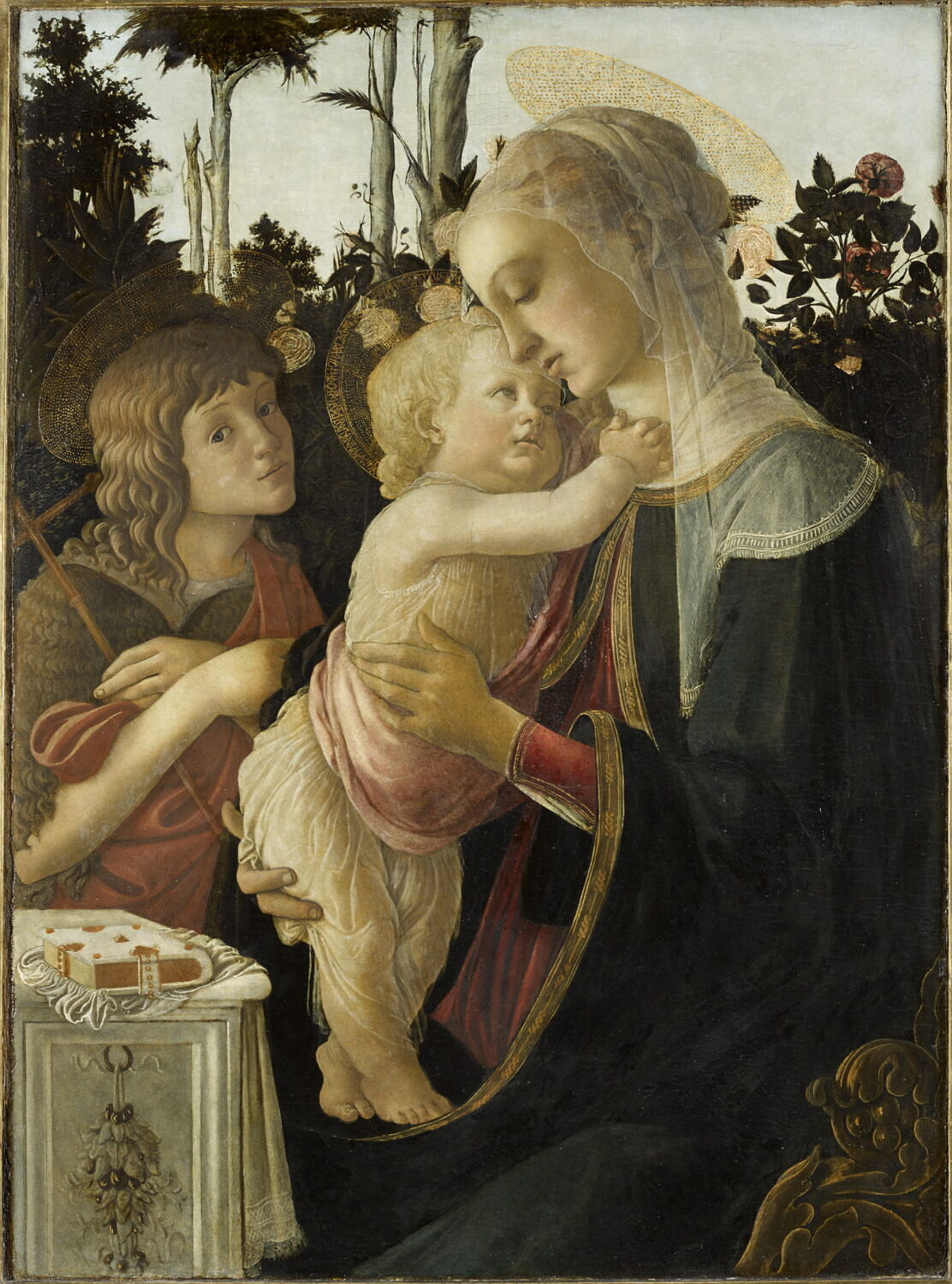
Sandro Botticelli’s works mark the culmination of a mystical religious tradition in the art of early Renaissance Florence, from the paintings of Lorenzo Monaco and Fra Angelico through those of Fra Filippo Lippi, Botticelli’s teacher. In this lyrical late work by Botticelli, two angels draw back curtains to reveal the Virgin and Child, who are framed by slender trees in a setting suggesting a throne. The intimate presentation of the holy figures and Christ’s gesture of blessing suggest that this small painting served a private devotional function. This supposition is supported by the choice of format, since a Florentine patron would have typically commissioned a circular painting, or tondo, for use in a bedchamber.
Art Institute of ChicagoCC BY 4.0
Scheda
- Numero di inventario
- 1954.282
Che cosa raffigura
In catalogo
Fonti
- Art Institute of Chicago: i dati aperti del museo · acquisita 8 giorni fa
- Immagine: Art Institute of Chicago — CC0
Nel frattempo, nella vita di Sandro Botticelli
Tutta la vita1480s
Lorenzo's circle: Ficino, Pico, Poliziano
Botticelli frequented Lorenzo the Magnificent's Platonic Academy, where he met the humanists, poets and philosophers Marsilio Ficino, Pico della Mirandola and Angelo Poliziano; the influence of Neoplatonism shows in his secular paintings.
1490–1498
Savonarola's preaching and Botticelli
From 1490 Savonarola preached in Florence; according to Vasari, Botticelli became his follower, gave up painting and fell into hardship. Modern historians reject this, and the extent of the preacher's influence remains uncertain — Botticelli's brother Simone was the clearer follower.
1491
The committee on the cathedral façade
In 1491 Botticelli served on the committee deciding on a façade for the Cathedral of Florence; the next year he received three payments for a design, eventually abortive, to put mosaics on some of the cathedral's interior vaults.