ART WIKI32.963 in sala
MappaCollezioneArtistiMuseiMostreRivista
Accedi

ART WIKI

Dove è appeso il capolavoro, e quando si può entrare.

Collezioni: Art Institute of Chicago, Cleveland Museum of Art, Ermitage, Galleria Tret'jakov, Getty Museum, Harvard Art Museums, Hirshhorn Museum and Sculpture Garden, Metropolitan Museum of Art, Minneapolis Institute of Art, Museo del Louvre, Museo Puškin delle belle arti, Museo russo, Museum of Modern Art, National Gallery of Art, National Museum of Asian Art, National Portrait Gallery, Rijksmuseum, Smithsonian American Art Museum, Statens Museum for Kunst, Victoria and Albert Museum, Villa Getty, Whitney Museum of American Art, Catalogo statale del fondo museale russo (274 musei), Europeana (19 musei), Wikidata (6 musei), Paris Musées (12 musei) e Joconde, la banca dati dei musei del Ministero della Cultura francese (495 musei). Le immagini appartengono ai titolari dei diritti.

Sezioni

  • Mappa
  • Ricerca
  • Collezione
  • Capolavori
  • Esposte ora
  • Artisti

Altro

  • Musei e gallerie
  • Mostre
  • Rivista
  • Da dove vengono i dati
  • Privacy e cookie
HomeMappaCatalogo
  1. Collezione/
  2. Museo Puškin delle belle arti/
  3. The Continence of Scipio
The Continence of Scipio, Nicolas Poussin, 1640
Nicolas Poussin, ritrattoNicolas PoussinFrancia, 1594–1665

The Continence of Scipio

1640 · Painting · 114.5 × 163.5 cm

Si può ammirare?

Non si sa

Museo Puškin delle belle arti

Mosca, Russia

Il proprietario è noto; non si sa se oggi sia esposta.

Fonte
Il museo
Sulla mappaPagina del museo

Sul dipinto

The Continence of Scipio is an oil on canvas painting by Nicolas Poussin, from 1640. It is held in the Pushkin Museum, in Moscow.

Wikipedia · CC BY-SA

Scheda

1640 · a 46 anni
15941665
Numero di inventario
Ж-1048

In catalogo

DipintiOlioPittura franceseBaroccoXVII secoloFrancia

Fonti

  • Ermitage
  • Immagine: Museo Puškin delle belle arti — Museum open access

Nel frattempo, nella vita di Nicolas Poussin

Tutta la vita
  1. 1630s

    Cassiano dal Pozzo — his chief patron

    Poussin’s flowering coincided with his complete abandonment of church commissions: he gathered a circle of patrons around him but strove for independence, accepting commissions from connoisseurs without binding himself to any of them permanently. The most important was Cassiano dal Pozzo; in the surviving correspondence the relationship comes close to servitude, although the painter did not live in his house.

  2. December 1640

    December 1640: Poussin returns to Paris

    François Sublet de Noyers, Superintendent of the King’s Buildings, whose invitations Poussin had declined, sent his cousins Roland and Paul Fréart to Rome, offering the title of First Painter to the King and a substantial residence at the Tuileries. Poussin yielded, and in December 1640 he was back in Paris.

  3. 1641

    An avalanche of royal commissions

    In Paris he was swamped with commissions: “The Institution of the Eucharist” for the chapel of the château of Saint-Germain-en-Laye, “The Miracle of St Francis Xavier” for the Jesuit novitiate, ceilings and vaults for the Grande Galerie of the Louvre, an allegory for Richelieu’s study, designs for tapestries and title pages for the royal printing house. For a man accustomed to working slowly and carefully it was too much.

  4. 1641–1665

    Post: Premier peintre du Roi

  5. autumn 1642

    Finds a pretext and leaves for Rome for good

    Increasingly unhappy with court intrigue and the weight of commissions, in the autumn of 1642, while the king and court were in Languedoc, Poussin found a pretext to leave Paris and returned to Rome permanently.

  6. 1642–1644

    Richelieu, Louis XIII and Urban VIII pass away

    Richelieu died in 1642, Louis XIII in 1643 and Pope Urban VIII in 1644; his successor Innocent X was less interested in art patronage and preferred Spanish culture, and the Barberini left for France. But Richelieu’s successor, Cardinal Mazarin, began to collect Poussin’s works.
Altre opere di Nicolas Poussin

Tutte le opere
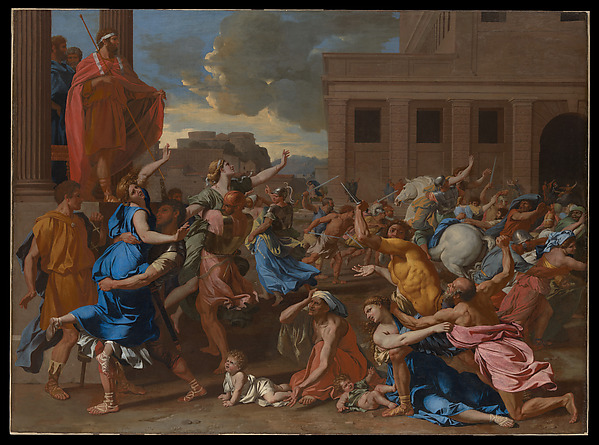
The Abduction of the Sabine Women, Nicolas Poussin, probably 1633–34

The Abduction of the Sabine Women

probably 1633–34 · Metropolitan Museum of Art

Blind Orion Searching for the Rising Sun, Nicolas Poussin, 1658

Blind Orion Searching for the Rising Sun

1658 · Metropolitan Museum of Art

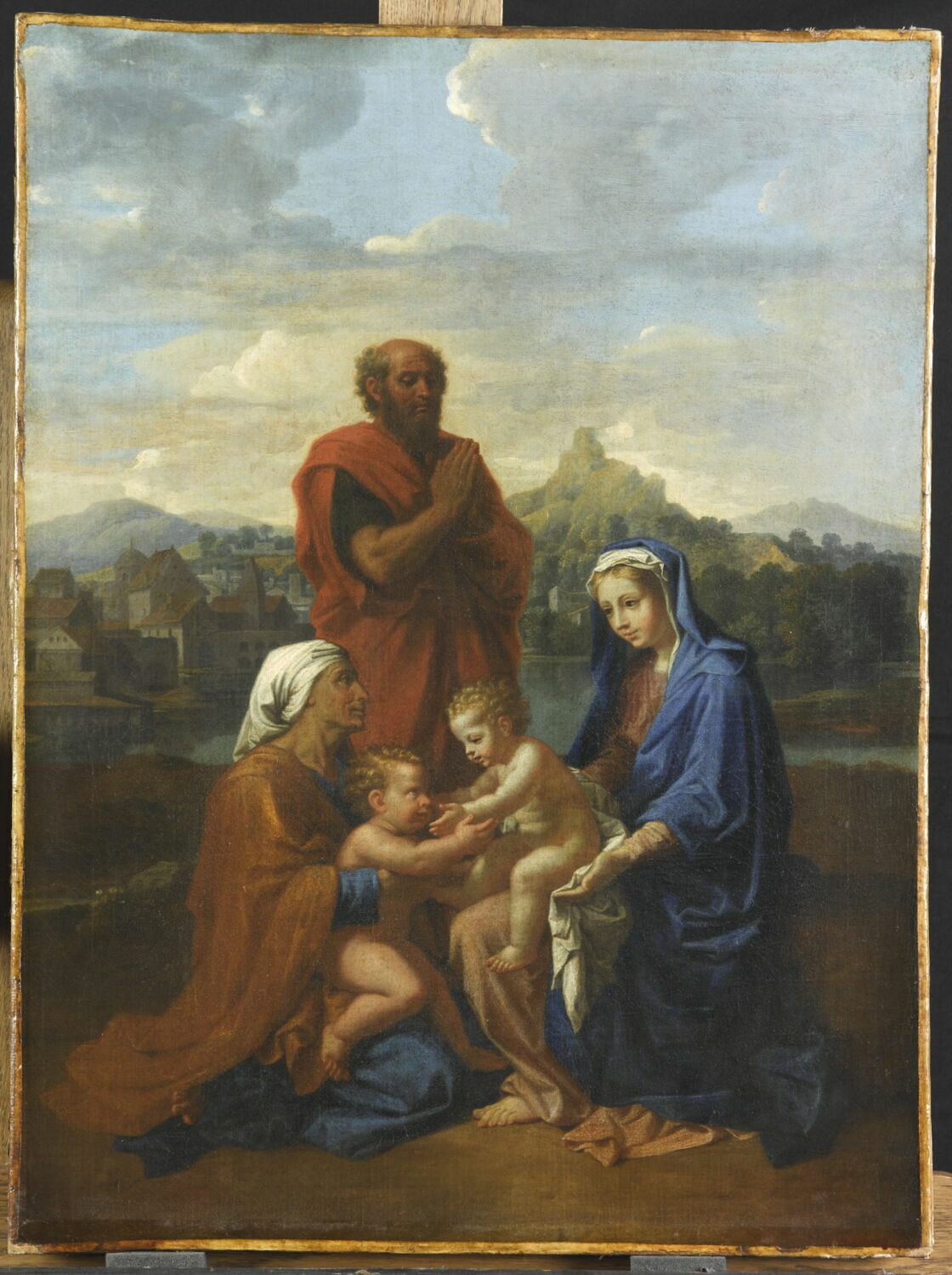
La Sainte Famille avec saint Jean, sainte Elisabeth et saint Joseph priant, Poussin, Nicolas, Milieu du XVIIe siècle (vers 1650 - 1951)

La Sainte Famille avec saint Jean, sainte Elisabeth et saint Joseph priant

Milieu du XVIIe siècle (vers 1650 - 1951) · Museo del Louvre

Victory of Joshua over the Amalekites, Nicolas Poussin, 1623

Victory of Joshua over the Amalekites

1623 · Ermitage

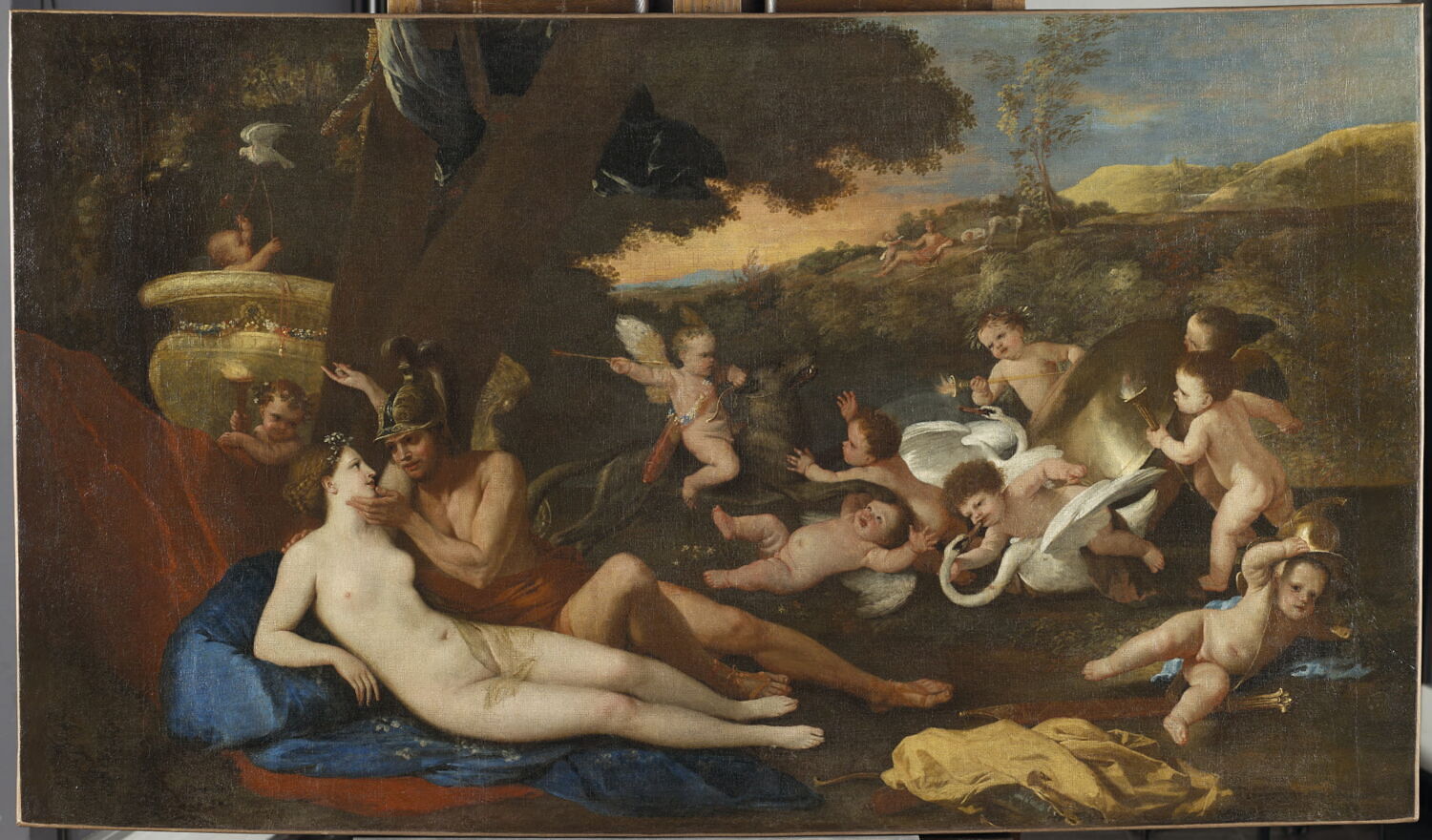
Mars et Vénus, Poussin, Nicolas, 1e tiers du XVIIe siècle (vers 1625)

Mars et Vénus

1e tiers du XVIIe siècle (vers 1625) · Museo del Louvre

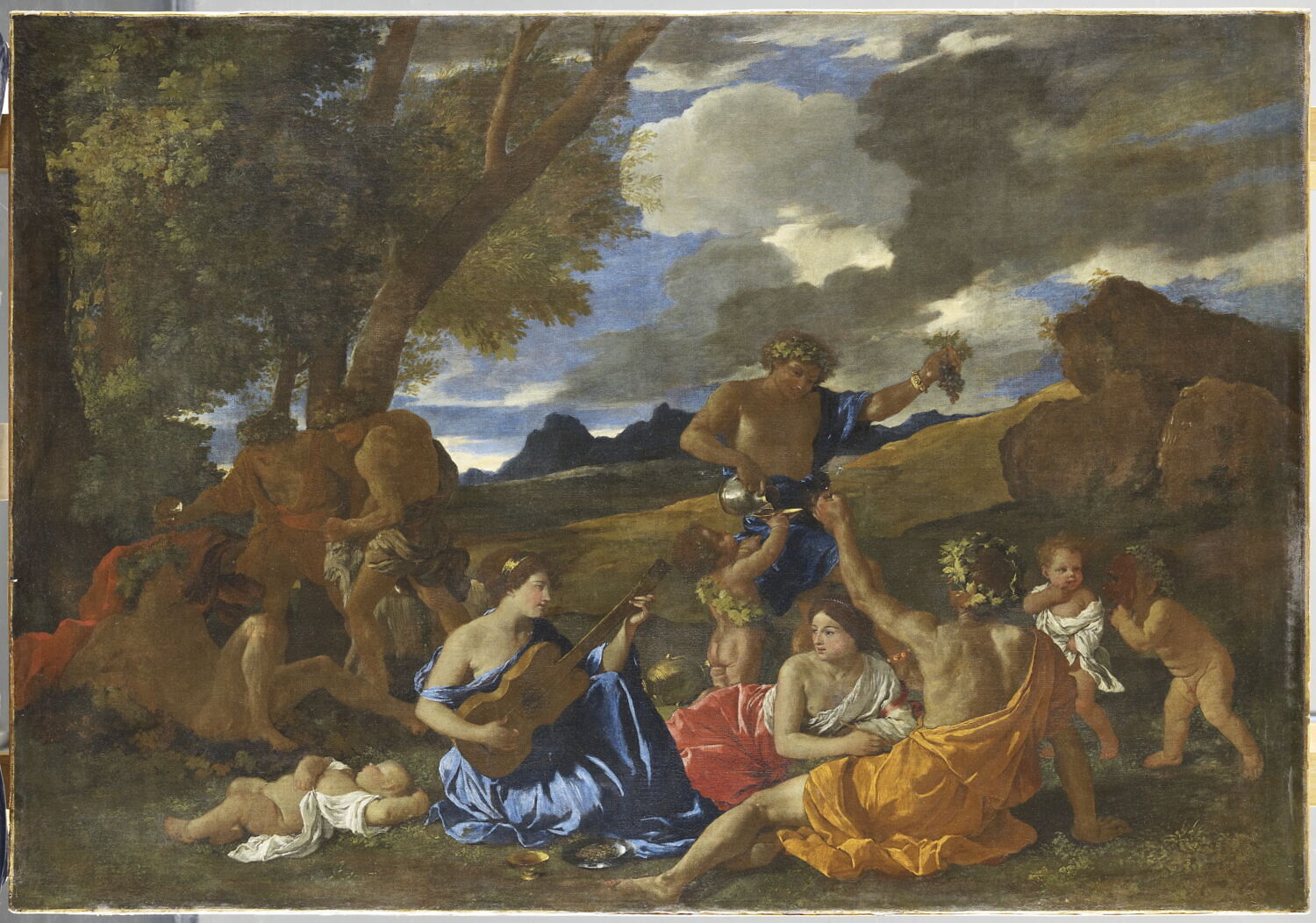
Bacchanale à la joueuse de guitare, Poussin, Nicolas, 2e quart du XVIIe siècle (vers 1625)

Bacchanale à la joueuse de guitare

2e quart du XVIIe siècle (vers 1625) · Museo del Louvre

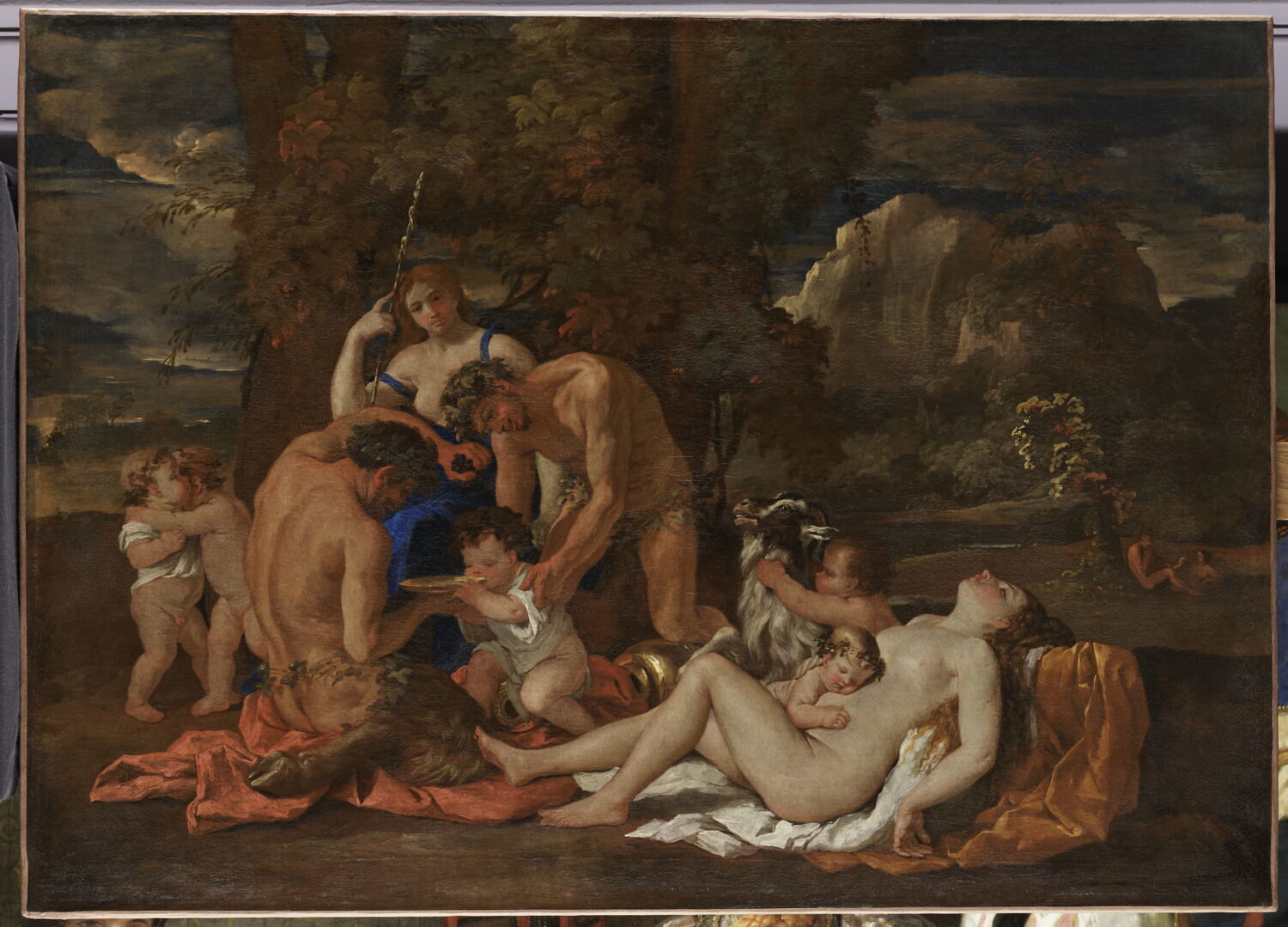
La Nourriture de Bacchus, Poussin, Nicolas, 2e quart du XVIIe siècle (vers 1626)

La Nourriture de Bacchus

2e quart du XVIIe siècle (vers 1626) · Museo del Louvre

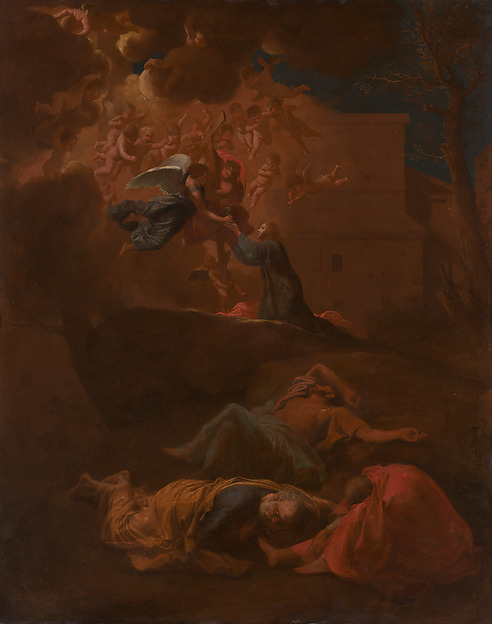
The Agony in the Garden, Nicolas Poussin, 1626–27

The Agony in the Garden

1626–27 · Metropolitan Museum of Art