Top Man
Si può vedere?
Non esposta al momento
Dove si trova «Top Man» oggi? Collezione: Minneapolis Institute of Art, Minneapolis. Non esposta al momento. Verificato 23 novembre 2026.

Minneapolis, Stati Uniti
Appartiene alla collezione, ma al momento non è esposta.
- Verificato
- Ultimo cambio di stato
- Fonte
- Il museo
Sul dipinto
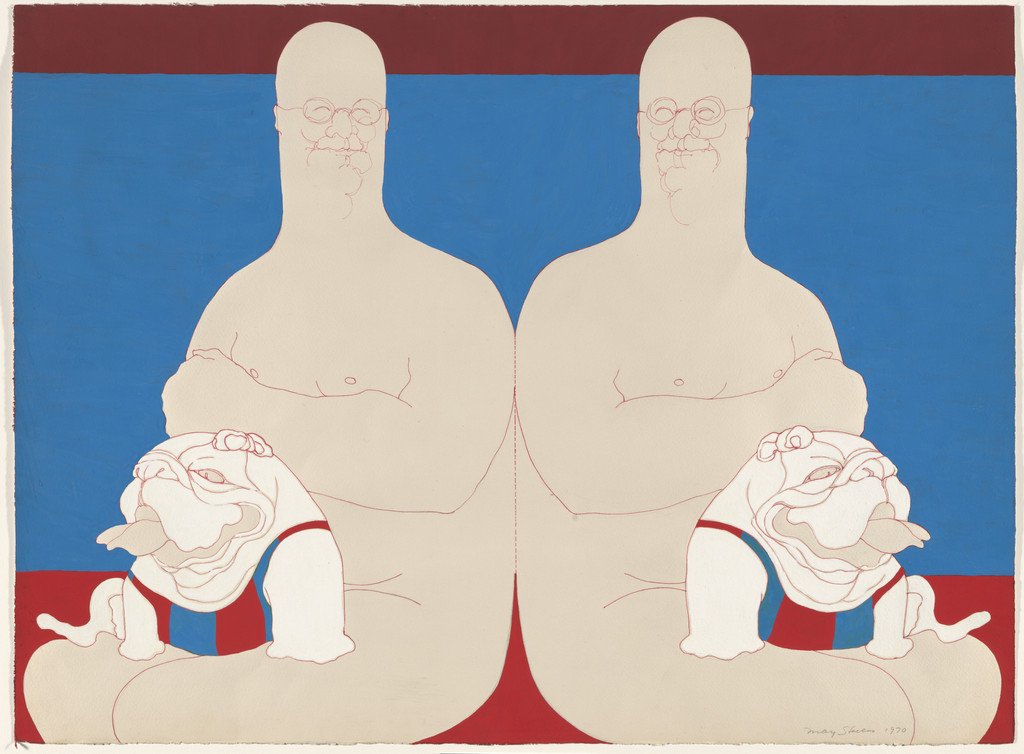
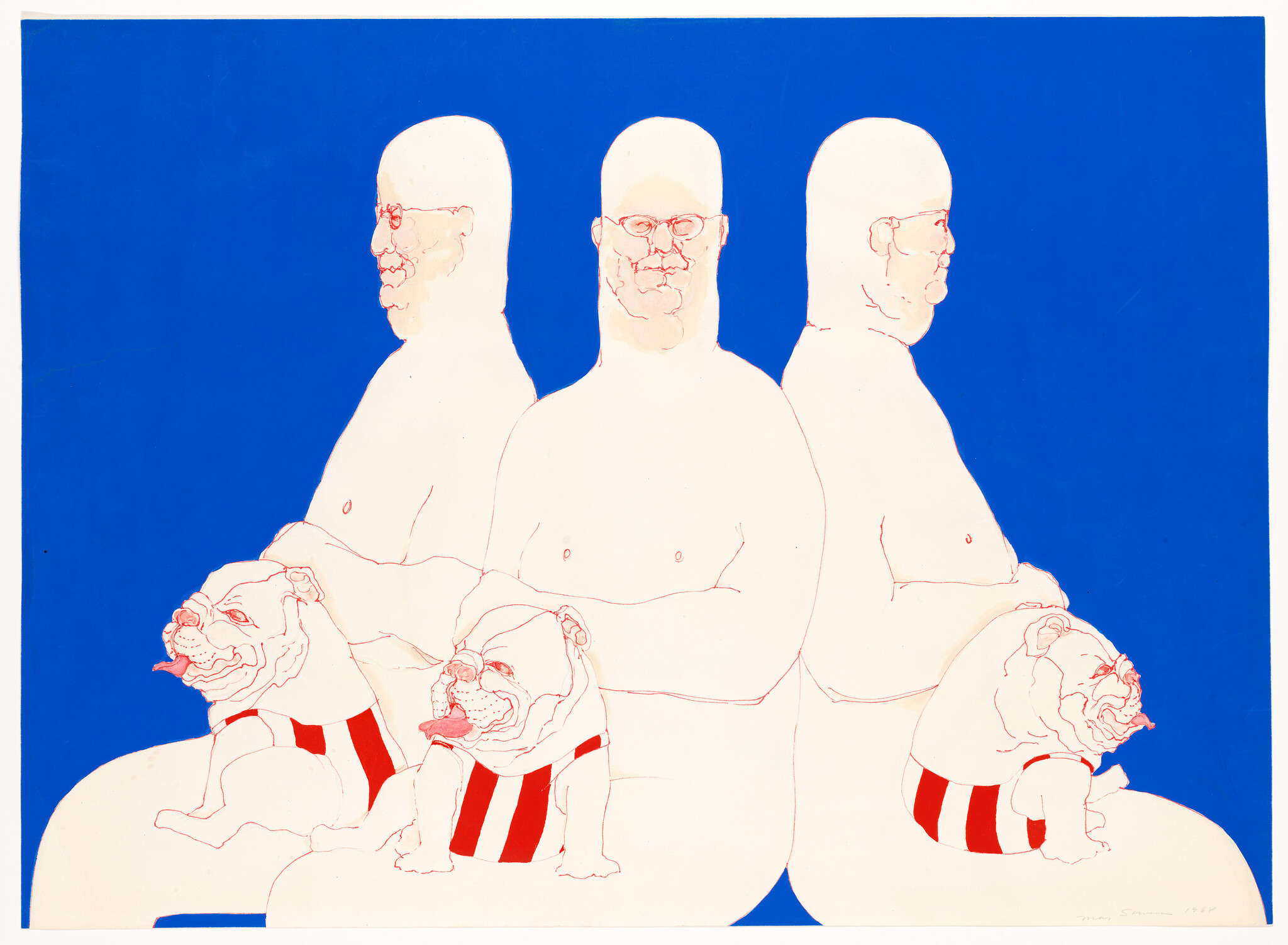
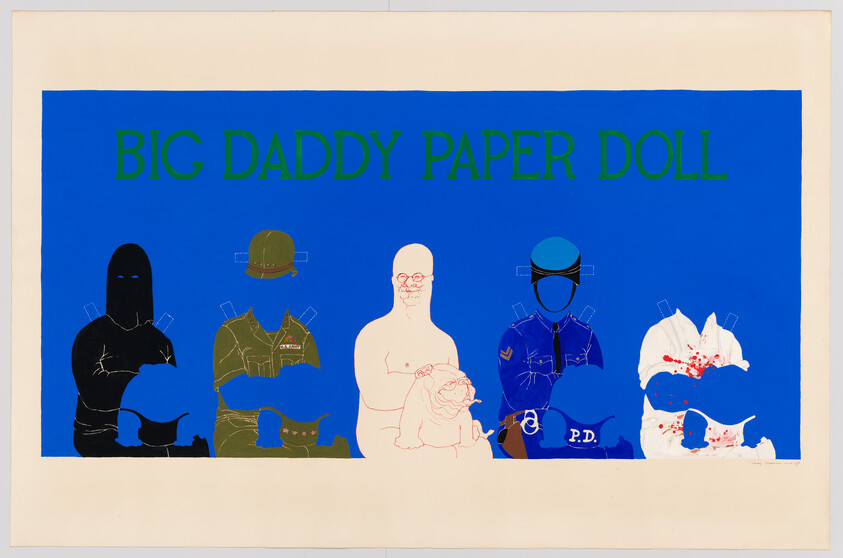
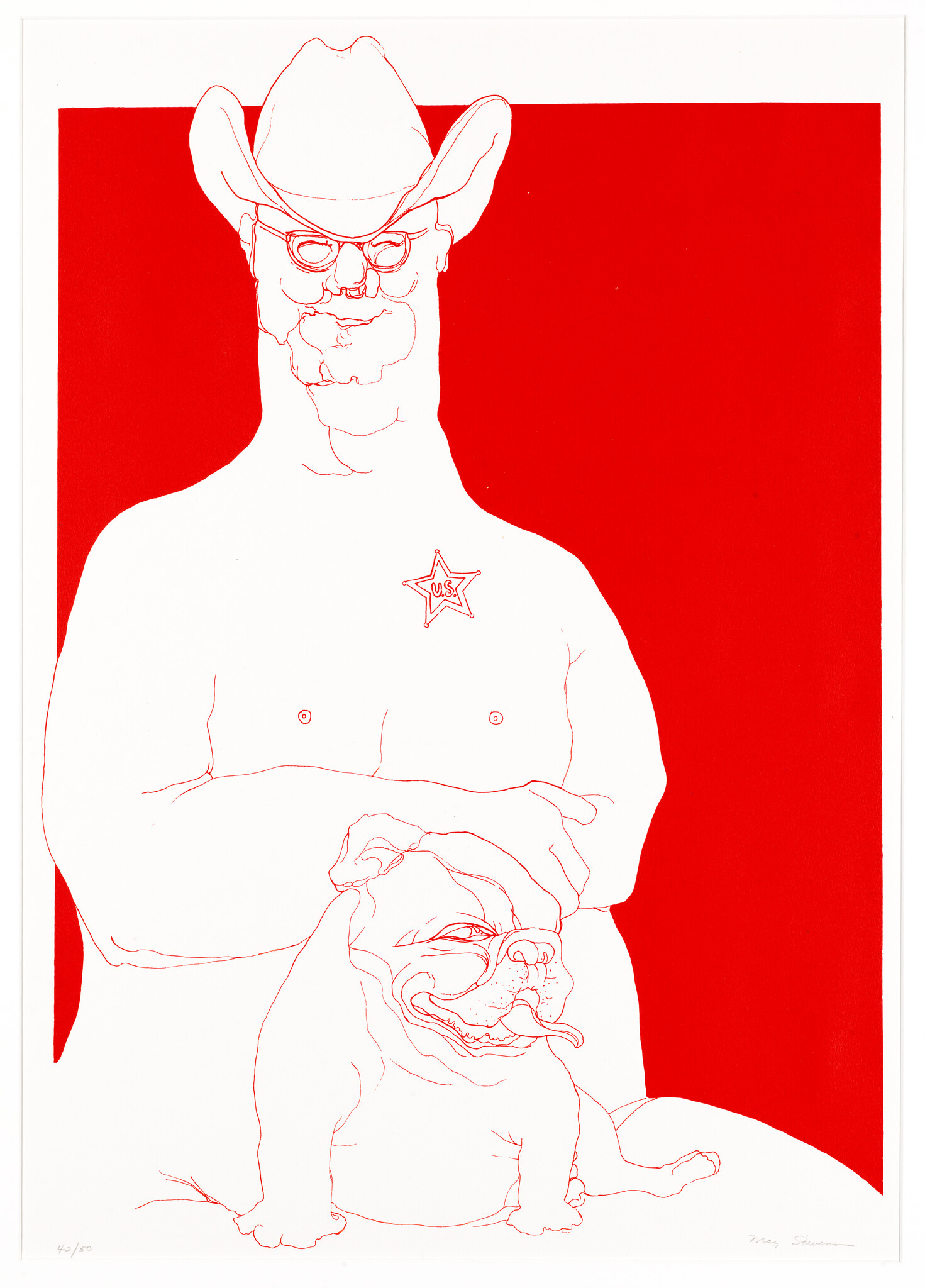
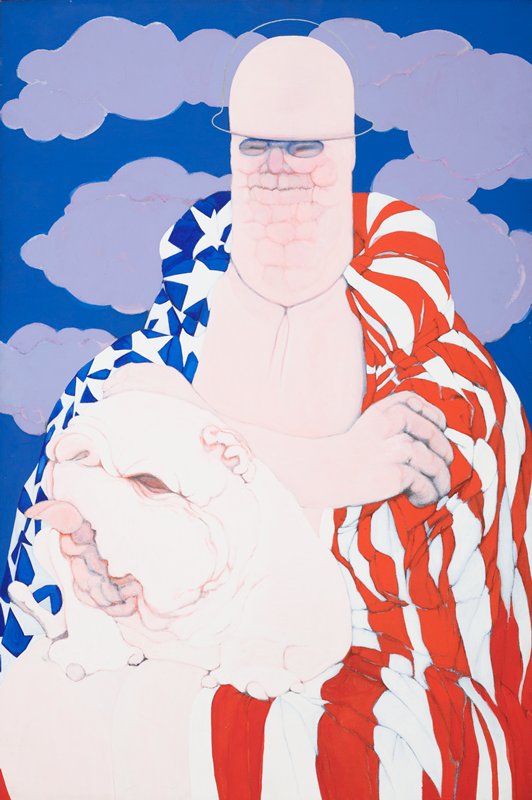
A bald man sits with crossed arms and a bulldog on his lap in May Stevens's Top Man, painted in 1975 and now in the Minneapolis Institute of Art, Minneapolis. An American flag covers his shoulders. The figure comes from Stevens's Big Daddy series, a grotesque version of her father, Ralph Stanley Stevens. Conceived during the Vietnam War, Big Daddy personifies American racism, prejudice and ignorance. The series belongs to political Pop art addressing war, civil rights and feminism. Critic Lucy Lippard read its authority figure as an expression of anger against domination abroad and at home.
Con le parole del museo
Top Man is a powerful example from May Stevens’ Big Daddy series featuring a grotesque caricature of her father, Ralph Stanley Stevens. The pasty, doughy, bald male figure is seated nude with his arms crossed, cloaked only in an American flag that is draped over his shoulders. Seated on Big Daddy’s lap is his pet bulldog, whose folds of pale skin reiterate the wrinkled man’s face, and whose tongue is clearly a stand-in for the aged man’s phallus. The character of Big Daddy, created at the height of the Vietnam War, is intended to be an embodiment of ignorance, bigotry and racism in America at the time.
Leggi
Top Man and the Big Daddy series are examples of political pop art from the 1960s and 70s which addressed issues surrounding the Vietnam War, as well as the fight for equality in the Civil Rights Movement and the first wave American Feminism. Writing in 1975 of Stevens and her Big Daddy series, art critic Lucy Lippard remarked that Big Daddy “is a graphic representation of the authority figure which has a special meaning for a woman in a male- dominated society. Steven brings to the Big Daddy paintings a controlled but powerful rage against imperialism on the foreign and the domestic fronts.”
Minneapolis Institute of Art
Scheda
- Numero di inventario
- 2018.14
In catalogo
Fonti
- Minneapolis Institute of Art
- Immagine: Minneapolis Institute of Art — © May Stevens