ART WIKI32.963 in sala
MappaCollezioneArtistiMuseiMostreRivista
Accedi

ART WIKI

Dove è appeso il capolavoro, e quando si può entrare.

Collezioni: Art Institute of Chicago, Cleveland Museum of Art, Ermitage, Galleria Tret'jakov, Getty Museum, Harvard Art Museums, Hirshhorn Museum and Sculpture Garden, Metropolitan Museum of Art, Minneapolis Institute of Art, Museo del Louvre, Museo Puškin delle belle arti, Museo russo, Museum of Modern Art, National Gallery of Art, National Museum of Asian Art, National Portrait Gallery, Rijksmuseum, Smithsonian American Art Museum, Statens Museum for Kunst, Victoria and Albert Museum, Villa Getty, Whitney Museum of American Art, Catalogo statale del fondo museale russo (274 musei), Europeana (19 musei), Wikidata (6 musei), Paris Musées (12 musei) e Joconde, la banca dati dei musei del Ministero della Cultura francese (495 musei). Le immagini appartengono ai titolari dei diritti.

Sezioni

  • Mappa
  • Ricerca
  • Collezione
  • Capolavori
  • Esposte ora
  • Artisti

Altro

  • Musei e gallerie
  • Mostre
  • Rivista
  • Da dove vengono i dati
  • Privacy e cookie
HomeMappaCatalogo
  1. Collezione/
  2. Cleveland Museum of Art/
  3. Sea Monster ("Das Meerwunder")
Sea Monster ("Das Meerwunder"), Albrecht Dürer, c. 1498
Albrecht Dürer, ritrattoAlbrecht DürerGermania, 1471–1528

Sea Monster ("Das Meerwunder")

c. 1498 · Print

CapolavoroN. 20delle opere su carta più famose

Si può ammirare?

Al momento non riceve

Cleveland Museum of Art

Cleveland, Stati Uniti

Appartiene alla collezione, ma al momento non è esposta.

Collezione: National Gallery of Art, Washington

Verificato
3 giorni fa
Ultimo cambio di stato
2 ott 2026
Fonte
Il museo
Sulla mappaPagina del museo

Sull’opera

The Sea Monster (German: Das Meerwunder) is a c. 1498–1500 copper engraving by the German Renaissance master Albrecht Dürer. It shows a voluptuous naked woman riding on the back of a merman, a male creature who is half-man, half-fish. The man wears a beard and antlers, while his lower body is covered in scales. The woman has seemingly been snatched and dragged away from the river bank; her companions are shown scrambling out of the water in panic, raising their arms in protest or lying down weeping. The woman wears an extravagant Milanese headdress and her mouth is open in a cry as she looks back at her friends in the distance. Despite the woman's gaze back at the bank and her open mouth, her relaxed Venus like pose suggests to some critics that she is not overly concerned with her plight.

Continua a leggere

For this reason writer Jonathan Jones described the engraving as a "troubling, wondrous image of the erotic", while historian Walter L. Strauss notes that her abduction may be a device to legitimise her nudity. A fortress is set on the rock high above the river; elements of its structure echo the Kaiserburg in Nuremberg.

This engraving is one of Dürer's early attempts at anatomy and proportion, completed before he arrived at what he saw as the canon of human beauty in his 1504 Adam and Eve.

The image can be approximately dated due to a similar nude study held in the Albertina in Vienna which Dürer signed and dated 1501. A well-regarded Mannerist copy was completed c. 1550 in Germany, which shows the scene in mirror image. The copy is signed IoHann Von Essen.

It is not known which specific classical or contemporary tale Dürer sought to illustrate; he is known to have synthesised different sources and bring motifs together in a single image. The abduction of a woman by a water god is one of the oldest Greek mythological conceptions and a subject that fascinated men through to the Renaissance. Dürer adds a layer of complexity to the scene in that the woman does not seem too upset at her fate.

Vasari gave an early description of the work through a vague description of a picture of a nymph set in the ancient world. Recent interpretations mention the abduction of Scylla by the sea demon Glaucus or the abduction of Hesione by a monster. Further speculation centres on Anna Perenna, who escapes from Aeneas with the aid of a horned water-god. Art historian Jane Campbell Hutchison suggests that the Milanese headdress may refer to the Lombard queen Theodelinda, who was also abducted by a sea monster. The horned Tritonesque figure echoes a description given by Poggio Bracciolini of a sea monster that had terrorised the Adriatic coast in the early 15th century.

Wikipedia · CC BY-SA

Con le parole del museo

The precise narrative of Dürer’s Sea Monster remains a source of debate among scholars because locating the origin of this imagery in either classical or German mythology has been difficult. The engraving depicts a woman’s abduction by a horned mythical hybrid creature that has the torso of a man and the tail of a fish. Set before a detailed coastal landscape featuring Nuremberg castle, the woman’s companions across the river flail their arms in distress over her kidnapping. While it is clear that Dürer aimed to showcase his achievements in portraying a reclining female nude, her somewhat blasé appearance and lack of struggle add to the peculiarity of this image.

National Gallery of Art

Scheda

c. 1498
14711528
Numero di inventario
1943.3.3483

Che cosa raffigura

Female nudeOceanSeaEdificioMonster

In catalogo

StampeBulinoRinascimentoXV secoloGermanMythologyGermany, late 15th-early 16th Century

Andirivieni

  1. Al momento non esposta

    Cleveland Museum of Art · 2 ott 2026 — oggi · Verificato

  2. Al momento non esposta

    National Gallery of Art · 29 set 2026 — 2 ott 2026 · Verificato

  3. Al momento non esposta

    Cleveland Museum of Art · 29 set 2026 — 29 set 2026 · Verificato

  4. Al momento non esposta

    National Gallery of Art · 29 set 2026 — 29 set 2026 · Verificato

  5. Al momento non esposta

    Cleveland Museum of Art · 28 set 2026 — 29 set 2026 · Verificato

  6. Al momento non esposta

    National Gallery of Art · 28 set 2026 — 28 set 2026 · Verificato

  7. Al momento non esposta

    Cleveland Museum of Art · 27 set 2026 — 28 set 2026 · Verificato

  8. Al momento non esposta

    National Gallery of Art · 26 set 2026 — 27 set 2026 · Verificato

  9. Al momento non esposta

    Cleveland Museum of Art · 19 ago 2026 — 26 set 2026 · Verificato

Fonti

  • Cleveland Museum of Art
  • Immagine: National Gallery of Art — Museum open access
Altre opere di Albrecht Dürer

Tutte le opere
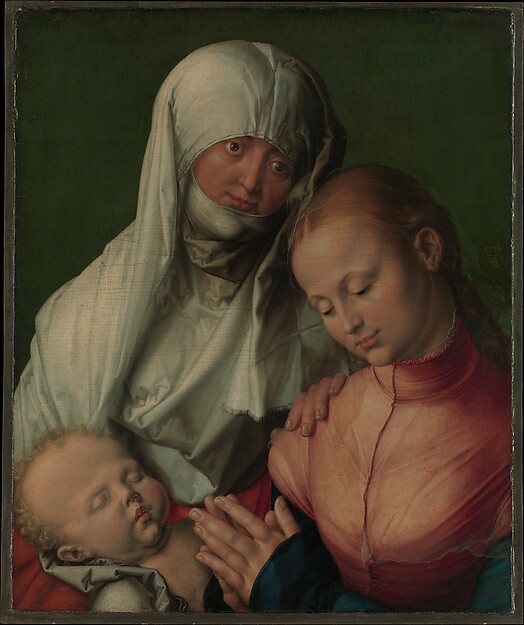
Virgin and Child with Saint Anne, Albrecht Dürer, probably 1519

Virgin and Child with Saint Anne

probably 1519 · Metropolitan Museum of Art

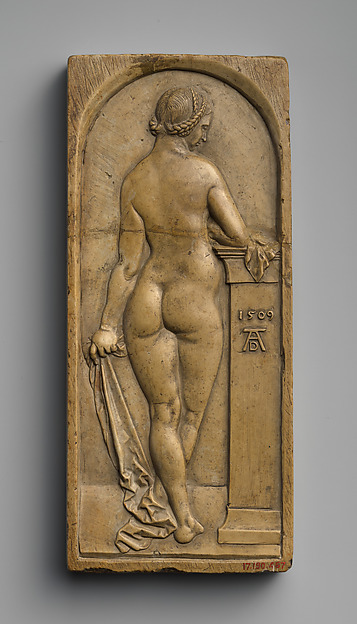
Female Nude Seen from Behind, Albrecht Dürer, early 17th century

Female Nude Seen from Behind

early 17th century · Metropolitan Museum of Art

Madonna and Child [obverse], Albrecht Dürer, c. 1496/1499

Madonna Haller

c. 1496/1499 · National Gallery of Art

Lot and His Daughters [reverse], Albrecht Dürer, c. 1496/1499

Lot and His Daughters [reverse]

c. 1496/1499 · National Gallery of Art

The Martyrdom of Saint Catherine, Albrecht Dürer, ca. 1498

The Martyrdom of Saint Catherine

ca. 1498 · Metropolitan Museum of Art

Nemesis (The Great Fortune), Albrecht Dürer, c. 1501/1502

Nemesis (The Great Fortune)

c. 1501/1502 · Cleveland Museum of Art

Large Horse, Albrecht Dürer, 1505

Large Horse

1505 · Cleveland Museum of Art

The Lamentation, Albrecht Dürer, 1507

The Lamentation

1507 · Cleveland Museum of Art

Sotto lo stesso tetto: Cleveland Museum of Art

Pagina del museo
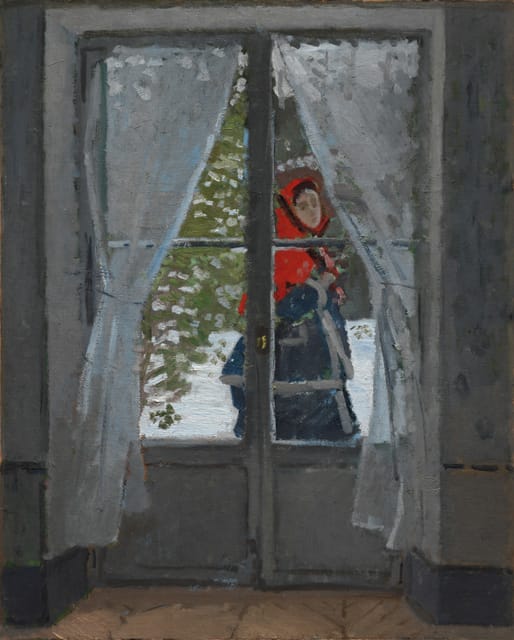
The Red Kerchief, Claude Monet, c. 1868–73

Claude Monet

The Red Kerchief, c. 1868–73

Melencolia I, Albrecht Dürer, 1514

Albrecht Dürer

Melencolia I, 1514

The Virgin and Child with the Pear, Albrecht Dürer, 1511

Albrecht Dürer

The Virgin and Child with the Pear, 1511

The Nativity, Albrecht Dürer, probably c. 1509/1510

Albrecht Dürer

The Nativity, probably c. 1509/1510

The Virgin and Child on a Crescent with a Starry Crown, Albrecht Dürer, 1508

Albrecht Dürer

The Virgin and Child on a Crescent with a Starry Crown, 1508

The Lamentation, Albrecht Dürer, 1507

Albrecht Dürer

The Lamentation, 1507

Large Horse, Albrecht Dürer, 1505

Albrecht Dürer

Large Horse, 1505

Nemesis (The Great Fortune), Albrecht Dürer, c. 1501/1502

Albrecht Dürer

Nemesis (The Great Fortune), c. 1501/1502

Sullo stesso tema · Female nude

Tutte le opere sul tema
Marie-Thérèse Considering a Surrealist Sculpture of Her Effigy (Marie-Thérèse considérant son effigie surréaliste sculptée), Pablo Picasso, 1933

Pablo Picasso

Marie-Thérèse Considering a Surrealist Sculpture of Her Effigy (Marie-Thérèse considérant son effigie surréaliste sculptée), 1933

Non esposta · National Gallery of Art

Marie-Thérèse as an Idol and Three Bearded Greeks (Marie-Thérèse en idole et trois grecs barbus), Pablo Picasso, 1934

Pablo Picasso

Marie-Thérèse as an Idol and Three Bearded Greeks (Marie-Thérèse en idole et trois grecs barbus), 1934

Non esposta · National Gallery of Art

Two Women at the Bath (Deux femmes au bain), Pablo Picasso, 1934

Pablo Picasso

Two Women at the Bath (Deux femmes au bain), 1934

Non esposta · National Gallery of Art

Rembrandt Takes a Young Veiled Woman by the Hand (Rembrandt tenant par la main un jeune femme au voile), Pablo Picasso, 1934

Pablo Picasso

Rembrandt Takes a Young Veiled Woman by the Hand (Rembrandt tenant par la main un jeune femme au voile), 1934

Non esposta · National Gallery of Art

Rape under the Window (Le viol sous la fenetre), Pablo Picasso, 1933

Pablo Picasso

Rape under the Window (Le viol sous la fenetre), 1933

Non esposta · National Gallery of Art

Marie-Thérèse Looking at Her Sculpted Body (Marie-Thérèse regardant son corps sculpté), Pablo Picasso, 1933

Pablo Picasso

Marie-Thérèse Looking at Her Sculpted Body (Marie-Thérèse regardant son corps sculpté), 1933

Non esposta · National Gallery of Art

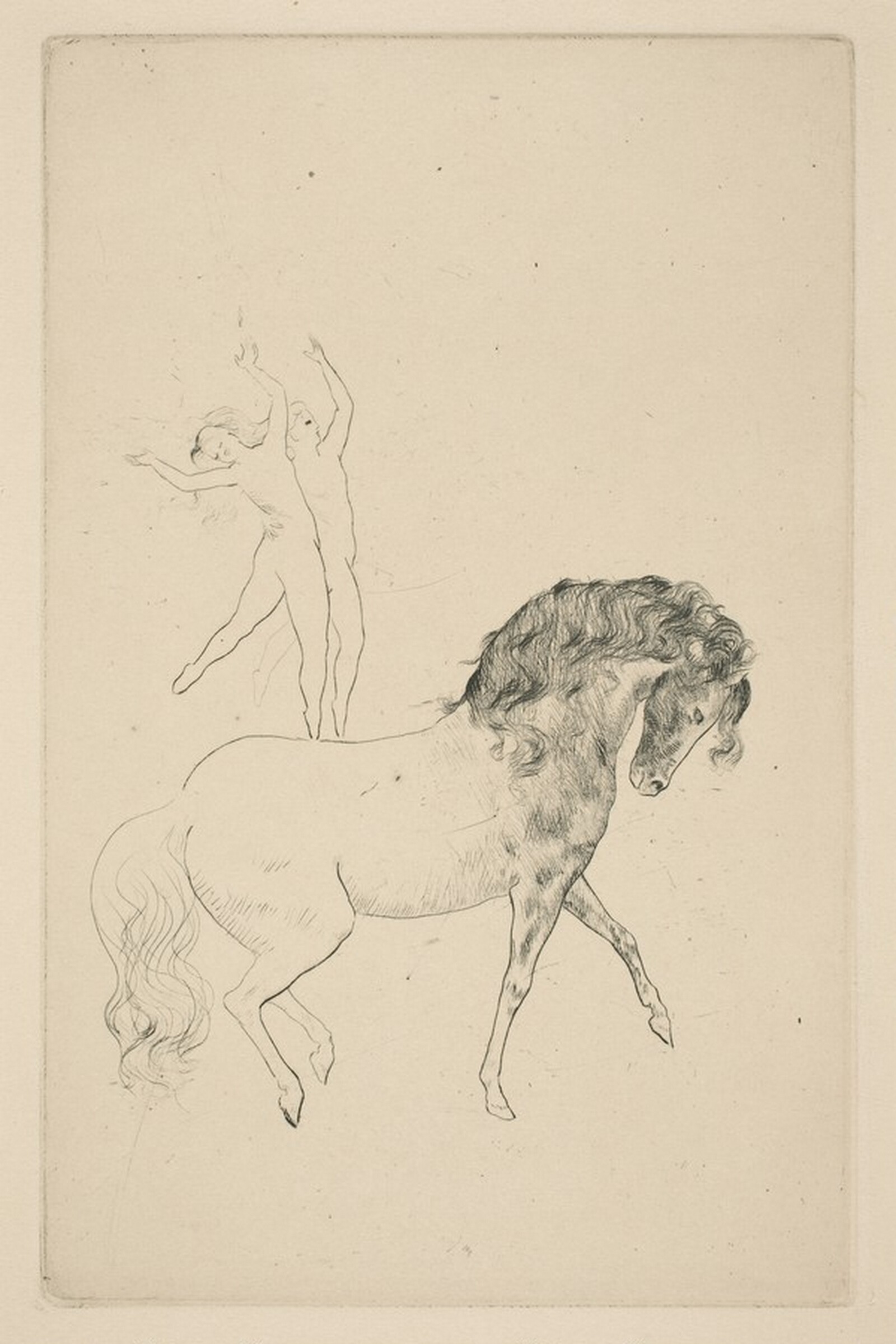
At the Circus (Au cirque), Pablo Picasso, 1905, published 1913

Pablo Picasso

At the Circus (Au cirque), 1905, published 1913

Non esposta · National Gallery of Art

Female Bathers (Femmes au bain), Pablo Picasso, 1934

Pablo Picasso

Female Bathers (Femmes au bain), 1934

Non esposta · National Gallery of Art