ART WIKI32.963 in sala
MappaCollezioneArtistiMuseiMostreRivista
Accedi

ART WIKI

Dove è appeso il capolavoro, e quando si può entrare.

Collezioni: Art Institute of Chicago, Cleveland Museum of Art, Ermitage, Galleria Tret'jakov, Getty Museum, Harvard Art Museums, Hirshhorn Museum and Sculpture Garden, Metropolitan Museum of Art, Minneapolis Institute of Art, Museo del Louvre, Museo Puškin delle belle arti, Museo russo, Museum of Modern Art, National Gallery of Art, National Museum of Asian Art, National Portrait Gallery, Rijksmuseum, Smithsonian American Art Museum, Statens Museum for Kunst, Victoria and Albert Museum, Villa Getty, Whitney Museum of American Art, Catalogo statale del fondo museale russo (274 musei), Europeana (19 musei), Wikidata (6 musei), Paris Musées (12 musei) e Joconde, la banca dati dei musei del Ministero della Cultura francese (495 musei). Le immagini appartengono ai titolari dei diritti.

Sezioni

  • Mappa
  • Ricerca
  • Collezione
  • Capolavori
  • Esposte ora
  • Artisti

Altro

  • Musei e gallerie
  • Mostre
  • Rivista
  • Da dove vengono i dati
  • Privacy e cookie
HomeMappaCatalogo
  1. Collezione/
  2. Cleveland Museum of Art/
  3. The Pink Cloud
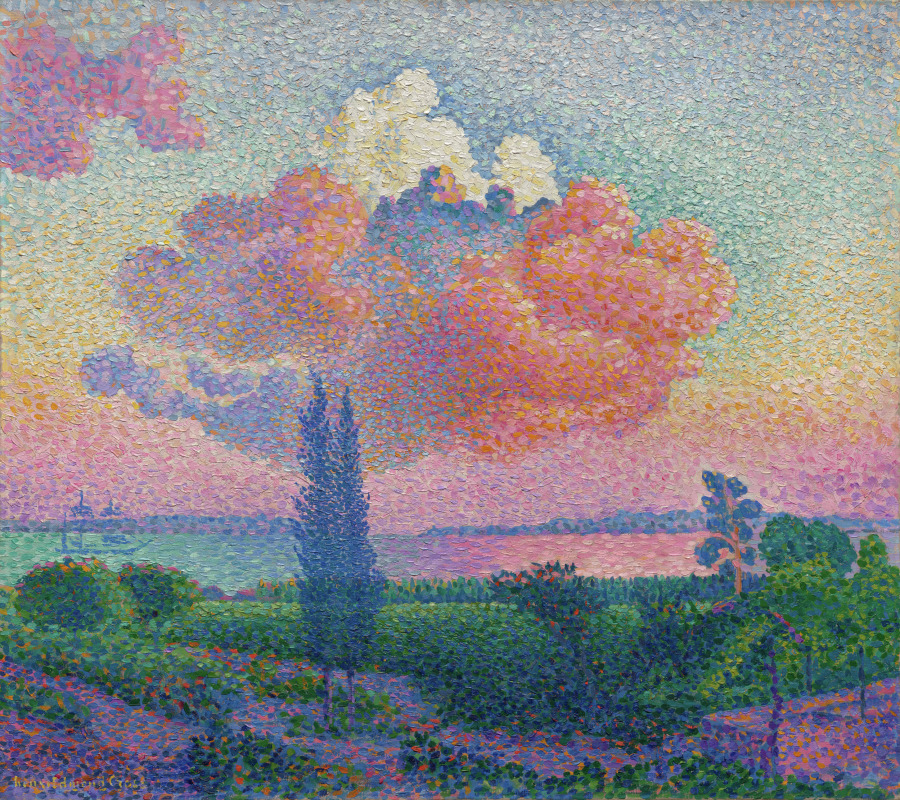
The Pink Cloud, Henri-Edmond Cross, c. 1896
Henri Edmond Cross, ritrattoHenri Edmond CrossFrancia, 1856–1910

The Pink Cloud

c. 1896 · Painting

Si può ammirare?

Al momento non riceve

Cleveland Museum of Art

Cleveland, Stati Uniti

Appartiene alla collezione, ma al momento non è esposta.

Verificato
l’altro ieri
Ultimo cambio di stato
28 set 2026
Fonte
I dati di collezione del museo stesso
Sulla mappaPagina del museo

Sul dipinto

Due to his diagnosis of persistent rheumatism, Henri-Edmond Cross left Paris in 1891 and settled in the seaside village of Saint-Clair on the Mediterranean coast where the climate was more temperate. He expressed his enthusiasm for the French Riveria to his mother, “In the distance, the blue silhouette of the Maures and the Estérel—I have enough here to keep me busy all of life—I have just discovered happiness.” Once he had settled in the south, Cross adopted the Neo-Impressionist technique of Pointillism—applying paint in small dots or dashes of complementary colors that mix in the beholder’s eye to create an intense sensation of color and light. Here, a spectacular cloud is illuminated by the sunset. A pair of cypress trees link the garden landscape below to the vivid sky above.

Cleveland Museum of Art

Scheda

c. 1896
18561910
Numero di inventario
2020.106

In catalogo

DipintiOlioPittura franceseImpressionismoXIX secoloFrance, 19th century

Fonti

  • Cleveland Museum of Art: i dati aperti del museo · acquisita 8 giorni fa
  • Immagine: Cleveland Museum of Art — Museum open access

Nel frattempo, nella vita di Henri Edmond Cross

Tutta la vita
  1. 1890s

    Meets Fénéon, Gide and Verhaeren

    In the 1890s he works alongside Signac and gets to know the writers and critics Félix Fénéon, André Gide and Emile Verhaeren.

  2. c. 1895

    Moves from Pointillism to a mosaic-like brushstroke

    From about 1895 he gradually changes his technique: instead of tiny dots, broad blocky brushstrokes with small areas of bare canvas left between them. The surfaces resemble mosaics, and such paintings are seen as precursors of Fauvism and Cubism.

  3. 1895

    Shows at La Libre Esthétique at Maus’s invitation

    Octave Maus, who had earlier invited him to the annual exhibitions of Les XX, invites him to the Libre Esthétique show; Cross takes part again in 1897, 1901, 1904, 1908 and 1909.

  4. 1896

    Lithograph “The Wanderer” for an anarchist journal

    The lithograph “L’Errant” (“The Wanderer”), his first work with a publisher, appeared anonymously in Jean Grave’s anarchist journal Les Temps Nouveaux. Like Signac and Pissarro, Cross held anarchist principles, and they shaped his choice of subjects — scenes of a utopian world.

  5. 1898

    The first Neo-Impressionist exhibition in Germany

    In 1898, together with Signac, Maximilien Luce and Théo van Rysselberghe, he takes part in the first Neo-Impressionist exhibition in Germany, organized by Harry Kessler at the Keller und Reiner Gallery.
Altre opere di Henri Edmond Cross

Tutte le opere
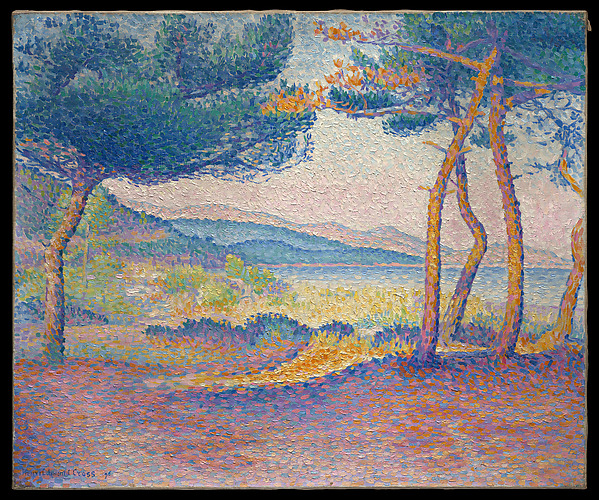
Pines Along the Shore, Henri-Edmond Cross, 1896

Pines Along the Shore

1896 · Metropolitan Museum of Art

Church of Santa Maria degli Angely Near Assisi, Henri Edmond Cross, 1909

Church of Santa Maria degli Angely Near Assisi

1909 · Ermitage

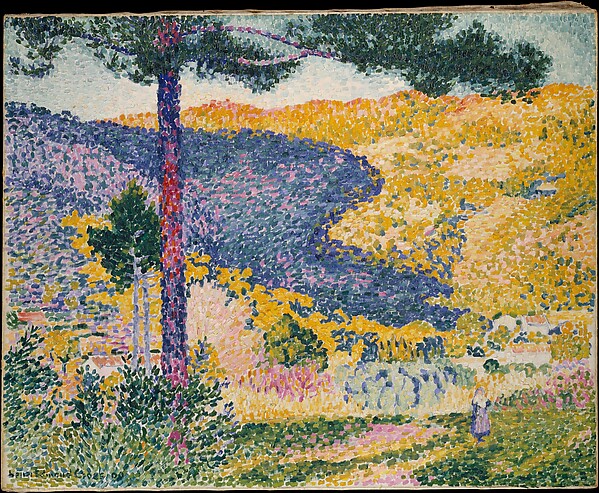
Valley with Fir (Shade on the Mountain), Henri-Edmond Cross, 1909

Valley with Fir (Shade on the Mountain)

1909 · Metropolitan Museum of Art

Seascape, Henri-Edmond Cross, c. 1891-1892

Seascape

c. 1891-1892 · Harvard Art Museums

Woman Harvesting Vegetables, Henri-Edmond Cross, c. 1892

Woman Harvesting Vegetables

c. 1892 · Harvard Art Museums

Sketchbook, Henri-Edmond Cross, 1897

Sketchbook

1897 · Harvard Art Museums

Sketchbook, Henri-Edmond Cross, 1897

Sketchbook

1897 · Harvard Art Museums

Three Swans, Henri-Edmond Cross, c. 1899-1900

Three Swans

c. 1899-1900 · Harvard Art Museums

Sotto lo stesso tetto: Cleveland Museum of Art

Pagina del museo
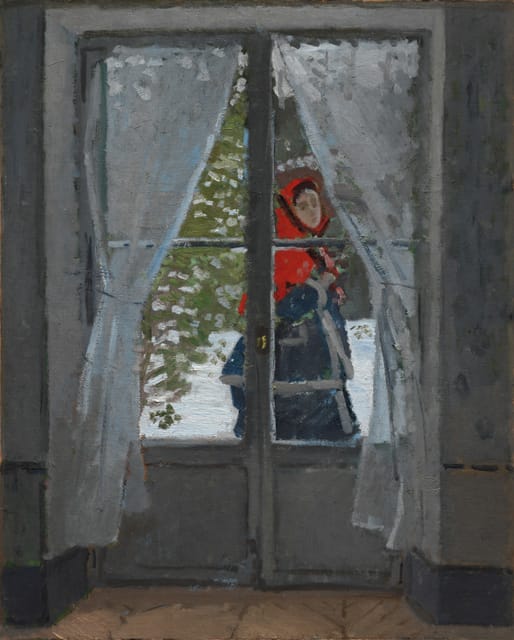
The Red Kerchief, Claude Monet, c. 1868–73

Claude Monet

The Red Kerchief, c. 1868–73

Melencolia I, Albrecht Dürer, 1514

Albrecht Dürer

Melencolia I, 1514

The Virgin and Child with the Pear, Albrecht Dürer, 1511

Albrecht Dürer

The Virgin and Child with the Pear, 1511

The Nativity, Albrecht Dürer, probably c. 1509/1510

Albrecht Dürer

The Nativity, probably c. 1509/1510

The Virgin and Child on a Crescent with a Starry Crown, Albrecht Dürer, 1508

Albrecht Dürer

The Virgin and Child on a Crescent with a Starry Crown, 1508

The Lamentation, Albrecht Dürer, 1507

Albrecht Dürer

The Lamentation, 1507

Large Horse, Albrecht Dürer, 1505

Albrecht Dürer

Large Horse, 1505

Nemesis (The Great Fortune), Albrecht Dürer, c. 1501/1502

Albrecht Dürer

Nemesis (The Great Fortune), c. 1501/1502