The Mount of the Good Shepherd
Si può vedere?
Sì, esposta ora
Dove si trova «The Mount of the Good Shepherd» oggi? Victoria and Albert Museum, Europe 1600-1815, Room 7, The Sheikha Amna Bint Mohammed Al Thani Gallery, Londra. Sì, esposta ora. Verificato 25 settembre 2026.

Londra, Regno Unito
SalaEurope 1600-1815, Room 7, The Sheikha Amna Bint Mohammed Al Thani Gallery
Aperto· fino alle 17:45
Esposta al pubblico.
- Verificato
- Ultimo cambio di stato
- Fonte
- Il museo
Sulla scultura
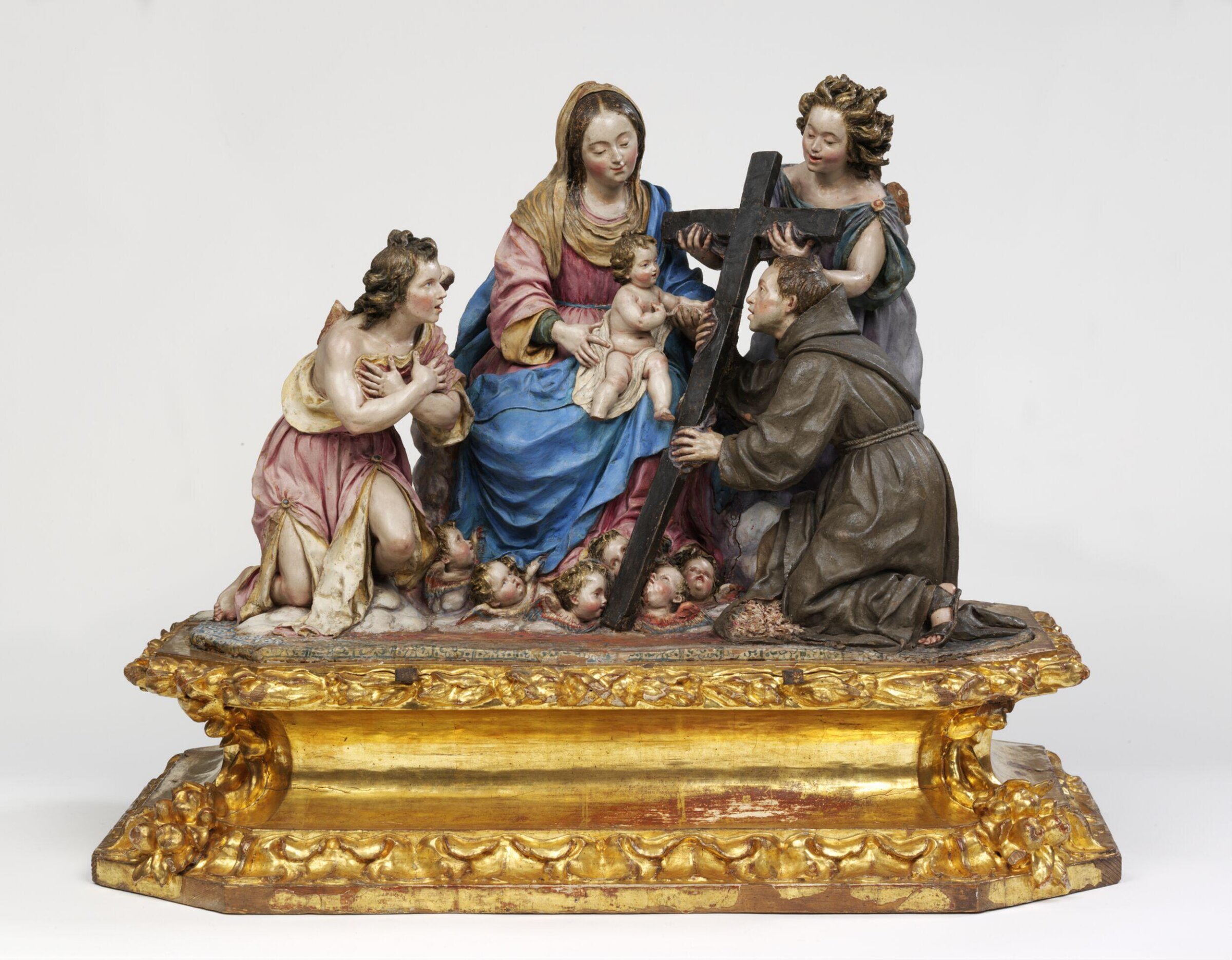
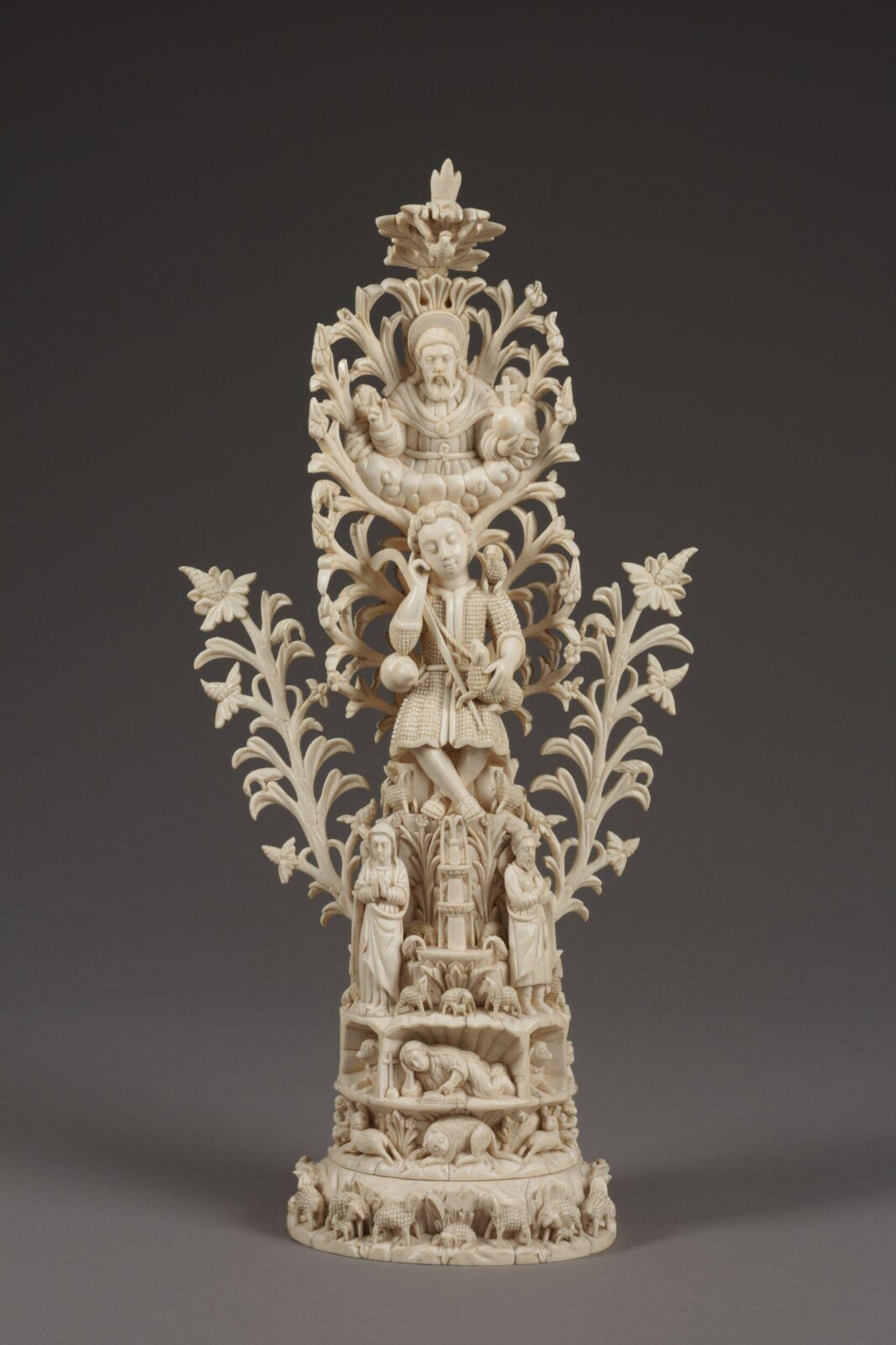
Christ is shown as a child dressed as a shepherd, and perched on top of the mount, his chin resting on his right hand, asleep. Three leafy branches fan out from the back of the group; in the central branch is a half-length relief of God the Father holding an orb in his left hand, and blessing with his right, and above him the dove as the Holy Spirit. Below is a mount with a fountain, from which sheep are drinking. This is flanked by St Joseph and the Virgin. Beneath, St Mary Magdalene reclines reading a book, beside a crucifix. The mountainside is dense with animals, including lions, rabbits, dogs and sheep.
Leggi
This distinctive composition is unique to Goan ivories, and recurs again and again; many examples have survived. The clustered figures, and certain important iconographic types taken from Indian art, such as the fountain, showing the plentiful effusion of nature's blessings, had deep-rooted ritual value, and seem to have been re-applied in a Christian context. The combination of the Christ child in the guise of a shepherd with saints, a fountain, vegetation and animals suggests the richness of the natural world. The seated sleeping Christ child is reminiscent of images of the sleeping Buddha. Ivory carving had a long tradition on the Indian subcontinent, and elaborate works of art were made, particularly as diplomatic gifts, often presented to Western rulers. Most of the ivory would have been exported from Mozambique in East Africa to be carved in Goa by local craftsmen.
Goa was the second base in India to be established by the Portuguese, having been conquered by Alfonso de Albuquerque (about 1453-1515) during the reign of Manuel I of Portugal initially in 1510, and then reconquered in 1512. Portugal was interested first and foremost in trade, and the discovery of India was motivated by a desire to dominate trade-routes. But the Christian settlers and missionaries were also keen to convert the native populace to Christianity, and religious images in ivory were commissioned to assist in this. Some were exported to Europe, but others evidently remained and were used for evangelical purposes. From the sixteenth century onwards, the four main missionary Orders (Augustinians, Jesuits, Dominicans and Franciscans) built churches and aimed to convert the inhabitants of India. Despite the control of the Church over subject matter, the iconography of Indian art also permeated Christian ivories; the most obvious and at the same time strangest instance of this is the Mount of the Good Shepherd.
Victoria and Albert Museum
Scheda
- Numero di inventario
- A.58-1949
Che cosa raffigura
In catalogo
Fonti
- Victoria and Albert Museum
- Immagine: Victoria and Albert Museum — © Victoria and Albert Museum, London