 Paul CézanneFrancia, 1839–1906
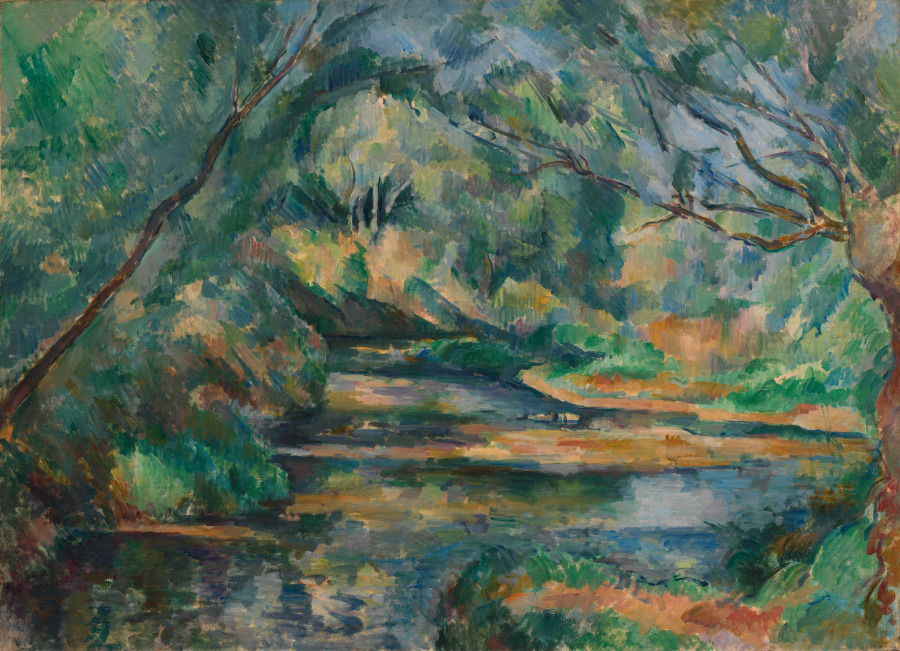
The Brook
Si può vedere?
Sì, esposta ora
Dove si trova «The Brook» oggi? Cleveland Museum of Art, 222 Impressionism & Post-Impressionism, Cleveland. Sì, esposta ora. Verificato 16 novembre 2026.

Chiuso· apre domani alle 10:00
Esposta al pubblico.
- Verificato
- Ultimo cambio di stato
- Fonte
- Il museo
Sul dipinto
Paul Cézanne's The Brook, about 1895–1900, depicts the Arc valley southeast of his home in Aix-en-Provence; it is in Cleveland's Museum of Art. Adjacent strokes of differing colors describe water, foliage, and branches without relying on drawn contours. Cézanne wanted forms and colors to balance within a composition. Though he had twice exhibited alongside the Impressionists, he did not share their wish to record momentary changes of light and air. Here, color itself gives the landscape its shapes. On view in gallery 222.
Con le parole del museo
Although Cezanne exhibited twice with the Impressionists, he rejected his friends’ goals of capturing the fleeting effects of light and atmosphere in their art. Instead, he sought to create balance among the forms and colors in his compositions. This painting depicts the valley of the Arc River that runs southeast of Cezanne’s home in Aix-en-Provence. Throughout the composition, he juxtaposed strokes of different hues, describing the leaves, branches, and the stream with color rather than drawing the outlines of forms.
Cleveland Museum of Art
Scheda
- Numero di inventario
- 1958.20
In catalogo
Fonti
- Cleveland Museum of Art
- Immagine: Cleveland Museum of Art — Museum open access
Nella vita di Paul Cézanne
Tutta la vita1895
La prima mostra personale da Vollard
Ambroise Vollard aprì la prima mostra personale di Cézanne nella sua galleria parigina, mostrando 50 delle circa 150 opere inviate. La mostra portò la sua arte a un vasto pubblico; i prezzi delle sue opere si centuplicarono.
25 October 1897
La morte della madre
Morì la madre dell'artista, Anne-Élisabeth-Honorine Aubert.
1899
La vendita del Jas de Bouffan
Per insistenza della sorella vendette la tenuta deserta del Jas de Bouffan e si trasferì in un piccolo appartamento in città al 23 di rue Boulegon ad Aix; l'acquisto progettato del Château Noir sfumò. Assunse una governante, la signora Brémond, che si prese cura di lui fino alla morte.
1901–1903
Lo studio sul Chemin des Lauves
Nel 1901 acquistò un terreno a nord di Aix, nel 1902 vi costruì uno studio secondo le proprie indicazioni (oggi Atelier de Cézanne) e nel 1903 vi si trasferì; nella parete fu aperta una lunga e stretta fessura per far entrare la luce naturale necessaria alle grandi «Bagnanti».
29 September 1902
La morte di Émile Zola
La morte di Zola gettò Cézanne nel lutto, nonostante il lungo allontanamento.