Georges BraqueFrancia, 1882–1963
Still Life
Sul dipinto
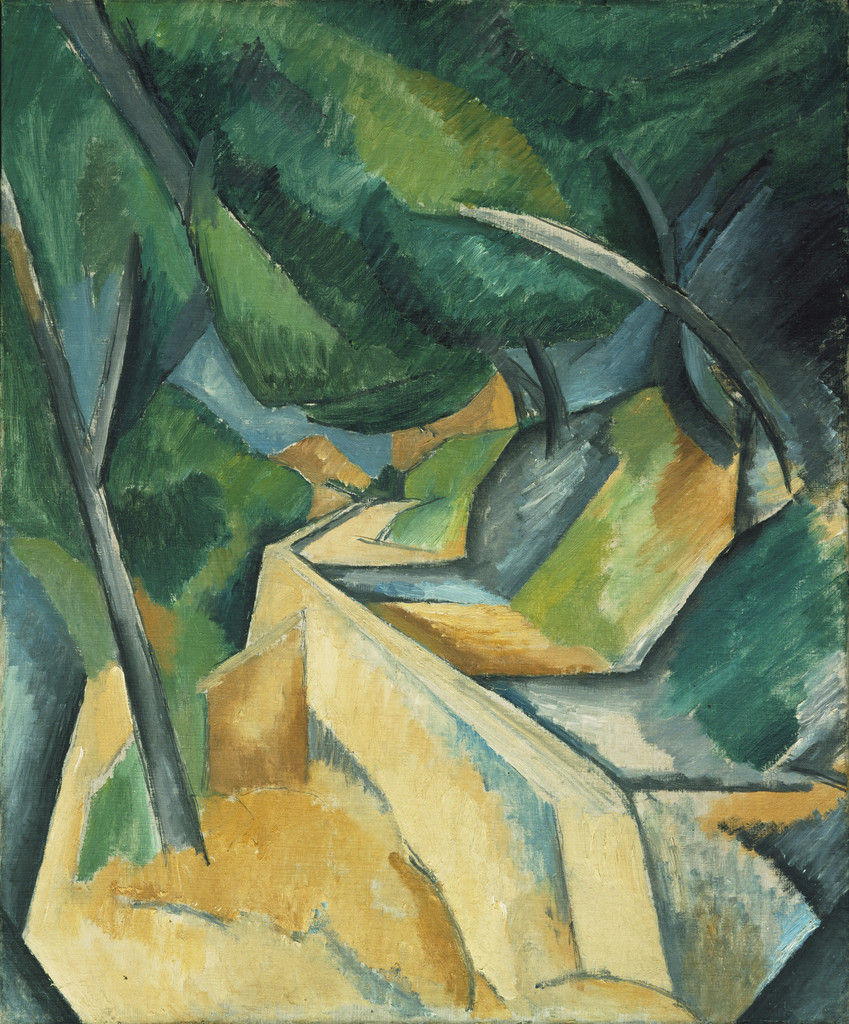
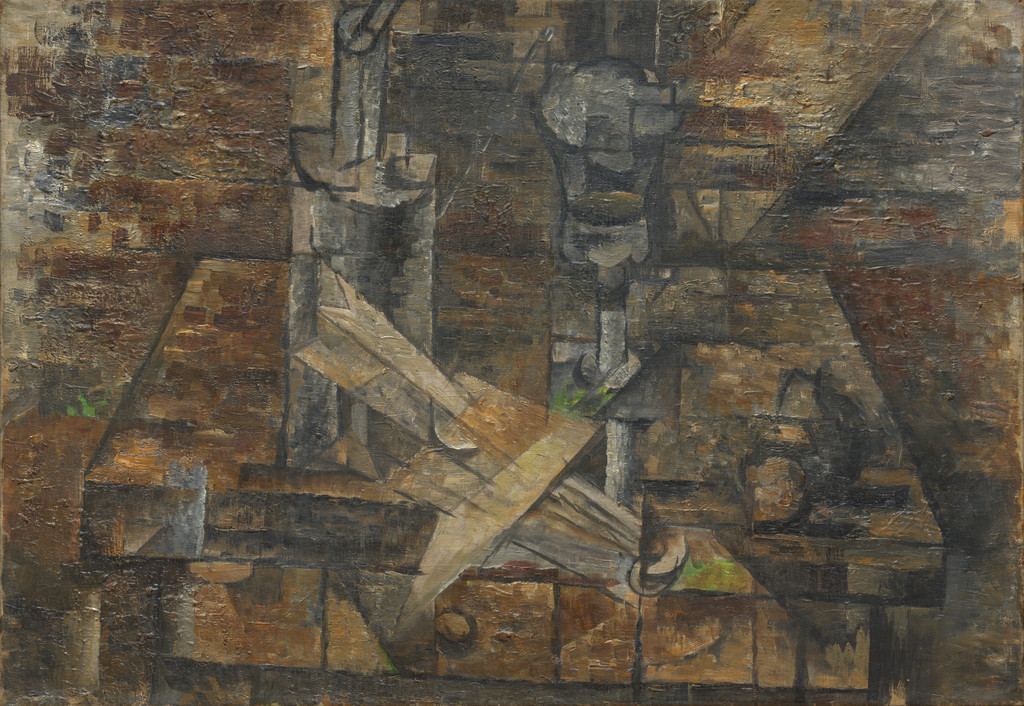
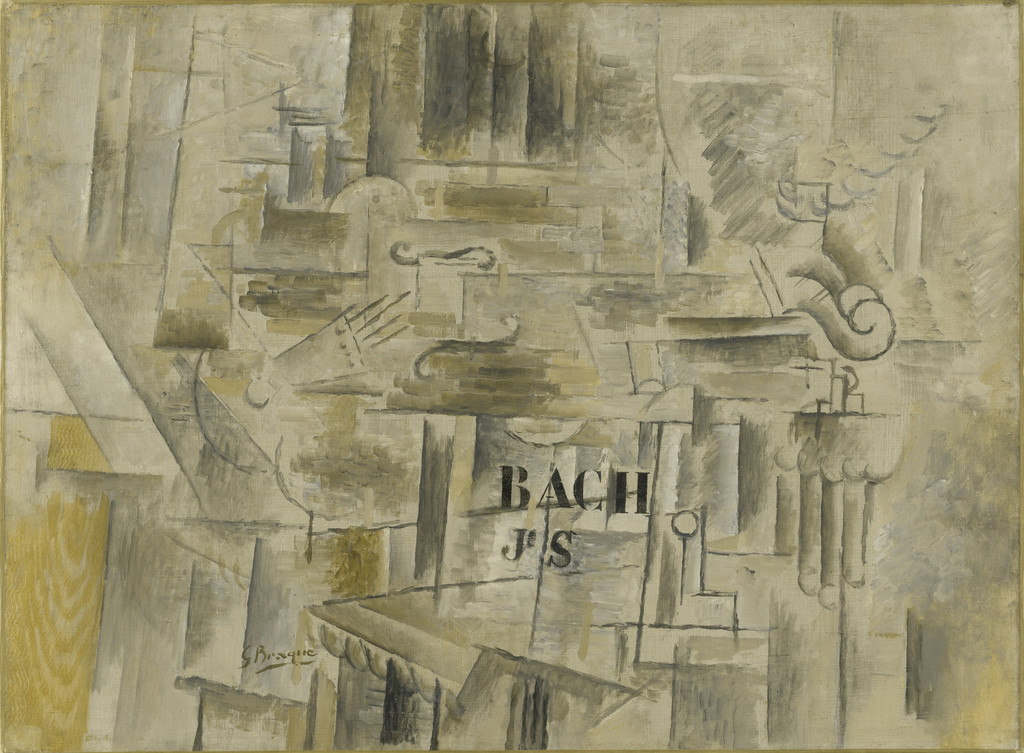
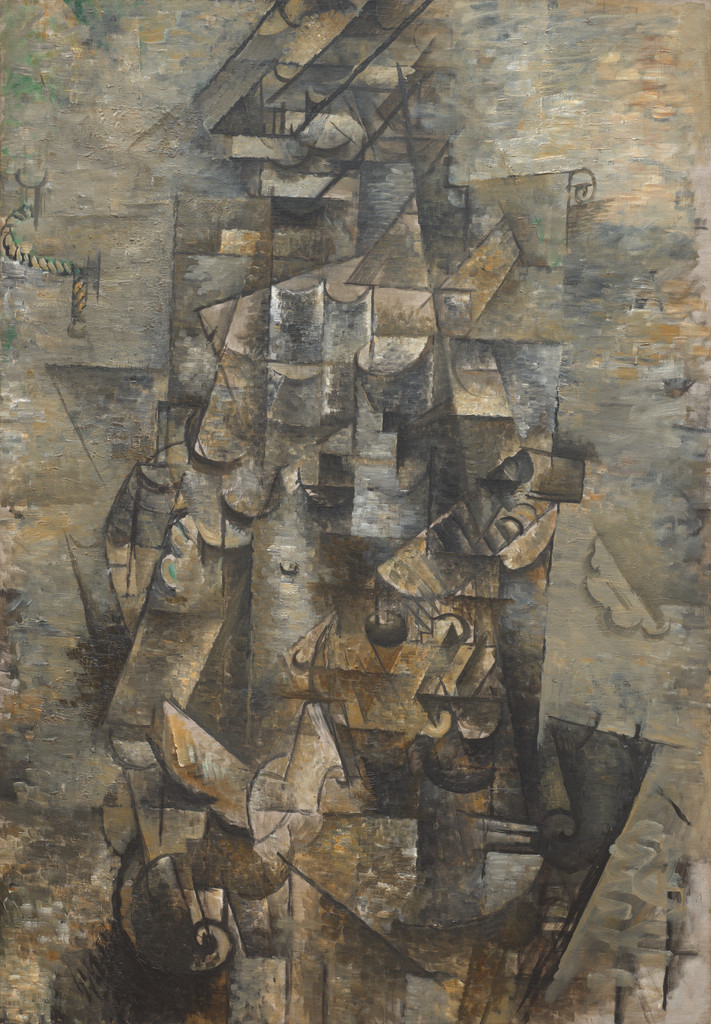
Together with Pablo Picasso , Georges Braque was responsible for developing the revolutionary approach to painting known as Cubism (c. 90o7- 14). Starting with their meeting in 1907, Picasso and Braque moved together through the successive phases of this radically new style: the early phase (c. 1907-09), which was strongly influenced by the study of African art and Cézanne; the so-called Analytical phase (c. 1910-12), in which the rhythm of the picture becomes dense and broken, at times making the subject almost unreadable; and the so-called Synthetic phase (c. 1912-14), which is marked by a loosening of the picture's structure, partly under the influence of collage, in favor of broader planes, brighter color, and more decorative effects.
Continua a leggere
In this painting, we see Braque emerging after World War I (he was seriously wounded in 1915 and did not resume painting until 1917) with a style clearly indebted to his earlier Cubist works, but tempered by a mood of quiet reflection. There is a fluidity and looseness in the way Braque applied traditional Cubist devices here that bespeaks an easy familiarity without the urgency and edge of the earlier experimental work. The artist handled this favorite Cubist subject here with a fuguelike sense of visual counterpoint that seems indeed to illustrate the analogy between painting and music so wide-spread in the early part of this century. The broad planes and patterned surfaces of Synthetic Cubism are evident in the treatment of the objects, which are defined by large, overlapping areas of color.
The decorative pointillism used to distinguish certain planes and the simulated wood grain used for the guitar's neck recall the Cubists' earlier radical experiments with collage. Cubism's legacy is, however, best exemplified here by the startling liberty Braque took with the guitar's body, its customary curvature broken at left by a gaping, angular opening, which finds its primary justification not in resemblance to an outside model but in the painting's inner logic.
—Entry, Margherita Andreotti, Art Institute of Chicago Museum Studies, Vol. 20, No. 2, The Joseph Winterbotham Collection at The Art Institute of Chicago (1994), p. 154-155.
Art Institute of ChicagoCC BY 4.0

Scheda
- Numero di inventario
- 1929.764