 Viktor Vasnetsov1848–1926
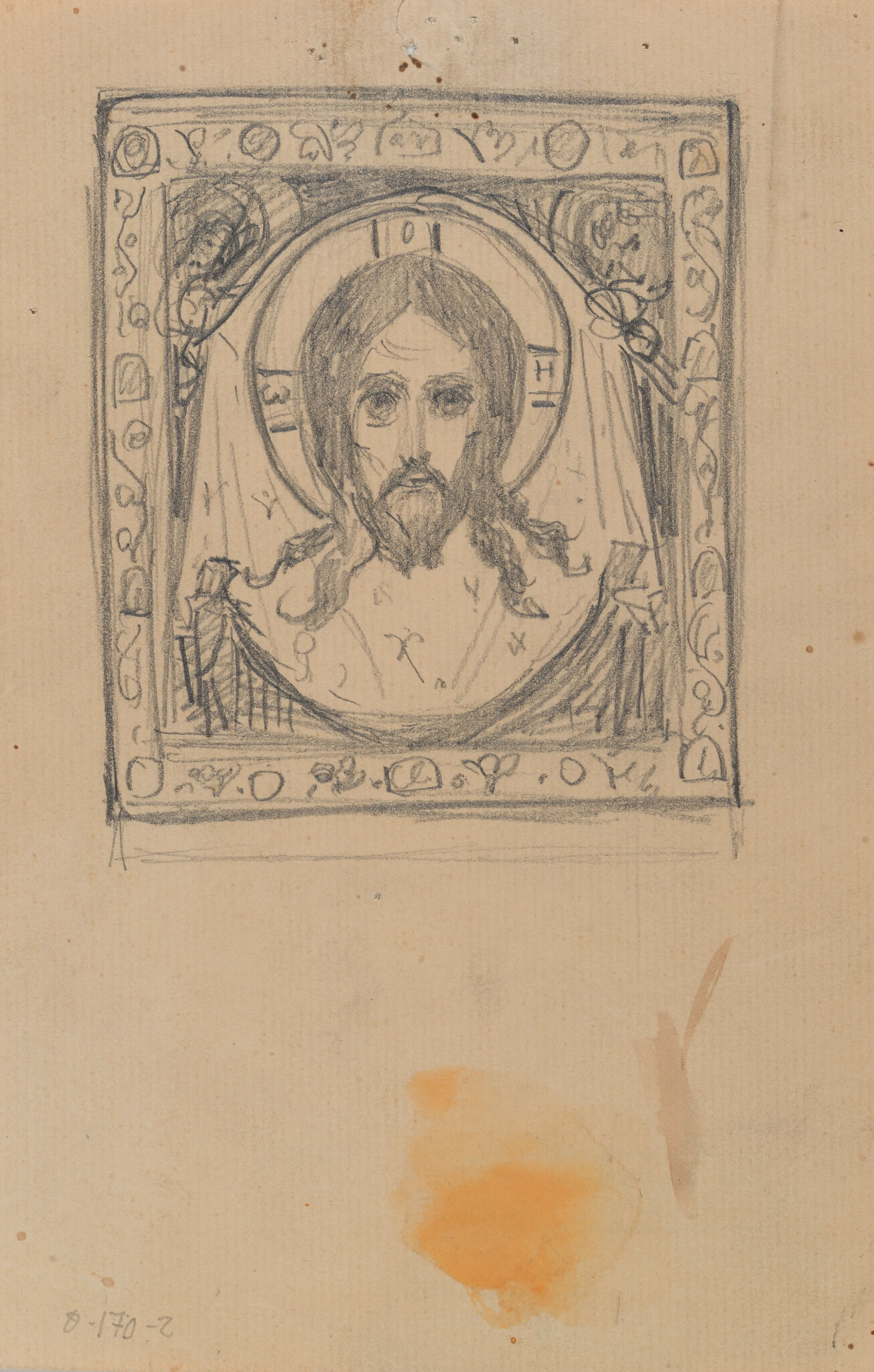
Спас Нерукотворный. Эскиз
Si può ammirare?
Non si sa

Galleria Tret'jakov
Mosca, Russia
Il proprietario è noto; non si sa se oggi sia esposta.
- Ultimo cambio di stato
- Fonte
- Il museo
Sull’opera
Con le parole del museo — in russo
Иконография образа сложилась согласно преданию о том, что Иисус Христос, умыв лицо, приложил к нему убрус, и на ткани чудесным образом отпечатался Его лик. Этот святой убрус был отправлен в Эдессу царю Авгарю V Уккаме, больному проказой. Приложившись к плату, царь получил исцеление. В византийском искусстве иконография Спаса Нерукотворного распространилась со второй половины Х века. Из русских памятников самый ранний известный – новгородская икона второй половины XII века. Иконографический тип изображения имеет множество вариантов. В работах Васнецова известны два из них: Спас на убрусе и Спас на убрусе с ангелами.
Continua a leggere
В России образ Спаса Нерукотворного с давних времен изображался на стягах, под которым сражались русские войска. Этим, вероятно, можно объяснить особое внимание художника к данной иконографии в период трагических событий начала XX века. Под одним из образов Спасителя художник поставил две даты: 1905 и 1915. Множественные проколы в углах – следы закрепления листа – свидетельствуют о длительной работе над образом.
На белом плате в обрамлении крестчатого нимба изображен лик Спасителя. Его черты близки образу Христа Вседержителя во Владимирском соборе в Киеве, но отличительной особенностью стало выраженное в нем глубокое страдание. Через образ Спасителя художник выразил свое личное ощущение трагизма переживаемого времени.
После событий Кровавого воскресенья он писал И.Л. Щеглову-Леонтьеву: «…не буду говорить о главных болях и ранах души… они те же, что, вероятно, и у Вас… Да отпустит Бог грехи наши и да поможет нашей бедной страдающей так тяжко Родине!» Первоначальный вариант был написан в 1905 году, и, вероятно, Васнецов считал его законченным, так как той же акварелью, которой прописаны складки и кайма плата, поставлена подпись: «В.Васнецов 1905 г.». Двойная дата дает возможность предположить, что спустя десять лет художник возобновил работу, значительно усилив выражение страдания в лике Христа. Тени под глазами, на щеках, скорбная складка на лбу проложены итальянским карандашом, им же поставлены дата и подпись: «7/8 июня 1915 г. В. Васнецов».
«…Думали ли мы, что доживем до таких тяжких времен! – писал художник Е.А. Праховой в 1914 году, – о чем бы ни говорил, о чем бы ни думал, а в душе все время великая незабываемая тяжелая дума – война! Бог милостив – будем молиться!» Упование на милосердие Божие в самые тяжелые времена для русского народа выразилось в созданном художником образе Спаса Нерукотворного.
Galleria Tret'jakov
Scheda
- Numero di inventario
- ДМВ Г-489
In catalogo
Fonti
- Galleria Tret'jakov
- Immagine: Galleria Tret'jakov — © State Tretyakov Gallery
Nel frattempo, nella vita di Viktor Vasnetsov
Tutta la vita1878
He moves to Moscow, the city of his life’s work
In 1878, his resolve strengthened by Mamontov’s letter, he moved to Moscow, the city to which most of his creative life would be tied: he settled in a small flat in 3rd Ushakovsky Lane near Ostozhenka, walked the city for hours admiring the Kremlin and St Basil’s, and until 1885 the family changed rented flats in Moscow six times.
1878–1880
Mamontov’s commission for the Donetsk Railway
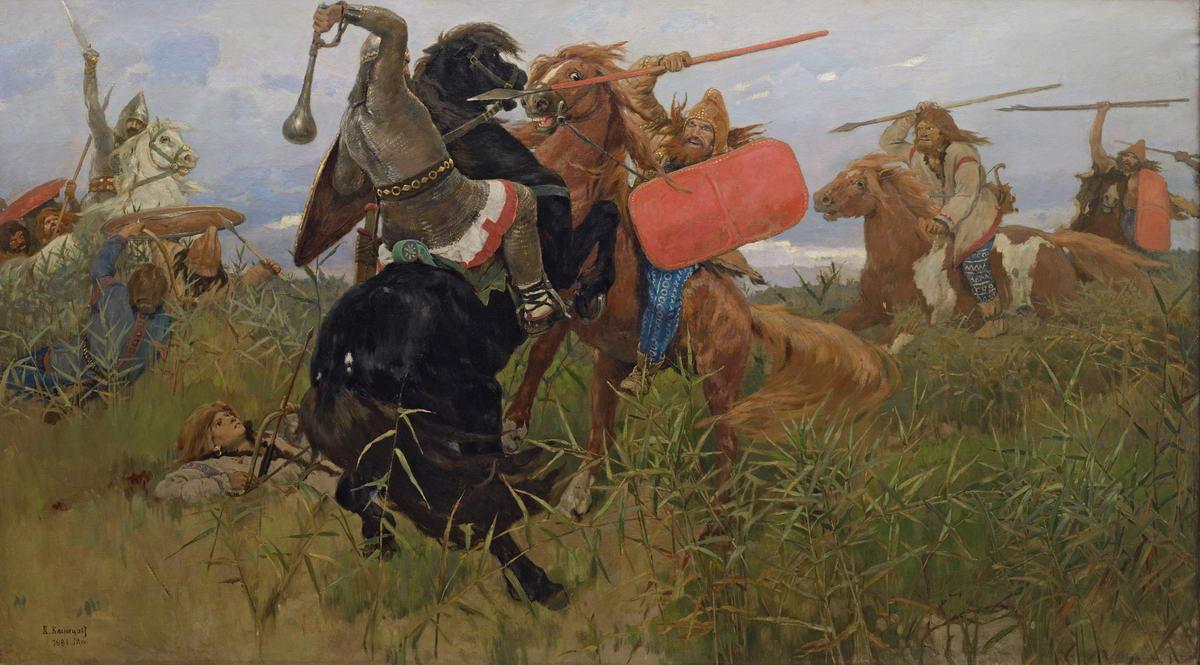
Repin brought him to the house of Savva Mamontov, who commissioned three fairy-tale pictures for the boardroom of the Donetsk Railway — “The Battle of the Russians with the Scythians”, “The Flying Carpet” and “The Three Princesses of the Underground Kingdom” (the princesses of gold, precious stones and coal); the princess Coal, a modest dark-haired girl in a black dress, was especially successful.
1878–1890 · Carriera
the Peredvizhniki
From 1878 he belonged to the Society of Travelling Art Exhibitions (the Peredvizhniki): he took part in its activity in 1878–1890 and exhibited with it until 1897; he was admitted for the realism and sharp social subjects of his genre paintings.
June 1880
His first visit to Mamontov’s Abramtsevo
In June 1880, with his brother Apollinary, he first came to Abramtsevo at Savva Mamontov’s invitation and joined the circle of Repin, Polenov, Serov and other artists, where he became one of the leaders of the national-romantic current.
1884–1889
Friendship with Mikhail Vrubel in Kiev
While living in Kiev he became friends with Mikhail Vrubel, who was also working on the cathedral; while they worked together Vasnetsov taught the younger artist a great deal.
1891–1894
He builds a terem-style house in Troitskaya Sloboda
In 1891 he bought land in Troitskaya Sloboda and himself devised a wooden mansion in the style of an ancient Russian terem; construction, carried out by peasants from Vladimir Governorate, was completed in 1894, and the second-floor studio (110 m², six-metre ceilings) became the place where the “Bogatyrs”, “The Snow Maiden” and the “Poem of Seven Fairy Tales” were painted; Governor-General Grand Duke Sergei Alexandrovich allowed the house to exceed the height limit.