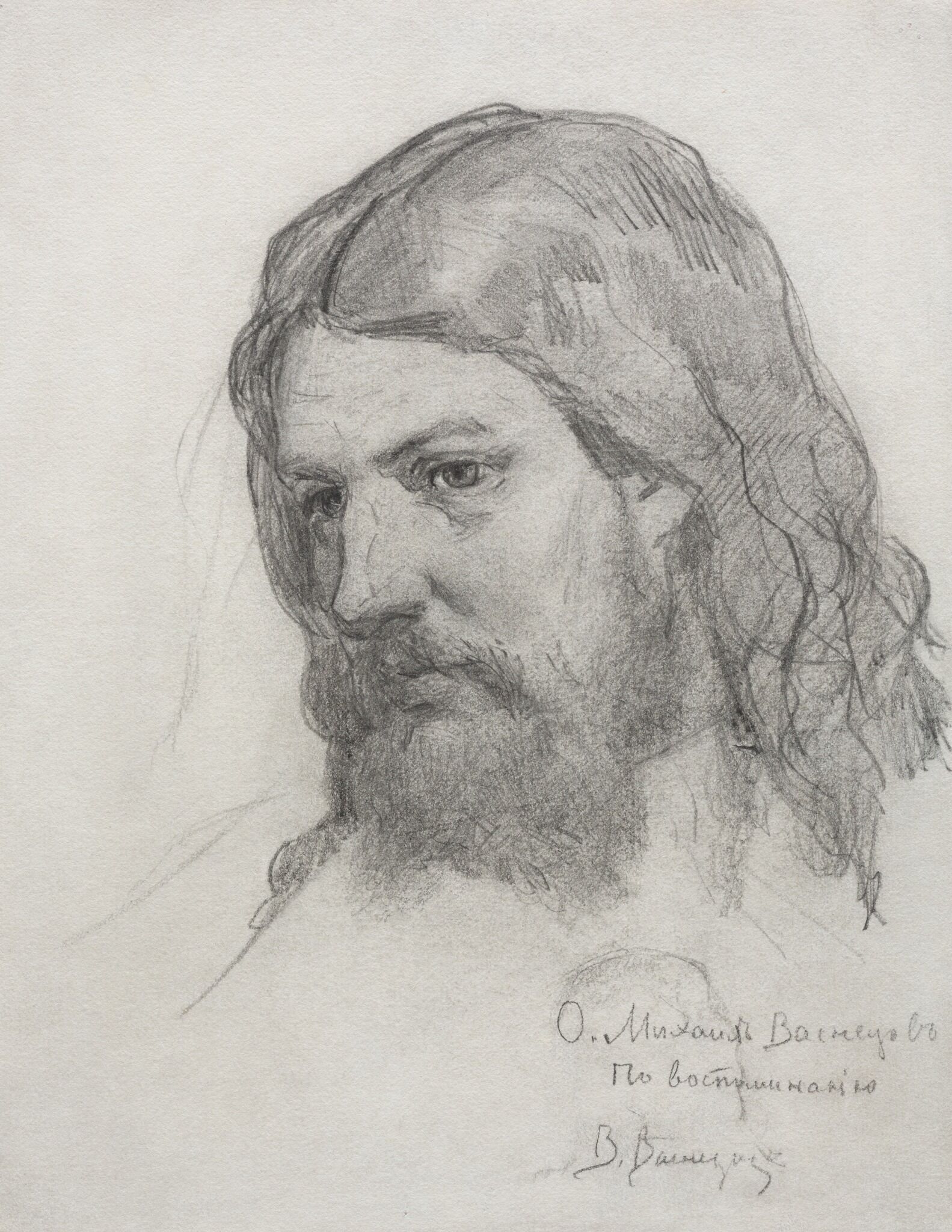
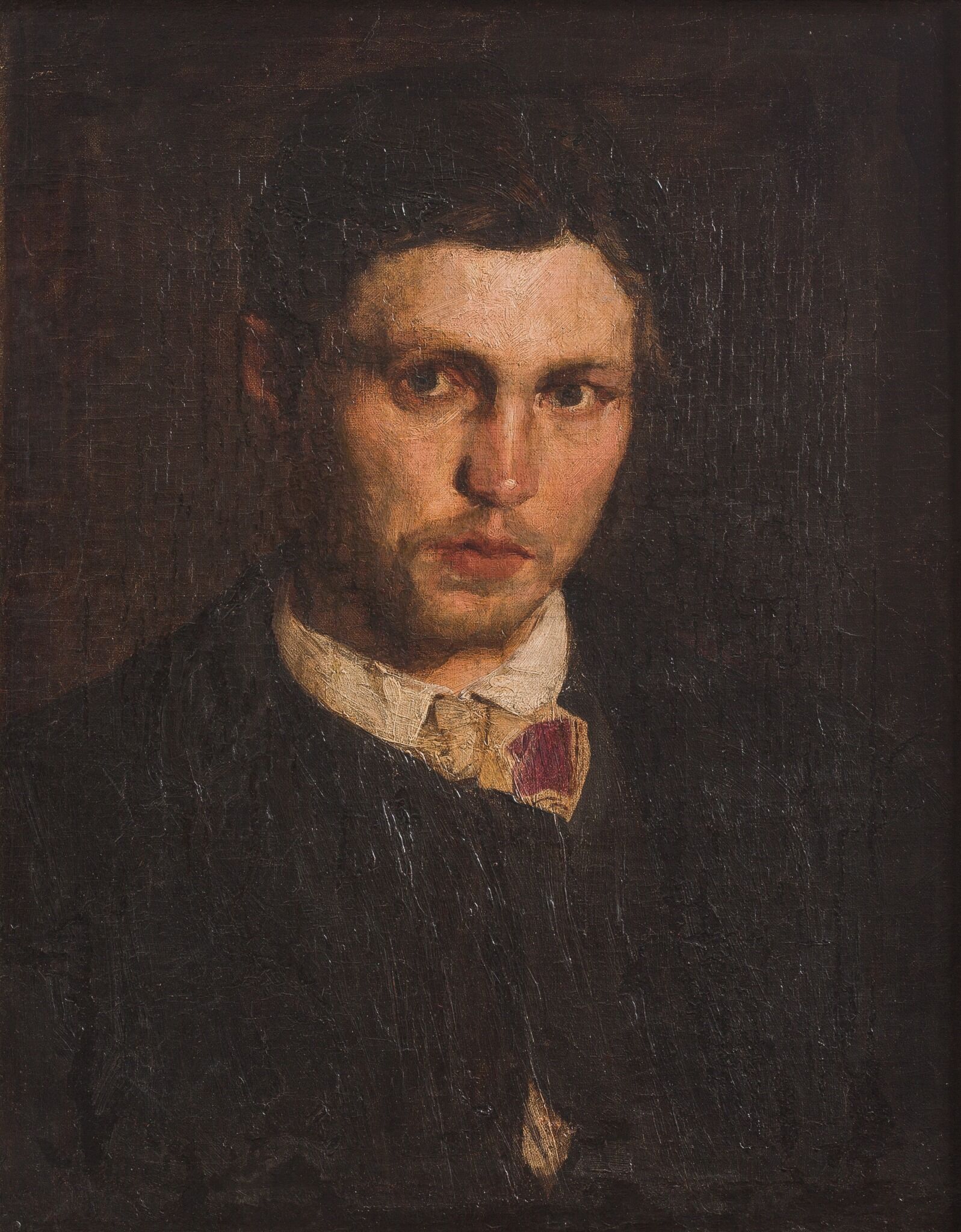
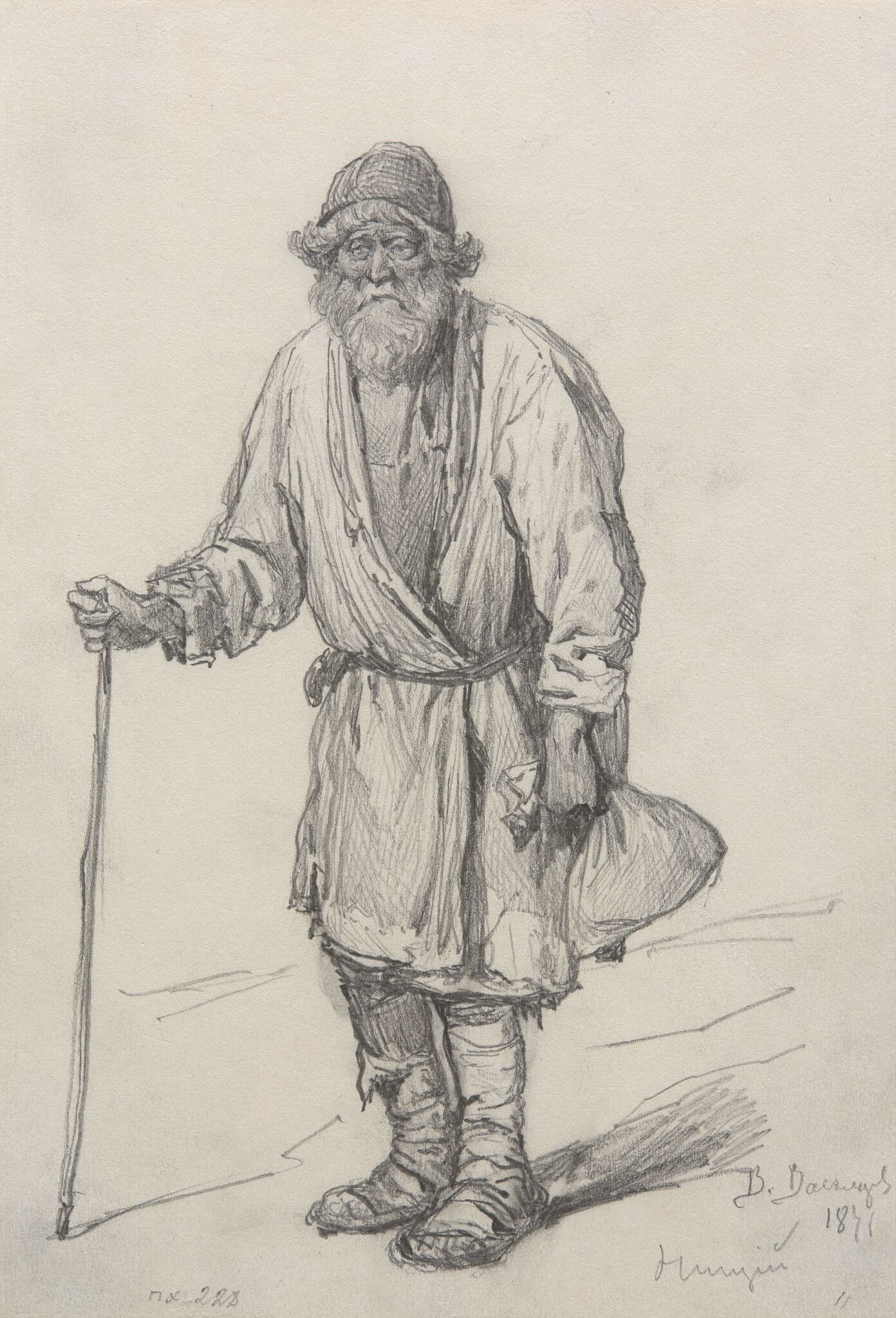
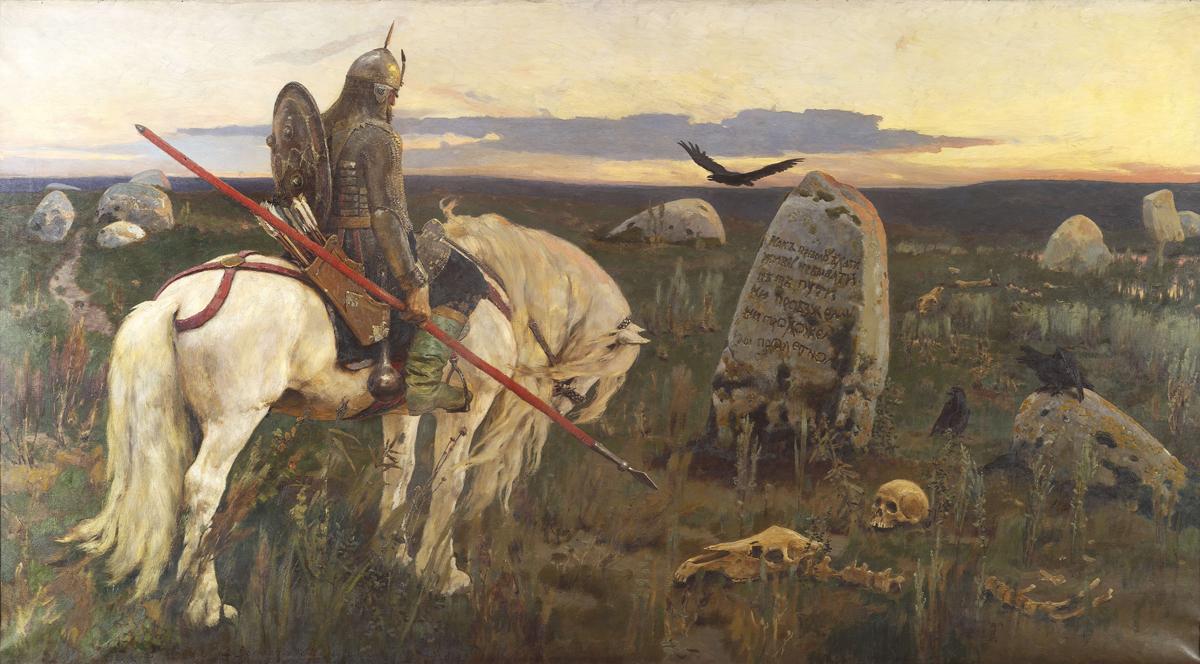
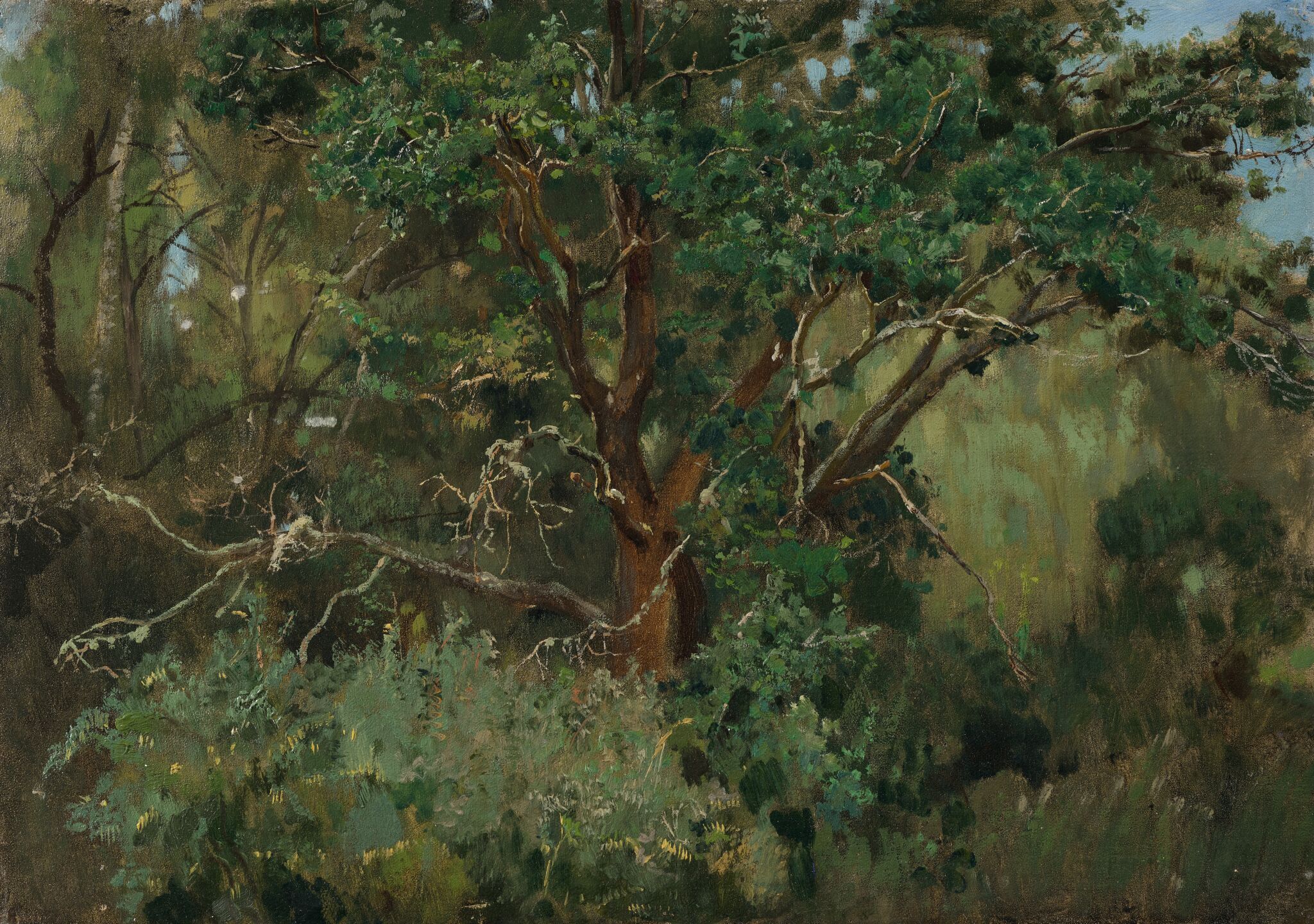
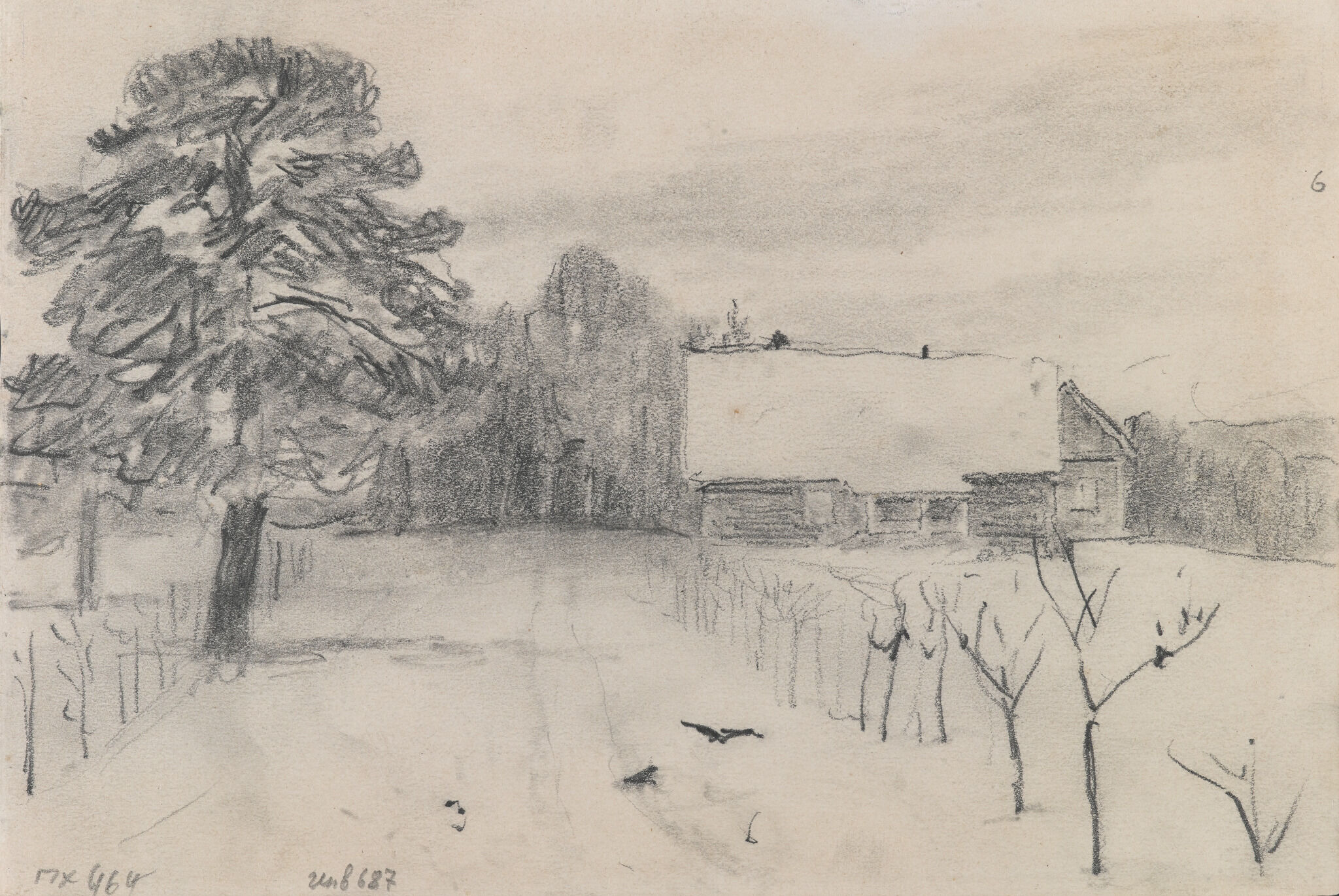
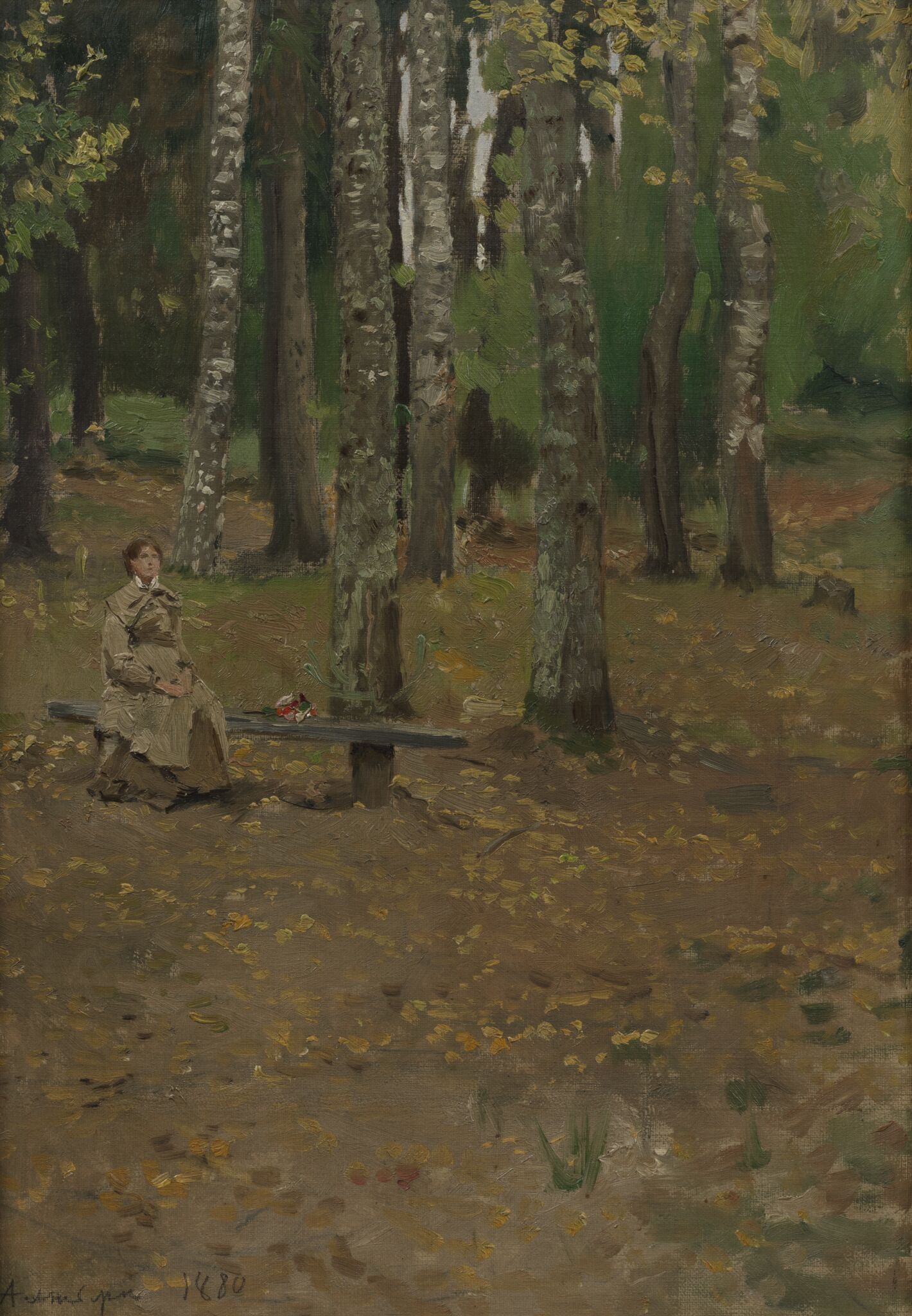
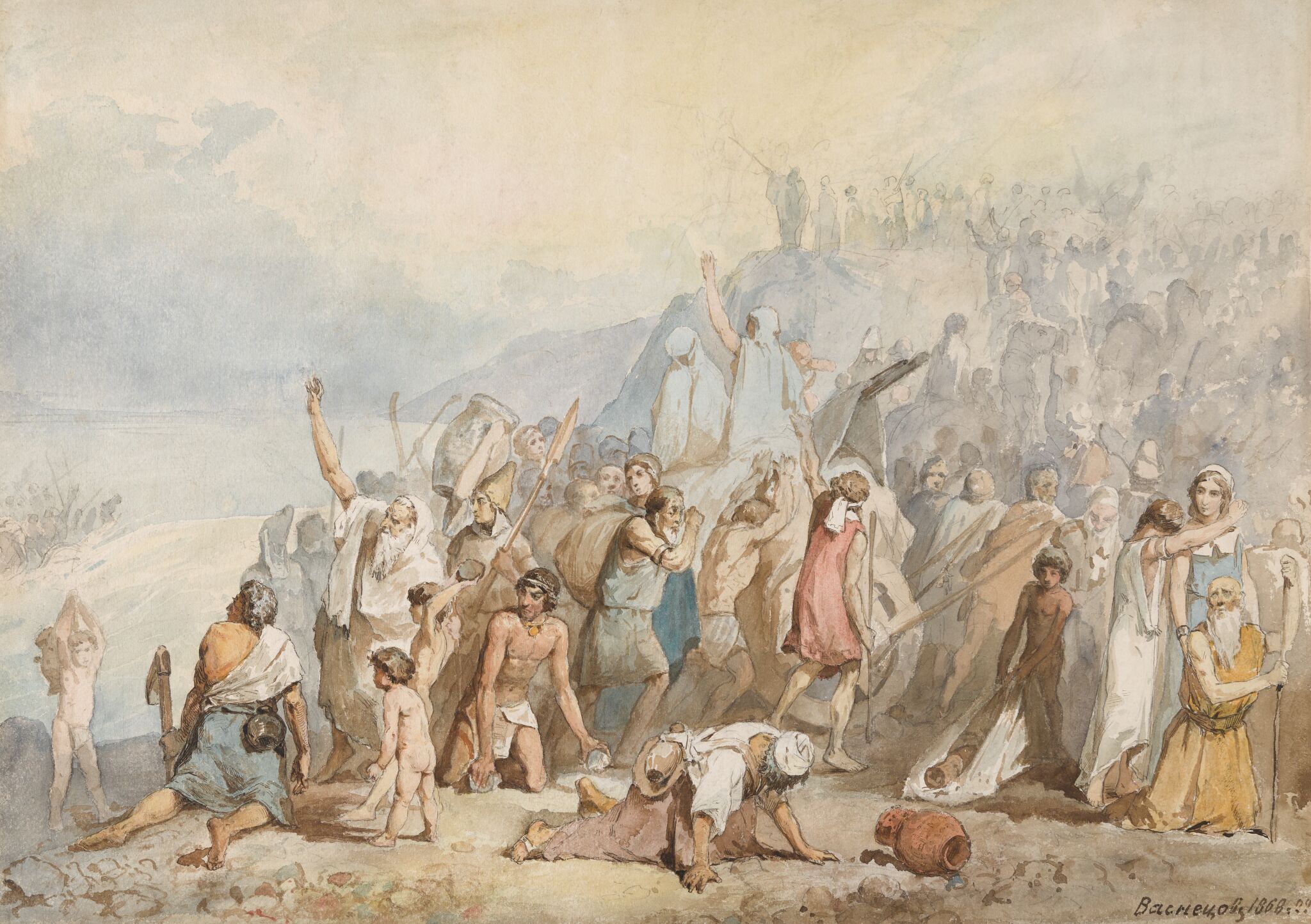
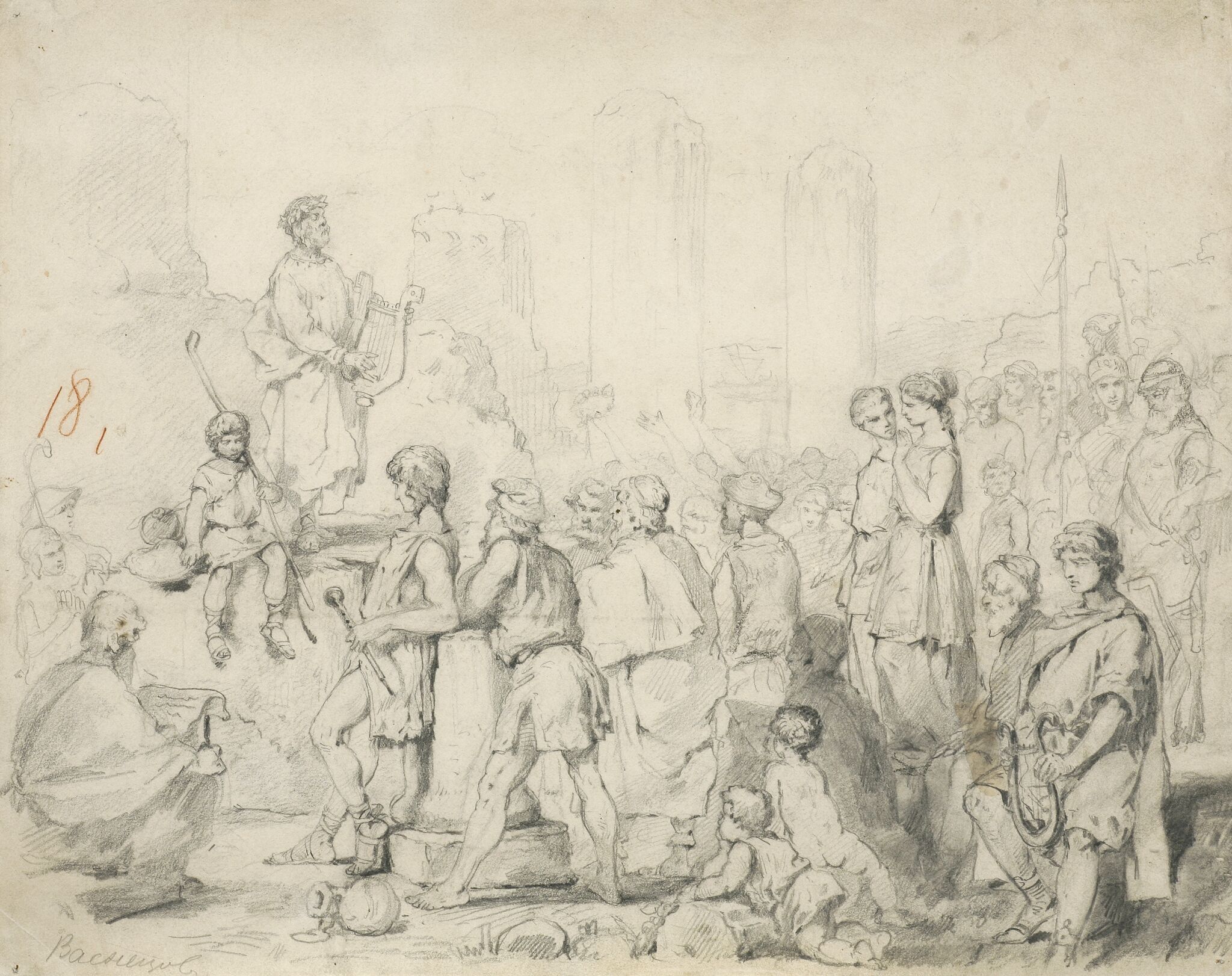
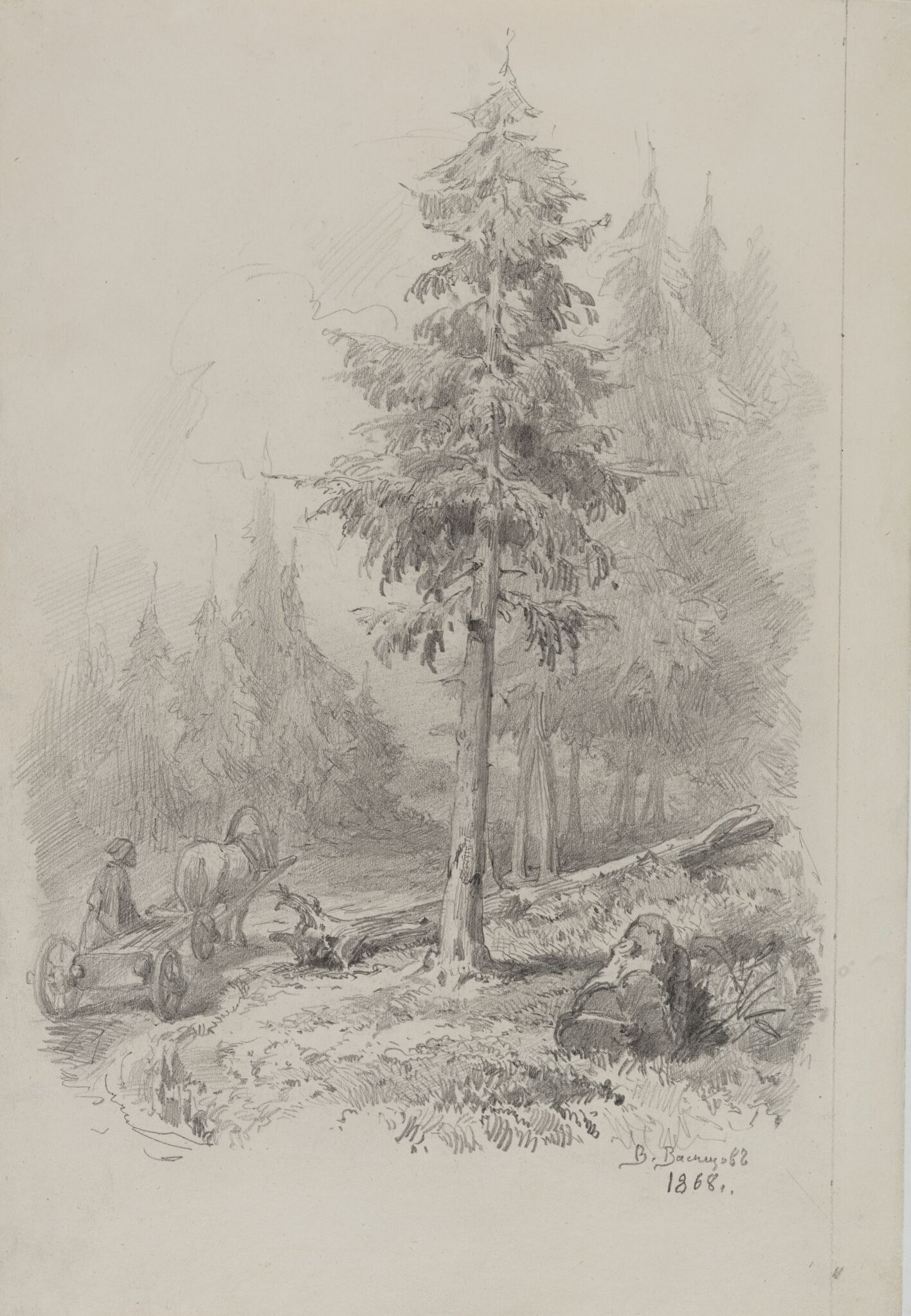
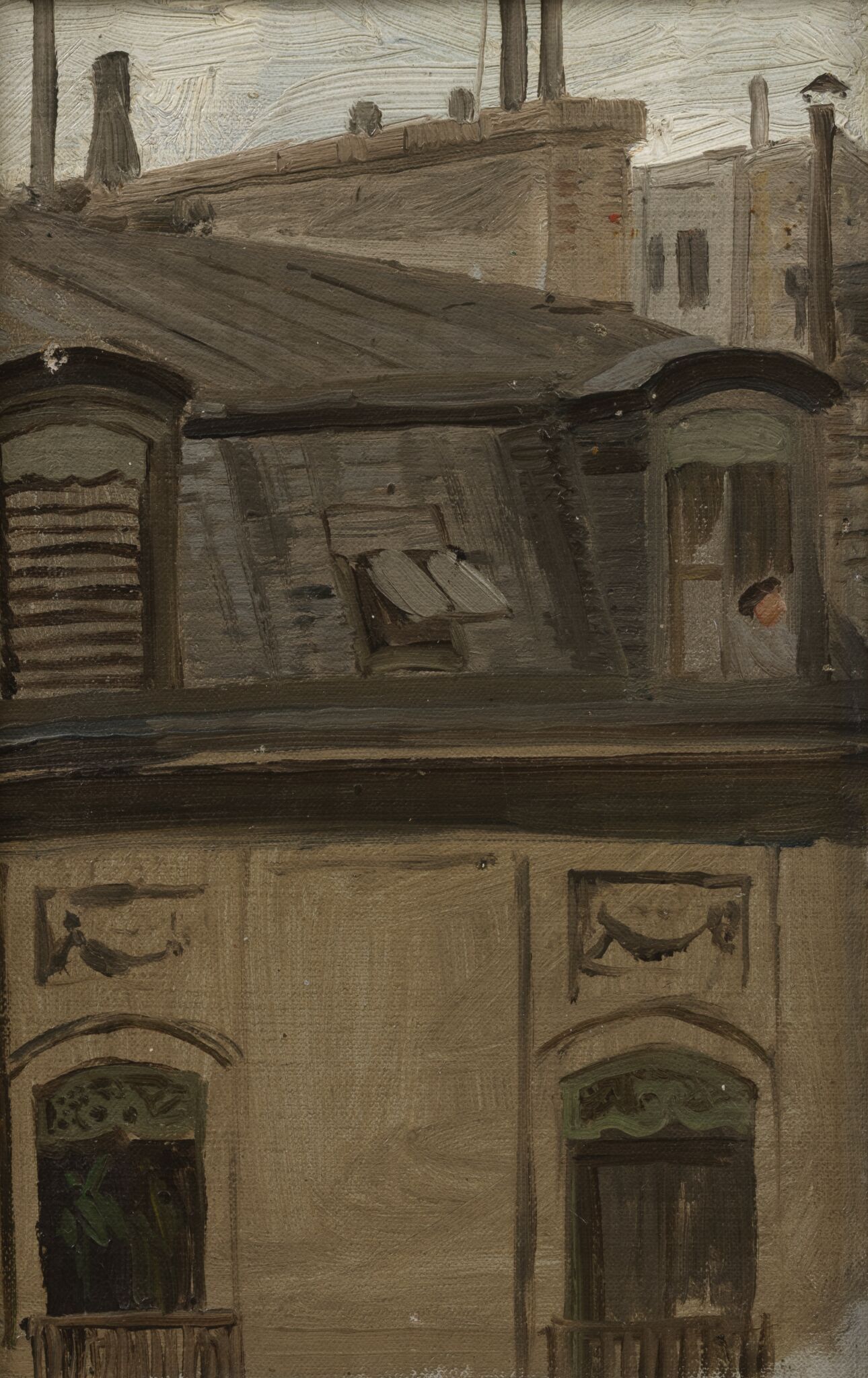
The artistic roots of the family: a great-grandfather and a grandmother
His great-grandfather Kozma Ivanovich (1776–1827), a priest, painted portraits, studies and still lifes and himself designed the bell tower and church wall in the village of Taloklyuchenny, while on the walls of his paternal grandmother Olga Vechtomova’s house large watercolours in gilt frames hung in rows.
Evento
From a line of village priests
He was born into the family of the village priest Mikhail Vasilyevich Vasnetsov, a versatile man who loved nature and drew well from life; his mother, Apollinaria Ivanovna (née Kibardina), came from a clerical family, and almost all the men of the Vasnetsov line had been priests for eight generations.
Evento · 1848–1858 · Ryabovo
His father as first teacher: reading, singing, drawing
Soon after his birth the family moved to the neighbouring village of Ryabovo, where he spent his childhood; his father taught his sons reading, writing, arithmetic and singing at home, gave them their first drawing skills and took them on long walks through the fields, telling them about the stars and the structure of the universe.
Evento · 1848–1858
Ships far from the sea, and the songs of village friends
He began drawing in earliest childhood — “mostly ships and sea battles”, hundreds of miles from any sea — and then landscapes and peasants from memory; growing up among peasant children, he knew folk songs, tales and rites from an early age and loved his playmates, in his own words, “not as a narodnik but simply as friends”.
1850– 1859
1858
Formazione · 1858–1867
Vyatka: the theological school and seminary
In 1858, aged ten, he entered the Vyatka theological school and in 1862 went on to the seminary, where he studied early Russian literature and the lives of the saints, took painting lessons from local teachers, worked for a local icon shopkeeper, and was influenced by the former seminary professor Alexander Krasovsky, a follower of Dobrolyubov and Chernyshevsky.
1860– 1869
1863
Incontro · 1863–1867 · Vyatka
Elwiro Andriolli: “Give up the seminary”
The Polish artist Elwiro Andriolli, exiled to Vyatka after the uprising of 1863, noticed the young man’s talent and urged him to give up the seminary and go to the Academy of Arts — there were priests enough, good and bad, without him, but few people with such gifts; Vasnetsov helped him execute frescoes for Vyatka’s Alexander Nevsky Cathedral.
In 1867, with his father’s blessing, he left the Vyatka seminary and set off for St Petersburg to enter the Academy of Arts; he raised the money for the journey by auctioning his paintings “Woman Harvester” and “Milk-maid” (both 1867).
While attending the drawing school of the Society for the Encouragement of Artists he befriended Ivan Kramskoi, leader of the Peredvizhniki, and called him his teacher.
Poverty in St Petersburg and a meeting with Krasovsky
For several months he searched for work and lived in dire poverty; a chance meeting with Vasily Krasovsky, brother of his Vyatka mentor, saved him — he found Vasnetsov a job teaching drawing to General Ilyin’s children and set him to redraw seventeenth-century arms and armour onto wood blocks for the publication “Tsarskoye Selo Arsenal”; the ornament in particular fascinated him.
Friendship with Repin and the “evenings” at Antokolsky’s
In St Petersburg he grew very close to Ilya Repin; he attended the “evenings” at the apartment of Repin and the sculptor Mark Antokolsky, where the student Ivan Savenkov read bylinas in a slow chant, in the northern accent so familiar to Vasnetsov — and so his interest in early Russian culture and folk epic finally took shape.
In St Petersburg he grew especially close to Arkhip Kuindzhi: the taciturn Vasnetsov found the key to his reserved nature, and when Kuindzhi painted “Ukrainian Night” he exclaimed that it was the very night Gogol had spoken of — “now we see it”.
In August 1868, at the second attempt, he was admitted to the Imperial Academy of Arts; the attempt a year earlier had not worked out.
1869
Opera
The drawing “An Easter Egg” and Stasov’s praise
For Easter 1869 he made for the magazine “Vsemirnaya illyustratsiya” a drawing, “An Easter Egg”, of which, in Stasov’s words, “everyone was glad and delighted”; the critic saw in it a first attempt to combine reality with fantasy.
In 1869 he won two small silver medals — for the drawing “Two Nude Models” and a study from life — and in 1870 a large one for the sketch “Pilate Washes His Hands”; from 1869 he began to exhibit, first at Academy shows and then with the Peredvizhniki.
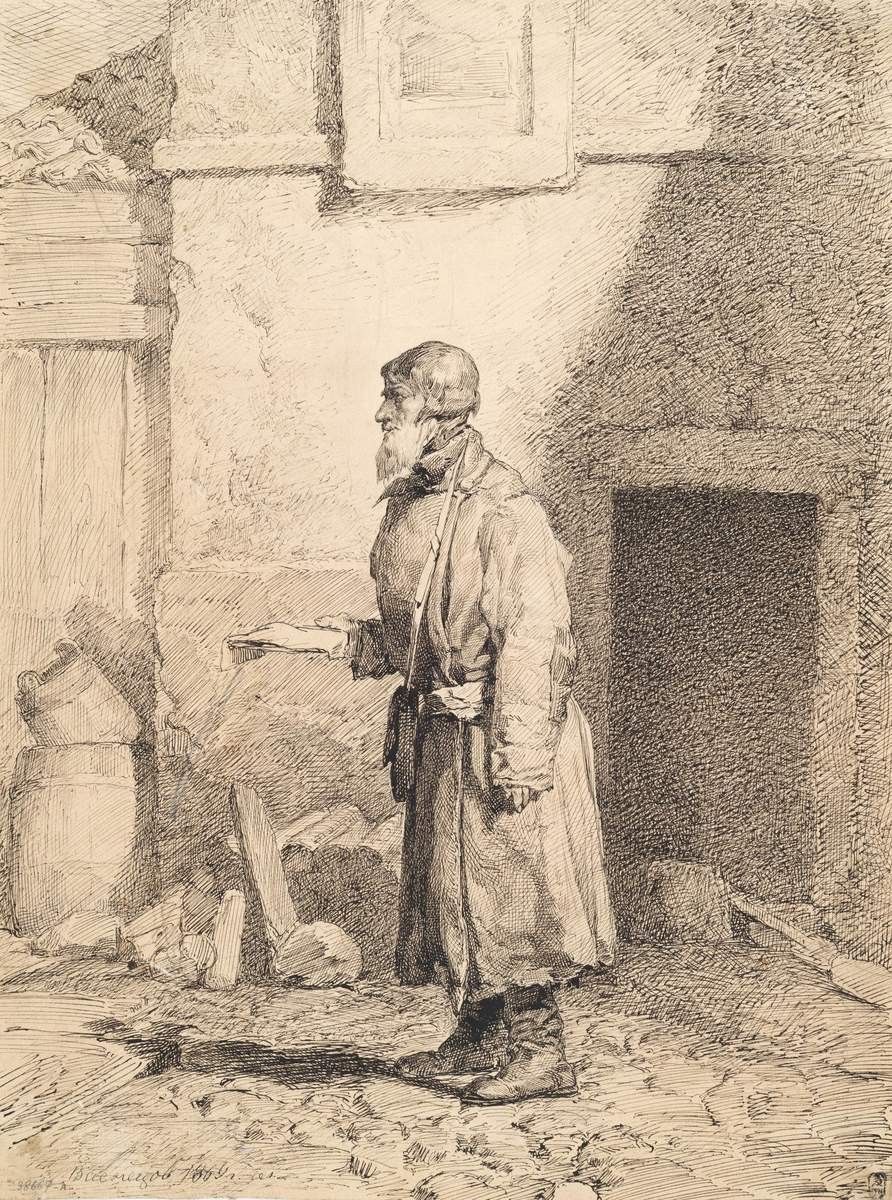
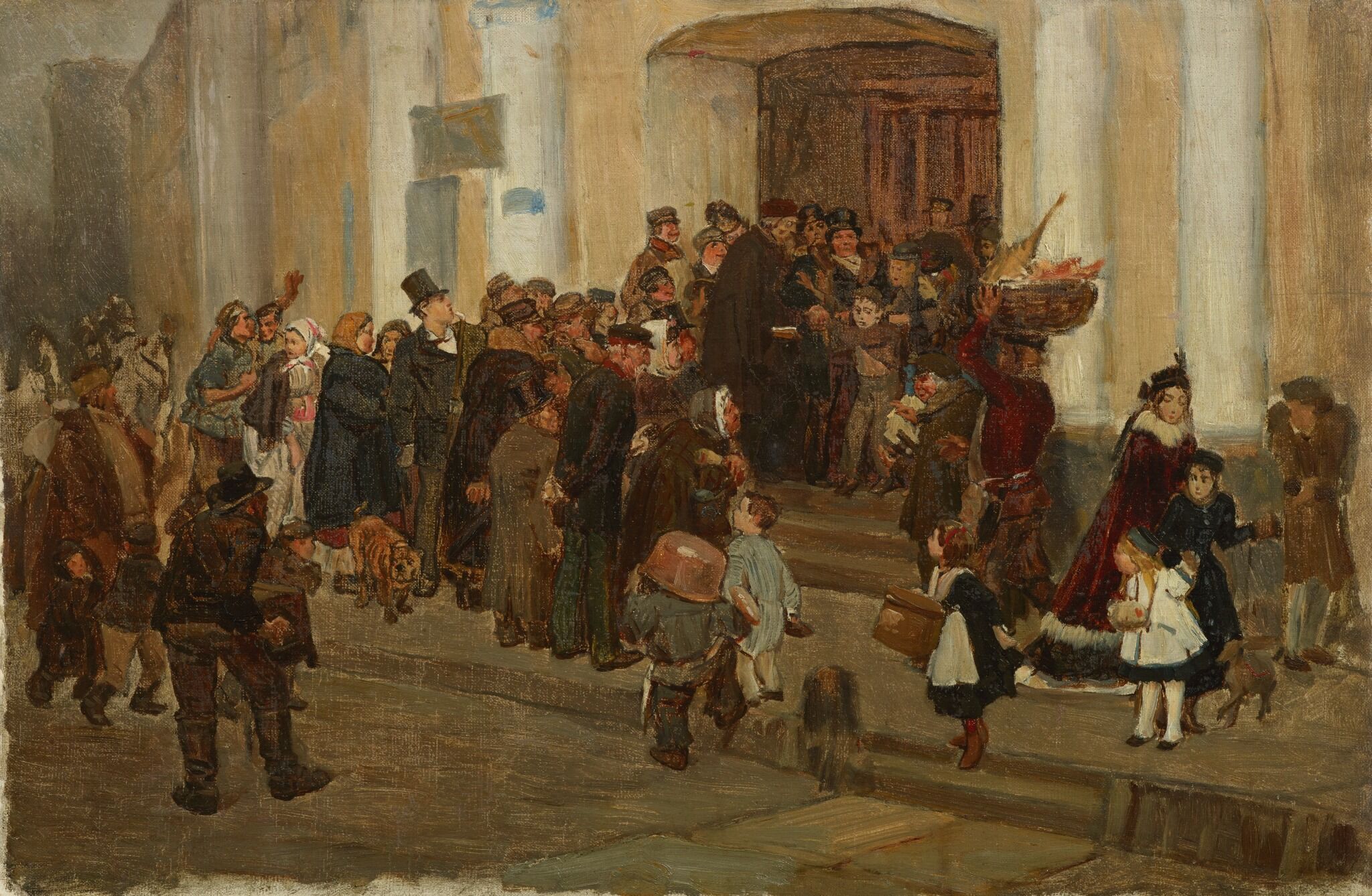
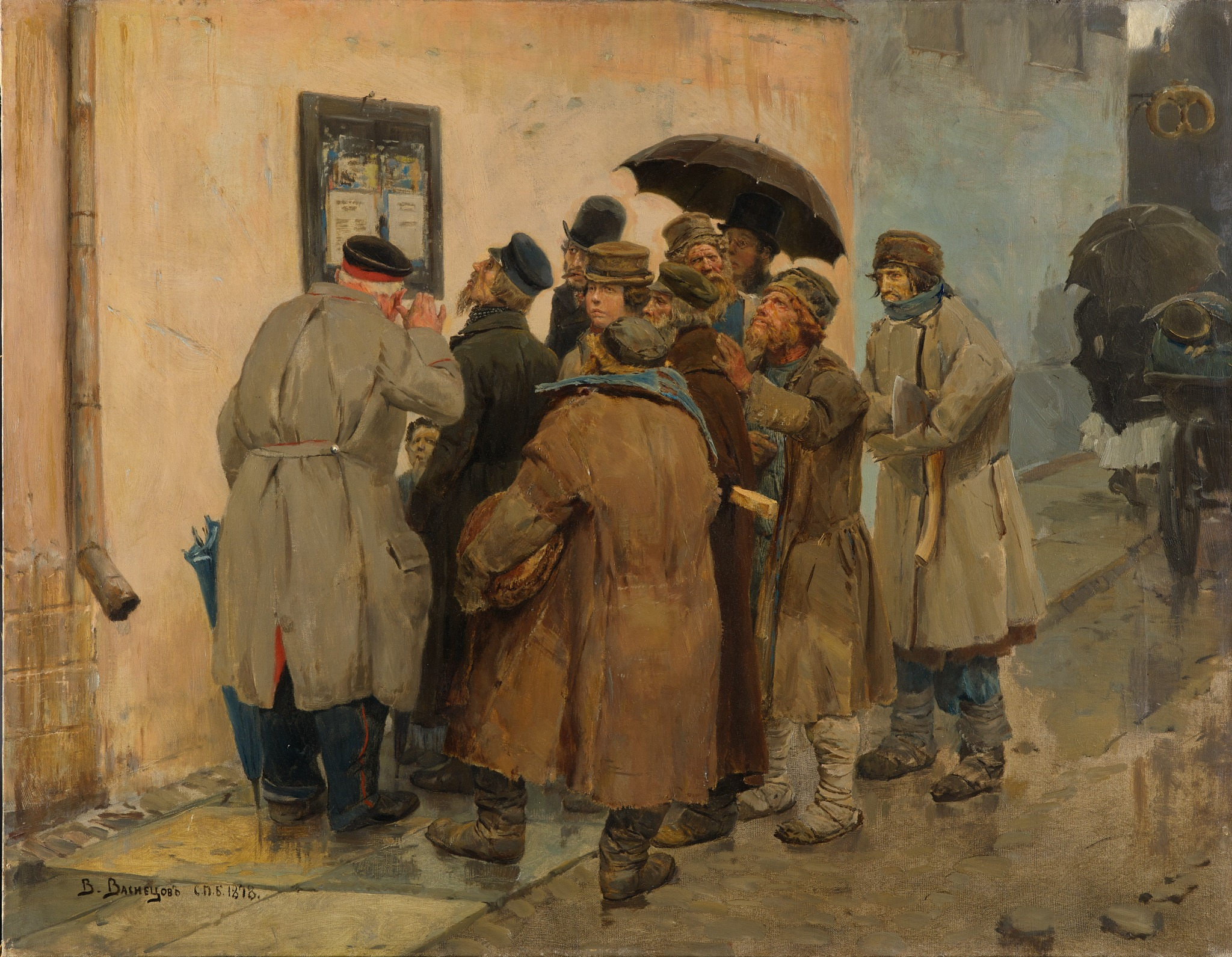
In his St Petersburg years he drew from life many types of the urban poor — “Monk Collecting Alms”, “Rag-picker” (a lithograph of 1869, which Stasov called his earliest), “Torch-bearer”, “Winter”; Stasov praised their truthfulness and keen observation; he also made cycles of illustrations for the “Soldier’s Primer”, the “People’s Primer” and the “Russian Primer for Children”.
Pavel Chistyakov, back from Rome, saw Vasnetsov’s drawing “A Prince’s Icon-painting Workshop” at an Academy exhibition, asked to be introduced to its author and soon made him a regular pupil; Vasnetsov remembered his teacher as “an enemy of the formula” who could show each pupil the road to his own development.
Famiglia
His father dies; his brother Nikolai becomes guardian
In 1870 his father, Mikhail Vasilyevich, died; the elder brother Nikolai became guardian of the younger children, and for some years their aunt Elizaveta Shilyaeva lived with the younger brothers.
1871
Famiglia · summer 1871 · Vyatka
He meets his future wife, Alexandra Ryazantseva
In the summer of 1871, home in Vyatka on academic leave, he met Alexandra Ryazantseva in the local library — a merchant’s daughter who would become one of the first women from Vyatka with a higher medical education; he was struck by “her eyes — stern and extraordinarily kind”.
“The Rooks Have Returned” at the Peredvizhniki exhibition
In the autumn of 1871, at the first exhibition of the Peredvizhniki, he was deeply struck by Savrasov’s “The Rooks Have Returned”: “Here she is, my beloved homeland. Unadorned, just as she is” — the picture, with its poetry of the Russian spring, became for him a symbol of the revival of Russian art.
In 1873, a year before the end of the course, he almost stopped attending the Academy and went only to Chistyakov’s studio: Chistyakov told him he had already got from the Academy all it could give, and Kramskoi advised the same; on 4 (16) February 1875 he was formally discharged, receiving a certificate that listed two small silver medals and one large one.
In 1874 he took part for the first time in an exhibition of the Peredvizhniki, showing “Tea-drinking in a Tavern” (“Over Tea”).
Mostra
A bronze medal at the London World Fair
In 1874 two of his engravings of contemporary life — “Provincial Bookseller” (1870) and “A Boy with a Bottle of Vodka” (1872) — won a bronze medal at the World Fair in London.
Mamontov’s letter, homesickness and the first sketch for the “Bogatyrs”
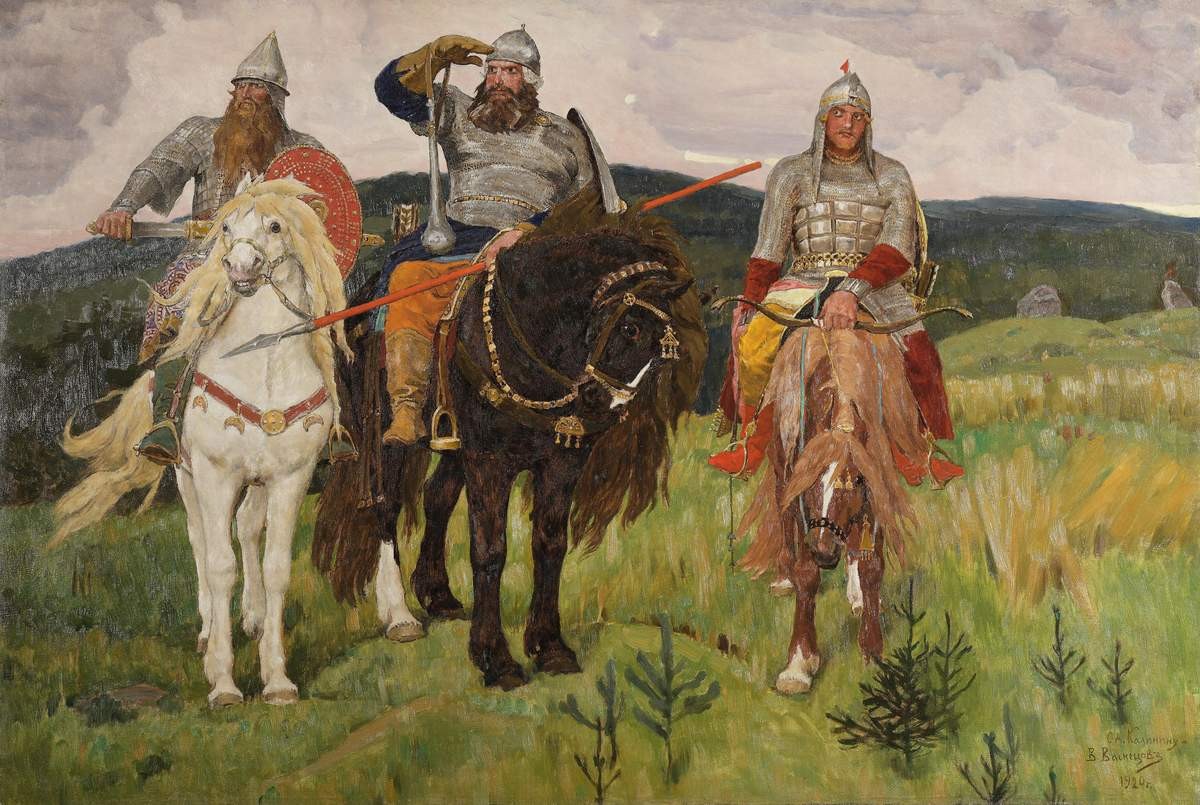
In Polenov’s Paris studio he and Repin re-read a letter from Savva Mamontov calling the artists to Moscow; the letter sharpened his homesickness (“Alone, alone and alone!”), and it was there that the first painted sketch of the “Bogatyrs” was made.
Viaggio
A trip to Paris: Polenov, Repin and an advance
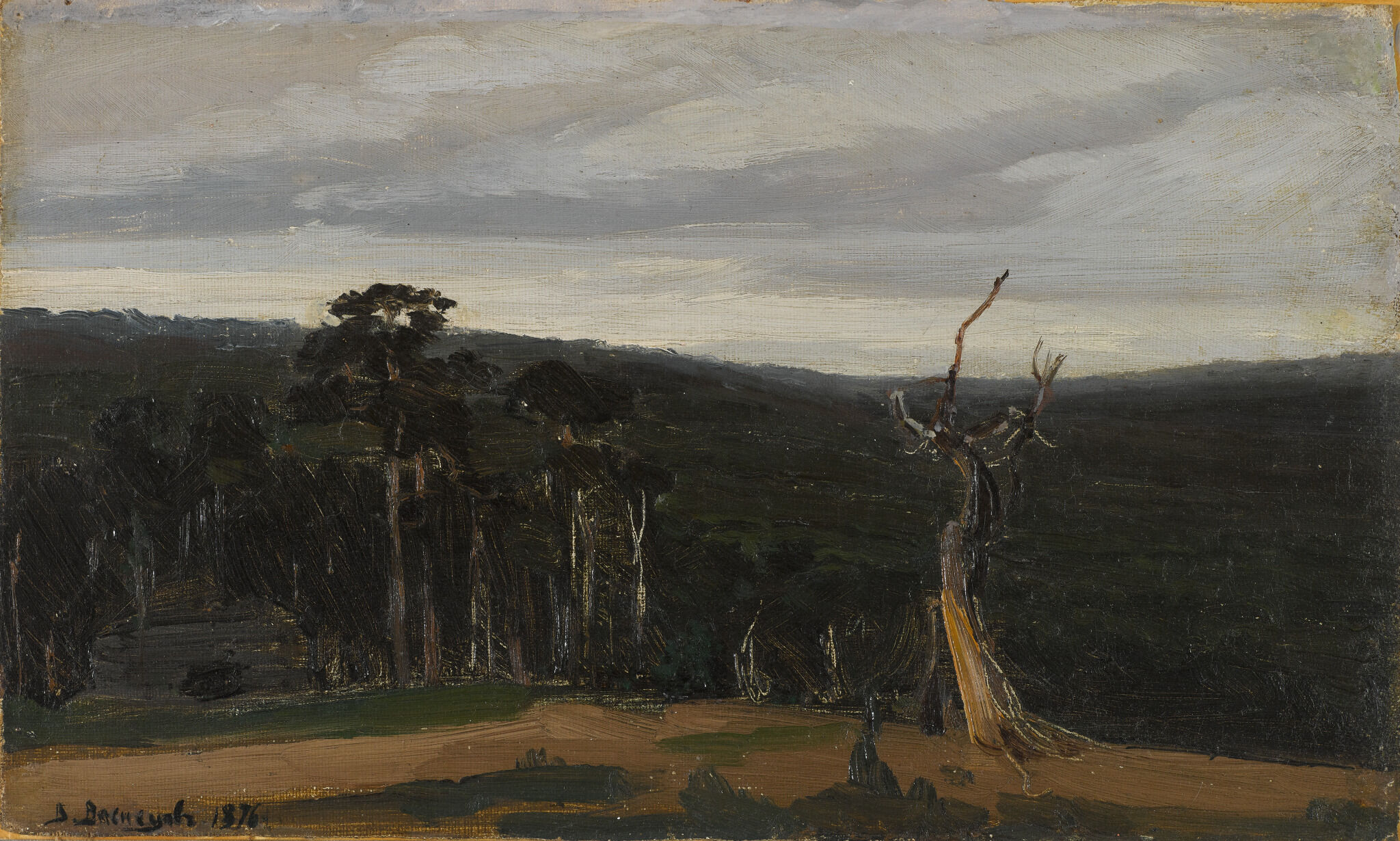
He dreamed of going abroad but had no money; Polenov offered help, Repin invited him to the Peredvizhniki colony in Paris, and, taking an advance from a publisher, Vasnetsov left in 1876 and settled with the Kramskois; his younger brother Apollinary, who disliked living at his elder brother’s expense, decided to go back to Vyatka.
Before leaving for Paris he had proposed to Ryazantseva; the wedding took place in November 1877 in the Church of Saints Peter and Paul of the Semyonovsky-Alexandrovsky military hospital in St Petersburg.
1878
Viaggio
He moves to Moscow, the city of his life’s work
In 1878, his resolve strengthened by Mamontov’s letter, he moved to Moscow, the city to which most of his creative life would be tied: he settled in a small flat in 3rd Ushakovsky Lane near Ostozhenka, walked the city for hours admiring the Kremlin and St Basil’s, and until 1885 the family changed rented flats in Moscow six times.
His daughter Tatyana, the first of five children, is born
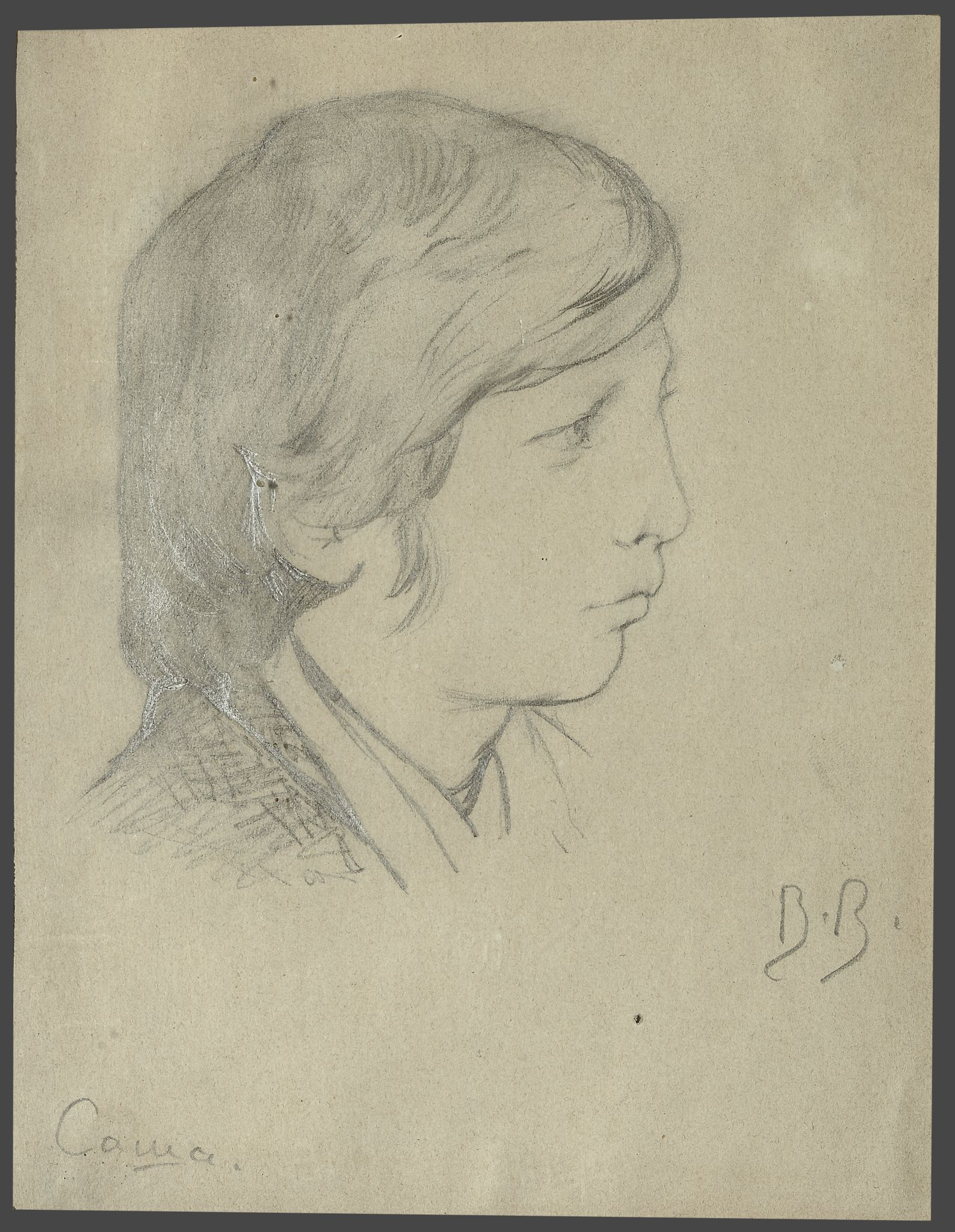
In 1879 his daughter Tatyana was born, later an artist and keeper of her father’s legacy; sons followed — Boris (1880), Alexei (1882), Mikhail (1884) and Vladimir (1889).
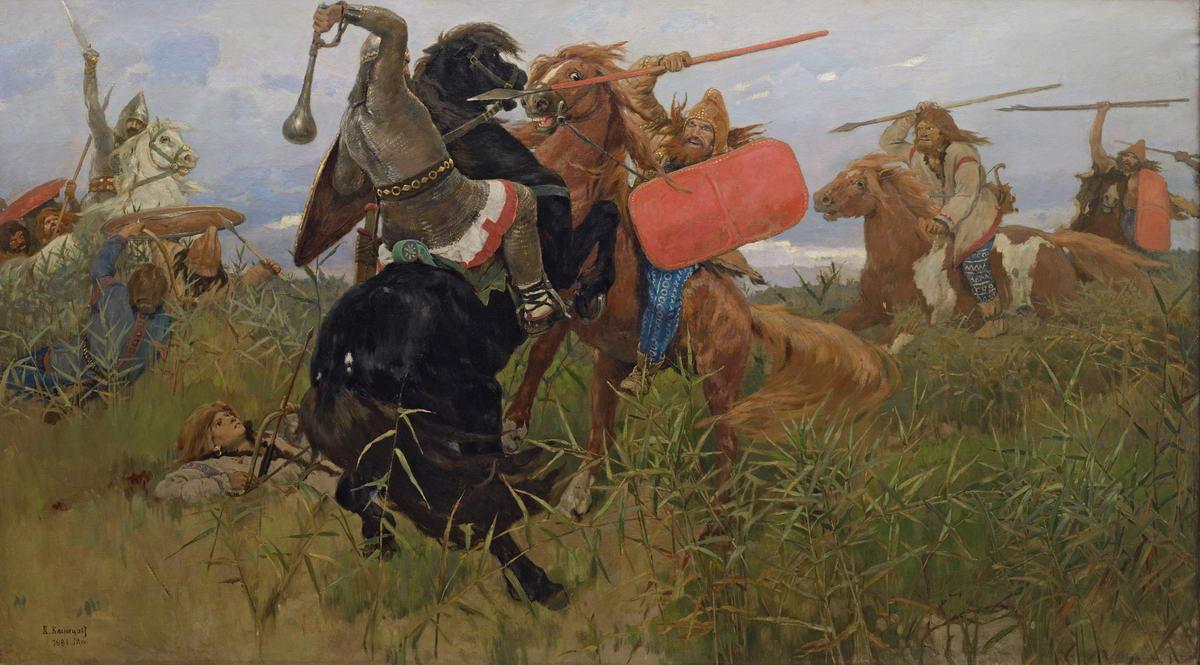
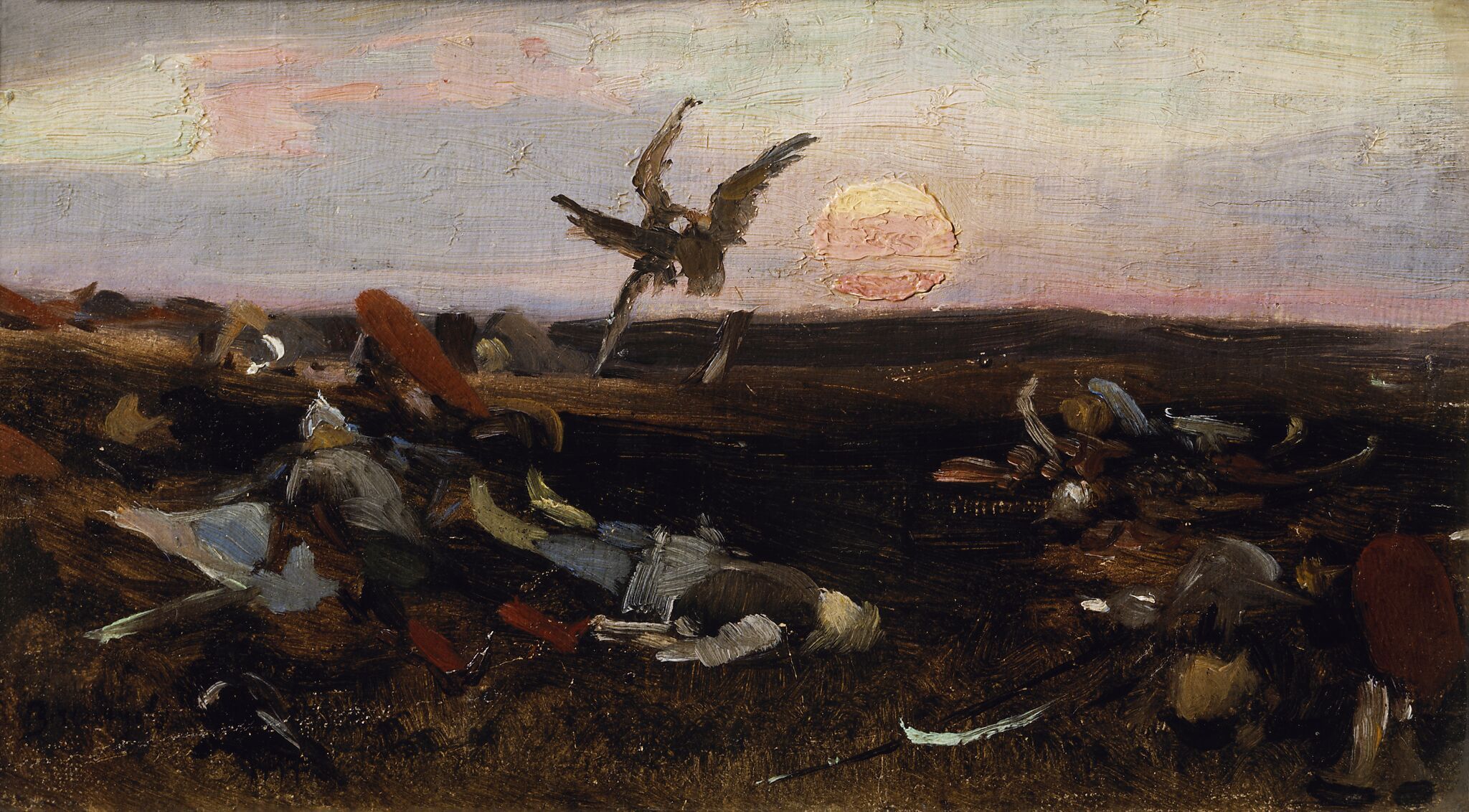
“After Prince Igor Svyatoslavich’s Battle with the Polovtsy”
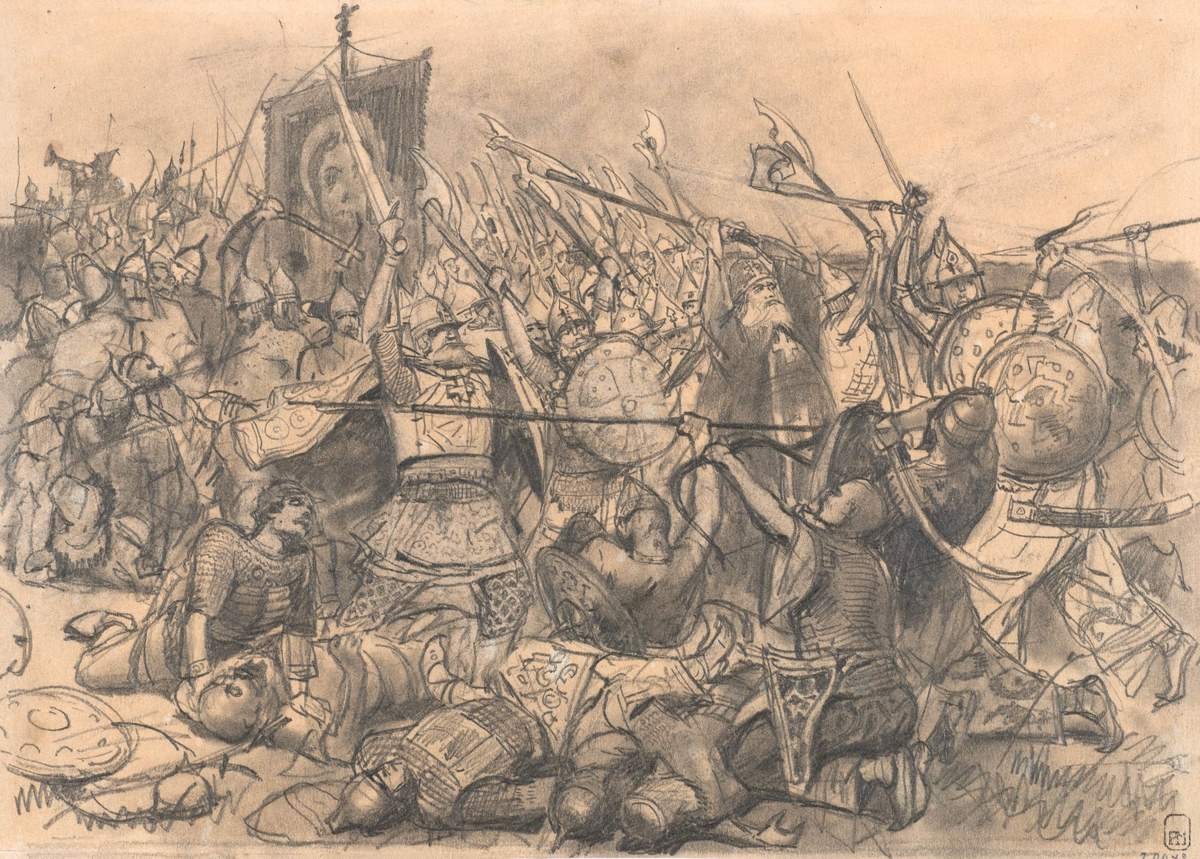
He completed the painting on a theme from “The Tale of Igor’s Campaign” (now in the Tretyakov Gallery) — one of the epic and historical canvases whose creation became the turning point of his career.
Incontro · June 1880
His first visit to Mamontov’s Abramtsevo
In June 1880, with his brother Apollinary, he first came to Abramtsevo at Savva Mamontov’s invitation and joined the circle of Repin, Polenov, Serov and other artists, where he became one of the leaders of the national-romantic current.
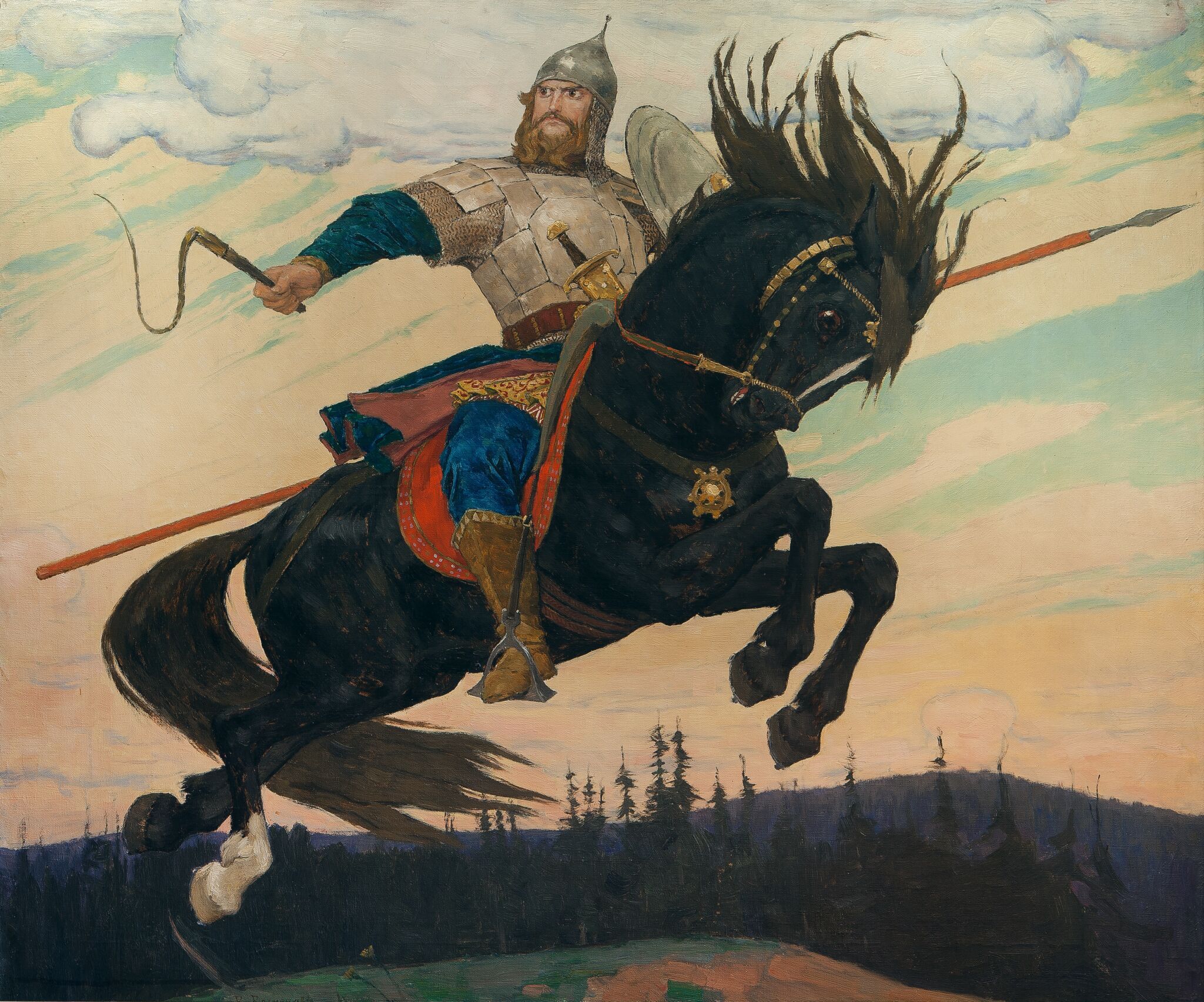
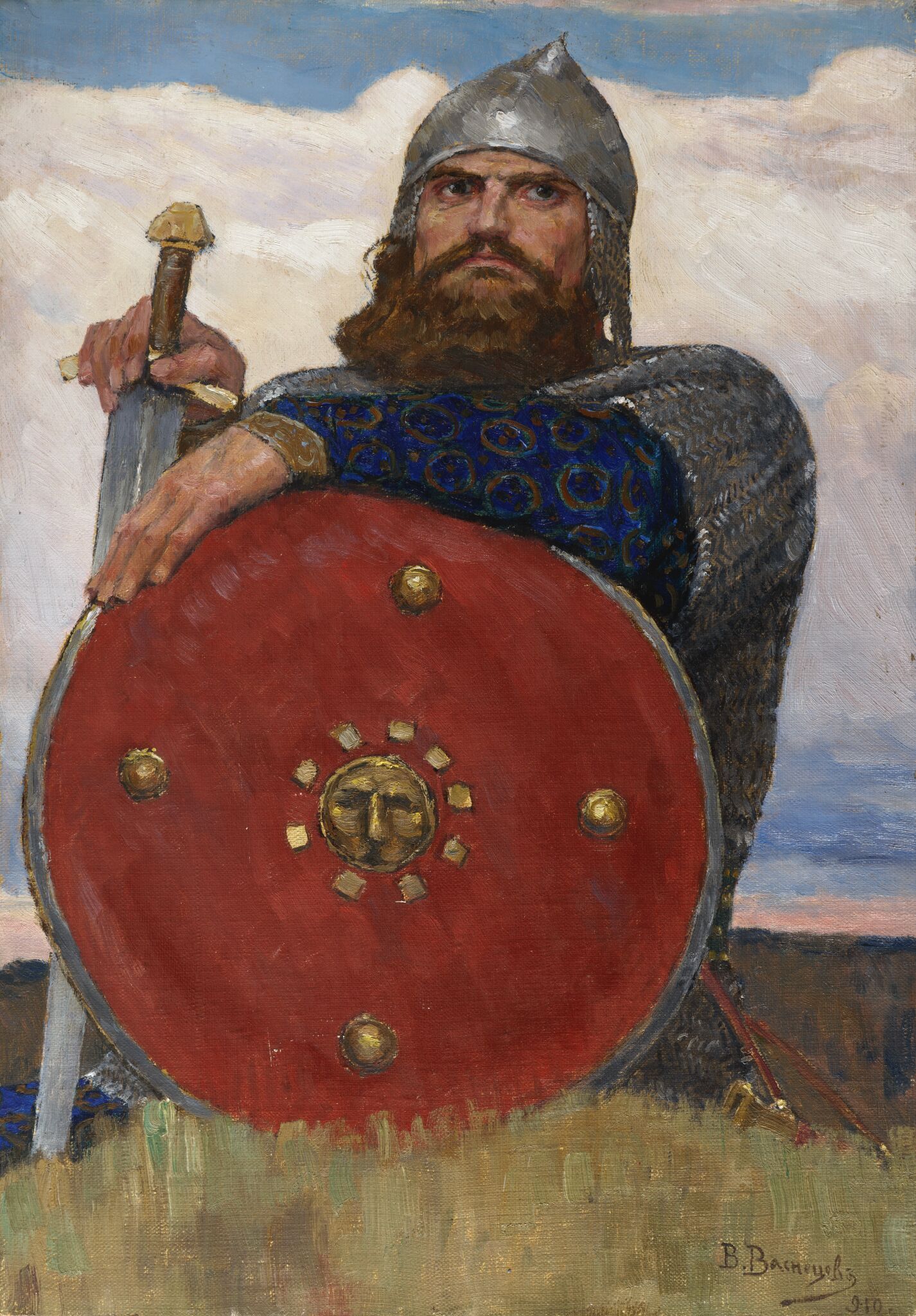
Begun in 1881 (the first painted sketch had appeared back in Paris) and finished in 1898, the painting became Vasnetsov’s key work: giving up multi-figure compositions, he kept the number of figures to a minimum but gave them epic monumentality.
Opera · 1881–1882
The Church of the Saviour Not Made by Hands at Abramtsevo
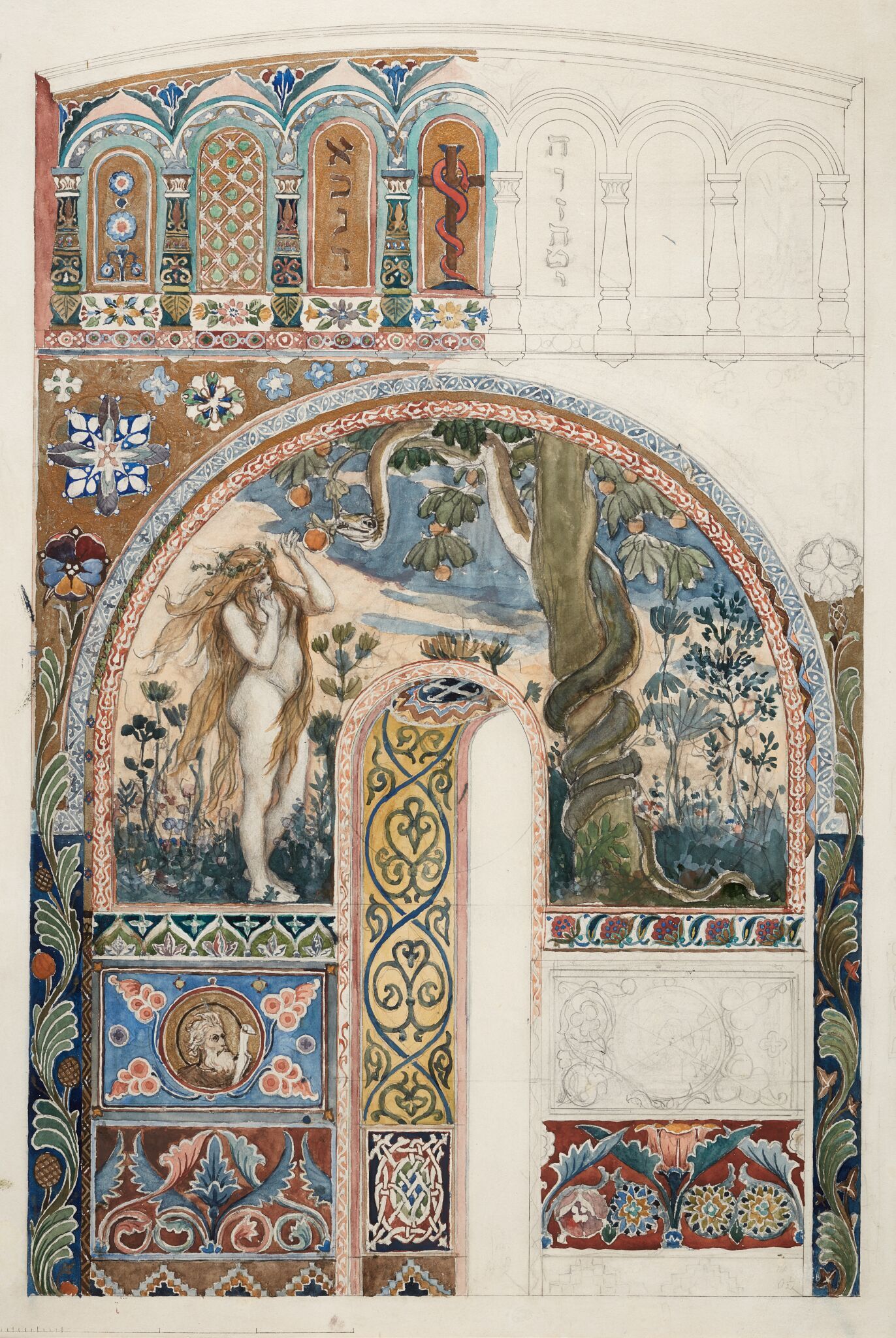
With Vasily Polenov and Pavel Samarin he designed the estate church of the Saviour Not Made by Hands — his first architectural work: he painted the choir stalls, made a sketch for the mosaic floor and painted the icons for the iconostasis; Natalya Polenova remarked that “our church lets Vasnetsov get no sleep at night”.
While living in Kiev he became friends with Mikhail Vrubel, who was also working on the cathedral; while they worked together Vasnetsov taught the younger artist a great deal.
Famiglia
His son Mikhail becomes the model for the Christ Child in the altar image
In 1884 his son Mikhail was born; he became the model for the infant in the Virgin’s arms in the altar image of St Vladimir’s Cathedral, and later was an astronomer and then a priest of the Russian emigration in Prague.
1885
Opera · 1885–1895 · Kyiv
The frescoes of St Vladimir’s Cathedral in Kiev
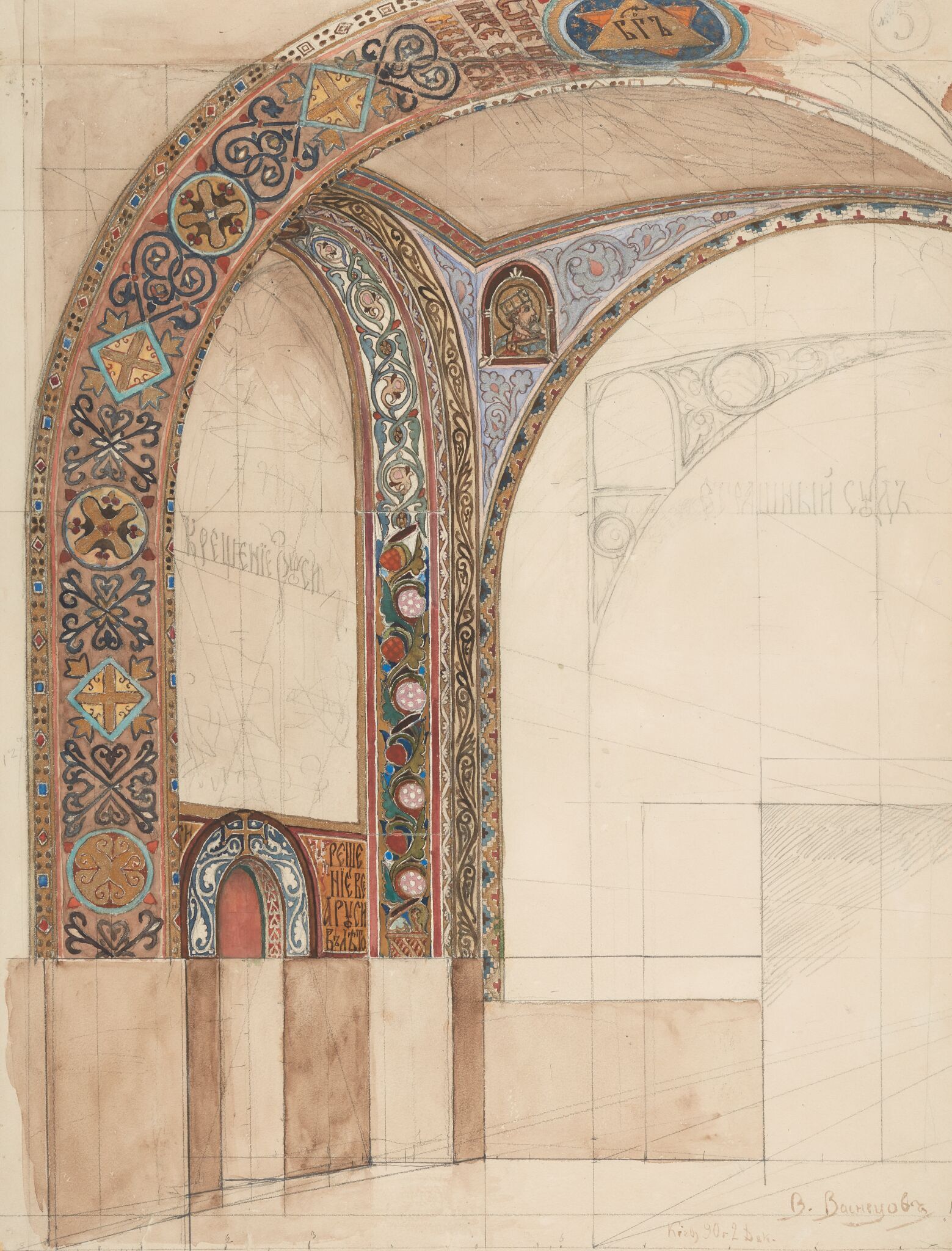
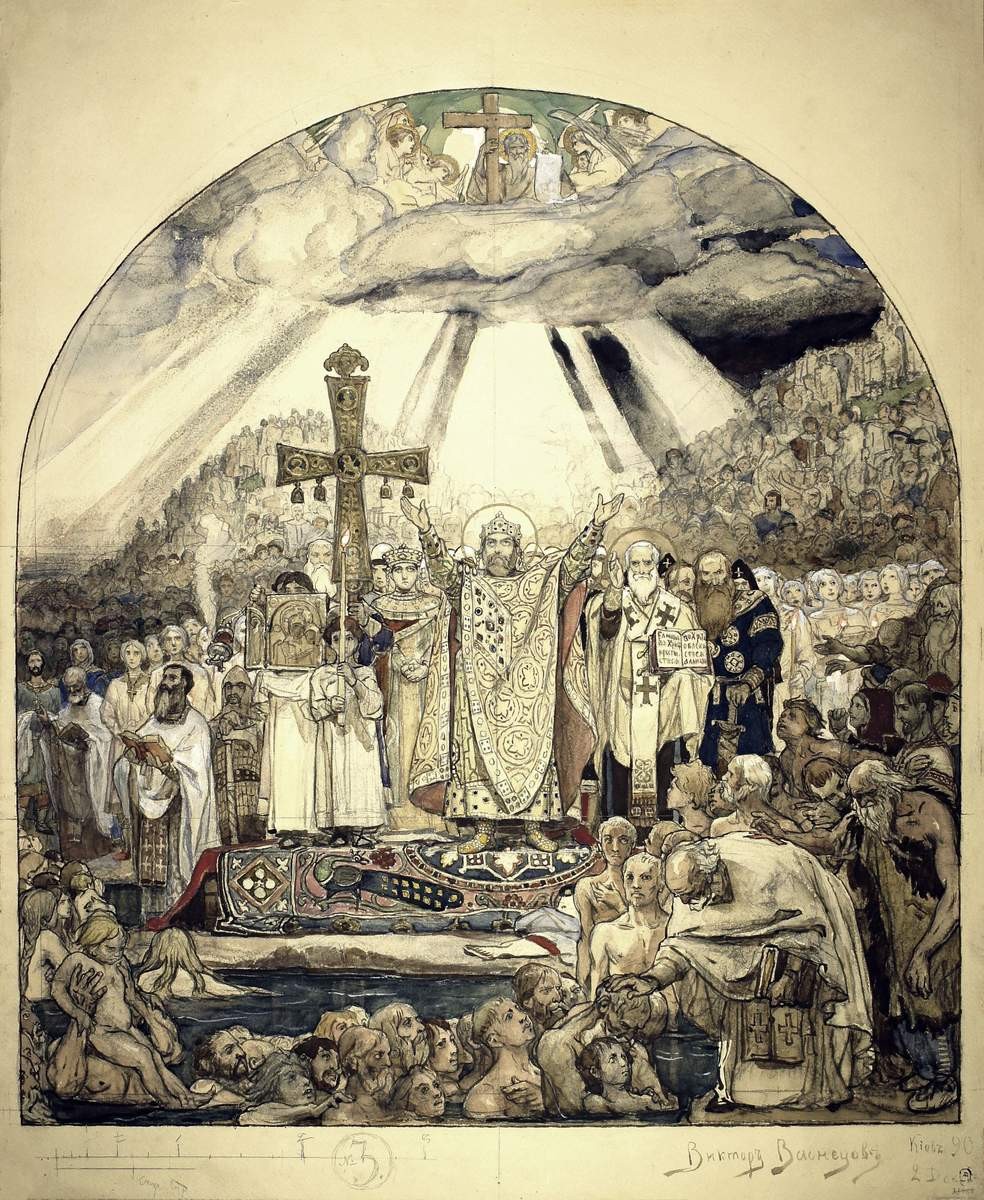
In 1885, at Adrian Prakhov’s invitation, he began decorating the newly built St Vladimir’s Cathedral: for ten years he created the central nave, the apse, the dome, the pillars, the icons of the main iconostasis and the compositions “The Baptism of the Kievans” and “The Baptism of Prince Vladimir”.
Evento
Rimsky-Korsakov’s “The Snow Maiden”: Berendey’s palace
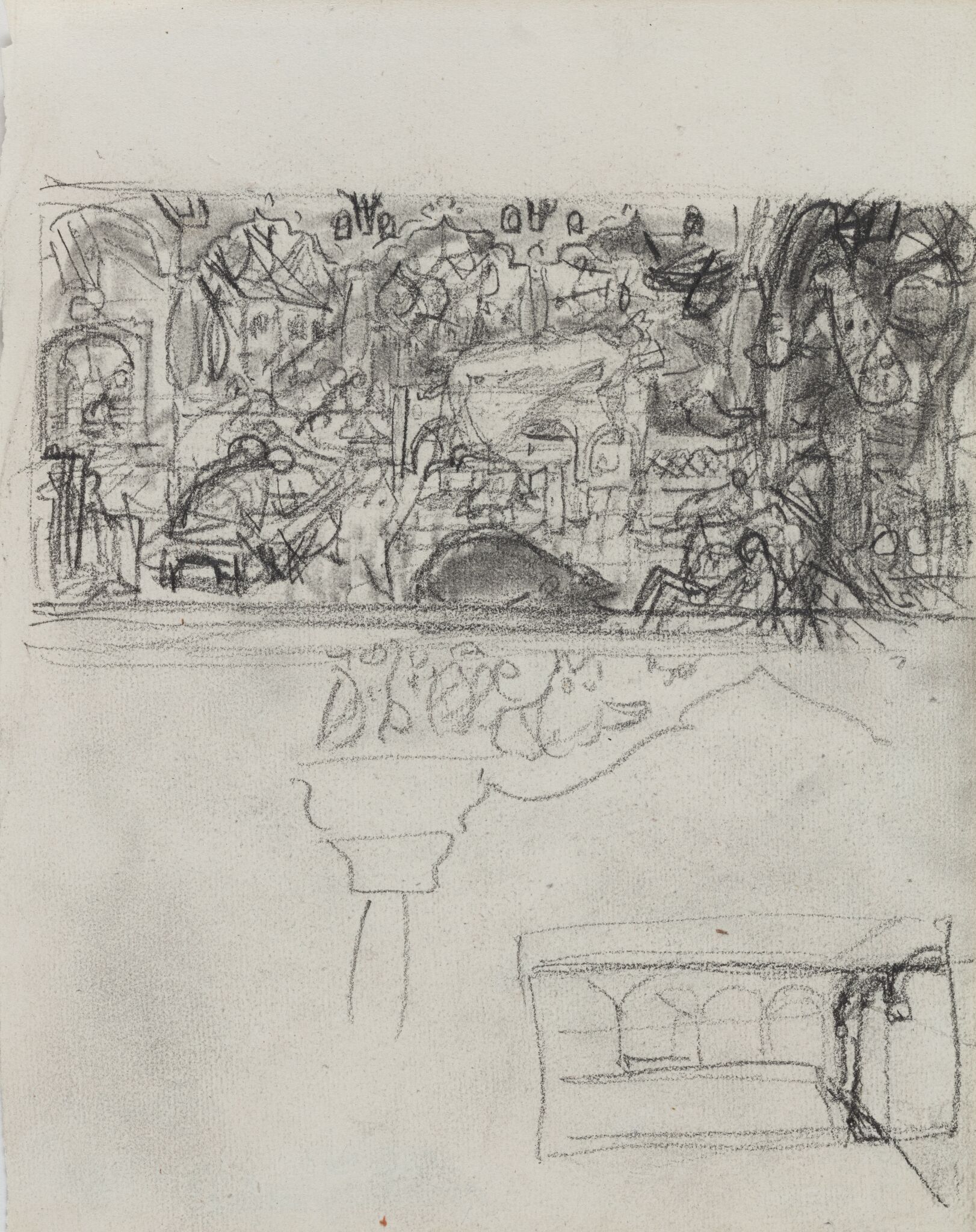
In 1885 he created sets and costumes for Rimsky-Korsakov’s “The Snow Maiden” at Savva Mamontov’s Private Opera — a three-dimensional design for Berendey’s palace, whose colours came from folk festivities in Vyatka and Moscow; in 1881 he had already prepared sketches and sets for a home production of Ostrovsky’s play.
Evento · 1885–1895 · Kyiv
The controversy over the Kiev frescoes: Stasov, Benois, Filosofov
Contemporaries disagreed: Dmitry Filosofov saw in the frescoes “the first bridge over the 200-year-old gulf” between classes of Russian society, Stasov a sacrilegious play with the religious feelings of the people, and Alexandre Benois a “sumptuous and frivolous féerie”; Vasnetsov himself saw the cathedral as a “Bible for the poor”.
He builds a terem-style house in Troitskaya Sloboda
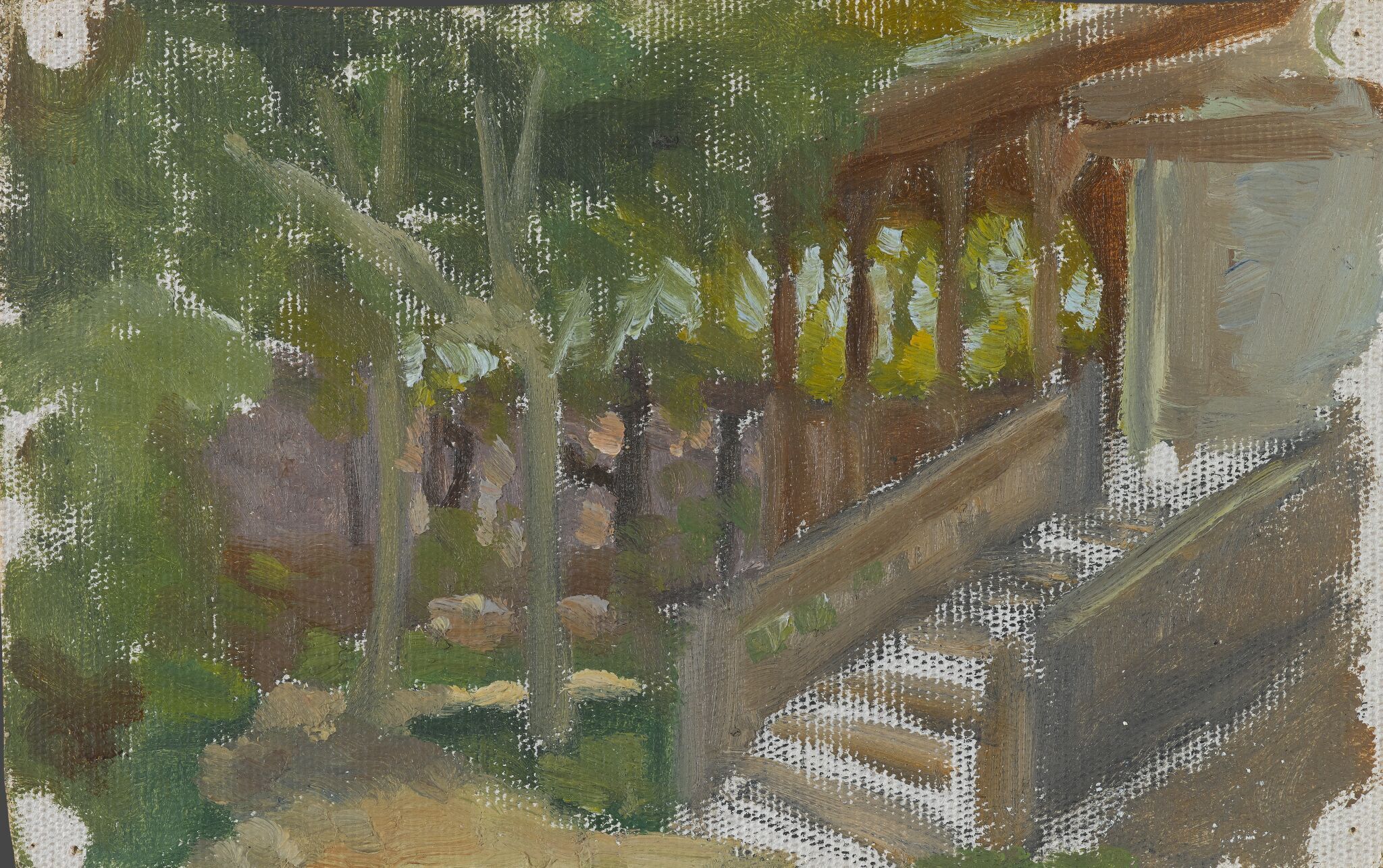
In 1891 he bought land in Troitskaya Sloboda and himself devised a wooden mansion in the style of an ancient Russian terem; construction, carried out by peasants from Vladimir Governorate, was completed in 1894, and the second-floor studio (110 m², six-metre ceilings) became the place where the “Bogatyrs”, “The Snow Maiden” and the “Poem of Seven Fairy Tales” were painted; Governor-General Grand Duke Sergei Alexandrovich allowed the house to exceed the height limit.
1892
Carriera
Professor of the Imperial Academy of Arts
From 1892 he was a professor of the Imperial Academy of Arts, and in 1893–1905 a full member of the Academy (under its new statute).
The mosaics of the Church of the Saviour on Blood in St Petersburg
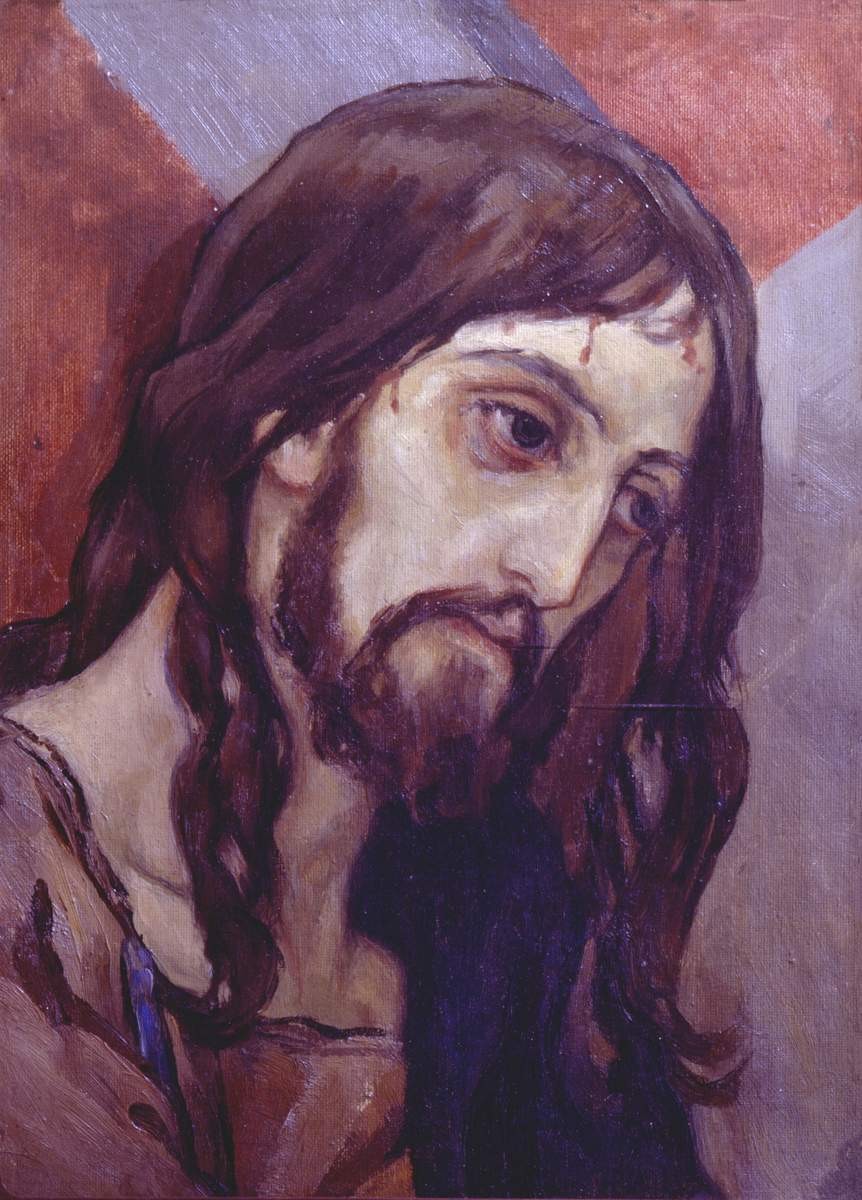
He proposed six works for the mosaics of the Church of the Resurrection of Christ (“The Carrying of the Cross”, “The Crucifixion”, “The Deposition”, “The Harrowing of Hell”, and images of the Pantocrator and the Virgin); disagreeing with the church decoration committee’s demands about “the position of figures, heads, hands and so on”, he was ready to give up the commission, but the dispute was decided in his favour — the mosaics were executed from his cartoons by Alexander Frolov’s workshop.
1897
Opera · 1897–1911
The mosaics of the Alexander Nevsky Cathedral in Warsaw
For the tallest building in Warsaw he painted the altar images and made designs for 16 huge mosaic compositions: some 2,800 square metres were decorated over twelve years; the exact years of the work are given differently — from 1897 to 1901, or 1906–1911.
On Prechistenskaya Embankment a mansion for the collector and banker Ivan Tsvetkov was built to Vasnetsov’s design — a “Russian teremok with tiles”, conceived not as a dwelling but as a place to display his collection; the builders were Vasily Bashkirov and Boris Schnaubert.
In 1900 the council of the Tretyakov brothers’ City Art Gallery commissioned him to design a new façade; he approached the task with particular exactingness and worked free of charge — “for the memory of the deeply respected Pavel Mikhailovich”; the façade in Lavrushinsky Lane was built in 1902–1904.
1905
L’epoca · after 1905
Closeness to the Union of the Russian People
After 1905 he was close to the Union of the Russian People, though not a member, and took part in financing and designing monarchist publications, including the “Book of Russian Sorrow”.
In 1912 an imperial decree granted him, for his artistic merits, “the nobility of the Russian Empire with all his descendants”; in 1914 he received the rank of actual state councillor.
“Poem of Seven Fairy Tales”: pictures for the studio
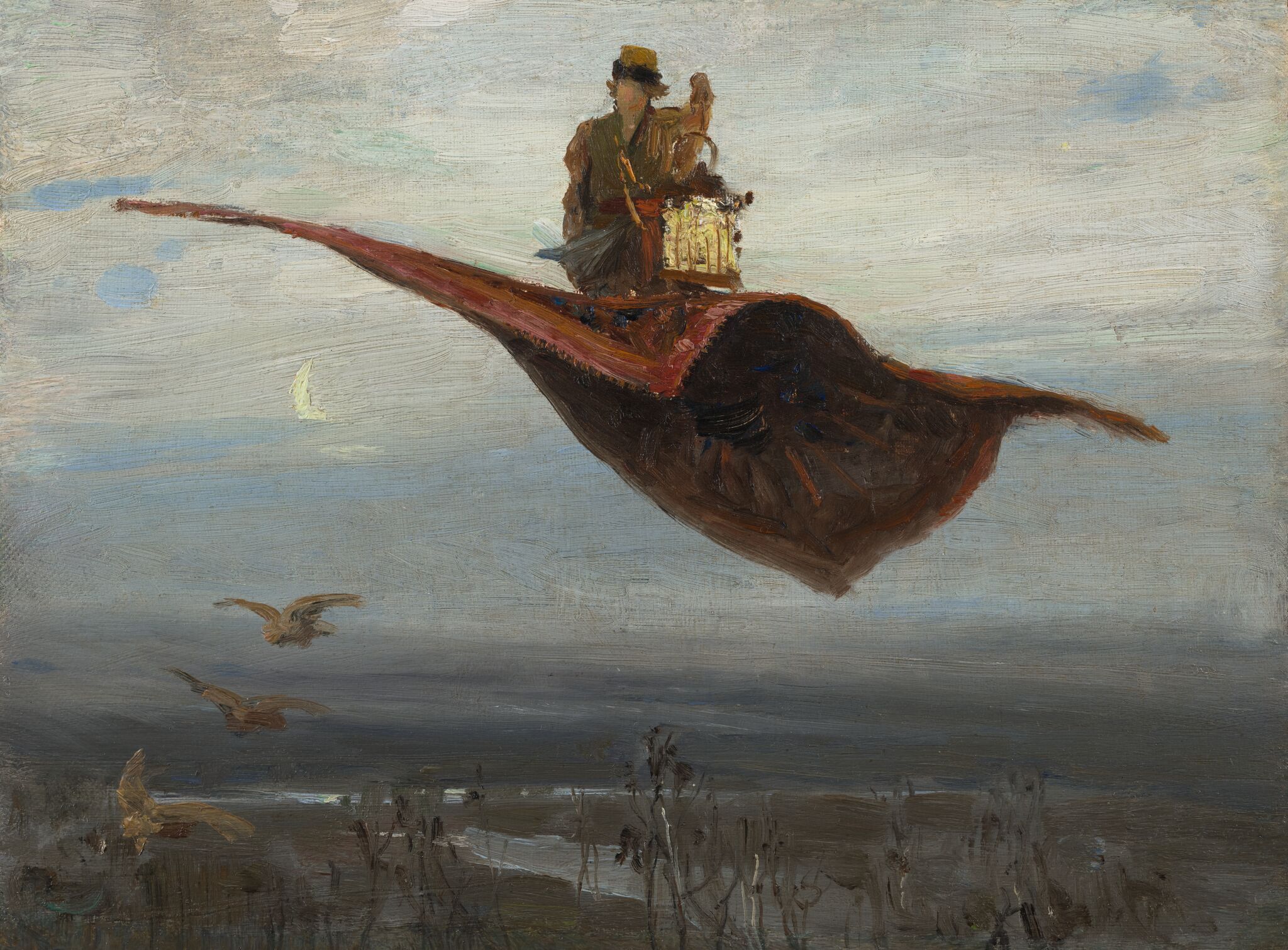
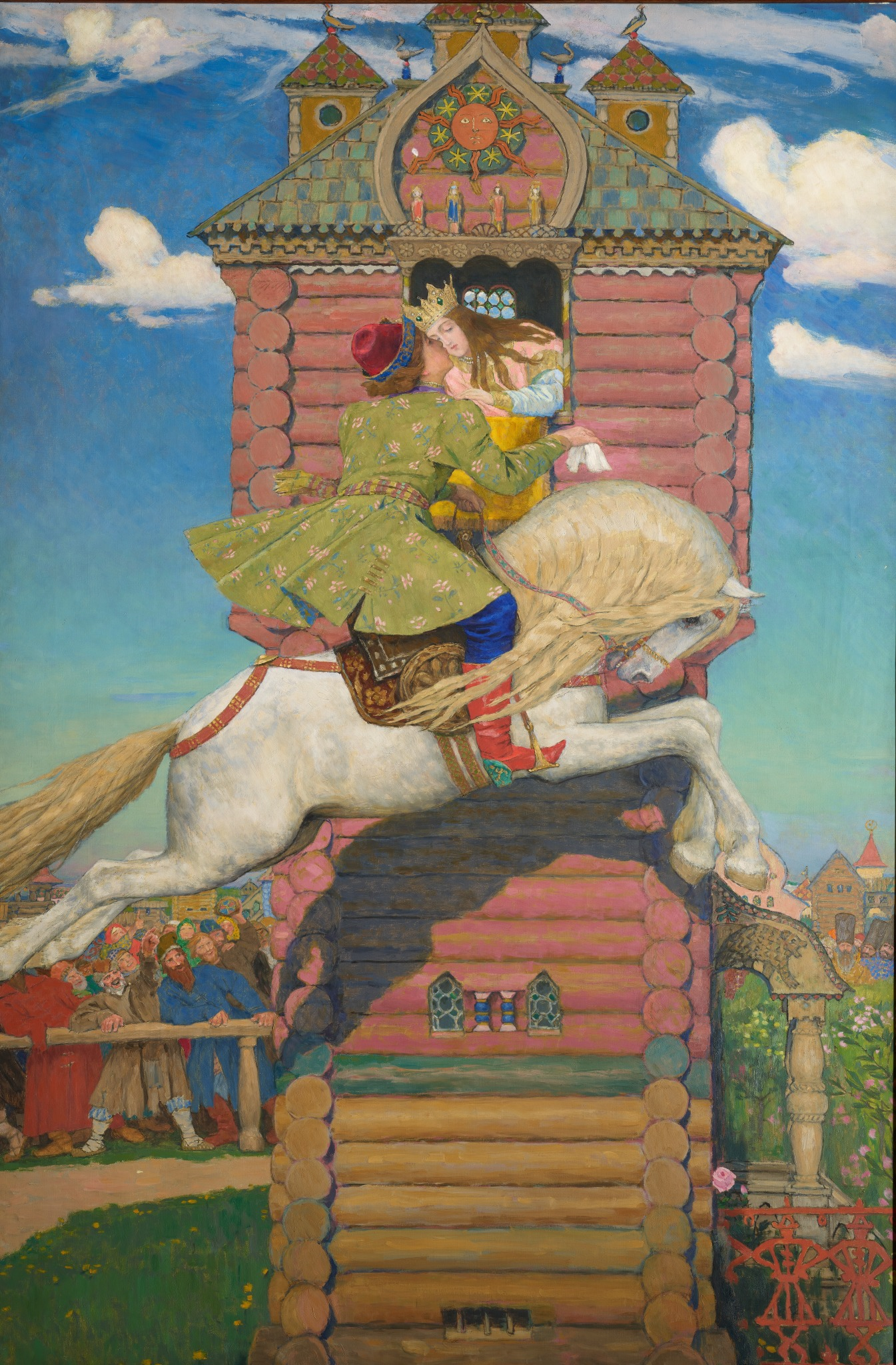
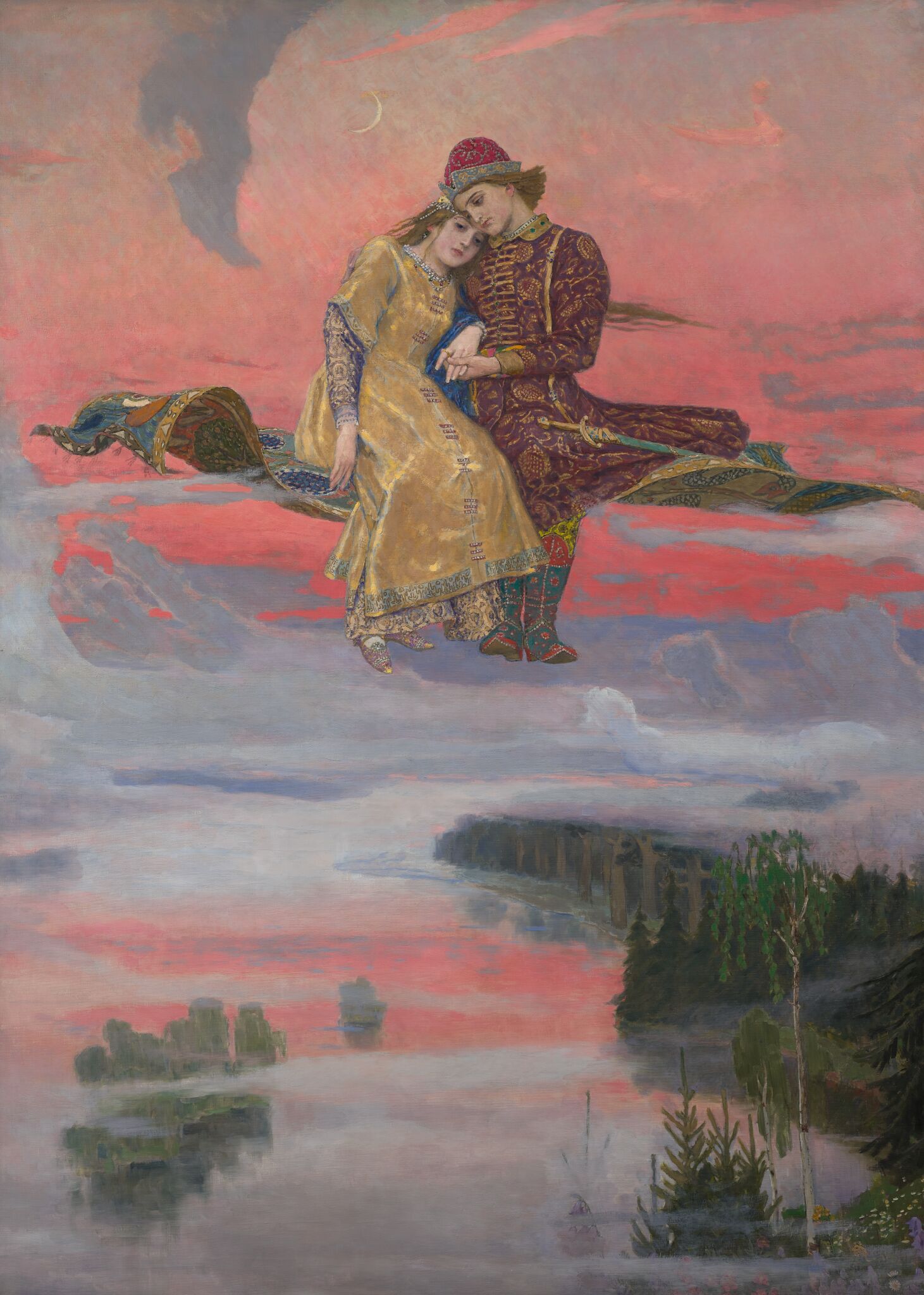
During the First World War commissions stopped and he could give himself wholly to long-held plans — the cycle “Poem of Seven Fairy Tales” (“Sleeping Princess”, “Tsarevna Nesmeyana”, “Frog Princess”, “Koschei the Deathless”, “Baba Yaga”, “Sivka-Burka”, “The Flying Carpet”); he did not mean to show it to the public, and the pictures stayed in his studio.
Viaggio
His last visit to Vyatka
In 1914 he came to Vyatka for the last time and visited the theological school and seminary where he had studied.
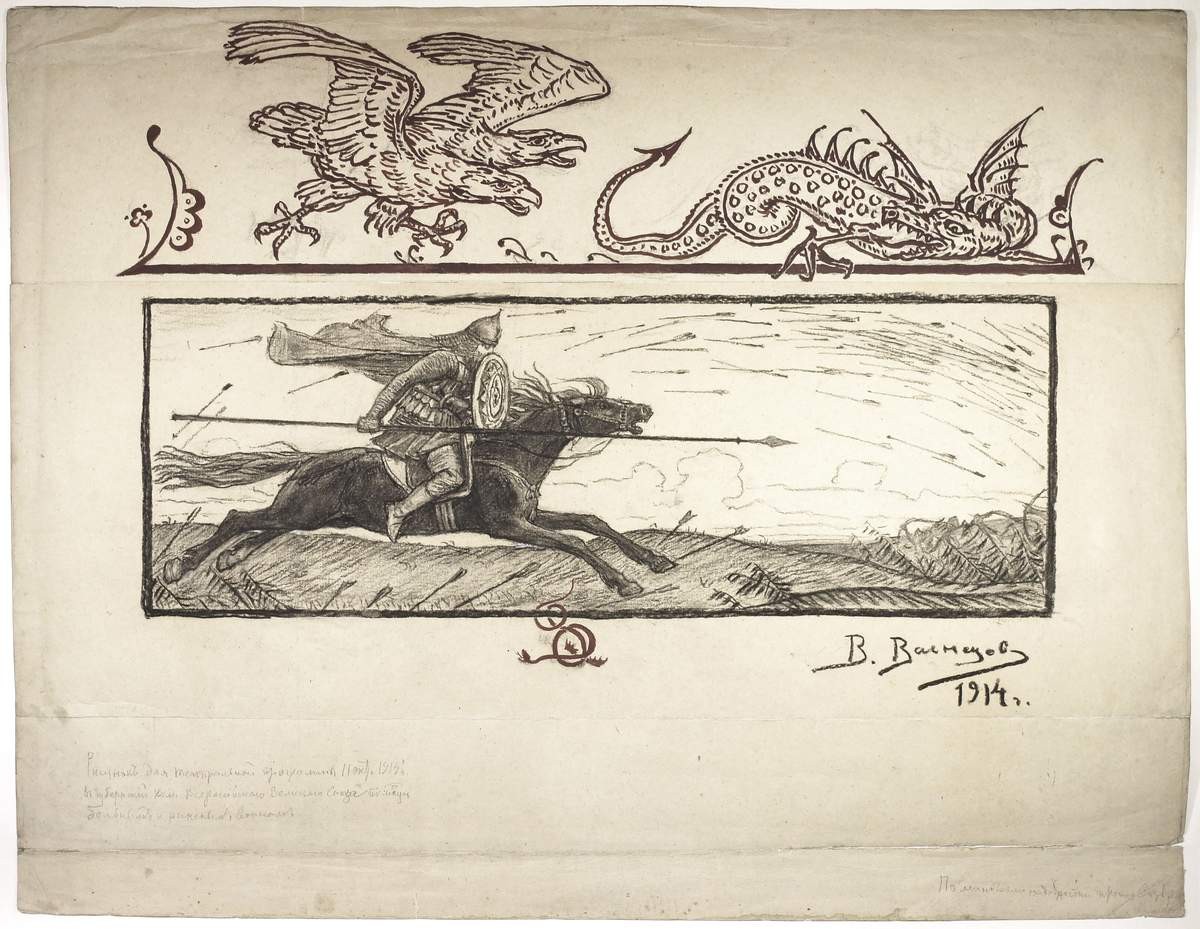
In 1915 he took part in designing a military uniform for the Russian army’s victory parade in Berlin and Constantinople; he is credited with creating the “bogatyrka”, a hat reproducing the cone-shaped helmets of Kievan Rus’ — the future budenovka.
He did not accept the October Revolution, calling himself a convinced monarchist “on the ancient Russian principles”; his nobility and ties with the old regime found no favour with the Bolsheviks, but he did not emigrate and went on living and working in Moscow.
Opera · 1917–1919
Fairy-tale canvases of the revolutionary years
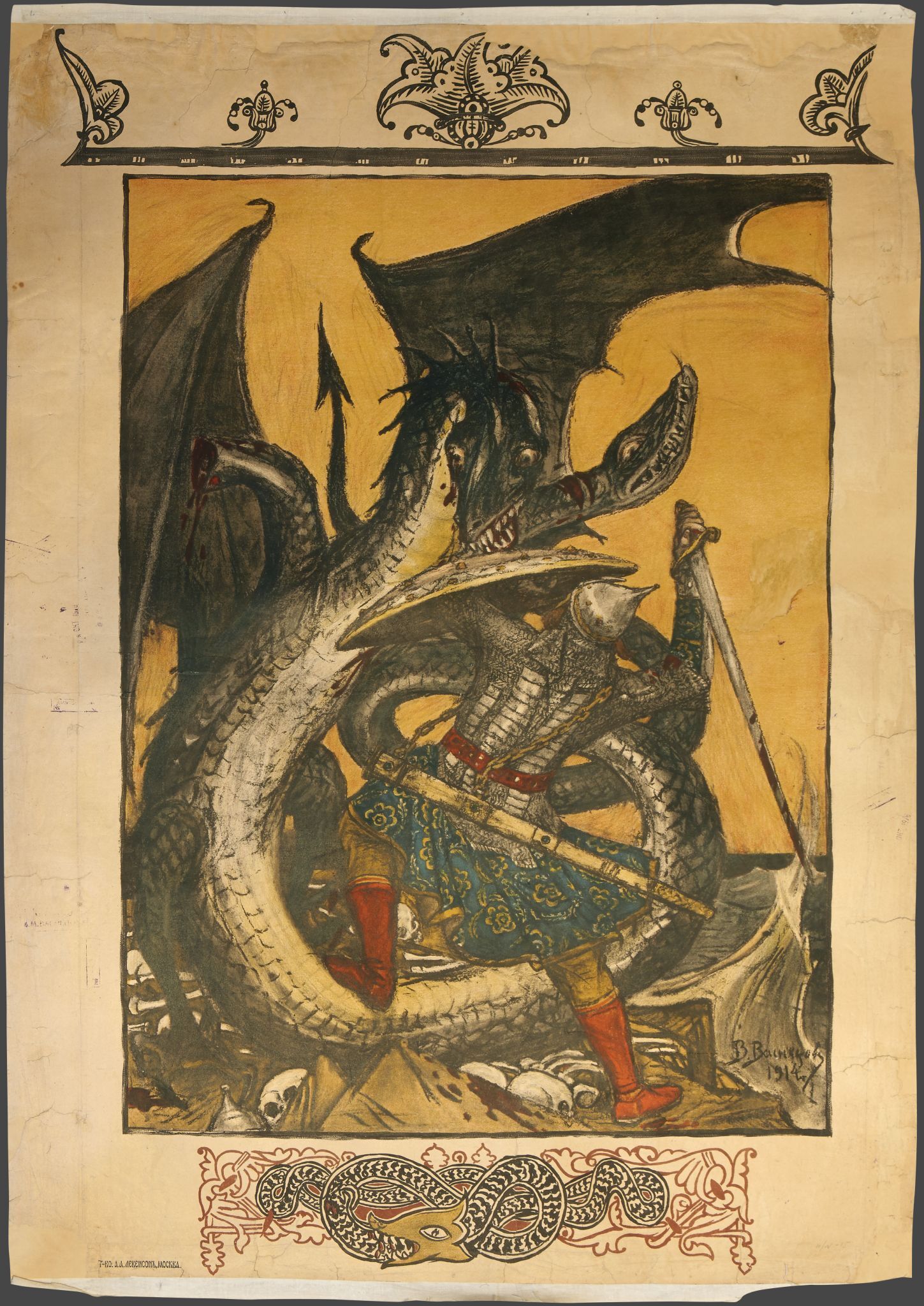
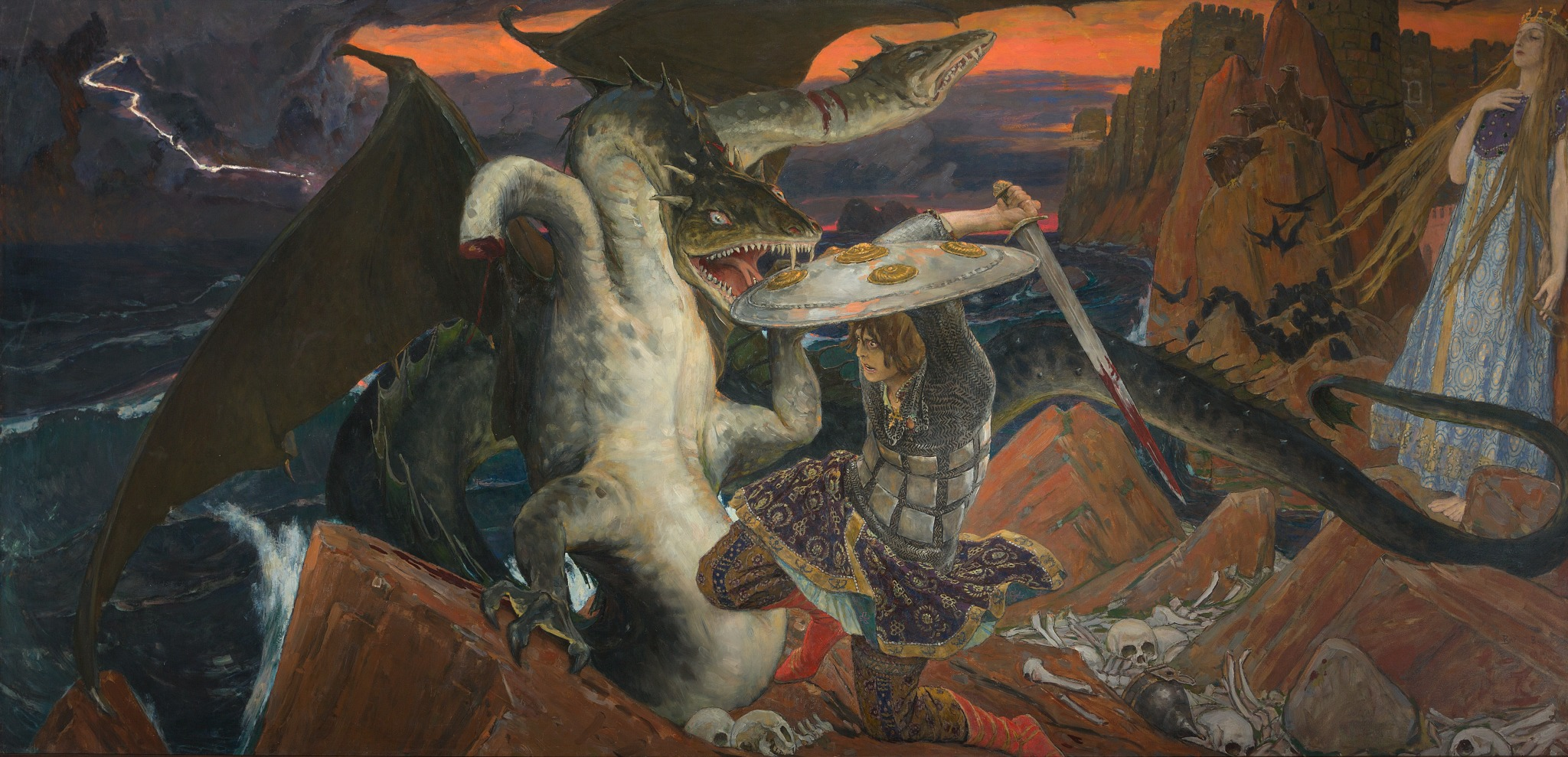
In 1917 he finished “Baba Yaga”, in 1917–1919 painted “Koschei the Deathless”, and in 1918 created “The Fight of Dobrynya Nikitich with the Serpent Gorynych” and “The Frog Princess”; researchers see in these fairy tales his feelings about the events of the era.
Carriera · after 1917
After the revolution: church paintings to the Tretyakov
After the October Revolution he advocated moving some of the religious paintings from churches to the Tretyakov Gallery; even before the revolution he had been a trustee of the gallery and gave a significant part of his income to the State Historical Museum, a large part of whose collection was acquired with his money.
1919
Famiglia
His son Boris dies
In 1919 his son Boris (1880–1919) died; after the revolution the artist’s family was scattered, which he took hard.
L’epoca · September 1919
Rumours that Vasnetsov has been shot
In September 1919 a Russian émigré newspaper reported that the Bolsheviks had “in all likelihood” killed the artist; the rumour reached Repin at Penaty, who anxiously asked the Soviet artists visiting him whether it was true that Vasnetsov had been shot.
During the Civil War Mikhail taught at the White Army’s flying school in Kiev; in 1920, escaping the Red Army, he sent his wife and son to his father’s house and left on the last steamer sailing from Crimea to Gallipoli — the family knew nothing of his fate until 1922.
The last fairy tales: “Nesmeyana” and “The Sleeping Princess”
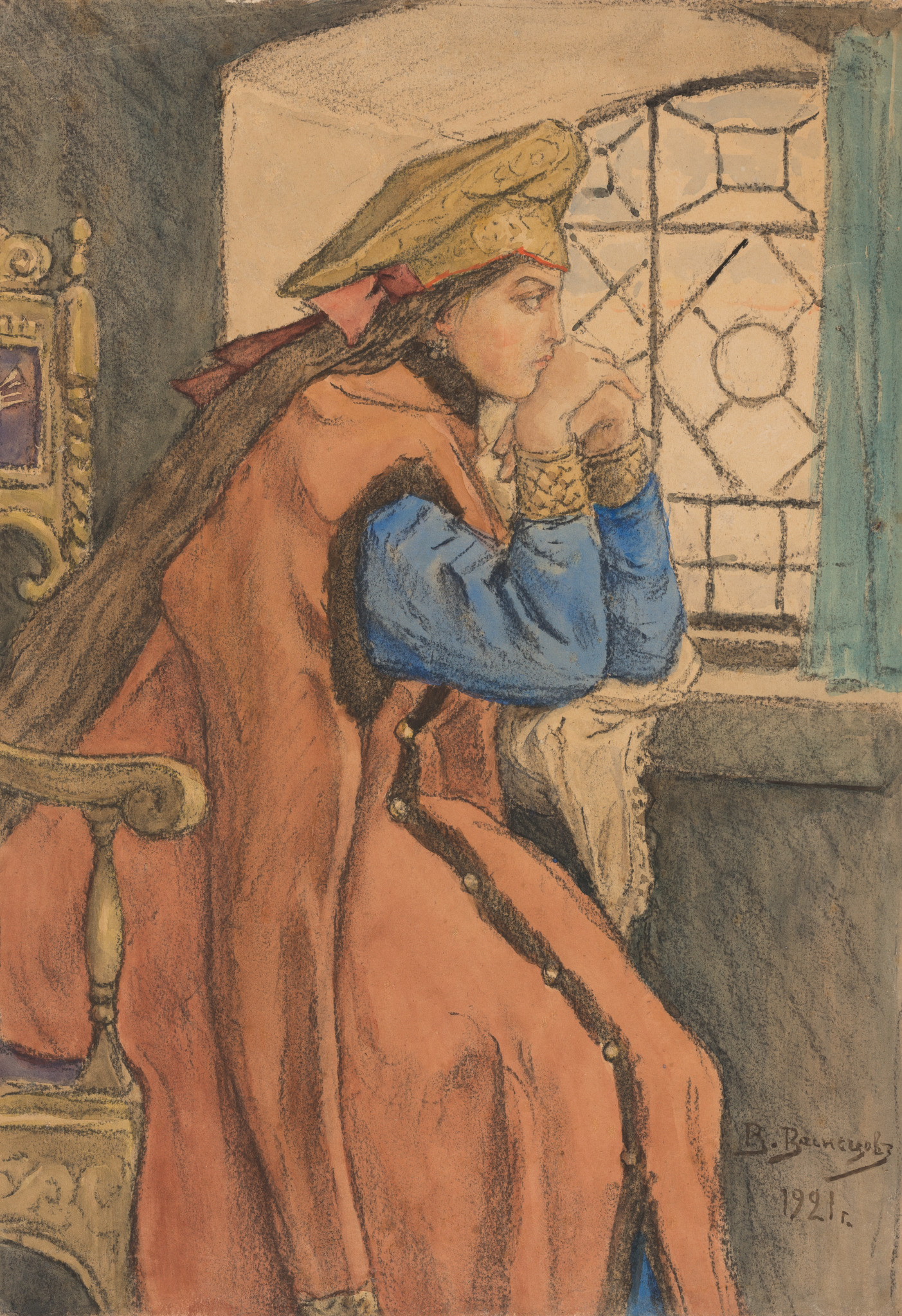
In the early 1920s he painted “The Flying Carpet” (1920–1925) and “Sivka-Burka”, while “Tsarevna Nesmeyana” (begun back in 1916) and “The Sleeping Princess” were completed in 1926 — the master’s last finished works; contemporaries took them as allegories.
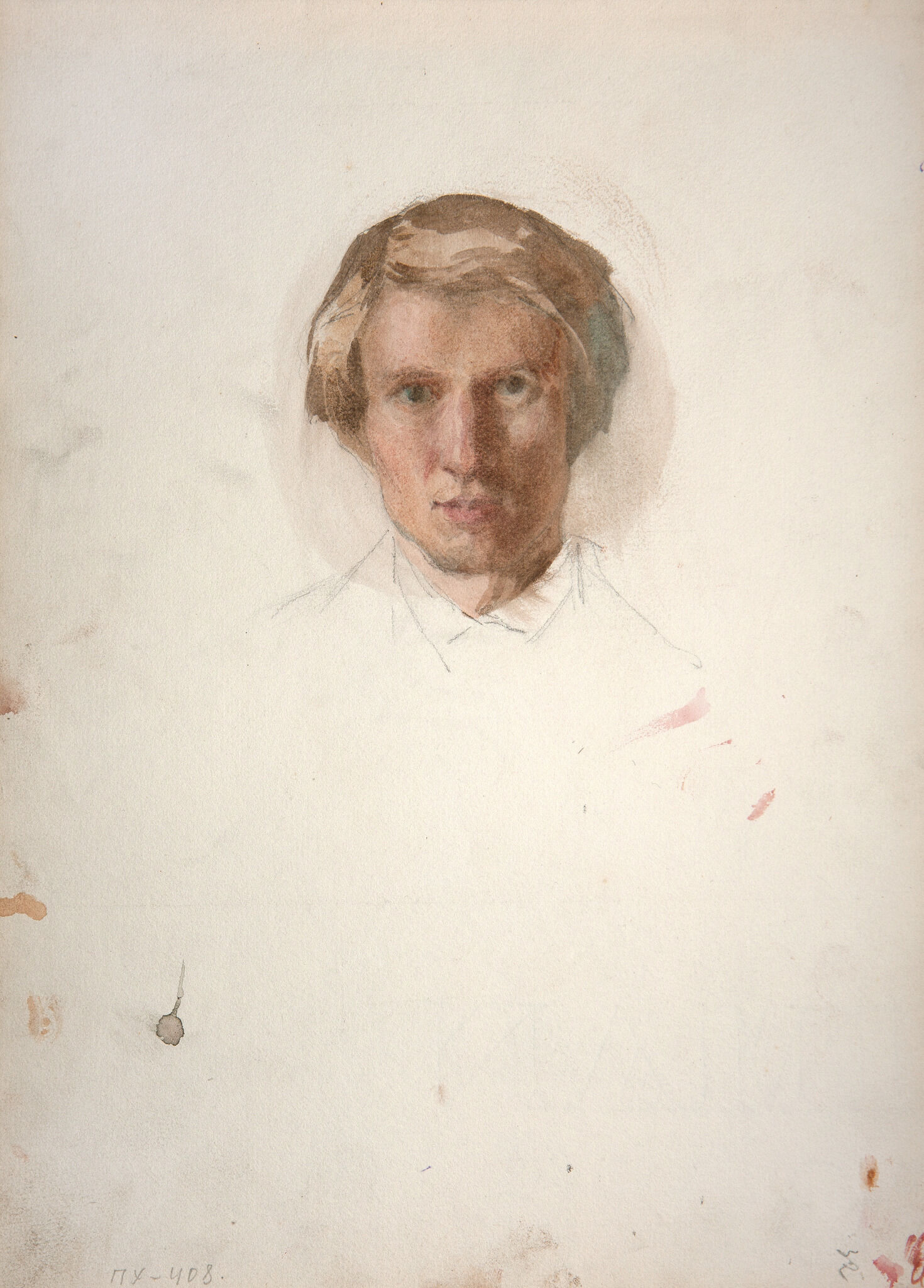
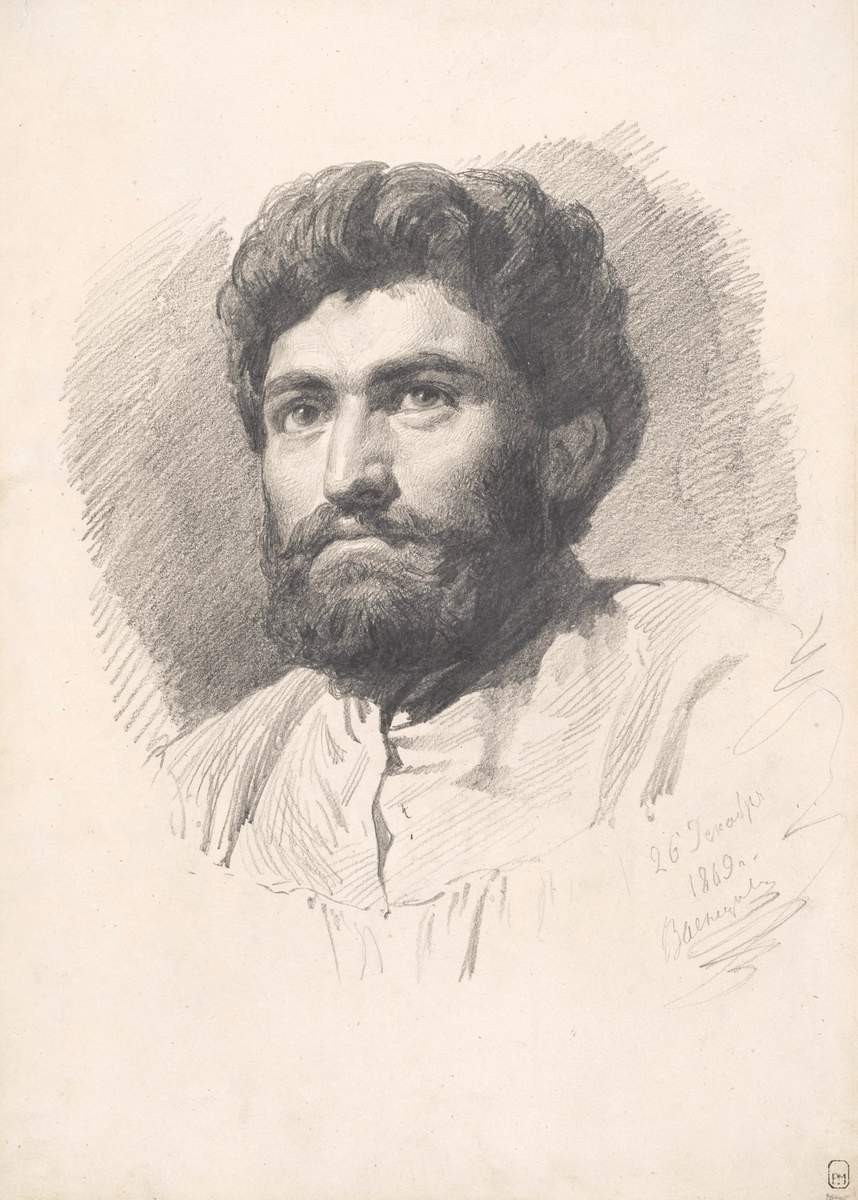
Repin, who had long been looking for a type for the hero of “Sadko”, saw Vasnetsov as he listened to a letter from Savva Mamontov and found “something ancient Russian” in his looks; Vasnetsov put on a merchant’s fur coat and a boyar’s hat — and so the study came about in which, in Repin’s words, “daring flashes in the eyes”.
Viaggio · 1876–1877
Paris: Rembrandt delights, the Salon disappoints
At the Louvre he studied the old masters at length, above all Rembrandt, and “Christ at Emmaus” (1629) in a small Paris museum made him “freeze on the spot”; the Salon of 1876, full of “salon painting”, disappointed him (“from copper basins and cauldrons — a ringing in the ears!”), although he looked at the Impressionists with curiosity.
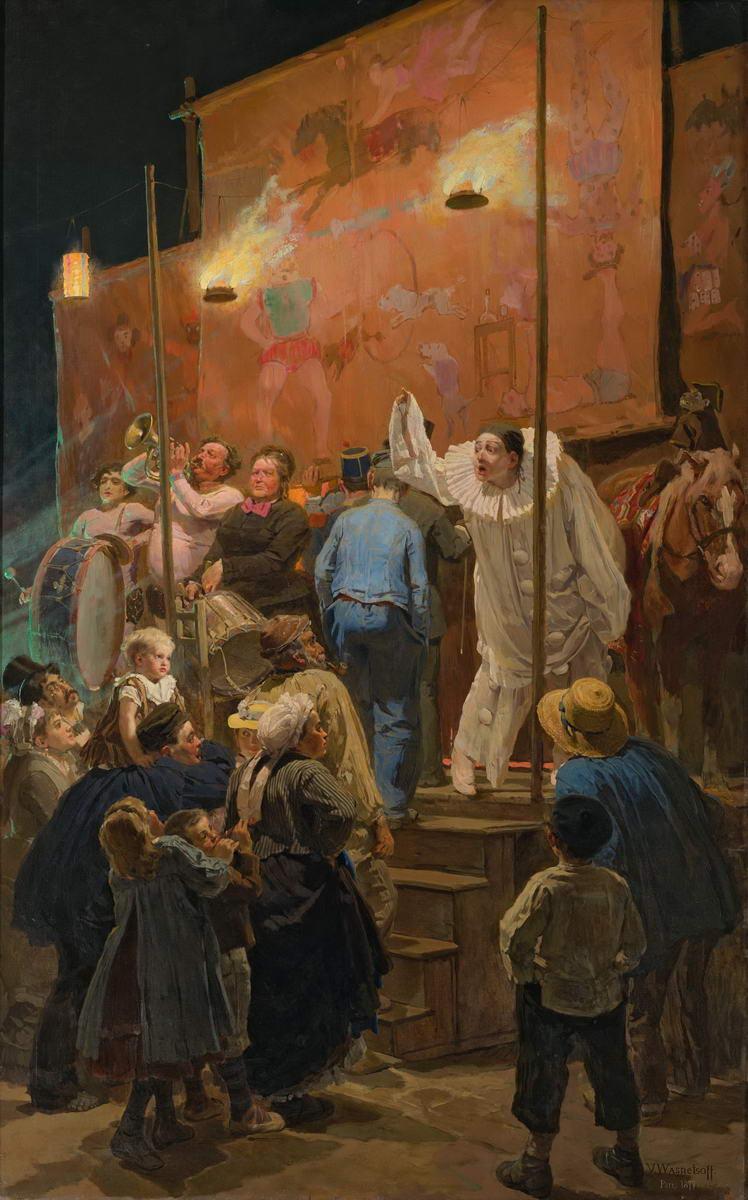
Seeking truthful subjects, he moved in with a peasant in the Paris suburb of Meudon and painted “Booths near Paris” (“Acrobats”): the reverse side of the capital — the poor’s shabby entertainment, a grimacing Pierrot, and a poor man in a blue smock with empty pockets; critics noted a richer palette.
Repin brought him to the house of Savva Mamontov, who commissioned three fairy-tale pictures for the boardroom of the Donetsk Railway — “The Battle of the Russians with the Scythians”, “The Flying Carpet” and “The Three Princesses of the Underground Kingdom” (the princesses of gold, precious stones and coal); the princess Coal, a modest dark-haired girl in a black dress, was especially successful.
Carriera · 1878–1890
Member of the Peredvizhniki
From 1878 he belonged to the Society of Travelling Art Exhibitions (the Peredvizhniki): he took part in its activity in 1878–1890 and exhibited with it until 1897; he was admitted for the realism and sharp social subjects of his genre paintings.