 John CageStati Uniti, 1912–1992
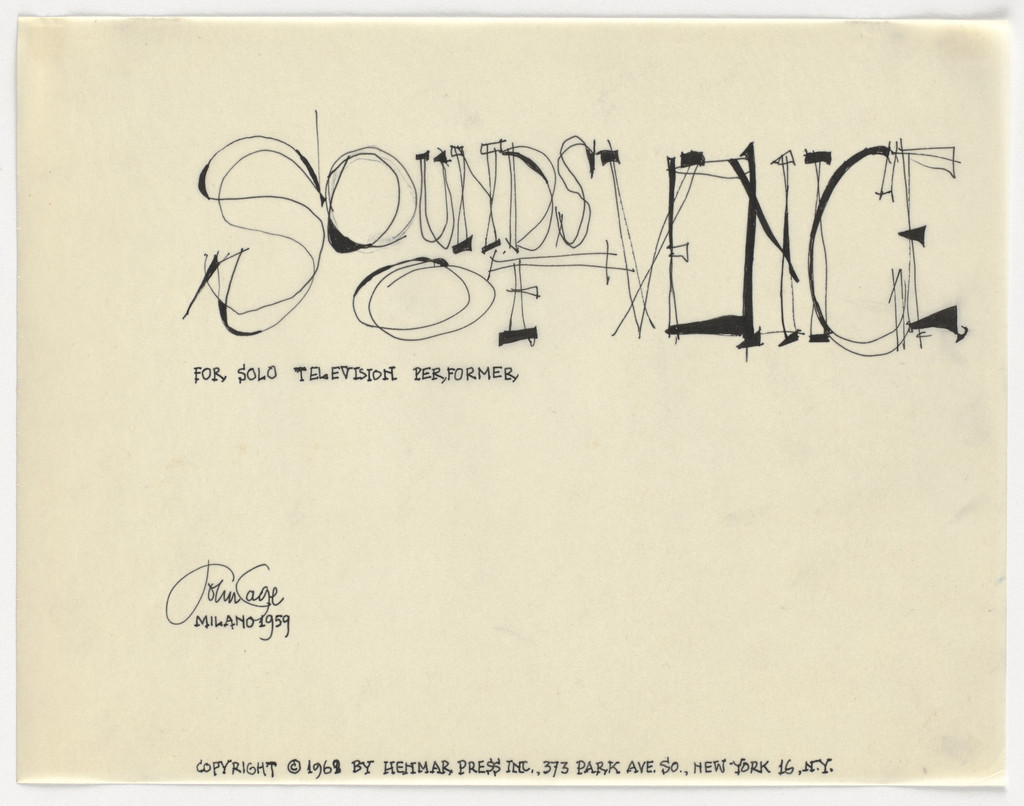
Sounds of Venice
Si può vedere?
Non esposta al momento
Dove si trova «Sounds of Venice» oggi? Collezione: Museum of Modern Art, New York. Non esposta al momento. Verificato 6 ottobre 2026.

New York, Stati Uniti
Appartiene alla collezione, ma al momento non è esposta.
- Verificato
- Fonte
- Il museo
Scheda
- Numero di inventario
- 1395.2018.a-e
In catalogo
Fonti
- Museum of Modern Art
- Immagine: Museum of Modern Art — © the artist or rights holder
Nella vita di John Cage
Tutta la vita1950s
Chance wrecks his reputation
The adoption of chance procedures has disastrous consequences for Cage's reputation: the press, which used to react favourably to his percussion and prepared-piano music, ignores his new works, and many valuable friendships and connections are lost. Boulez, who used to promote Cage's work in Europe, opposes his particular use of chance, as do other composers who came to prominence in the 1950s, such as Stockhausen.
1956–1961
The New School class and Fluxus
From 1956 to 1961 Cage teaches classes in experimental composition at The New School in New York (from 1956 to 1958 he also works as an art director and designer of typography); most of his students are visual artists with little or no musical background: Jackson Mac Low, Allan Kaprow, Al Hansen, George Brecht, Ben Patterson, Dick Higgins. The classes influence the formation of Fluxus; Cage met Kaprow, who coined the term “happenings”, on a mushroom hunt with George Segal and invited him to join his class.
1960
Wesleyan University and Norman O. Brown
From the 1950s until his death Cage collaborates with the music department of Wesleyan University in Middletown, where the philosopher, poet and classicist Norman O. Brown befriends him — an association fruitful to both. In 1960 Cage is appointed a fellow on the faculty of the Center for Advanced Studies and starts teaching classes in experimental music.
from 1960 until the early 1970s
Arthritis: Cage stops performing in public
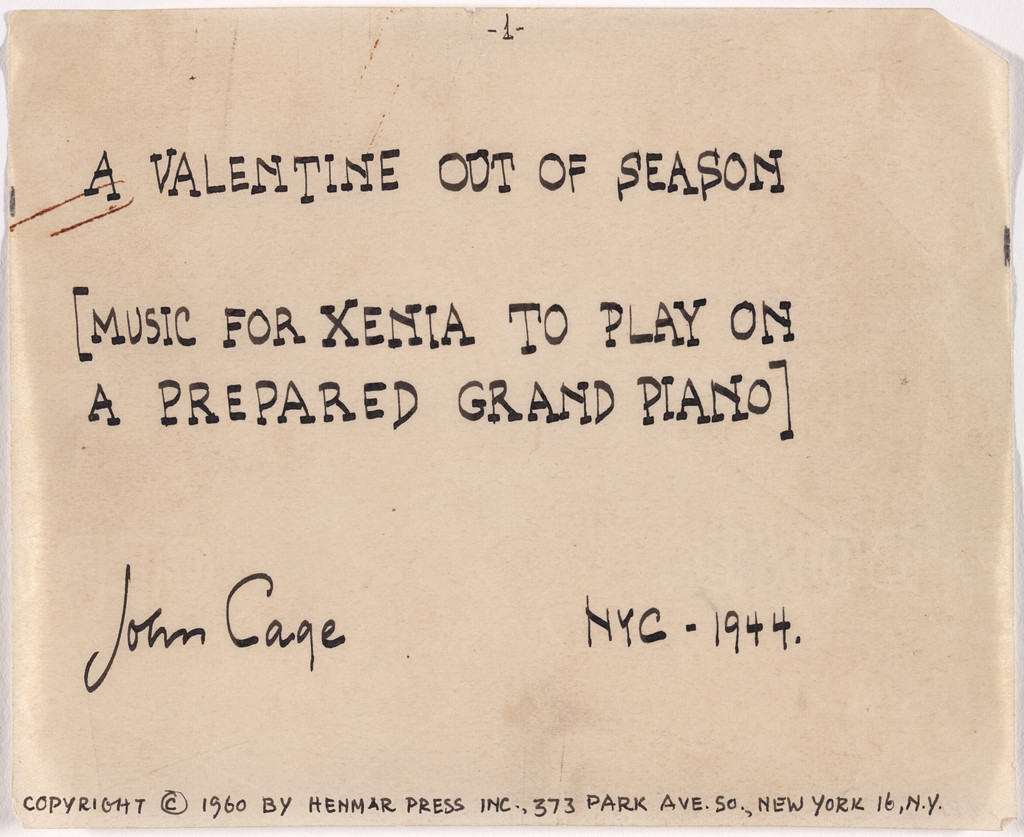
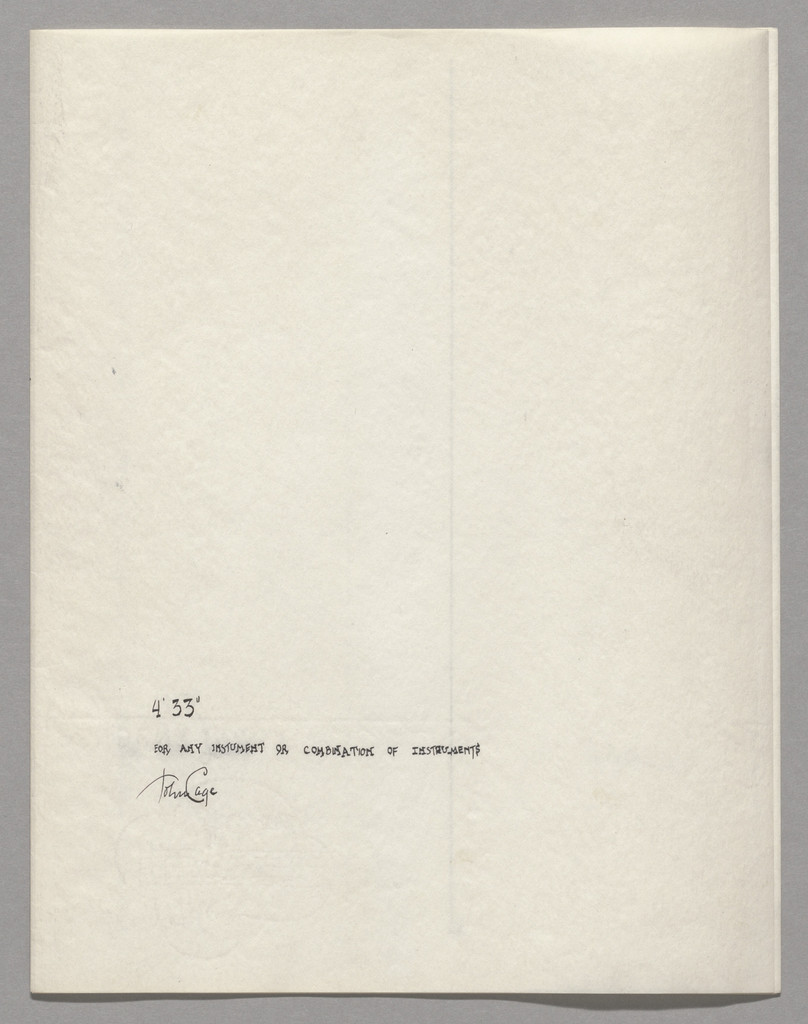
Arthritis troubles Cage from 1960, and by the early 1970s his hands are painfully swollen, so that he can no longer perform — “Cheap Imitation” is the last work he plays in public — and manuscripts for publication, previously done in his calligraphic script, now have to be completed by assistants. On top of this, David Tudor leaves performing for composition in the early 1970s, and Cage, for the first time in two decades, has to rely on other performers — Grete Sultan, Paul Zukofsky, Margaret Leng Tan and many others.
October 1961
“Silence” and Edition Peters: wide fame
In October 1961 Wesleyan University Press publishes “Silence”, a collection of Cage's lectures and writings on a wide variety of subjects, including the famous “Lecture on Nothing”, composed using a complex time-length scheme; it is the first of his six books and remains his most widely read and influential. In the early 1960s he begins a lifelong association with the music publisher Edition Peters: its president Walter Hinrichsen offers an exclusive contract and instigates a catalogue of Cage's works (1962); together with “Silence” this brings the composer much greater prominence than ever before.
1969
“HPSCHD”: seven harpsichords and 64 projectors
In 1969 the University of Illinois Urbana-Champaign hosts the five-hour first performance of “HPSCHD”, a large-scale multimedia work created with the composer and computer scientist Lejaren Hiller: seven harpsichords play chance-determined excerpts from Cage, Hiller and the classical canon, joined by 52 tapes of computer-generated sound, 6,400 slides (many supplied by NASA) and forty motion-picture films; audience members are free to move around the space.