 Armand GuillauminFrancia, 1841–1927
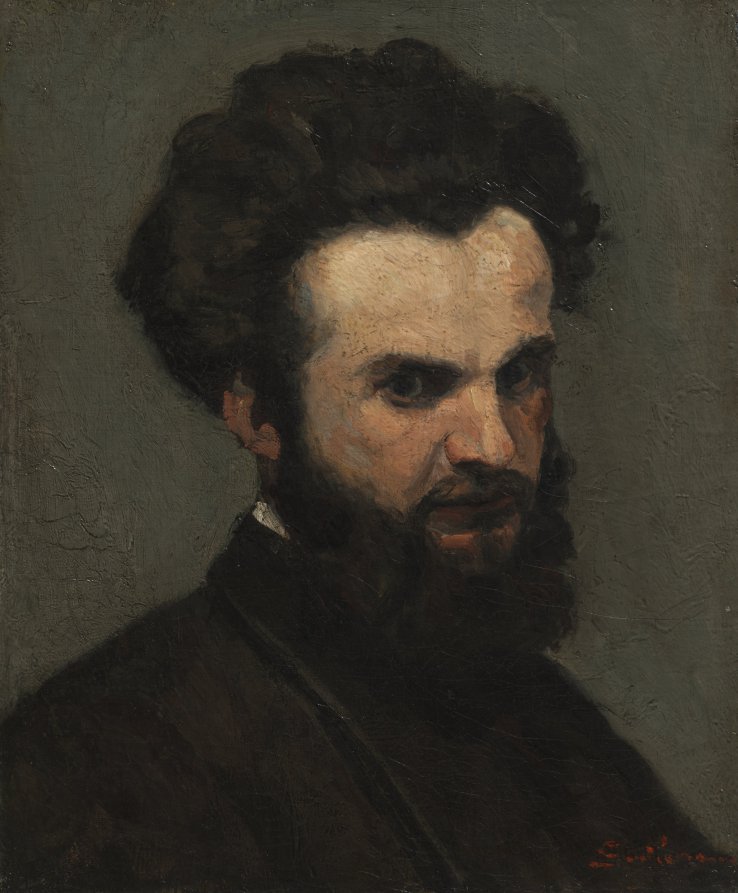
Self-Portrait
Si può ammirare?
Al momento non riceve

Cleveland Museum of Art
Cleveland, Stati Uniti
Appartiene alla collezione, ma al momento non è esposta.
- Verificato
- l’altro ieri
- Ultimo cambio di stato
- 19 ago 2026
- Fonte
- I dati di collezione del museo stesso
About the painting
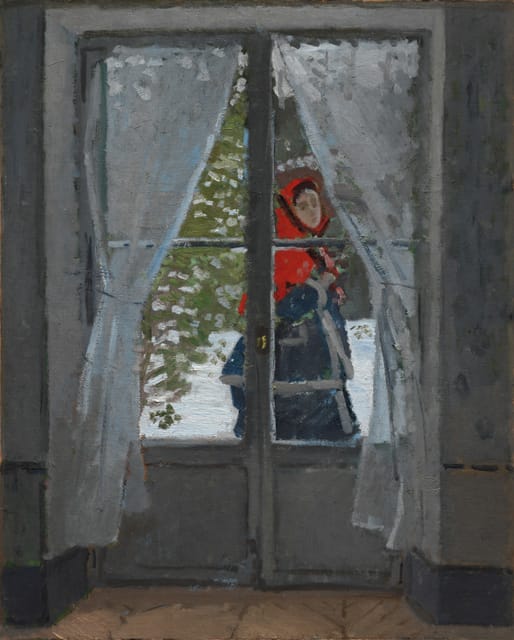
Armand Guillaumin created numerous self-portraits throughout his career. In this early example, the muted, brown tones and somber gaze downward in the painting convey seriousness, while the vivid blue, orange, green, and yellow colors in Self-Portrait (2020.129) suggest a confidence echoed by the artist’s direct gaze. Both emotions were experienced by Guillaumin around this time, as he sought to establish himself as a professional artist alongside a full-time job for the French railway system.
Cleveland Museum of Art
Scheda
- Numero di inventario
- 1980.266
In catalogo
Fonti
- Cleveland Museum of Art: the museum's own open data · acquisita 5 giorni fa
- Immagine: Cleveland Museum of Art — Museum open access
Nel frattempo, nella vita di Armand Guillaumin
Tutta la vita1870s
Painting alongside Pissarro and Cézanne
In the 1870s the three friends — Guillaumin, Pissarro and Cézanne — often paint in each other's company; for a time the studios of Guillaumin and Cézanne on the Île Saint-Louis in Paris are next door to each other.
1872
Back at work; visits to Pissarro in Pontoise
Forced to return to his job, he keeps painting and often visits Pissarro in Pontoise; in September Pissarro writes to Antoine Guillemet that Guillaumin has just spent several days with them — painting by day and ditch-digging in the evening — and admires his courage.
1873
Cézanne portrays him in an etching
In 1873 Cézanne makes the only etchings of his career; one of them depicts Guillaumin.
1874
The first Impressionist exhibition
Shows three landscapes at the first Impressionist exhibition, among them “Sunset at Ivry”, whose motif echoes Monet's “Impression, Sunrise”; he is a member of the Société anonyme des artistes peintres, sculpteurs et graveurs from the start. He later takes part in the exhibitions of 1877, 1880, 1881, 1882 and 1886 (other accounts say in all but the second, of 1876).