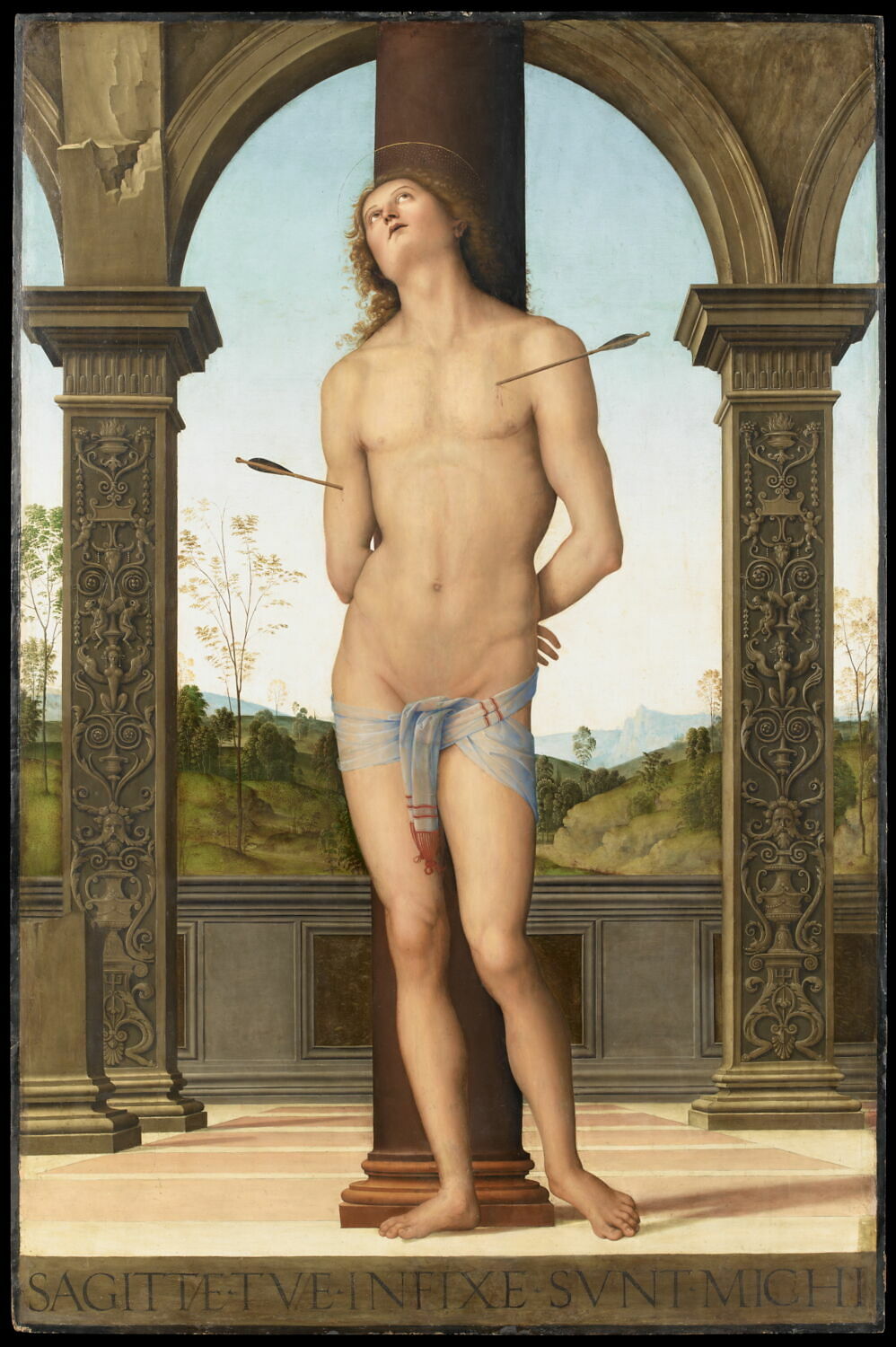
 Pietro PeruginoItalia, 1448–1523
Saint Sébastien
Si può ammirare?
Sì, riceve visite

Esposta al pubblico. Chi lo garantisce è indicato qui sotto.
- Verificato
- 9 giorni fa
- Ultimo cambio di stato
- 26 set 2026
- Fonte
- I dati di collezione del museo stesso
About the painting
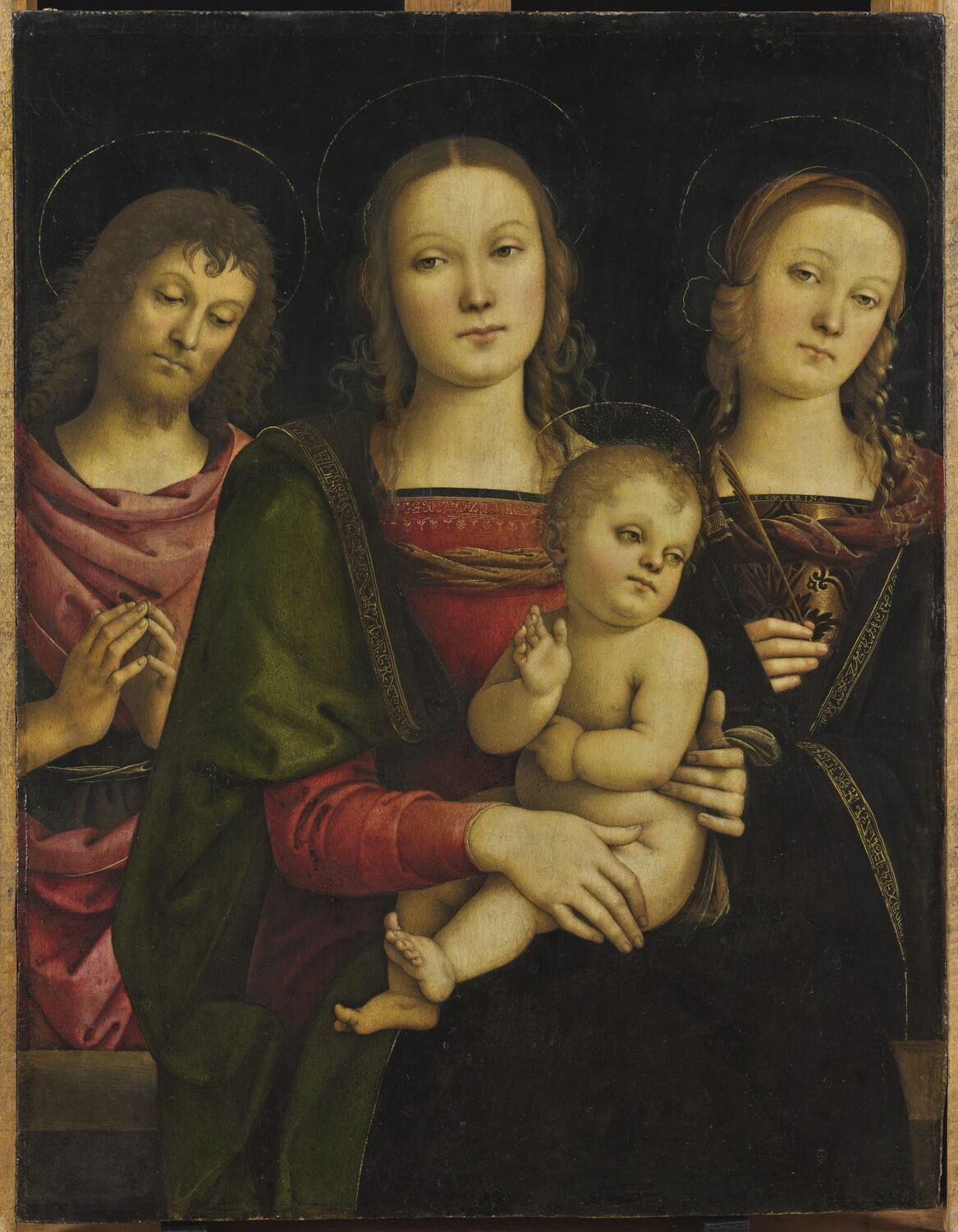
San Sebastiano è un dipinto a olio su tavola di quercia (176x116 cm) di Pietro Perugino, databile al 1495 circa e conservato nel Museo del Louvre a Parigi.
Scheda
- Numero di inventario
- RF 957
Fonti
- Museo del Louvre: the museum's own open data · acquisita 9 giorni fa
- Immagine: Museo del Louvre — © 2012 GrandPalaisRmn (musée du Louvre) / Tony Querrec
Nel frattempo, nella vita di Pietro Perugino
Tutta la vitac. 1481
Summoned to Rome to paint the Sistine Chapel
Already a renowned master, Perugino is invited by Pope Sixtus IV to Rome, among the best artists of Italy — Botticelli, Ghirlandaio, Cosimo Rosselli, Luca Signorelli and others — to take part in painting the Sistine Chapel.
c. 1481
Pinturicchio — assistant and partner
Perugino's assistant Pinturicchio accompanies him to Rome and is made his partner, receiving a third of the profits; he may have done some of the Moses and Zipporah subjects.
1486–1499
Two studios: in Florence and in Perugia
Between 1486 and 1499 Perugino works mainly between Florence and Perugia, maintaining a studio in each city. In the 1480s and 1490s he is one of the most celebrated artists of Italy.
September 1493
Marriage to Chiara Fancelli and return to Florence
According to Vasari, Perugino returns to Florence in September 1493 to marry Chiara, daughter of the architect Luca Fancelli. That same year Florence again becomes his permanent home, although he continues to accept work elsewhere.
1496
The money-changers' guild commissions the Cambio hall
The money-changers' guild of Perugia asks Perugino to decorate the Sala delle Udienze of the Collegio del Cambio, with the humanist scholar Francesco Maturanzio as consultant. The scheme — a vault with the seven planets and the signs of the zodiac, and sacred subjects on the walls — may have been finished by 1500; on the mid-pilaster Perugino placed his own bust-form portrait.
c. 1496
Raphael's possible apprenticeship as a boy
Around 1496 Raphael, still a boy, may have been placed by his uncles under Perugino's tuition and may have had a hand in the work on the vaulting of the Cambio hall.

![The Crucifixion with the Virgin, Saint John, Saint Jerome, and Saint Mary Magdalene [left panel], Pietro Perugino, c. 1482/1485](https://api.nga.gov/iiif/b43e331e-ede9-44ca-a276-0b8806630fbd/full/!2400,2400/0/default.jpg)