Albrecht DürerGermania, 1471–1528
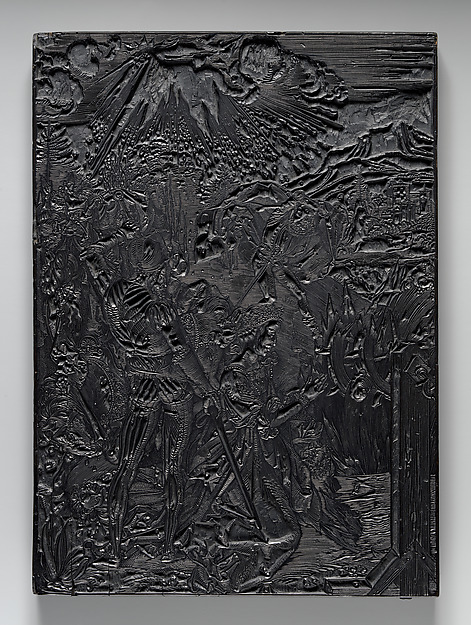
Saint Eustace
Si può ammirare?
Al momento non riceve

Cleveland Museum of Art
Cleveland, Stati Uniti
Appartiene alla collezione, ma al momento non è esposta.

Collezione: National Gallery of Art, Washington
- Verificato
- ieri
- Ultimo cambio di stato
- 2 ott 2026
- Fonte
- I dati di collezione del museo stesso
Sull’opera
Sant'Eustachio è un'incisione (35,5x25,9 cm) di Albrecht Dürer, databile al 1501 circa. Delle varie copie superstiti, una delle migliori si trova nel Fogg Art Museum di Cambridge (Massachusetts).
Scheda
- Numero di inventario
- 1971.15.1
What it shows
In catalogo
Andirivieni
Al momento non esposta
Cleveland Museum of Art · 2 ott 2026 — oggi · Verificato
Al momento non esposta
National Gallery of Art · 29 set 2026 — 2 ott 2026 · Verificato
Al momento non esposta
Cleveland Museum of Art · 29 set 2026 — 29 set 2026 · Verificato
Al momento non esposta
National Gallery of Art · 29 set 2026 — 29 set 2026 · Verificato
Al momento non esposta
Cleveland Museum of Art · 28 set 2026 — 29 set 2026 · Verificato
Al momento non esposta
National Gallery of Art · 28 set 2026 — 28 set 2026 · Verificato
Al momento non esposta
Cleveland Museum of Art · 27 set 2026 — 28 set 2026 · Verificato
Al momento non esposta
National Gallery of Art · 25 set 2026 — 27 set 2026 · Verificato
Al momento non esposta
Cleveland Museum of Art · 19 ago 2026 — 25 set 2026 · Verificato
Fonti
- Cleveland Museum of Art: the museum's own open data · acquisita 5 giorni fa
- Immagine: National Gallery of Art — Museum open access
Nel frattempo, nella vita di Albrecht Dürer
Tutta la vita1500
Jacopo de' Barbari and the secret of proportion
The Venetian Jacopo de' Barbari, whom Dürer had met in Venice, came to Nuremberg, and Dürer said he learned much from him about perspective, anatomy and proportion. Feeling that de' Barbari would not explain everything he knew, Dürer began studies of his own that became a lifelong preoccupation.
1501–1502
In the circle of Nuremberg's humanists
Through his lifelong friend Willibald Pirckheimer, Dürer entered the circle of Nuremberg's humanists. He engraved illustrations for Conrad Celtis's editions of Hrotsvitha (1501) and of his Four Books of Love (1502), and decorated 14 books in Pirckheimer's library with drawings.
1502
Death of his father
Albrecht Dürer the Elder died, and his son took on the care of his mother and his two younger brothers, Endres and Hans.
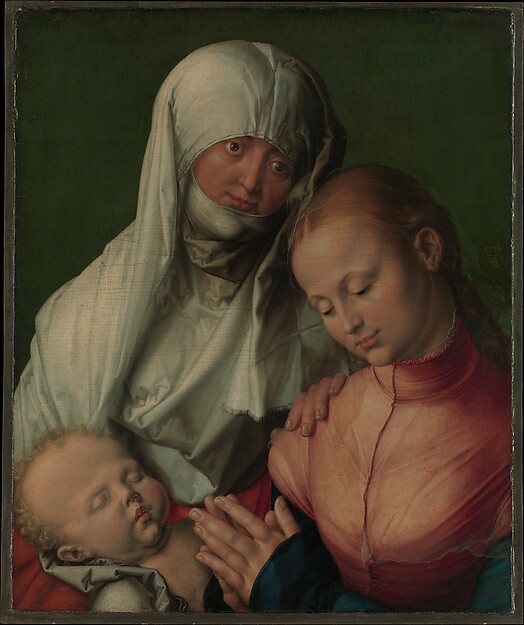
![Madonna and Child [obverse], Albrecht Dürer, c. 1496/1499](https://api.nga.gov/iiif/878db7e6-10ae-4cae-ba5d-6d6f5c413ae8/full/!2400,2400/0/default.jpg)
![Lot and His Daughters [reverse], Albrecht Dürer, c. 1496/1499](https://api.nga.gov/iiif/7565a449-f82a-414b-9bda-c93f55a51b4d/full/!2400,2400/0/default.jpg)