Tapiés, AntoniSpagna, 1923–2012
Pissarra
Si può ammirare?
Al momento non riceve

Art Institute of Chicago
Chicago, Stati Uniti
Appartiene alla collezione, ma al momento non è esposta.
- Verificato
- l’altro ieri
- Ultimo cambio di stato
- 19 ago 2026
- Fonte
- I dati di collezione del museo stesso
Sull’opera
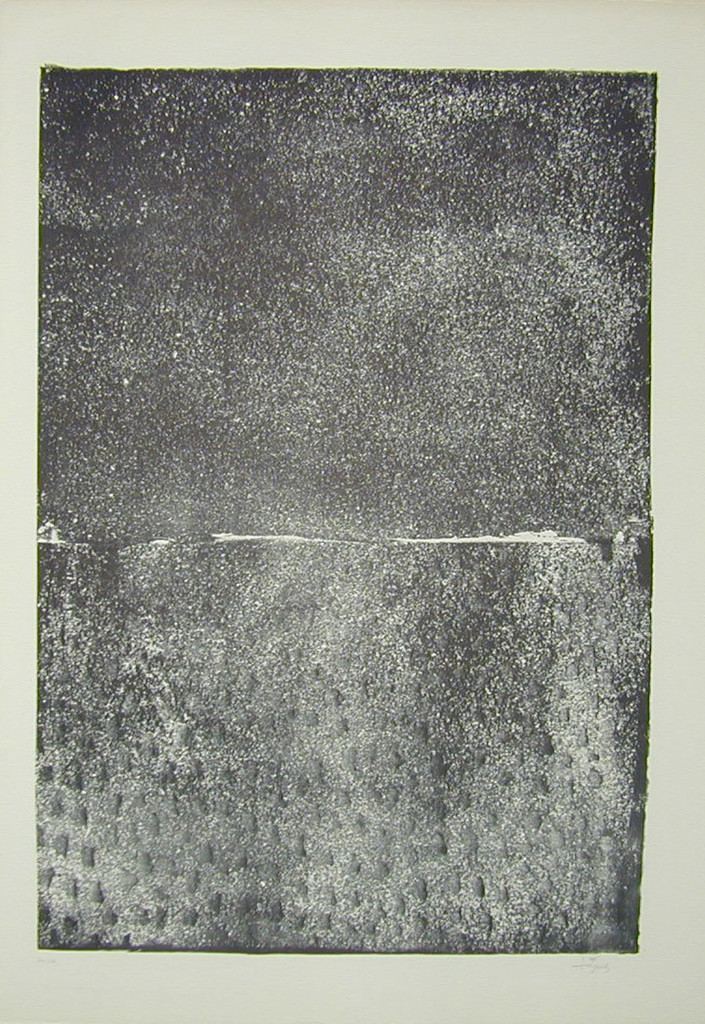
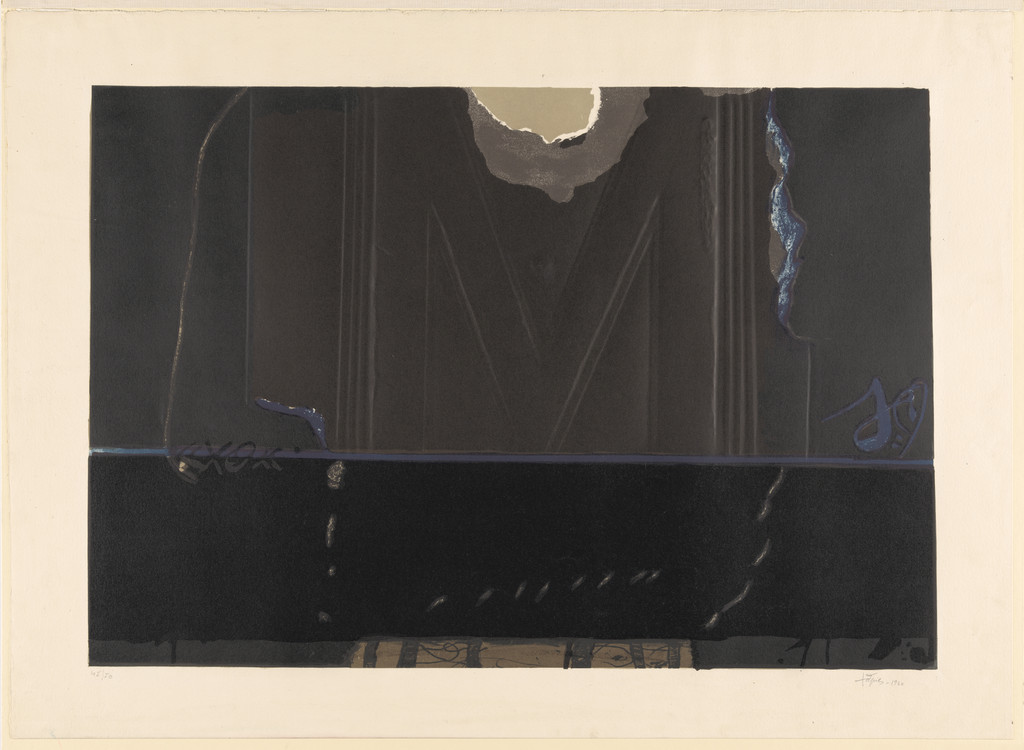
Instead of laboriously using a hand-held rocker to create texture, Antoni Tàpies applied a carborundum paste over this large plate, its unevenness helping achieve the rugged, blackboard-like look he desired. The resulting abrasion on the plate collects a saturated ink film commensurate to the backgrounds of Tàpies’s related paintings, similarly filled with cryptic texts and impasto textures.
Art Institute of ChicagoCC BY 4.0
Scheda
- Numero di inventario
- 1974.60
In catalogo
Fonti
- Art Institute of Chicago: the museum's own open data · acquisita 6 giorni fa
- Immagine: Art Institute of Chicago — © the artist or rights holder
Nel frattempo, nella vita di Tapiés, Antoni
Tutta la vitac. 1970
Objects in the paintings: pieces of furniture
Influenced by Pop Art, he begins incorporating more substantial objects into his paintings, such as parts of furniture.
1970s–1980s
Meditative emptiness and Eastern calligraphy
The paintings Tàpies produced later, in the 1970s and 1980s, reveal an aesthetic of meditative emptiness: spray-painted canvases with linear elements suggestive of Oriental calligraphy and mixed-media paintings that extend the vocabulary of Art informel, with imagery appearing only as oblique allusions within a fundamentally abstract idiom.
1970–1999
Essays on art, life and politics
His essays are collected in a series of books: “La pràctica de l'art” (1970), “L'art contra l'estètica” (1974), “Memòria personal” (1978), “La realitat com a art” (1982), “Per un art modern i progressista” (1985), “Valor de l'art” (1993) and “L'art i els seus llocs” (1999). In them he reflects on art, life and politics, on the social role of art and of the artist, on the influences on his work, and sets out his artistic and political views.
1972
Rubens Prize
He receives the Rubens Prize.
1973
Retrospective at the Musée National d'Art Moderne
A major retrospective is held at the Musée National d'Art Moderne in Paris.
1974
The lithographs “Assassins” in memory of Puig Antich
He makes a series of lithographs, “Assassins”, and shows it at the Galerie Maeght in Paris in memory of the militant anarchist Salvador Puig Antich.