ART WIKI32.963 in sala
MappaCollezioneArtistiMuseiMostreRivista
Accedi

ART WIKI

Dove è appeso il capolavoro, e quando si può entrare.

Collezioni: Art Institute of Chicago, Cleveland Museum of Art, Ermitage, Galleria Tret'jakov, Getty Museum, Harvard Art Museums, Hirshhorn Museum and Sculpture Garden, Metropolitan Museum of Art, Minneapolis Institute of Art, Museo del Louvre, Museo Puškin delle belle arti, Museo russo, Museum of Modern Art, National Gallery of Art, National Museum of Asian Art, National Portrait Gallery, Rijksmuseum, Smithsonian American Art Museum, Statens Museum for Kunst, Victoria and Albert Museum, Villa Getty, Whitney Museum of American Art, Catalogo statale del fondo museale russo (274 musei), Europeana (19 musei), Wikidata (6 musei), Paris Musées (12 musei) e Joconde, la banca dati dei musei del Ministero della Cultura francese (495 musei). Le immagini appartengono ai titolari dei diritti.

Sezioni

  • Mappa
  • Ricerca
  • Collezione
  • Capolavori
  • Esposte ora
  • Artisti

Altro

  • Musei e gallerie
  • Mostre
  • Rivista
  • Da dove vengono i dati
  • Privacy e cookie
HomeMappaCatalogo
  1. Collezione/
  2. Rostov Regional Fine Arts Museum/
  3. Пишущий мальчик
Пишущий мальчик, Antonio Canova, 1800-1825
Antonio Canova, ritrattoAntonio CanovaItalia, 1757–1822

Пишущий мальчик

1800-1825 · Sculpture · 29.5 × 13 cm

Si può ammirare?

Non si sa

RRF
Rostov Regional Fine Arts Museum

Rostov sul Don, Russia

Il proprietario è noto; non si sa se oggi sia esposta.

Ultimo cambio di stato
29 set 2026
Fonte
Il museo
Sulla mappaPagina del museo

Scheda

Numero di inventario
С-48

In catalogo

SculturaMarmoNeoclassicismoRomanticismoXIX secolo

Fonti

  • Il Catalogo statale del fondo museale della Russia
  • Immagine: Rostov Regional Fine Arts Museum — © Ростовский областной музей изобразительных искусств · Госкаталог музейного фонда РФ

Nel frattempo, nella vita di Antonio Canova

Tutta la vita
  1. 1800

    The most celebrated artist in Europe

    By 1800 Canova was the most celebrated artist in Europe. He promoted his reputation systematically — publishing engravings of his works and having marble versions of his plaster casts made in his workshop — and acquired patrons across Europe, from France, England, Russia, Austria and Holland, including members of several royal lineages.

  2. 1802

    Summoned to Paris to sculpt Napoleon’s bust

    Napoleon wanted a portrait by Canova, and in 1802 (by other accounts, already on 6 October 1801) the sculptor was summoned to France; he became one of the official artists of the Empire. Yet, deeply grieved by the removal of works of art to France, he returned to Italy in protest, despite Napoleon’s insistent demands that he stay in Paris for good.

  3. 1815

    Mission to Paris: bringing back the looted masterpieces

    In 1815 Pope Pius VII named Canova his Minister Plenipotentiary and tasked him with recovering works of art that Napoleon had taken to Paris. At the Louvre he met resistance from its director Vivant Denon and, because of the works’ size or unclear whereabouts, was forced to leave major pieces behind, among them Veronese’s “The Wedding at Cana”.

  4. 1816

    Marquis of Ischia and the “Golden Book”

    Returning to Rome in 1816 with some of the art Napoleon had taken, Canova was rewarded by the Pope with the title of Marquis of Ischia, inscription in the “Golden Book of Roman Nobles” (the Pope entered his name with his own hands) and an annual pension of 3,000 crowns.

  5. 11 July 1819

    Lays the foundation stone of his own temple in Possagno

    After his 1814 proposal for a statue of Religion in St Peter’s was rejected, Canova resolved to build his own temple: he designed and financed the building himself and partly built it, combining the Parthenon and the Pantheon. On 11 July 1819 he laid the foundation stone, dressed in a red papal uniform and wearing all his medals, and afterwards visited Possagno every autumn to direct the workmen.

  6. 13 ottobre 1822

    Died

Altre opere di Antonio Canova

Tutte le opere
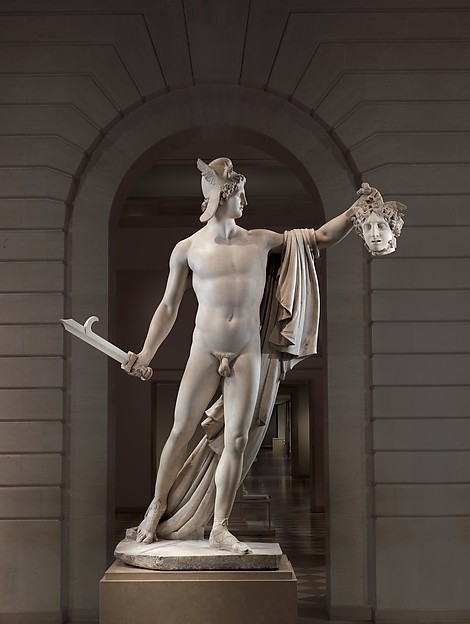
Perseus with the Head of Medusa, Antonio Canova, 1804–6

Perseus with the Head of Medusa

1804–6 · Metropolitan Museum of Art

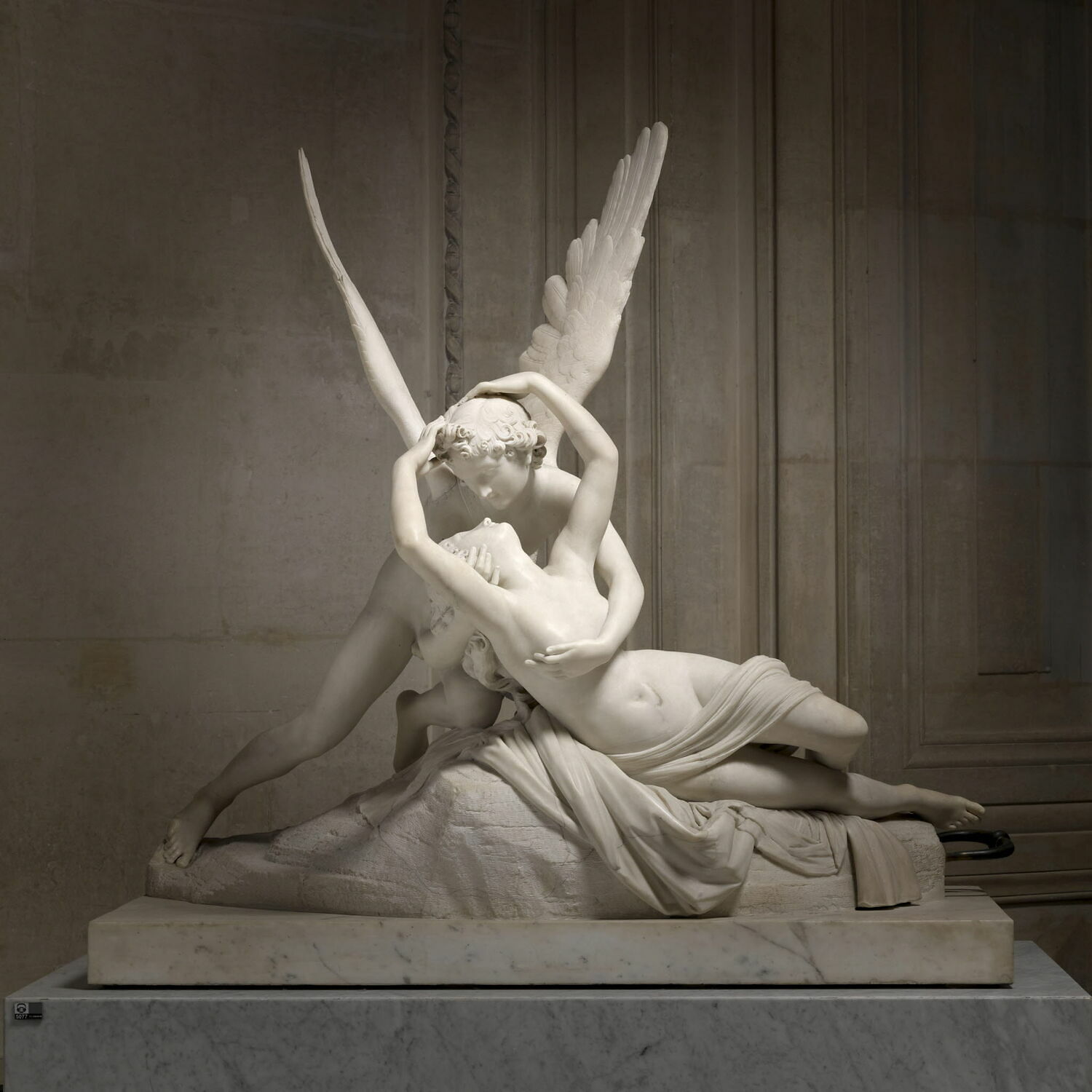
L'Amour et Psyché à demi couchée, Canova, Antonio, 1787 - 1793

Amore e Psiche

1787 - 1793 · Museo del Louvre

Cupid and Psyche, Antonio Canova, 1794

Cupid and Psyche

1794 · Metropolitan Museum of Art

Winged Victory, Antonio Canova, after the Antique, c. 1803/1806

Winged Victory

c. 1803/1806 · National Gallery of Art

Dancer with Finger on Chin, Antonio Canova, model 1809/1814, carved 1819/1823

Dancer with Finger on Chin

model 1809/1814, carved 1819/1823 · National Gallery of Art

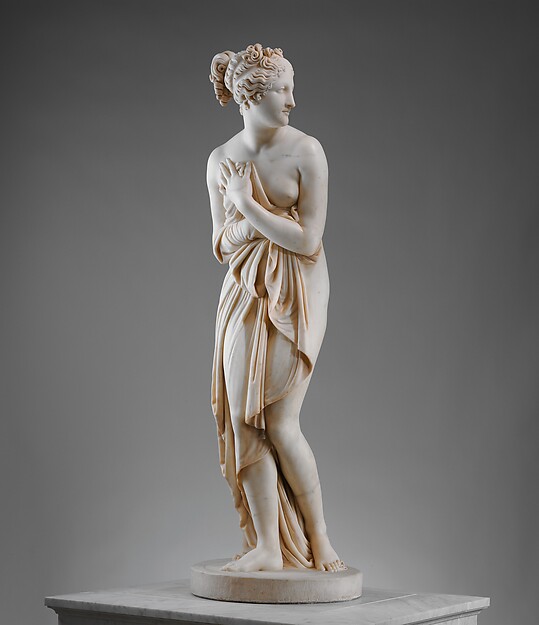
Venus Italica, Antonio Canova, probably ca. 1822–23, variant of marble first executed 1810

Venus Italica

probably ca. 1822–23, variant of marble first executed 1810 · Metropolitan Museum of Art

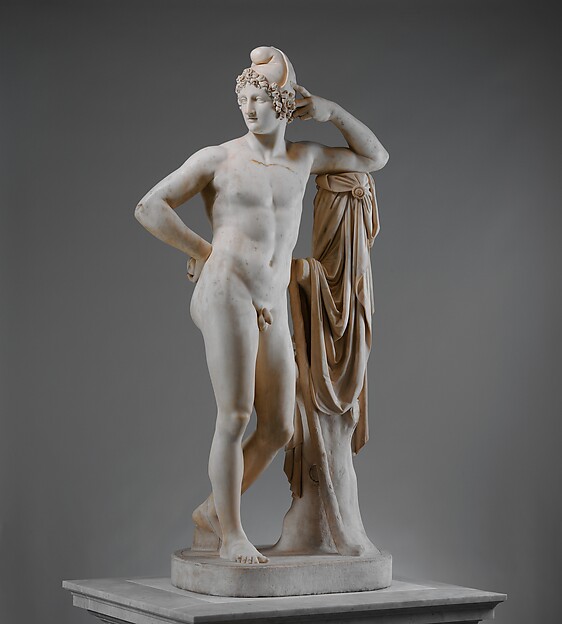
Paris, Antonio Canova, ca. 1822–23, original marble version completed November 1812

Paris

ca. 1822–23, original marble version completed November 1812 · Metropolitan Museum of Art

Naiad, Antonio Canova, model 1815/1817, carved 1820/1823

Naiad

model 1815/1817, carved 1820/1823 · National Gallery of Art

Dalla collezione: Rostov Regional Fine Arts Museum

Pagina del museo
Март. Храм святой Елены и Константина в ст. Ессентукской, Igor Borisovich Khoronko, 2021

Igor Borisovich Khoronko

Март. Храм святой Елены и Константина в ст. Ессентукской, 2021

Кумганы и гранаты, Aleksandr Mikhaylovich Rubets, 2021

Aleksandr Mikhaylovich Rubets

Кумганы и гранаты, 2021

Кубачинские кумганы, Aleksandr Mikhaylovich Rubets, 2021

Aleksandr Mikhaylovich Rubets

Кубачинские кумганы, 2021

Вечер в Домбае, Igor Borisovich Khoronko, 2020

Igor Borisovich Khoronko

Вечер в Домбае, 2020

Пятигорск, улица Дзержинского, Aleksandr Mikhaylovich Rubets, 2020

Aleksandr Mikhaylovich Rubets

Пятигорск, улица Дзержинского, 2020

Первоцвет, Khashkhayan Khristofor Ilich, 2020

Khashkhayan Khristofor Ilich

Первоцвет, 2020

Райские яблочки, Vera Aleksandrovna Korshunova, 2018

Vera Aleksandrovna Korshunova

Райские яблочки, 2018

Райские любимцы. Лис с яблоками, Anna Vladimirovna Serova, 2018

Anna Vladimirovna Serova

Райские любимцы. Лис с яблоками, 2018