
 Antonio CanovaItalia, 1757–1822
Dancer with Finger on Chin
Si può vedere?
Sì, esposta ora
Dove si trova «Dancer with Finger on Chin» oggi? National Gallery of Art, Sala 45 · Edificio Ovest, piano terra, Washington. Sì, esposta ora. Verificato 29 settembre 2026.

Chiuso· apre domani alle 10:00
Esposta al pubblico.
- Verificato
- Ultimo cambio di stato
- Fonte
- Il museo
Scheda
- Numero di inventario
- 2003.62.1
Che cosa raffigura
In catalogo
Fonti
- National Gallery of Art
- Immagine: National Gallery of Art — Museum open access
Nella vita di Antonio Canova
Tutta la vita1810
President of the Academy of St Luke
In 1810 Canova became president of the Roman Academy of St Luke, and in 1814 its president for life (by other accounts he was appointed president in 1816).
1815
Mission to Paris: bringing back the looted masterpieces
In 1815 Pope Pius VII named Canova his Minister Plenipotentiary and tasked him with recovering works of art that Napoleon had taken to Paris. At the Louvre he met resistance from its director Vivant Denon and, because of the works’ size or unclear whereabouts, was forced to leave major pieces behind, among them Veronese’s “The Wedding at Cana”.
1815
London: Haydon and the Elgin Marbles
In 1815 Canova visited London and met Benjamin Haydon; it was on Canova’s advice that the British Museum acquired the Elgin Marbles, with plaster copies sent to Florence at his request.
1816
Marquis of Ischia and the “Golden Book”
Returning to Rome in 1816 with some of the art Napoleon had taken, Canova was rewarded by the Pope with the title of Marquis of Ischia, inscription in the “Golden Book of Roman Nobles” (the Pope entered his name with his own hands) and an annual pension of 3,000 crowns.
11 July 1819
Lays the foundation stone of his own temple in Possagno
After his 1814 proposal for a statue of Religion in St Peter’s was rejected, Canova resolved to build his own temple: he designed and financed the building himself and partly built it, combining the Parthenon and the Pantheon. On 11 July 1819 he laid the foundation stone, dressed in a red papal uniform and wearing all his medals, and afterwards visited Possagno every autumn to direct the workmen.
13 ottobre 1822
Died




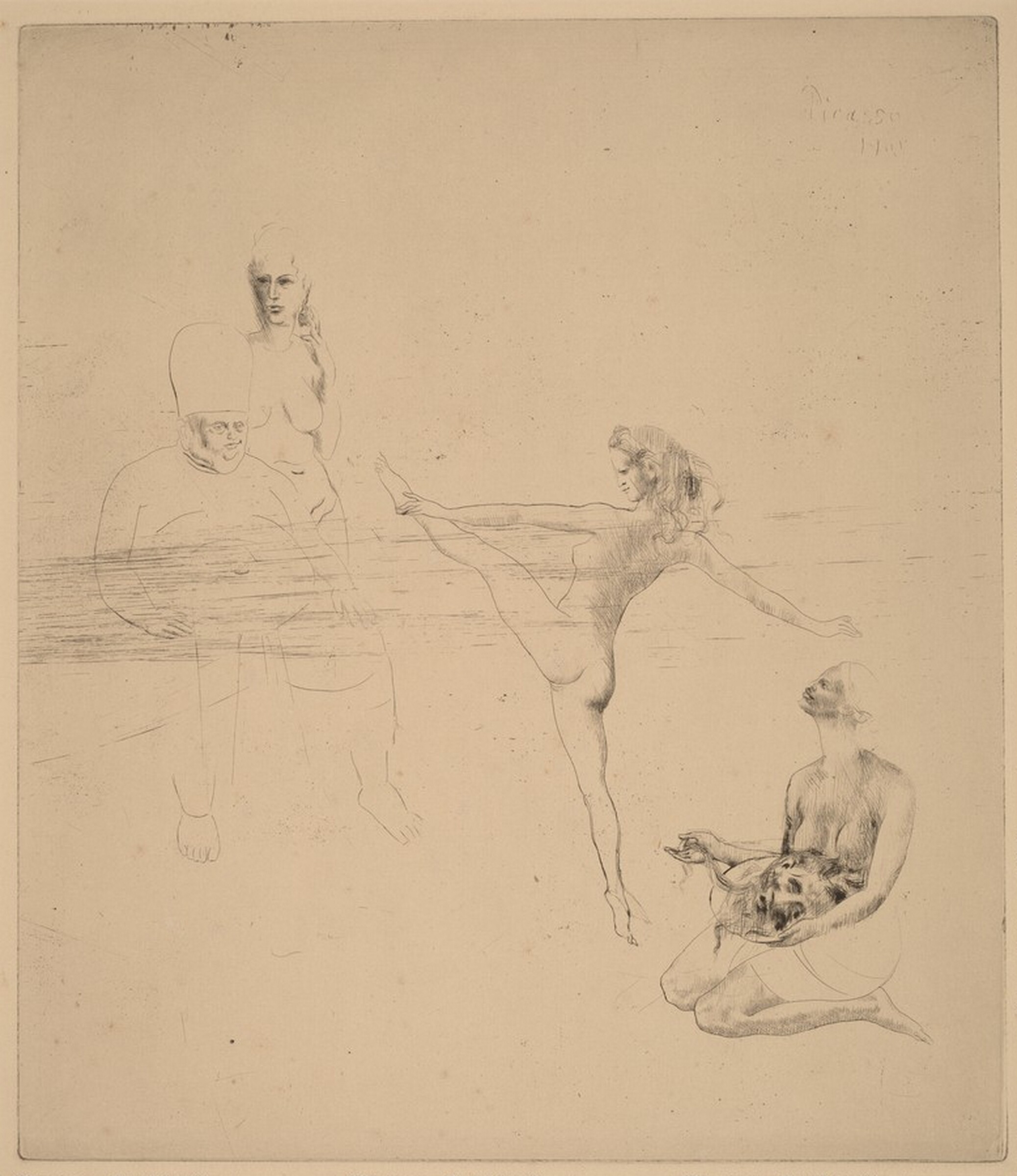
![The Barbaric Dance (Before Salomé and Hérod) [La danse barbare (devant Salomé et Hérode)], Pablo Picasso, 1905, published 1913](https://api.nga.gov/iiif/50a2abdc-52b3-49f7-af3f-2ef384c8f1d0/full/!2400,2400/0/default.jpg)


