ART WIKI32.963 in sala
MappaCollezioneArtistiMuseiMostreRivista
Accedi

ART WIKI

Dove è appeso il capolavoro, e quando si può entrare.

Collezioni: Art Institute of Chicago, Cleveland Museum of Art, Ermitage, Galleria Tret'jakov, Getty Museum, Harvard Art Museums, Hirshhorn Museum and Sculpture Garden, Metropolitan Museum of Art, Minneapolis Institute of Art, Museo del Louvre, Museo Puškin delle belle arti, Museo russo, Museum of Modern Art, National Gallery of Art, National Museum of Asian Art, National Portrait Gallery, Rijksmuseum, Smithsonian American Art Museum, Statens Museum for Kunst, Victoria and Albert Museum, Villa Getty, Whitney Museum of American Art, Catalogo statale del fondo museale russo (274 musei), Europeana (19 musei), Wikidata (6 musei), Paris Musées (12 musei) e Joconde, la banca dati dei musei del Ministero della Cultura francese (495 musei). Le immagini appartengono ai titolari dei diritti.

Sezioni

  • Mappa
  • Ricerca
  • Collezione
  • Capolavori
  • Esposte ora
  • Artisti

Altro

  • Musei e gallerie
  • Mostre
  • Rivista
  • Da dove vengono i dati
  • Privacy e cookie
HomeMappaCatalogo
  1. Collezione/
  2. Cleveland Museum of Art/
  3. Pine Wind from Myriad Villages
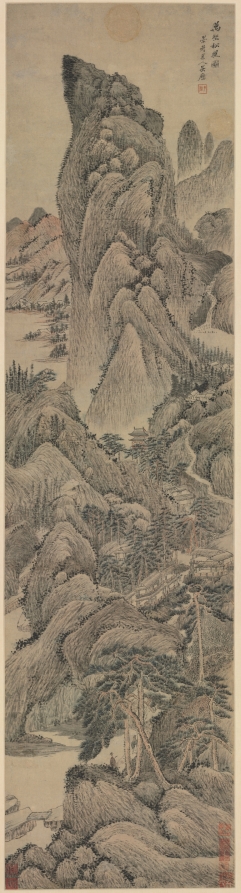
Pine Wind from Myriad Villages, Wu Li, late 1600s–1718
WWu LiCina, 1632–1718

Pine Wind from Myriad Villages

late 1600s–1718 · Painting

Si può ammirare?

Al momento non riceve

Cleveland Museum of Art

Cleveland, Stati Uniti

Appartiene alla collezione, ma al momento non è esposta.

Verificato
l’altro ieri
Ultimo cambio di stato
19 ago 2026
Fonte
Il museo
Sulla mappaPagina del museo

Sul dipinto

Wu Li, a native of Jiangsu province, was a talented painter, poet, and calligrapher. He studied painting with Wang Jian (1598–1677) and Wang Shimin (1592–1680), two of the “Four Wangs,” leaders of the Orthodox school of painting in the early Qing period. Through them, he also absorbed styles of earlier Ming dynasty masters.

Wu was highly praised by his contemporaries and his paintings were in demand, but his interest in philosophy and religion curtailed his painting activities later in life. Wu Li converted to Christianity and in 1688 was ordained as one of the first 3 Chinese Jesuit priests. He spent the final 30 years of his life primarily in missionary work with the poor.

Although this painting is undated, the sooty blackness of the ink tones and the easy self-confidence with which they are set down on paper echo recognized late works.
Cleveland Museum of Art

Scheda

late 1600s–1718 · a 86 anni
16321718
Numero di inventario
1954.584

In catalogo

DipintiInchiostroPittura cineseBaroccoXVIII secoloChina, Qing dynasty (1644–1911)

Fonti

  • Cleveland Museum of Art
  • Immagine: Cleveland Museum of Art — Museum open access

Sotto lo stesso tetto: Cleveland Museum of Art

Pagina del museo
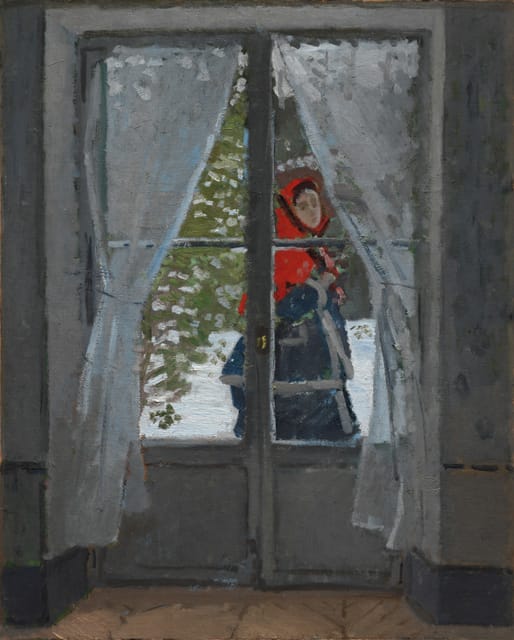
The Red Kerchief, Claude Monet, c. 1868–73

Claude Monet

The Red Kerchief, c. 1868–73

Melencolia I, Albrecht Dürer, 1514

Albrecht Dürer

Melencolia I, 1514

The Virgin and Child with the Pear, Albrecht Dürer, 1511

Albrecht Dürer

The Virgin and Child with the Pear, 1511

The Nativity, Albrecht Dürer, probably c. 1509/1510

Albrecht Dürer

The Nativity, probably c. 1509/1510

The Virgin and Child on a Crescent with a Starry Crown, Albrecht Dürer, 1508

Albrecht Dürer

The Virgin and Child on a Crescent with a Starry Crown, 1508

The Lamentation, Albrecht Dürer, 1507

Albrecht Dürer

The Lamentation, 1507

Large Horse, Albrecht Dürer, 1505

Albrecht Dürer

Large Horse, 1505

Nemesis (The Great Fortune), Albrecht Dürer, c. 1501/1502

Albrecht Dürer

Nemesis (The Great Fortune), c. 1501/1502