 Mark RothkoStati Uniti, 1903–1970
No. 10
Si può ammirare?
Sì, riceve visite

Museum of Modern Art
SalaMoMA, Floor 4, 403New York, Stati Uniti
Esposta al pubblico. Chi lo garantisce è indicato qui sotto.
- Verificato
- 12 giorni fa
- Fonte
- I dati di collezione del museo stesso
About the painting
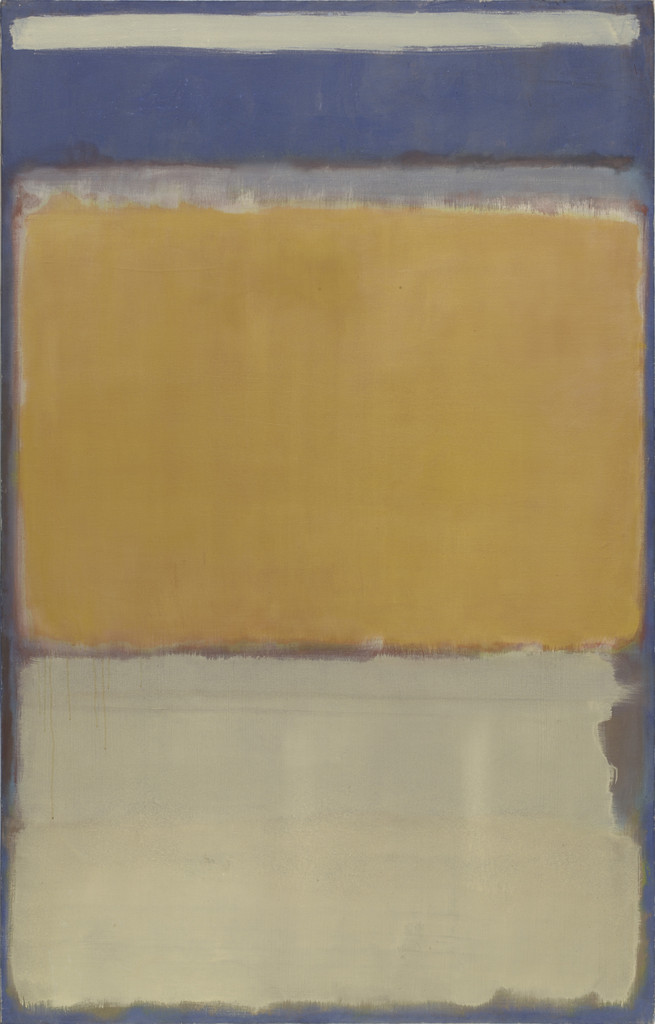
Number 10 è un dipinto del pittore di origine lettone Mark Rothko, esponente dell'espressionismo astratto americano.
Come molte opere di quest'autore anche questo suo lavoro è caratterizzato da grandi superfici rettangolari, dove i vari colori accostati fra loro si mischiano, confinando con quelli adiacenti. Rothko è così in grado di creare inediti effetti di trasparenza. Ciò è determinato da colori quasi liquidi dai toni luminosi che si sfumano ai confini.
Read on
In Number 10 rimane perciò solo una sagoma sfumata di un rettangolo, poiché il segno e la figurazione sono aboliti, pertanto unico e vero protagonista di questo dipinto non rimane che il colore, steso per ampi campi non ben definiti, spesso con sovrapposizioni. Se ne ricava un senso di mistero e fascino, come era nelle intenzioni dell'autore. Questo infatti, come Barnett Newman, ricercò un'astrazione pura che però non disdegnasse di essere portatrice di qualche implicazione spirituale.
Scheda
- Numero di inventario
- 38.1952
Fonti
- Museum of Modern Art: the museum's own open data · acquisita 12 giorni fa
- Immagine: Museum of Modern Art — © the artist or rights holder
Nel frattempo, nella vita di Mark Rothko
Tutta la vitaOctober 1948
Rothko’s mother dies
Rothko’s mother, Kate, died in October 1948; the discovery of his definitive form came at a period of great distress.
1948–1949
The “Subjects of the Artist” school
In 1948 Rothko, Robert Motherwell, William Baziotes, Barnett Newman and David Hare founded the Subjects of the Artist school at 35 East 8th Street, with public lectures by Jean Arp, John Cage and Ad Reinhardt; it failed financially and closed in the spring of 1949. Besides teaching, Rothko began writing for the new magazines Tiger’s Eye and Possibilities.
early 1949
New paintings at Parsons: a “revelation”
After painting his first multiform Rothko shut himself away at his house in East Hampton and invited only a select few, among them the critic Harold Rosenberg, to see the new paintings. In early 1949 he showed them at the Betty Parsons Gallery, where Rosenberg found them nothing short of a revelation.
1949–1956
Large vertical canvases: being “inside” the picture
For seven years Rothko painted in oil only on large vertical canvases so that the viewer would feel “enveloped within” the painting. Critics saw this as compensating for a lack of substance; he replied that he painted large because he wanted to be intimate, and advised viewers to stand as close as eighteen inches away.
early 1950
Five months in Europe
In early 1950 Rothko and his wife spent five months in Europe; he did not go back to his homeland but visited the great museums of England, France and Italy, and was most impressed by Fra Angelico’s frescoes in San Marco in Florence. Mell became pregnant during the trip, and on 30 December, back in New York, their daughter Kate was born, named after Rothko’s mother.
1952
“Fifteen Americans” and a quarrel with Newman
Dorothy Canning Miller’s Fifteen Americans at MoMA formally heralded the abstract artists, but it also set Rothko against Barnett Newman, who accused him of trying to exclude him from the show.