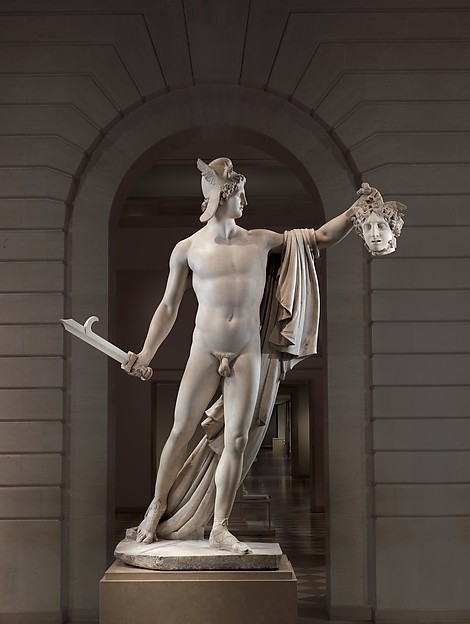
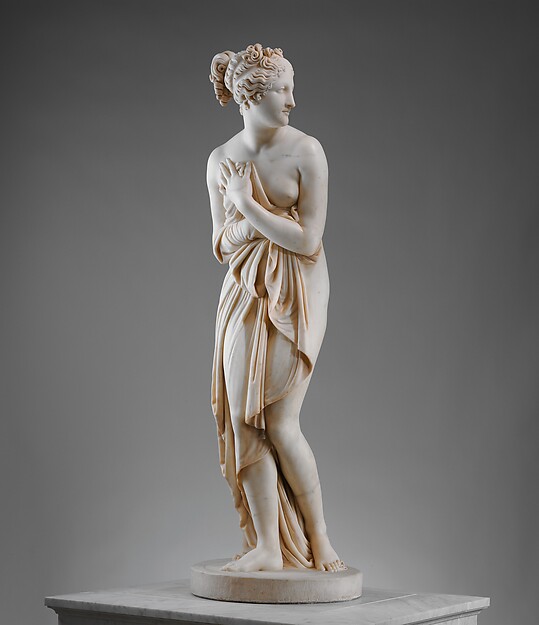
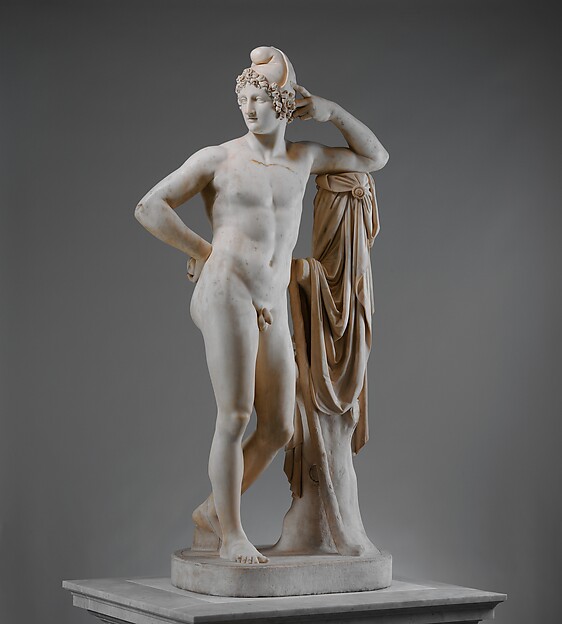
Antonio CanovaItalia, 1757–1822
Napoleon I.
Si può ammirare?
Non si sa: il museo mantiene il riserbo

Skulpturensammlung
Dresda, Germania
Il proprietario è noto. Se oggi sia esposta, il museo non lo dice, e a indovinare non ci hanno insegnato.
- Ultimo cambio di stato
- Fonte
- I dati di collezione del museo stesso
Scheda
What it shows
In catalogo
Fonti
- Skulpturensammlung: the museum's own open data · acquisita 7 giorni fa
- Immagine: Skulpturensammlung — In Copyright
Nel frattempo, nella vita di Antonio Canova
Tutta la vita1790s
Declines Catherine the Great’s invitation
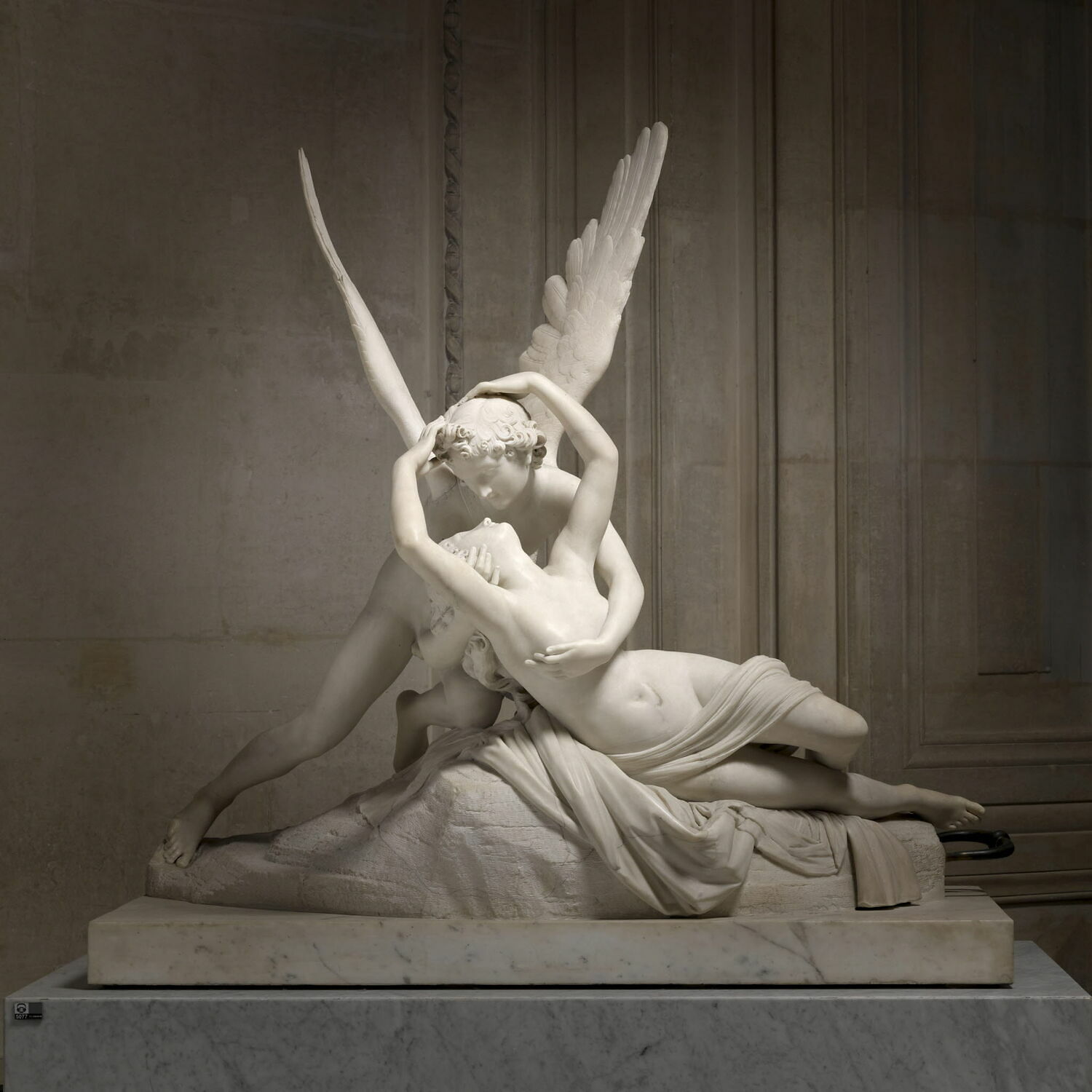
News of Canova’s work reached Russia, and Empress Catherine II tried to summon the sculptor to her court; he politely declined the honourable invitation and, in thanks, made a second version of “Cupid and Psyche”, now in the Hermitage in St Petersburg.
1791–1818
Honorary member of many academies in Europe and America
Canova was elected an honorary member of many academies: Florence (1791), Stockholm (1796), Verona (1803), Venice (1804), Siena (1805), Lucca (1806), St Petersburg (1804), Geneva (1804), Denmark (1805), Graz (1812), Marseille (1813), Monaco (1814), New York (1817), Antwerp and Vilnius (1818), and also Philadelphia.
1800
The most celebrated artist in Europe
By 1800 Canova was the most celebrated artist in Europe. He promoted his reputation systematically — publishing engravings of his works and having marble versions of his plaster casts made in his workshop — and acquired patrons across Europe, from France, England, Russia, Austria and Holland, including members of several royal lineages.
5 January 1800 · Carriera
the Academy of St Luke
On 5 January 1800, overcoming the usual jealousy of his colleagues, Canova was appointed a member of the Roman Academy of St Luke.
1802
Summoned to Paris to sculpt Napoleon’s bust
Napoleon wanted a portrait by Canova, and in 1802 (by other accounts, already on 6 October 1801) the sculptor was summoned to France; he became one of the official artists of the Empire. Yet, deeply grieved by the removal of works of art to France, he returned to Italy in protest, despite Napoleon’s insistent demands that he stay in Paris for good.
1802
Inspector-General of Fine Arts of the Papal State
In 1802 Canova was appointed Inspector-General of Fine Arts for Rome and the Papal State, with oversight of the Vatican and Capitoline museums and the Academy of St Luke — a post once held by Raphael. In that capacity he also pioneered the restoration of the Appian Way by restoring the tomb of Servilius Quartus.