 Karl Bryullov1799–1852
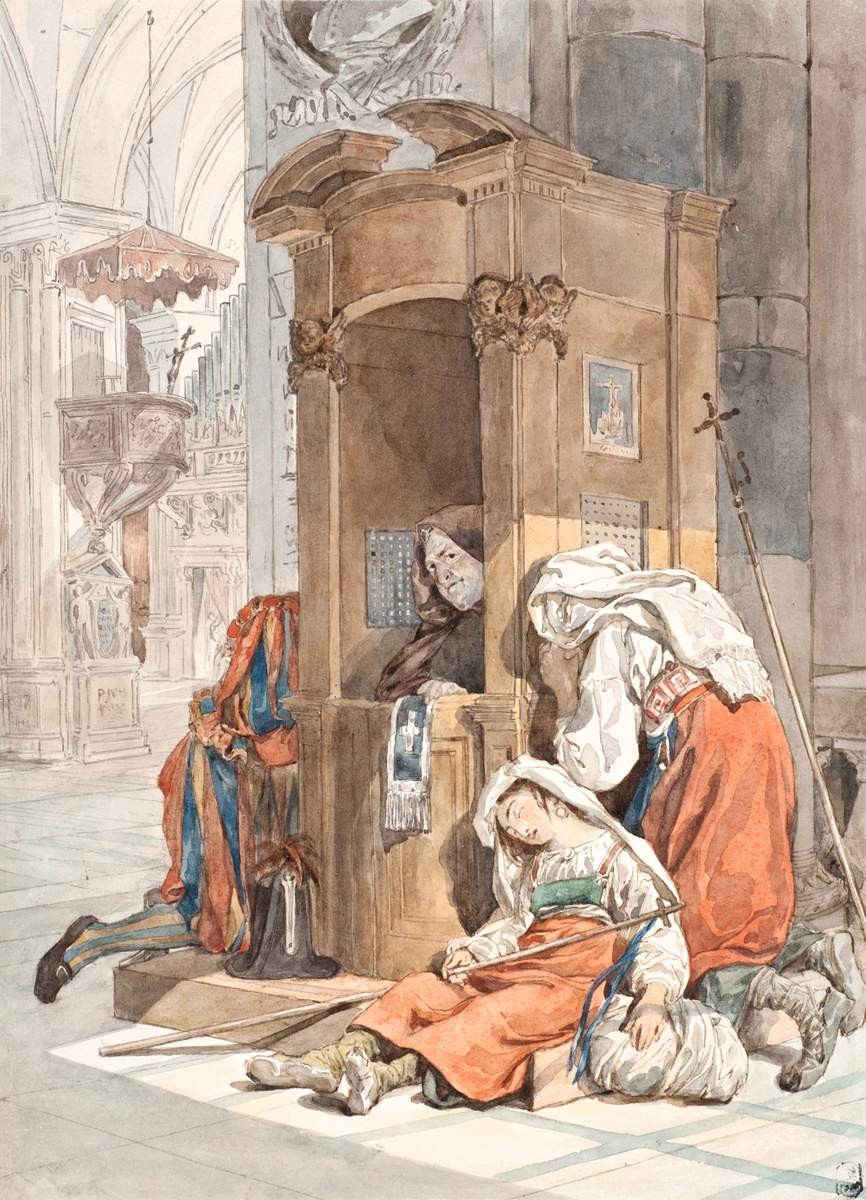
На исповеди
Si può vedere?
Non si sa
Dove si trova «На исповеди» oggi? Collezione: Museo russo, San Pietroburgo. Non si sa.

San Pietroburgo, Russia
Il proprietario è noto; non si sa se oggi sia esposta.
- Ultimo cambio di stato
- Fonte
- Il museo
Sull’opera
Con le parole del museo — in russo
Эта акварель упоминается в письме художника А. А. Козлова (1851). « Чуть было не забыл, — писал Козлов Брюллову,— я издал еще две литографии с ваших акварельных рисунков, находящихся у графа [П. К.] Ферзена: „Свидание“, „Исповедь“. Этими рисунками я начал [приводить в исполнение] идею издания вашего альбома: я думаю постепенно собрать, по возможности, если не все, то многие Ваши акварели, и, налитографировав, таким образом оставить дивный и разнообразный по содержанию альбом » (Архив Брюлловых. С. 171).
Известна литография А. А. Козлова (1851) с акварели «На исповеди». Н. Н. Соломатина // Великий Карл. К 225-летию со дня рождения К. П. Брюллова. СПб, 2024. С. 370.
Museo russo
Scheda
- Numero di inventario
- Р-2231
Che cosa raffigura
In catalogo
Fonti
- Museo russo
- Immagine: Museo russo — © State Russian Museum
Nella vita di Karl Bryullov
Tutta la vita1829
Breaks with the Society for the Encouragement of Artists
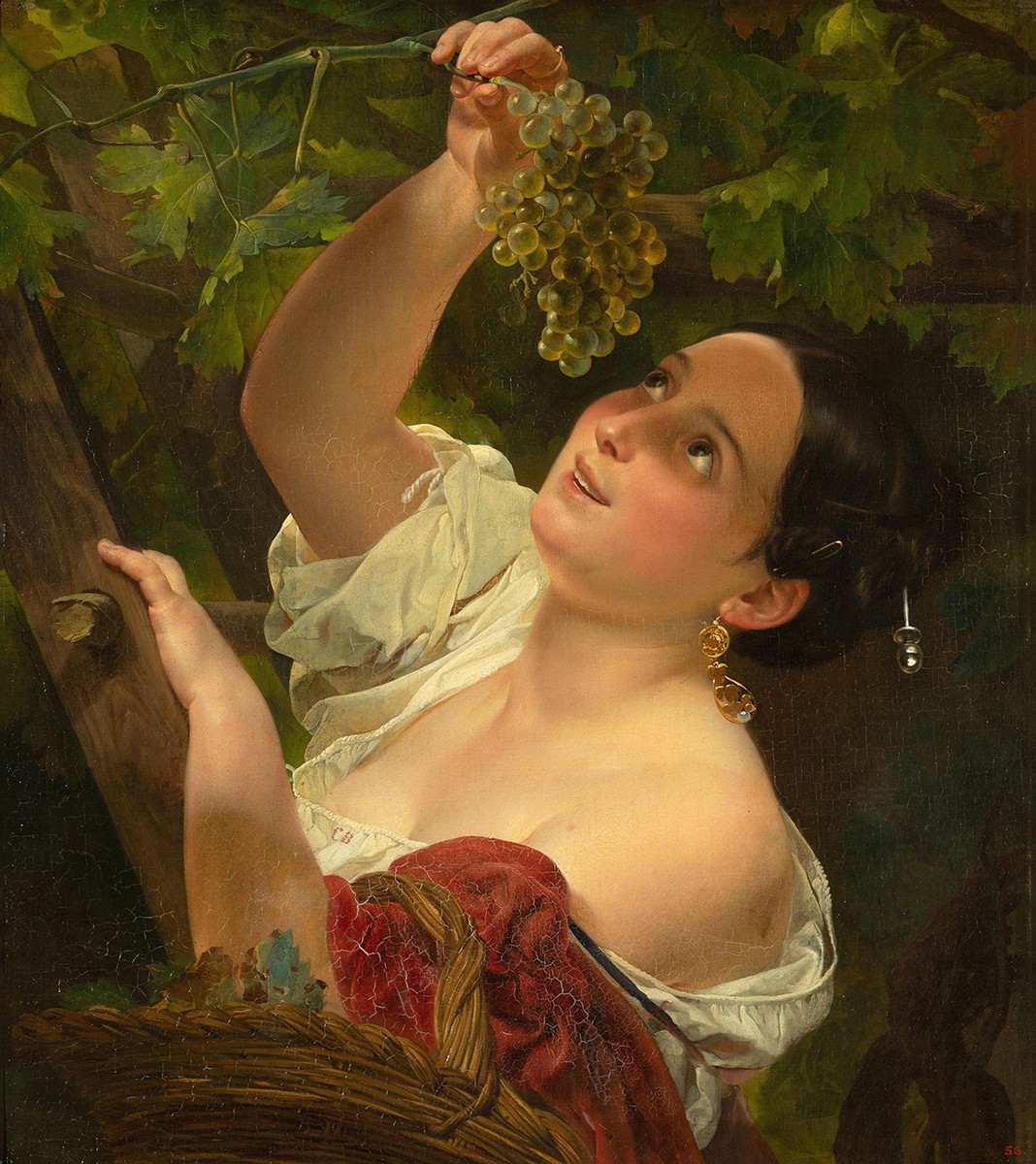
In response to the criticism of “Italian Noon” Bryullov broke with the Society in 1829; the many commissions that let him do without its support played no small part.
c. 1830
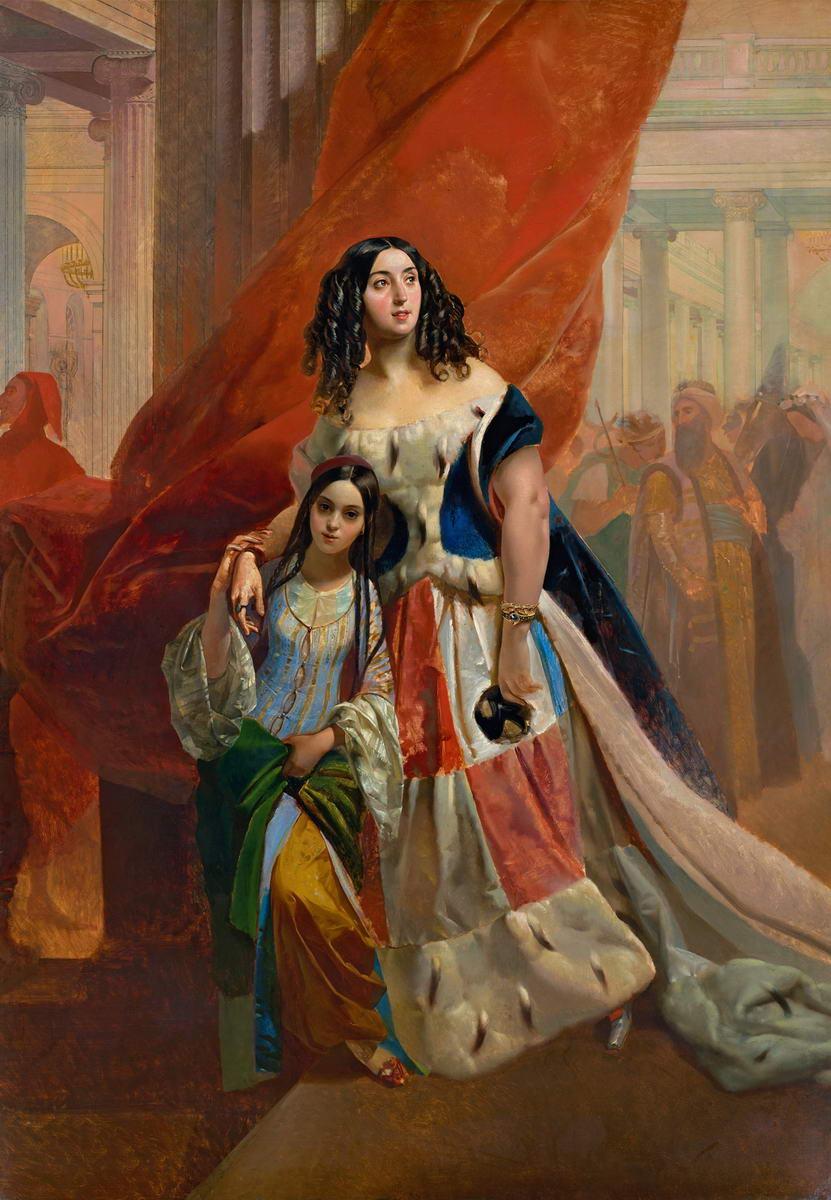
Meets Countess Yulia Samoilova
The time of his work on “Pompeii” is when Bryullov met Yu. P. Samoilova, an aristocrat of the Skavronsky family; for many years she was his muse and model.
c. 1830
Studies the excavations at Pompeii and Herculaneum
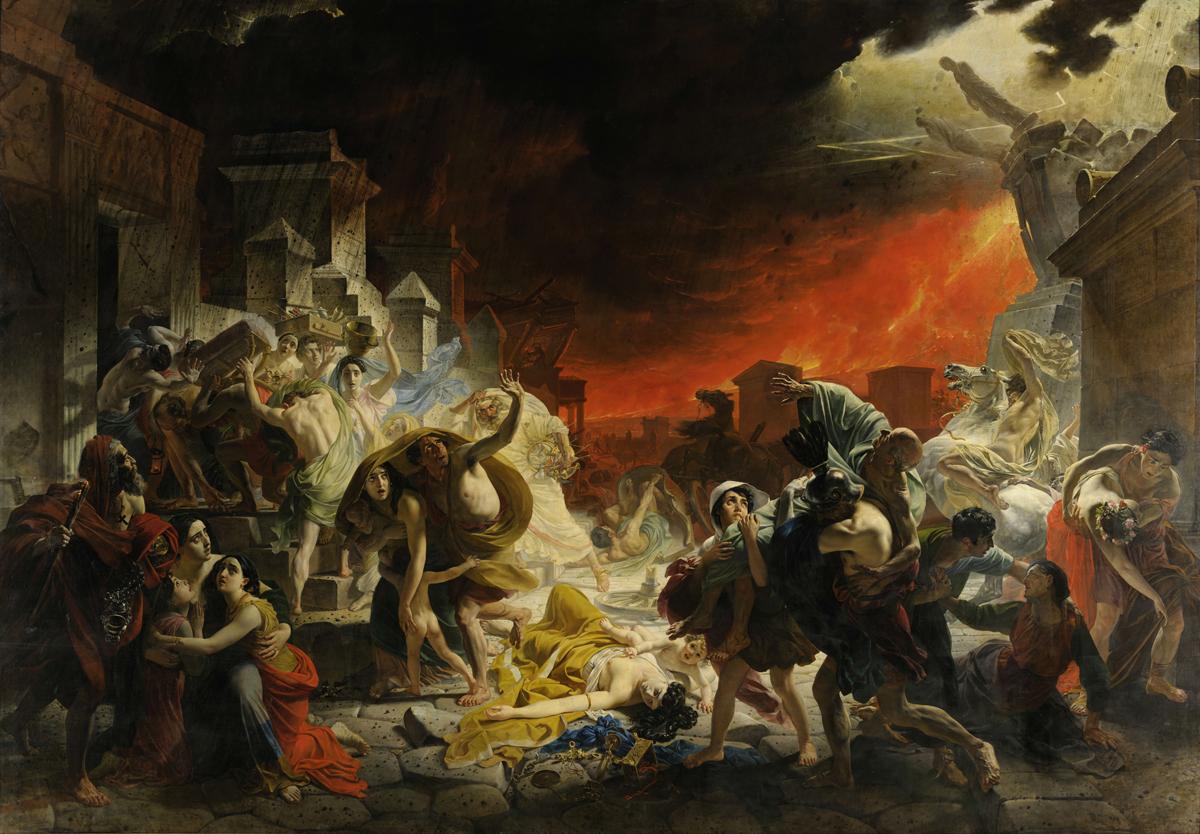
To convey the tragedy more accurately, Bryullov studied many literary sources, visited the excavations at Pompeii and Herculaneum and made sketches on the spot of the landscape, the ruins and the petrified figures; the canvas shows part of the Street of Tombs.
1833
“The Last Day of Pompeii” causes a sensation in Europe and Russia
Completed in 1833, the painting caused a real sensation. What was new for Russian painting was the subject itself: not an outstanding individual but a whole people in the hours of tragedy.