William EttyRegno Unito, 1787–1849
Miss Mary Arabella Jay
Si può vedere?
Non si sa
Dove si trova «Miss Mary Arabella Jay» oggi? Collezione: National Gallery, Londra. Non si sa.

Londra, Regno Unito
Il proprietario è noto; non si sa se oggi sia esposta.
- Ultimo cambio di stato
- Fonte
- Il museo
Scheda
- Numero di inventario
- NG6268
In catalogo
Fonti
- Wikidata
- Immagine: National Gallery — William Etty · Public domain · Wikimedia Commons
Nella vita di William Etty
Tutta la vita1817
First favourable press review
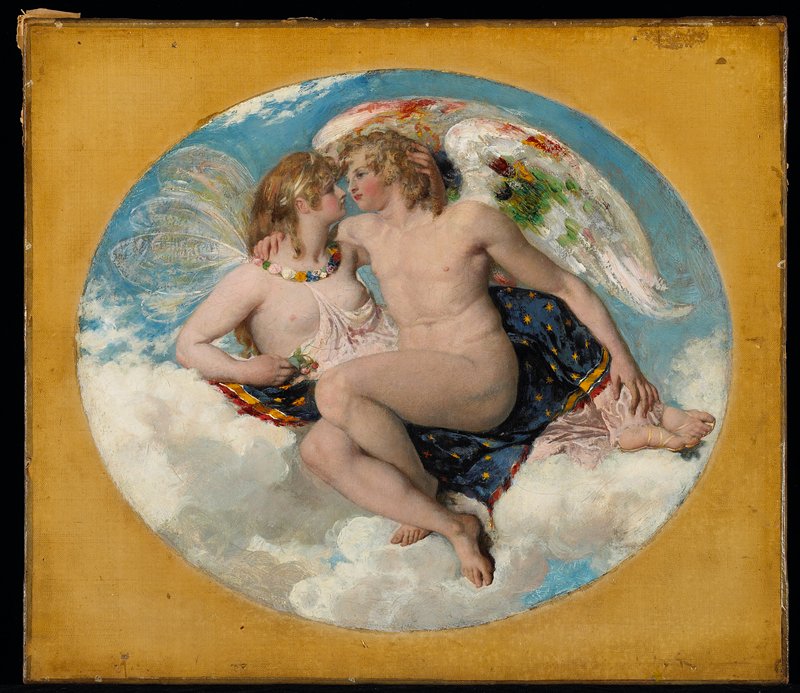
His two paintings at the 1817 Summer Exhibition, “Bacchanalians: a Sketch” and “Cupid and Euphrosyne”, drew a favourable review from William Paulet Carey in the Literary Gazette, who found the first a fine classical invention and the second full of promise. Carey was later proud to have been the first critic to recognise Etty’s potential and championed him throughout his career; Etty appears to have developed as a painter during his travels.
1818
Disqualified from an Academy competition
In 1818 Etty entered in an Academy painting competition a copy of Damiano Mazza’s “The Rape of Ganymede”, then thought to be by Titian, and was easily the best entrant, but two other contestants complained that he had briefly removed the painting from Academy premises to work on it at home and that he was technically a professional, and he was disqualified. The quality of the work only raised his prestige; by 1818 he had hired an assistant, George Henry Franklin, though he still lived on gifts from his brother.
1820
Freeling commissions “Cleopatra”
Sir Francis Freeling, who had admired “The Coral Finder” at the exhibition, learned that it was already sold and commissioned from Etty a similar picture on a more ambitious scale for 200 guineas. Etty had for some time been musing on a painting of Cleopatra and based it loosely on the composition of “The Coral Finder”.