ART WIKI33.040 in sala
MappaCollezioneArtistiMuseiMostreRivista
Accedi

ART WIKI

Dove è appeso il capolavoro, e quando si può entrare.

Collezioni: Art Institute of Chicago, Cleveland Museum of Art, Ermitage, Galleria Tret'jakov, Getty Museum, Harvard Art Museums, Hirshhorn Museum and Sculpture Garden, Metropolitan Museum of Art, Minneapolis Institute of Art, Museo del Louvre, Museo Puškin delle belle arti, Museo russo, Museum of Modern Art, National Gallery of Art, National Museum of Asian Art, National Portrait Gallery, Rijksmuseum, Smithsonian American Art Museum, Statens Museum for Kunst, Victoria and Albert Museum, Villa Getty, Whitney Museum of American Art, Catalogo statale del fondo museale russo (274 musei), Europeana (19 musei), Wikidata (6 musei), Paris Musées (12 musei) e Joconde, la banca dati dei musei del Ministero della Cultura francese (495 musei). Le immagini appartengono ai titolari dei diritti.

Sezioni

  • Mappa
  • Ricerca
  • Collezione
  • Capolavori
  • Esposte ora
  • Artisti

Altro

  • Musei e gallerie
  • Mostre
  • Rivista
  • Da dove vengono i dati
  • Privacy e cookie
HomeMappaCatalogo
  1. Collezione/
  2. Art Institute of Chicago/
  3. Millet Fields under Sun and Moon
Millet Fields under Sun and Moon, Artist unknown, 17th century
AArtist unknownGiappone, 1550–1644

Millet Fields under Sun and Moon

17th century · Painting

Si può ammirare?

Al momento non riceve

Art Institute of Chicago

Chicago, Stati Uniti

Appartiene alla collezione, ma al momento non è esposta.

Verificato
9 giorni fa
Ultimo cambio di stato
28 set 2026
Fonte
Il museo
Sulla mappaPagina del museo

Sul dipinto

右隻には、太陽の明るい日差しの下、粟畑が描かれており、その葉は鮮やかな緑青の絵の具で彩られている。一方、左隻には、月光の下、葉は褐色となって寄りあっている。

この屏風は、印章・落款を欠くが、野辺の草木類を緻密に描いた、土佐派の絵師によるものであろう。粟の穂先には、胡粉で細かに白く点じられている。もし、この屏風を、畳上で囲われて鑑賞したならば、双方の穂波が心地よい毛布のように見えるだろう。

屏風に太陽と月を対に表わすことは、既に数百年前より行われており、仏教、道教、神道と関連付けられている。しかし、この作品のように、穀物との組み合わせは、16世紀に入ってからのことで、恐らく、当時、農耕技術や品種改良などにより、農作物が増産したことに関係するのであろう。

Washed in bright sunlight on the right, a field of millet is adorned with leaves painted with a vibrant green malachite, while on the left the browned leaves of the plants nestle together under the moonlight.

Continua a leggere

Lacking both a signature and any identifying seals, these screens are likely the work of an artist from the Tosa school of painting, who, although unknown to us today, was highly accurate in his botanical rendering of the fields. Tiny white dots of shell-white pigment (gofun) form a patterned surface across the full heads of grain. Viewers who sat on tatami mats surrounded by these screens would have felt as if the billowing mass of each field was like a comfortable blanket that they could pull over themselves at night.

The pairing of the sun and the moon on screens dates back several centuries and carries Buddhist, Daoist, and Shinto associations. But its combination with edible grains, as seen here, is a 16th-century innovation that is perhaps the result of improved farming technologies and seed strains that caused agricultural yields to increase.

Rotation 2: August 15-September 27, 2009

Art Institute of Chicago · CC BY 4.0

Scheda

Numero di inventario
1989.625a-b

In catalogo

DipintiInchiostroPittura giapponeseBaroccoXVII secoloGiappone

Fonti

  • Art Institute of Chicago
  • Immagine: Art Institute of Chicago — CC0

Altre opere di Artist unknown

Tutte le opere
King Mu's Feast in Honor of Queen Mother of the West, Artist unknown, Ming dynasty (1368–1644)

King Mu's Feast in Honor of Queen Mother of the West

Ming dynasty (1368–1644) · Art Institute of Chicago

Banner Depicting Kintaro Battling Bears, Artist Unknown, 18th century

Banner Depicting Kintaro Battling Bears

18th century · Art Institute of Chicago

Corrugated Box, Ad Design, Artist unknown, c. 1947

Corrugated Box, Ad Design

c. 1947 · Art Institute of Chicago

Yang Pu Moving His Family, Artist Unknown, Yuan dynasty (1279–1368) 元朝

Yang Pu Moving His Family

Yuan dynasty (1279–1368) 元朝 · Non esposta · Art Institute of Chicago

Legends of the Yūzū Nembutsu Sect, Artist unknown, Kamakura period (1185–1333), 14th century

Legends of the Yūzū Nembutsu Sect

Kamakura period (1185–1333), 14th century · Non esposta · Art Institute of Chicago

Maize and Cockscombs, Artist unknown, mid 17th century

Maize and Cockscombs

mid 17th century · Non esposta · Art Institute of Chicago

Calligraphy Rubbing, Artist unknown, Unknown

Calligraphy Rubbing

Unknown · Non esposta · Art Institute of Chicago

Luohan, from the series Set of Twelve Luohans, Artist unknown

Luohan, from the series Set of Twelve Luohans

Non esposta · Art Institute of Chicago

Sotto lo stesso tetto: Art Institute of Chicago

Pagina del museo
The Bedroom, Vincent van Gogh, 1889

Vincent van Gogh

The Bedroom, 1889

A Sunday on La Grande Jatte — 1884, Georges Seurat, 1884–86, border added 1888–89

Georges Seurat

Una domenica pomeriggio sull'isola della Grande-Jatte, 1884–86, border added 1888–89

Paris Street; Rainy Day, Gustave Caillebotte, 1877

Gustave Caillebotte

Strada di Parigi in un giorno di pioggia, 1877

Two Sisters (On the Terrace), Pierre-Auguste Renoir, 1881

Pierre-Auguste Renoir

Sulla terrazza, 1881

The Basket of Apples, Paul Cézanne, c. 1893

Paul Cézanne

il cesto di mele, c. 1893

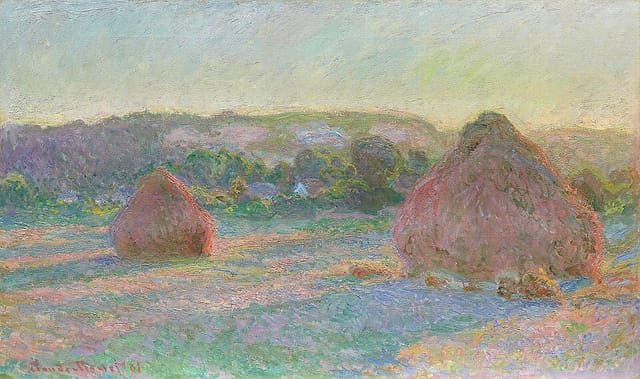
Stacks of Wheat (End of Summer), Claude Monet, 1890–91

Claude Monet

Stacks of Wheat (End of Summer), 1890–91

American Gothic, Grant Wood, 1930

Grant Wood

American Gothic, 1930

Nighthawks, Edward Hopper, 1942

Edward Hopper

I nottambuli, 1942