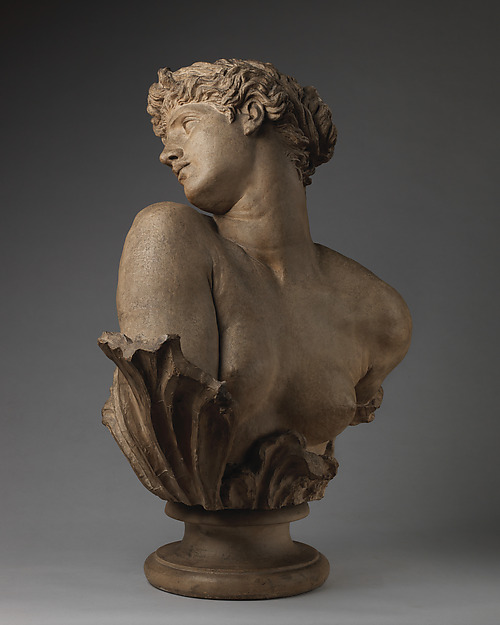
George Frederic WattsRegno Unito, 1817–1904
Love and Death
Si può ammirare?
Non si sa

Londra, Regno Unito
Il proprietario è noto; non si sa se oggi sia esposta.
- Ultimo cambio di stato
- Fonte
- Il museo
Scheda
- Numero di inventario
- NG1645
In catalogo
Fonti
- Wikidata
- Immagine: National Gallery — George Frederic Watts · Public domain · Wikimedia Commons
Nel frattempo, nella vita di George Frederic Watts
Tutta la vita1870s
A revised “House of Life” under Max Müller’s influence
The “House of Life” — a planned epic symbolic cycle in which the emotions and aspirations of life are expressed in one universal symbolic language — receives a revised version in the 1870s. Watts’s association with Rossetti and the Aesthetic movement changes: he combines the Classical tradition with a deliberately agitated, troubled surface, draws on the ideas of Max Müller, the founder of comparative religion, and hopes to trace the evolving mythologies of the world’s peoples, fusing spiritual ideas with modern science, above all Darwinian evolution.
1886
Second marriage to Mary Fraser Tytler
In 1886, at the age of 69, Watts marries for the second time — Mary Fraser Tytler, a Scottish designer and potter, then aged 36.
1887
Proposes a Memorial to Heroic Self-Sacrifice
For Queen Victoria’s Golden Jubilee Watts proposes a memorial to heroic self-sacrifice, honouring ordinary people who died saving the lives of others and might otherwise be forgotten. The scheme is not accepted at the time.
1891
Buys land at Compton and builds Limnerslease
In 1891 Watts buys land near Compton, south of Guildford in Surrey. The couple name the house Limnerslease — from “limner” (artist) and “leasen” (to glean) — and build a museum of his work nearby.