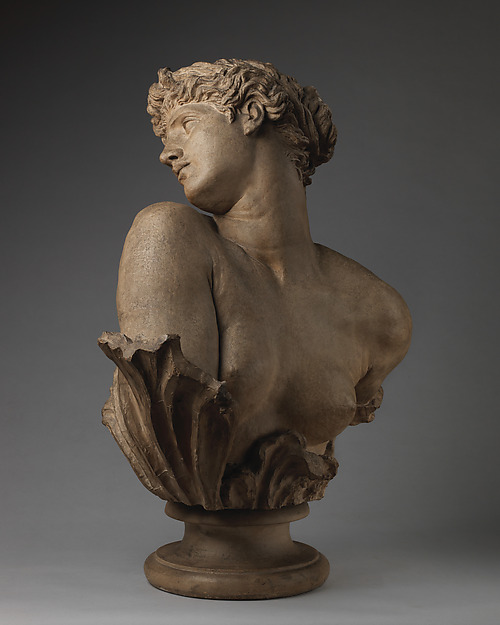
 George Frederic WattsRegno Unito, 1817–1904
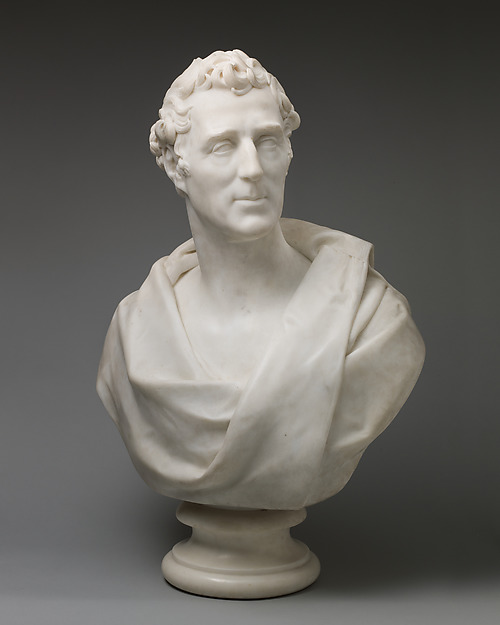
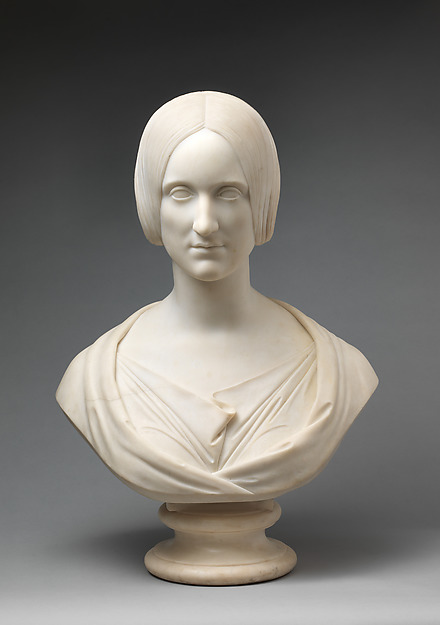
Clytie
Si può vedere?
Sì, esposta ora
Dove si trova «Clytie» oggi? Metropolitan Museum of Art, Sala 516, New York. Sì, esposta ora. Verificato 23 novembre 2026.

New York, Stati Uniti
Chiuso· apre ven alle 10:00
Esposta al pubblico.
- Verificato
- Ultimo cambio di stato
- Fonte
- Il museo
Scheda
- Numero di inventario
- 08.131
Che cosa raffigura
In catalogo
Fonti
- Metropolitan Museum of Art
- Immagine: Metropolitan Museum of Art — Open Access (CC0)
Nella vita di George Frederic Watts
Tutta la vita1850–1871
Lives with the Prinseps at Little Holland House
After meeting Henry Thoby Prinsep and his wife Sara in his studio, Watts enters the Prinseps’ bohemian circle, which includes Sara’s sisters and Julia Margaret Cameron; in 1850 he helps them take a 21-year lease on Little Holland House and lives there with them and their salon for those years. Of pupils he accepted only two — the hosts’ son Valentine Cameron Prinsep and John Roddam Spencer Stanhope; both remained friends, but neither became a major artist.
1867
Elected a Royal Academician
Watts once left the Royal Academy Schools soon after entering them, but in 1867 the Academy finally elects him a member — an Academician.
early 1870s
Buys a house at Freshwater on the Isle of Wight
Watts acquires a house at Freshwater on the Isle of Wight, where his friends Julia Margaret Cameron and Lord Tennyson already have homes. To keep up his friendship with the Prinsep family as their children begin to leave home, he builds The Briary for them nearby and adopts their relative Blanche Clogstoun.
early 1870s
Commissions a new London home from Cockerell
With the lease on Little Holland House nearing its end and the building soon to be demolished, Watts commissions F. P. Cockerell to build a new London home nearby — New Little Holland House, backing onto Lord Leighton’s estate.
1870s
A revised “House of Life” under Max Müller’s influence
The “House of Life” — a planned epic symbolic cycle in which the emotions and aspirations of life are expressed in one universal symbolic language — receives a revised version in the 1870s. Watts’s association with Rossetti and the Aesthetic movement changes: he combines the Classical tradition with a deliberately agitated, troubled surface, draws on the ideas of Max Müller, the founder of comparative religion, and hopes to trace the evolving mythologies of the world’s peoples, fusing spiritual ideas with modern science, above all Darwinian evolution.
1877
A friend opens the Grosvenor Gallery
In 1877 Watts’s friend Coutts Lindsay opens the Grosvenor Gallery, which will prove an ideal venue for the artist’s work over the next ten years.