 Giovanni Francesco Barbieri, called GuercinoItalia, 1591–1666
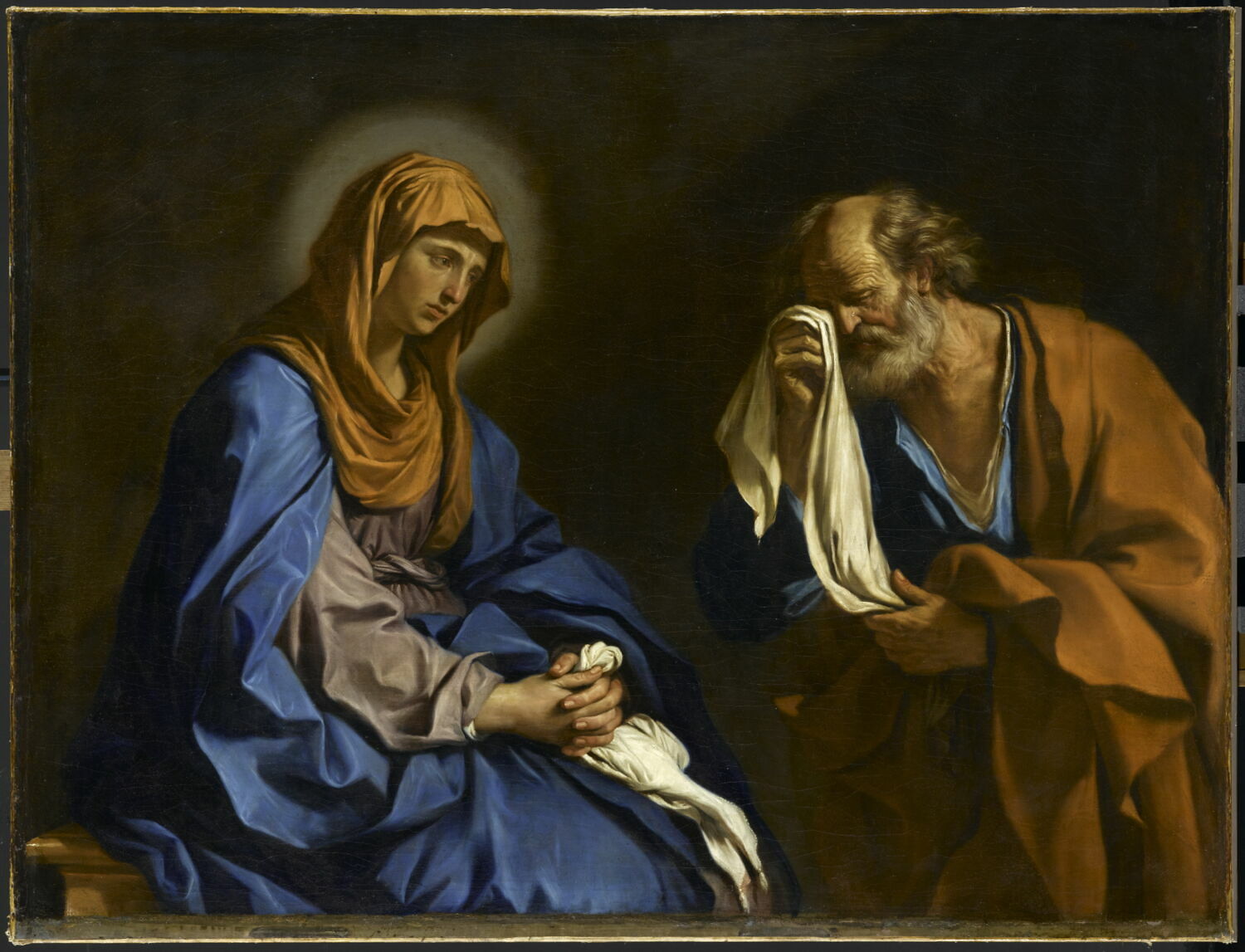
Les Larmes de saint Pierre
Si può vedere?
Sì, esposta ora
Dove si trova «Les Larmes de saint Pierre» oggi? Museo del Louvre, Salle 716, Aile Denon, Niveau 1, Parigi. Sì, esposta ora. Verificato 26 settembre 2026.

Chiuso· apre domani alle 9:00
Esposta al pubblico.
- Verificato
- Ultimo cambio di stato
- Fonte
- Il museo
Sul dipinto
San Pietro piangente davanti alla Vergine, noto anche come San Pietro in lacrime davanti alla Vergine o La Vergine con san Pietro piangente, è un dipinto a olio su tela (122 × 159 cm) realizzato da Giovanni Francesco Barbieri, detto il Guercino, intorno al 1647 e conservato nel Louvre di Parigi.
Scheda
- Numero di inventario
- INV 78
In catalogo
Fonti
- Museo del Louvre
- Immagine: Museo del Louvre — © 2009 GrandPalaisRmn (musée du Louvre) / Gérard Blot
Nella vita di Giovanni Francesco Barbieri, called Guercino
Tutta la vita1623
Returns to his native Cento
After the death of Pope Gregory XV, Guercino left Rome and returned to his hometown.
1623
Ottavio Leoni draws his portrait
The portrait emphasises the permanent squint that gave the artist his nickname. Guercino's right eye was apparently 'lazy' and he presumably had monocular vision — which did not stop him conveying depth remarkably well.
1629
The Barbieri household account book begins
From this year Guercino's affairs are recorded in the Libro dei Conti di Casa Barbieri, kept up with his brother Paolo Antonio, a notable still-life painter; the book survives. He worked with extreme rapidity — no fewer than 106 large altarpieces and some 144 other paintings, besides a great many drawings.
1642
Moves to Bologna after Guido Reni's death
After the death of his commercial rival Guido Reni, Guercino moved his busy workshop to Bologna and took over Reni's role as the city's leading painter of sacred subjects. He painted and taught to the end of his life, amassed a notable fortune and, never having married, left it to his nephews and pupils Benedetto Gennari II and Cesare Gennari.