 Paolo VeroneseItalia, 1528–1588
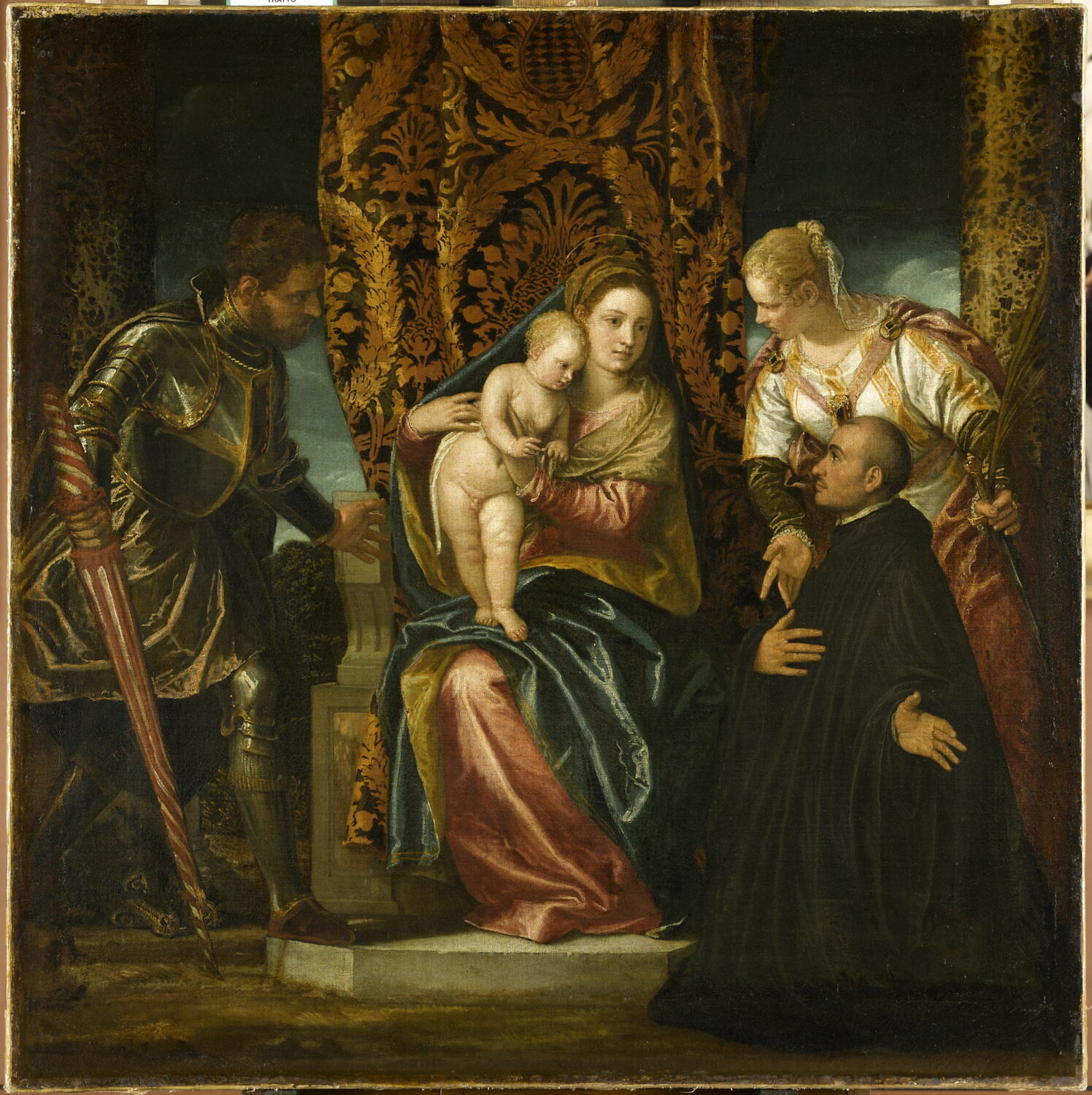
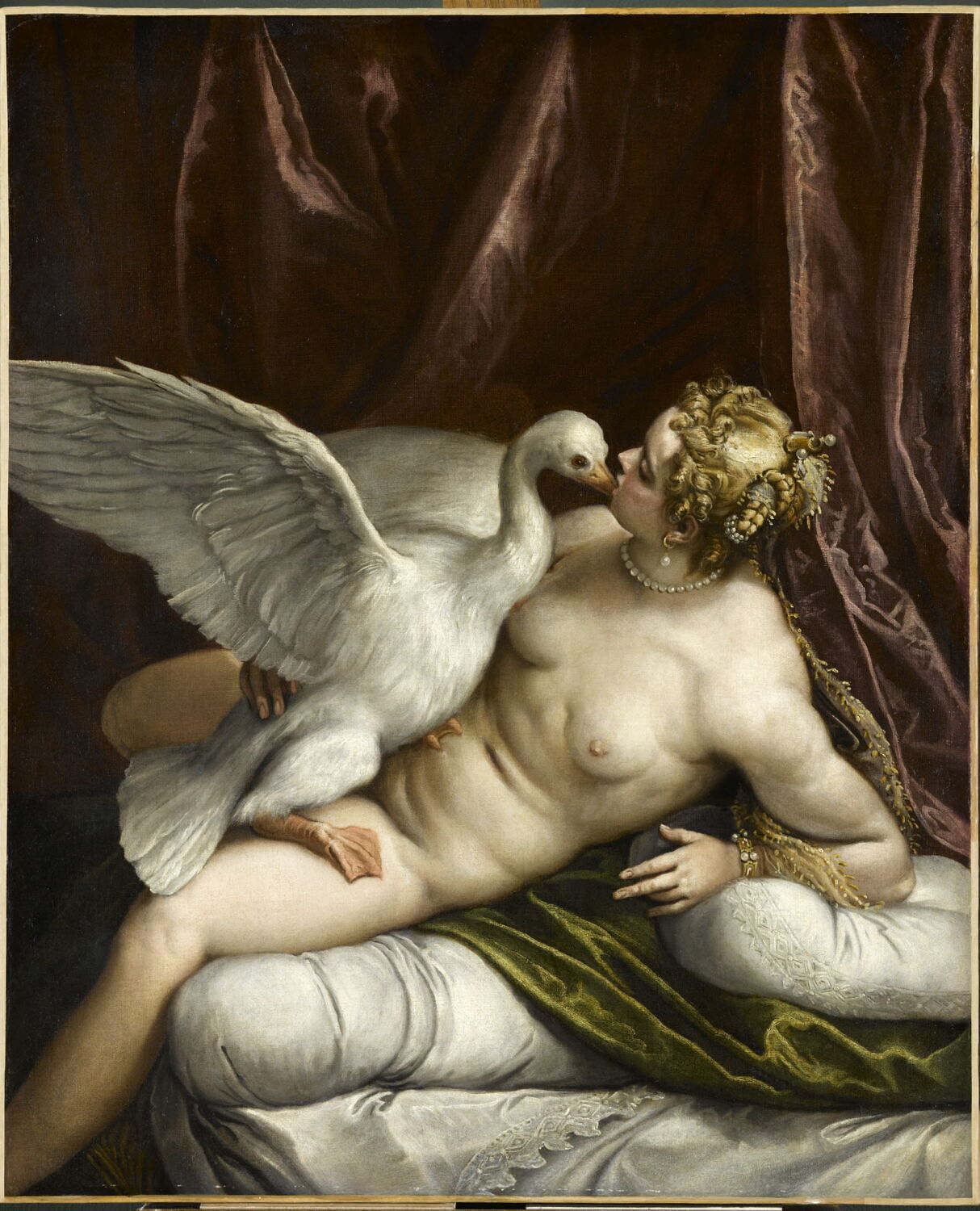
Léda et le cygne
Si può vedere?
Non si sa
Dove si trova «Léda et le cygne» oggi? Collezione: Museo del Louvre, Parigi. Non si sa.

Parigi, Francia
Il proprietario è noto; non si sa se oggi sia esposta.
- Ultimo cambio di stato
- Fonte
- Il museo
Scheda
- Numero di inventario
- MNR 274
In catalogo
Fonti
- Museo del Louvre
- Immagine: Museo del Louvre — © 2010 GrandPalaisRmn (musée du Louvre) / Gérard Blot
Nella vita di Paolo Veronese
Tutta la vita1528
Born
1553
Moves to Venice: his first state commission
In 1553 Caliari began working in Venice, possibly on the recommendation of the painter Giambattista Ponchino, then popular there. His first commission was the ceiling of the newly renovated Hall of the Council of Ten in the Doge's Palace: it already shows a mature style, with foreshortening that makes the figures seem to hang in the air above the viewer, a rich palette and sumptuous multi-figure compositions that fit naturally into a large room.
c. mid-1550s
Settles in Venice for good: signing as “Veronese”
For several years Caliari divided his time between Verona, Venice and commissions in other cities, but around the middle of the 1550s he finally settled in Venice, where he spent most of the rest of his life. From then on he signed his paintings “Veronese”, “the Veronese”; the earliest of them that can be exactly dated, the “Transfiguration” in Montagnana cathedral, was finished on 3 June 1555.
1566
Marries Elena Badile in Verona
In April 1566 Veronese went to his native Verona and married Elena Badile, daughter of his first master Antonio Badile. By then official recognition in Venice had secured him not only fame but also financial independence.
18 July 1573
Summoned before the Holy Inquisition over the “Last Supper”
On 18 July 1573 Veronese was summoned before the Venetian Inquisition, which objected to figures, animals and indecorum unsuited to a Last Supper in his canvas. He answered that painters take the same liberties as poets and madmen; the tribunal ordered him to repaint the picture, but he refused, and in the end it was merely re-titled the “Feast in the House of Levi”.
19 aprile 1588
Died