ART WIKI32.963 in sala
MappaCollezioneArtistiMuseiMostreRivista
Accedi

ART WIKI

Dove è appeso il capolavoro, e quando si può entrare.

Collezioni: Art Institute of Chicago, Cleveland Museum of Art, Ermitage, Galleria Tret'jakov, Getty Museum, Harvard Art Museums, Hirshhorn Museum and Sculpture Garden, Metropolitan Museum of Art, Minneapolis Institute of Art, Museo del Louvre, Museo Puškin delle belle arti, Museo russo, Museum of Modern Art, National Gallery of Art, National Museum of Asian Art, National Portrait Gallery, Rijksmuseum, Smithsonian American Art Museum, Statens Museum for Kunst, Victoria and Albert Museum, Villa Getty, Whitney Museum of American Art, Catalogo statale del fondo museale russo (274 musei), Europeana (19 musei), Wikidata (6 musei), Paris Musées (12 musei) e Joconde, la banca dati dei musei del Ministero della Cultura francese (495 musei). Le immagini appartengono ai titolari dei diritti.

Sezioni

  • Mappa
  • Ricerca
  • Collezione
  • Capolavori
  • Esposte ora
  • Artisti

Altro

  • Musei e gallerie
  • Mostre
  • Rivista
  • Da dove vengono i dati
  • Privacy e cookie
HomeMappaCatalogo
  1. Collezione/
  2. Art Institute of Chicago/
  3. Last Day
Last Day, George Grosz, 1934
Grosz, George, ritrattoGrosz, GeorgeGermania, 1893–1959

Last Day

1934 · Drawing and Watercolor

Si può ammirare?

Al momento non riceve

Art Institute of Chicago

Chicago, Stati Uniti

Appartiene alla collezione, ma al momento non è esposta.

Verificato
3 giorni fa
Ultimo cambio di stato
19 ago 2026
Fonte
Il museo
Sulla mappaPagina del museo

Sull’opera

Grosz left Germany only eighteen days before Hitler seized power in January 1933. Because of his relentless political satire and criticism of the state, he would undoubtedly have been the target of persecution and execution by the new Nazi regime. Between 1933, when he arrived in New York, and 1936, he worked on a series of watercolors representing his first impressions of the me­tropolis. The Last Day does seem to be based on the Manhattan skyline, but Grosz's treahnent of it is more a fore­shadowing of his apocalyptic paintings of the late 1930s. Grosz mounted an exhibition of his watercolors at Alfred Stieglitz's An American Place gallery in 1934-35.

Art Institute of Chicago · CC BY 4.0

Scheda

1934 · a 41 anni
18931959
Numero di inventario
1970.118

In catalogo

Disegni e acquerelliAcquerelloModernismoXX secoloStati Uniti

Fonti

  • Art Institute of Chicago
  • Immagine: Art Institute of Chicago — © the artist or rights holder

Nel frattempo, nella vita di Grosz, George

Tutta la vita
  1. 1928–1933 · Residenza

    Wilmersdorf

  2. June 1932

    An invitation to teach in New York

    Bitterly anti-Nazi, Grosz accepts an invitation to teach the summer semester at the Art Students League of New York; in October 1932 he returns to Germany.

  3. 1933

    A break with the past: a new style and subjects

    In America Grosz resolves to make a clean break with his past and changes his style and subject matter: in place of his corrosive vision of the city he paints conventional nudes and many landscape watercolours. In his autobiography he writes that much that had frozen within him in Germany melted in America and that he deliberately destroyed a part of his past.

  4. 12 – 23 January 1933

    Emigration to the United States

    On 12 January 1933 Grosz and his family emigrate to the United States; their ship docks in New York on 23 January, a week before Hitler comes to power in Berlin.

  5. 1933–1945

    His work is classed as “degenerate art”

    In Nazi Germany Grosz's work is classed as 'degenerate art'.

  6. 1933–1955

    Teaching at the Art Students League

    Grosz teaches at the Art Students League of New York until 1955; his students include Romare Bearden, who was influenced by his collage style, Joseph Glasco and Robert Cenedella, whom he mentored from 1957 to 1959.
Altre opere di Grosz, George

Tutte le opere
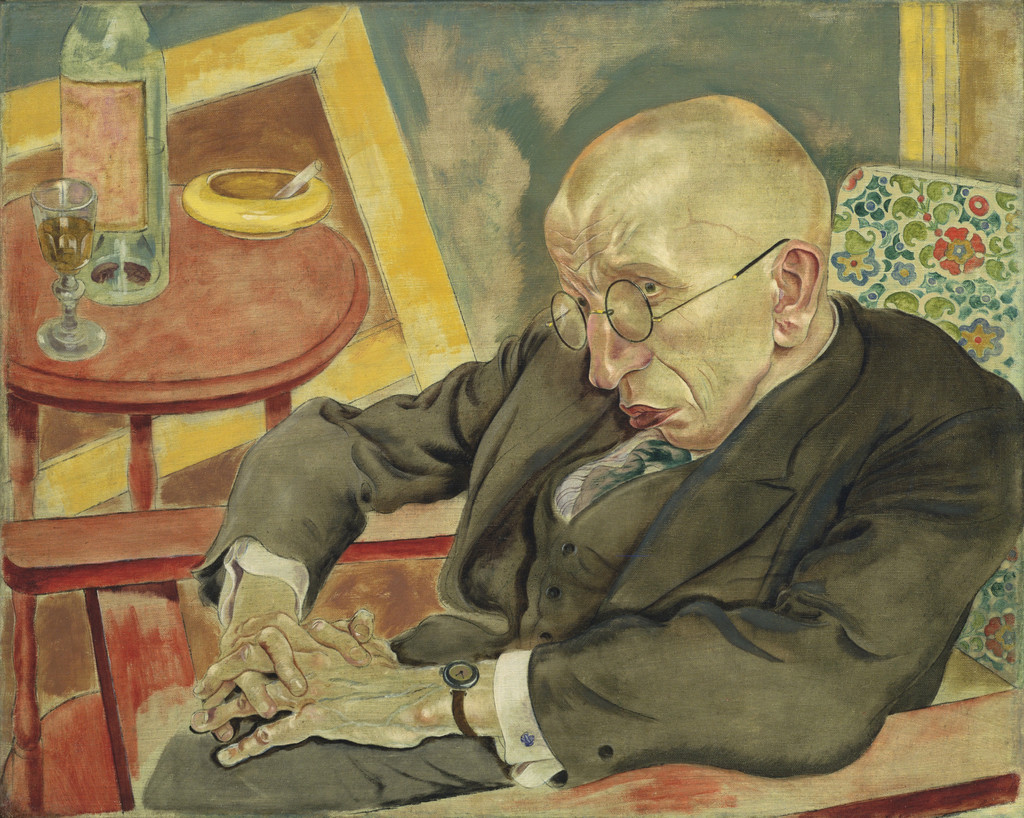
The Poet Max Herrmann-Neisse, George Grosz, 1927

The Poet Max Herrmann-Neisse

1927 · Museum of Modern Art

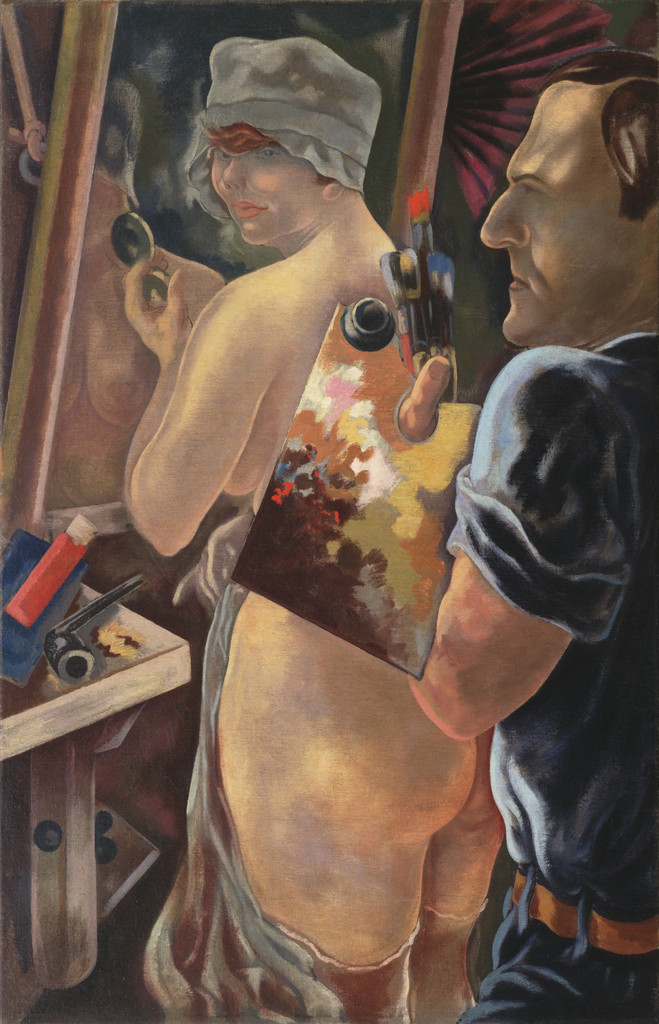
Self-Portrait with a Model, George Grosz, 1928

Self-Portrait with a Model

1928 · Museum of Modern Art

A Woman Walking to the Left, George Grosz

A Woman Walking to the Left

Non esposta · National Gallery of Art

In The Drawing Room [The Art Critics], George Grosz, late 1920s

In The Drawing Room [The Art Critics]

late 1920s · Non esposta · National Gallery of Art

Two Men Watching a Couple (Zwei Männer in Betrachtung eines Paares), George Grosz, 1911

Two Men Watching a Couple (Zwei Männer in Betrachtung eines Paares)

1911 · Non esposta · Museum of Modern Art

Studies of a Male Nude, George Grosz, 1912

Studies of a Male Nude

1912 · Non esposta · National Gallery of Art

The End of the Road (Out of Fear of Starvation) [Das Ende des Weges (Aus Nahrungssorgen)], George Grosz, 1913

The End of the Road (Out of Fear of Starvation) [Das Ende des Weges (Aus Nahrungssorgen)]

1913 · Non esposta · Museum of Modern Art

The Spider (Die Spinne), George Grosz, 1914

The Spider (Die Spinne)

1914 · Non esposta · National Gallery of Art

Sotto lo stesso tetto: Art Institute of Chicago

Pagina del museo
The Bedroom, Vincent van Gogh, 1889

Vincent van Gogh

The Bedroom, 1889

A Sunday on La Grande Jatte — 1884, Georges Seurat, 1884–86, border added 1888–89

Georges Seurat

Una domenica pomeriggio sull'isola della Grande-Jatte, 1884–86, border added 1888–89

Paris Street; Rainy Day, Gustave Caillebotte, 1877

Gustave Caillebotte

Strada di Parigi in un giorno di pioggia, 1877

Two Sisters (On the Terrace), Pierre-Auguste Renoir, 1881

Pierre-Auguste Renoir

Sulla terrazza, 1881

The Basket of Apples, Paul Cézanne, c. 1893

Paul Cézanne

il cesto di mele, c. 1893

Stacks of Wheat (End of Summer), Claude Monet, 1890–91

Claude Monet

Stacks of Wheat (End of Summer), 1890–91

American Gothic, Grant Wood, 1930

Grant Wood

American Gothic, 1930

Nighthawks, Edward Hopper, 1942

Edward Hopper

I nottambuli, 1942