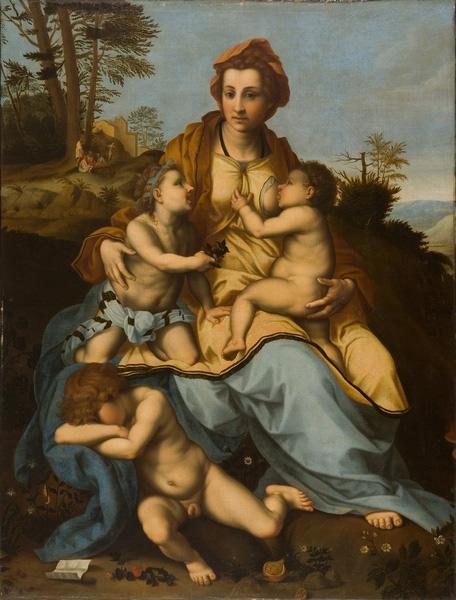
 Andrea del SartoItalia, 1486–1530
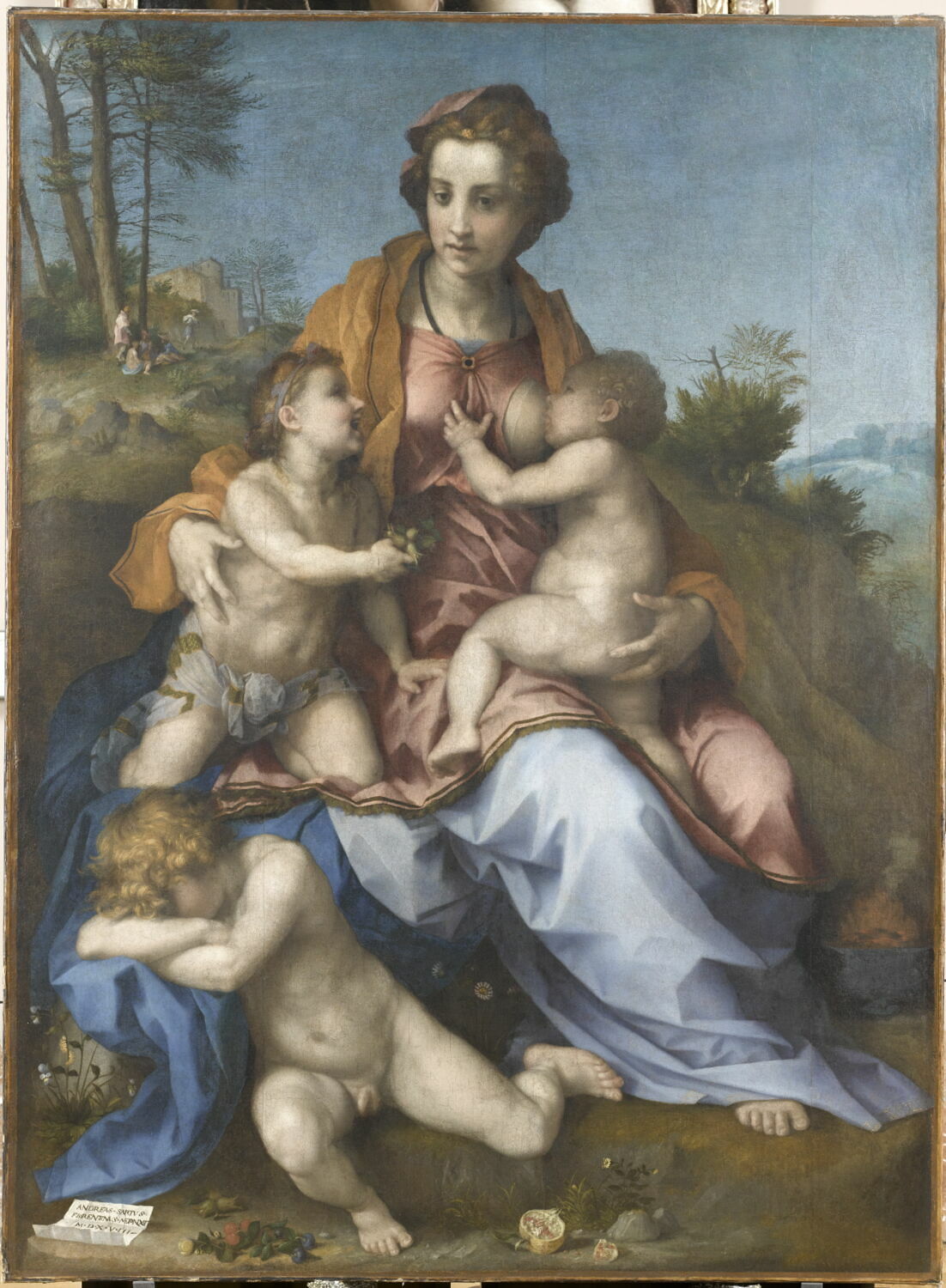
La Charité
Si può vedere?
Non si sa
Dove si trova «La Charité» oggi? Collezione: Musée des beaux-arts, Nantes. Non si sa.
Nantes, Francia
Il proprietario è noto; non si sa se oggi sia esposta.
- Ultimo cambio di stato
- Fonte
- Il museo
Scheda
- Numero di inventario
- 152
In catalogo
Fonti
- Musée des beaux-arts
- Immagine: Musée des beaux-arts — C. CLOS; Ministère de la Culture (France), base Joconde
Nella vita di Andrea del Sarto
Tutta la vita1523–1524
The plague: flight to the Mugello valley
The plague epidemic of 1523–1524 forces Andrea and his wife to flee Florence and take refuge in the countryside of the Mugello valley. There in 1524 he paints for the convent of St Peter an “Entombment” (now in the Pitti Gallery): the composition seems borrowed from Fra Bartolomeo and the poses are theatrical, but the soft shadows, highlights and saturated colours are an achievement.
1524
Michelangelo brings the young Vasari to him
Michelangelo, who is said to have thought very highly of Andrea’s talents, introduces the thirteen-year-old Giorgio Vasari to Andrea’s studio in 1524; Vasari later becomes his pupil. In his “Lives” Vasari is highly critical of his teacher, alleging that although Andrea had all the prerequisites of a great artist he lacked ambition and the divine fire of inspiration that animated Leonardo, Michelangelo and Raphael.
1527
The expulsion of the Medici and the “Sacrifice of Isaac”
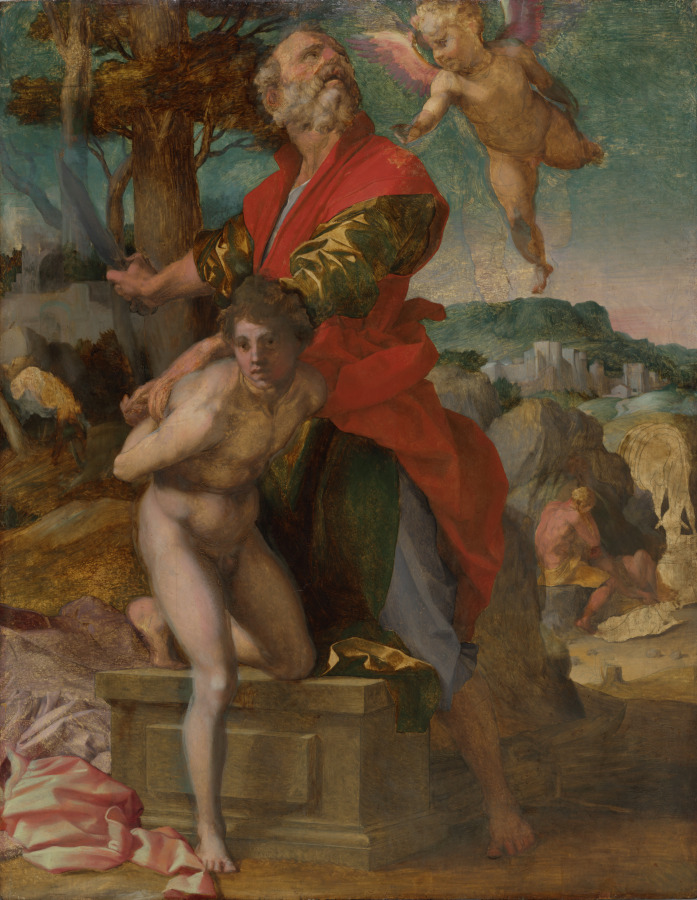
After the Medici family is expelled from Florence once again in 1527, Andrea goes on working on commissions from the Signoria; at that time he paints the “Sacrifice of Isaac”, intended as a gift to the French king François I.
late September 1530
Plague and death: Vasari’s account of Lucrezia
At the end of September 1530, aged 44, Andrea dies in Florence during an outbreak of bubonic plague that followed the siege; the Misericordia buries him unceremoniously in the church of the Servites. Vasari claims that his wife paid him no attention at all during his terminal illness, but since it was well known that plague was highly contagious, it has been speculated that Lucrezia was simply afraid of contagion. She survived her husband by 40 years.
29 settembre 1530
Died
1530 · Sepoltura
Santissima Annunziata