George Keyt
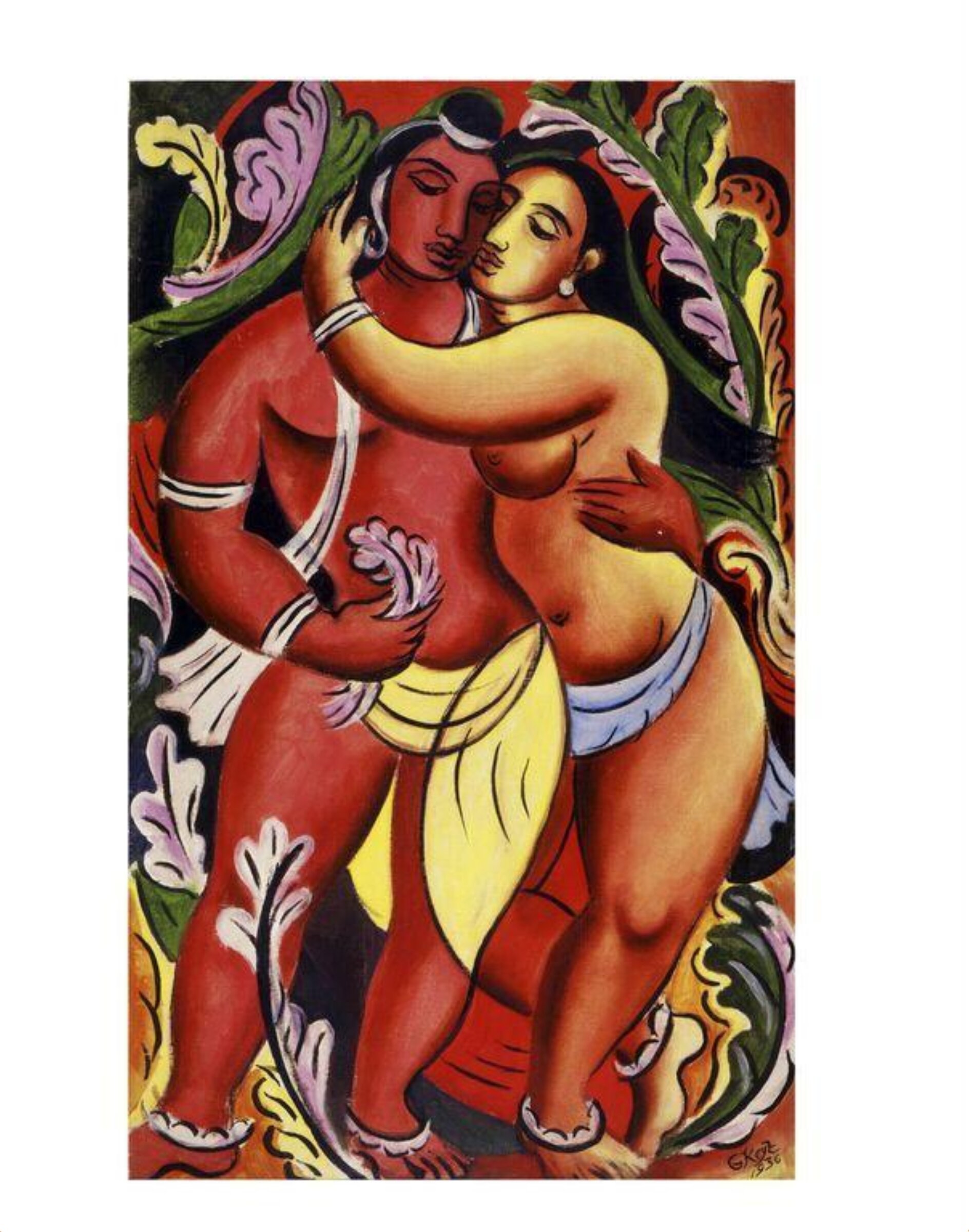
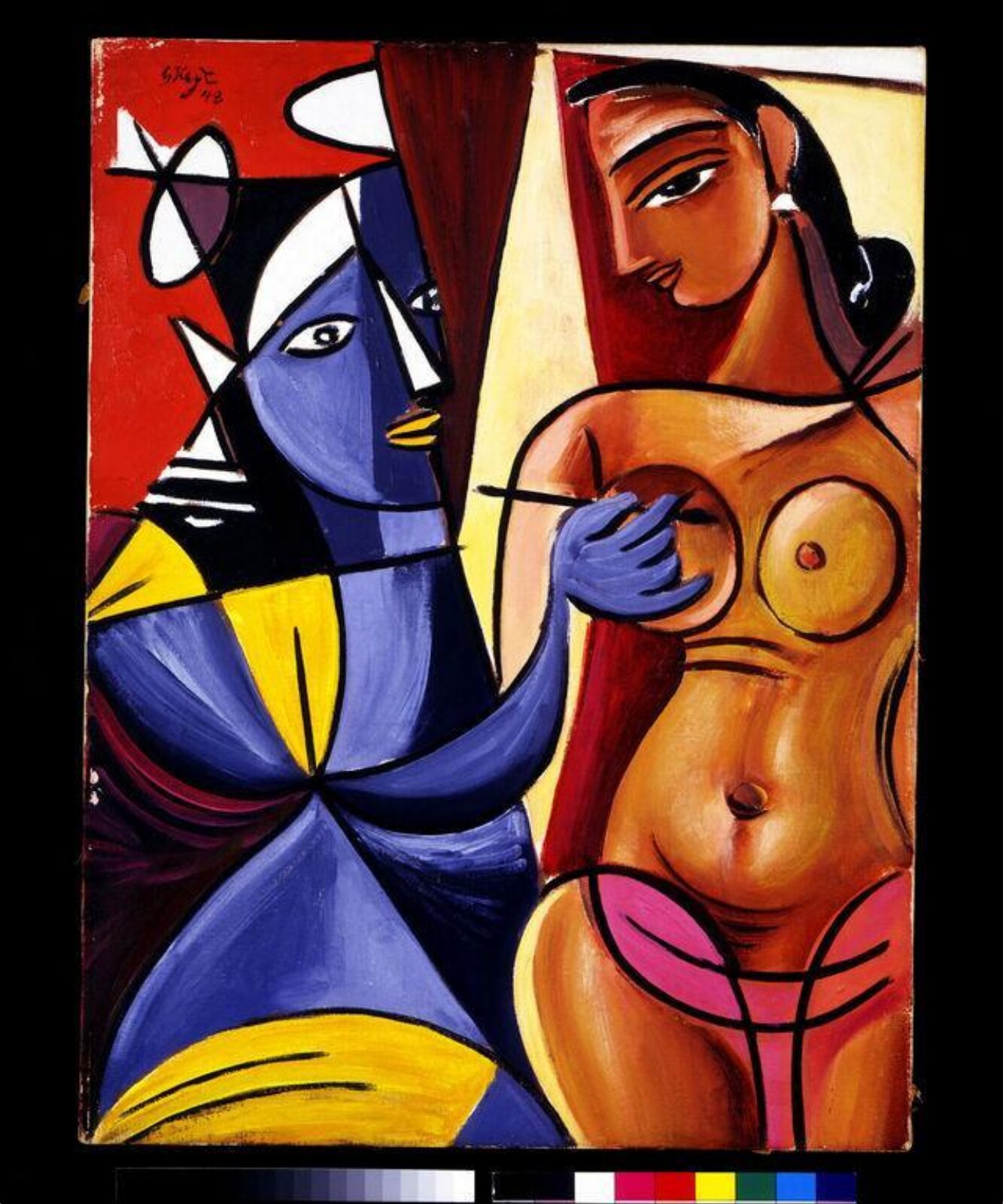
Krishna painting Radha
Si può ammirare?
Al momento non riceve

Victoria and Albert Museum
Londra, Regno Unito
Appartiene alla collezione, ma al momento non è esposta.
- Verificato
- Ultimo cambio di stato
- Fonte
- Il museo
Sul dipinto
The painting depicts Krishna painting the figure of Radha. The two divine Hindu subjects, who represent the archetypal symbol of transcendental love, are here depicted in a manner that reflects the influences of cubism as well as the Kalighat art of Calcutta. The influence of Kalighat art can be seen in the minimal use of lines, large eyes and the curves of the bodies, whereas that of cubism can be detected in the quasi-abstract and angular figure of Krishna. In this painting, we can thus see how Keyt has adopted Western elements into his visual vocabulary to depict a hugely popular theme of Hindu mythology.
Continua a leggere
George Keyt (1901–1993) was born in Sri Lanka (Ceylon) and educated at Trinity College (Kandy), an elite colonial school in the British public school tradition. Keyt gave much time to drawing and the study of art and developed a keen interest in Indian and Western literature. From a very early stage, the ancient hill capital and its Buddhist temples came to exercise a powerful and lasting influence on him, providing both a literary and artistic stimuli to his work. This interest spurred the young painter to reject the Western cultural values he had been brought up with and explore both Hindu mythology and Indian literary works. Towards the end of his career, the artist assimilated Western elements into his visual vocabulary such as Picasso’s cubism and Henri Matisse’s painterly flatness to paint Hindu mythological figures.
Victoria and Albert Museum
Scheda
- Numero di inventario
- IS.58-1963
Che cosa raffigura
In catalogo
Fonti
- Victoria and Albert Museum
- Immagine: Victoria and Albert Museum — © Victoria and Albert Museum, London